Which "Springfield" Are We Talking About — and Which Rules Apply
Three Springfields are large enough to host meaningful food and beverage manufacturing clusters: Springfield, Missouri; Springfield, Massachusetts; and Springfield, Oregon. The last is the one with a clearly documented industrial pretreatment program, administered by the City of Springfield and responsible to Oregon DEQ and EPA, that issues wastewater discharge permits to significant and categorical industrial users (springfield-or.gov, 2024-06-24).
Across all three locations the legal stack has the same shape. Federal EPA pretreatment under 40 CFR Part 403 sets the general framework, 40 CFR categorical standards apply to specific F&B subcategories, and a delegated local POTW pretreatment program issues SIU/CIU permits and layers local limits on top of the federal floor. In Springfield, OR the Industrial Pretreatment Team issues a Wastewater Discharge Permit that lists facility-specific discharge standards, parameters, and conditions after a site visit, and the Wastewater Discharge Permit Application from an SIU or CIU is required at least 90 days before any process-water discharge (springfield-or.gov, 2024-06-24).
Hazardous-waste notification is also mandatory. Under 40 CFR 403.12(p), any facility discharging more than 33 lb (15 kg) per month of material classified as hazardous waste under 40 CFR 261 must notify the POTW, the EPA Region, and the Oregon DEQ (springfield-or.gov). Plants in other Springfields that face the same federal floor should expect equivalent local permitting and reporting obligations through their own POTW's pretreatment program. A useful cross-industry reference is the Springfield metals-plant pretreatment playbook, which applies the same two-layer regulatory logic to a different discharge profile.
The Pollutant Profile That Drives Every F&B Pretreatment Design
Fats, oils, and grease (FOG) is the single most cited operational problem in food and beverage wastewater. The City of Springfield states plainly that FOG cools and hardens in collection-system piping and eventually blocks flow, causing backups or sewer overflows (springfield-or.gov). The same source notes that FOG interferes with biological treatment if it reaches the aeration basin, which is consistent with how meat, poultry, and dairy streams are described by ALAR Corp (S5).
BOD and COD are driven by proteins, carbohydrates, sugars, and starches. Beverage and confectionery lines are especially sugar- and starch-heavy and can spike BOD rapidly because these compounds are easily degraded by bacteria (S5, ALAR Corp). Meat, poultry, and dairy streams concentrate proteins and FOG, which together create high BOD plus persistent foaming and odor in downstream biological stages (S5, ALAR Corp). USP Technologies (S2) frames the same problem differently: high organic load in the form of proteins, carbohydrates, and other raw-material organics drives BOD and COD, depletes oxygen, inhibits microbial activity, and increases sludge production.
Clean-in-place (CIP) discharges swing pH and add detergents and disinfectants that can knock out nitrification and harm downstream biology (S5, ALAR Corp). USP Technologies (S2) adds that unstable pH and alkalinity cause nitrification failure, poor sludge settling, and high ammonia in the aeration basin. Hydrogen sulfide (H2S) odor is a primary F&B complaint and is treated with hydrogen peroxide for both direct H2S control and supplemental dissolved oxygen in overloaded aeration basins (S2, USP Technologies). Excess nitrogen and phosphorus trigger eutrophication and harmful algal blooms in receiving waters and are now a permit focus in nutrient-sensitive jurisdictions; Florida's regulations, for example, focus on nutrient removal to protect the Everglades and often require biological nutrient removal (BNR) (S1, Integrated Water Services).
The Standard F&B Pretreatment Train: Screening → Equalization → DAF → Biology → Polishing
A compliant F&B pretreatment line is built as a sequence of stages, each removing a specific class of contaminant. ALAR Corp (S5) describes the typical train as a step-by-step approach from coagulation, flocculation, and pH adjustment through flotation, biological treatment, clarification, and sludge handling, with disinfection increasingly required as discharge standards tighten (S2, S4).
The headworks protects downstream pumps, valves, and membranes. A rotary mechanical bar screen for headworks protection is the typical first stage for an industrial F&B plant. Flow equalization follows, dampening the batch spikes characteristic of CIP, wash-down, and changeover events so the chemistry and biology downstream see a stable feed. pH and alkalinity adjustment is the next critical step, because pH swings from CIP and acid/alkaline cleaners directly cause nitrification failure, poor sludge settling, and high ammonia in the aeration basin (S2, USP Technologies). A PLC-controlled chemical dosing system for coagulation and pH adjustment handles both the pH/alkalinity correction and the coagulant and flocculant chemistry that primes the next stage.
Dissolved air flotation is the workhorse for FOG, oil, and fine suspended solids in meat, protein, and dairy plants, and is commonly optimized with coagulant and flocculant chemistry (S2, S5). A DAF system for FOG and suspended solids removal sits between chemistry and biology. Biological treatment — conventional activated sludge, MBBR/IFAS, or a membrane bioreactor (MBR) — reduces soluble BOD/COD and, with a BNR configuration, nitrogen. An MBR membrane bioreactor for tighter BOD and TSS limits is highlighted by Integrated Water Services (S1) and ZwitterCo (S4) as a key advanced upgrade because it combines biological treatment with membrane filtration for higher contaminant removal. Residual sludge is dewatered on-site with a plate and frame filter press for on-site sludge dewatering to cut hauling cost (S5, ALAR Corp). Final disinfection (chlorine dioxide, UV, or ozone) is increasingly required as discharge standards tighten (S2, S4).
| Stage | Function | Typical Equipment | Driver / Source |
|---|---|---|---|
| Screening | Remove large solids to protect downstream equipment | Rotary mechanical bar screen | S5 (ALAR Corp) |
| Equalization | Dampen batch/CIP flow and load swings | EQ basin, mixers | S5 (ALAR Corp) |
| pH / alkalinity | Stabilize feed for biology; prevent nitrification failure | Chemical dosing system | S2 (USP Technologies) |
| Coagulation / flocculation | Condition FOG and TSS for flotation | Chemical dosing + flash mix | S2, S5 |
| DAF | Float and remove FOG, oil, fine suspended solids | Dissolved air flotation unit | S2, S5 |
| Biological step | Reduce soluble BOD/COD (and N, P with BNR) | MBR, MBBR/IFAS, or activated sludge | S1, S4, S5 |
| Nutrient polishing | Target ammonia, total N, total P | BNR configuration, chemical precipitation | S1 (Integrated Water Services) |
| Disinfection | Meet tightening microbial / effluent standards | Chlorine dioxide, UV, ozone | S2, S4 |
| Sludge dewatering | Cut hauling volume and cost | Filter press or rotary vacuum drum | S5 (ALAR Corp) |
Choosing the Right Biological Step: DAF, MBR, and BNR Compared
The single decision that most often defines 2026 capex for a Springfield-area F&B plant is which biological step to install — and whether to add nutrient removal on top. The three candidates are not interchangeable, and one of them (DAF) is not actually a biological step at all.
Membrane bioreactors combine activated sludge with submerged membrane filtration and deliver a smaller footprint plus higher and more consistent BOD, COD, TSS, and microbiological removal than conventional activated sludge (S1, Integrated Water Services; S4, ZwitterCo). ZwitterCo (S4) also notes that membrane filtration is increasingly used to address FOG, nitrogen, TSS, and BOD limits while creating opportunities for water reuse. For plants with stable, lower-strength F&B streams and adequate land, conventional activated sludge or MBBR/IFAS remains the lowest-capex option; ALAR Corp (S5) describes MBBR and IFAS as efficient BOD and nutrient reducers for high-strength F&B waste streams.
Biological nutrient removal (BNR) for nitrogen and phosphorus is becoming a permit expectation in nutrient-sensitive jurisdictions. Integrated Water Services (S1) reports that Florida's regulations focus on nutrient removal to protect the Everglades and that BNR may be required. A useful cross-process buyer reference is the 2026 buyer guide for COD/BOD removal technologies; for sub-sector-specific designs, see the starch wastewater COD removal guide and the confectionery wastewater COD removal guide. DAF, in contrast, is a physical separation step — it sits upstream of the biological step and removes FOG, oil, and floatables so the biology can run cleanly (S2, S5).
| Option | What it removes | Where it sits in the train | Best fit / note | Source |
|---|---|---|---|---|
| DAF (dissolved air flotation) | FOG, oil, fine suspended solids | Upstream of biology | Physical separation; not biological; workhorse for meat, protein, dairy | S2, S5 |
| MBR (membrane bioreactor) | Soluble BOD/COD, TSS, microbes; N with BNR config | Biological step + membrane filtration | Smaller footprint, higher and more consistent removal; advanced upgrade | S1, S4 |
| MBBR / IFAS | BOD, nutrient loads (with BNR config) | Biological step | Lower capex than MBR; robust on high-strength F&B streams | S5 |
| BNR (biological nutrient removal) | Nitrogen and phosphorus | Configured within the biological step | Permit expectation in nutrient-sensitive jurisdictions (e.g., Florida / Everglades) | S1 |
Permit Mechanics: Sampling, Reporting, and What Triggers Enforcement
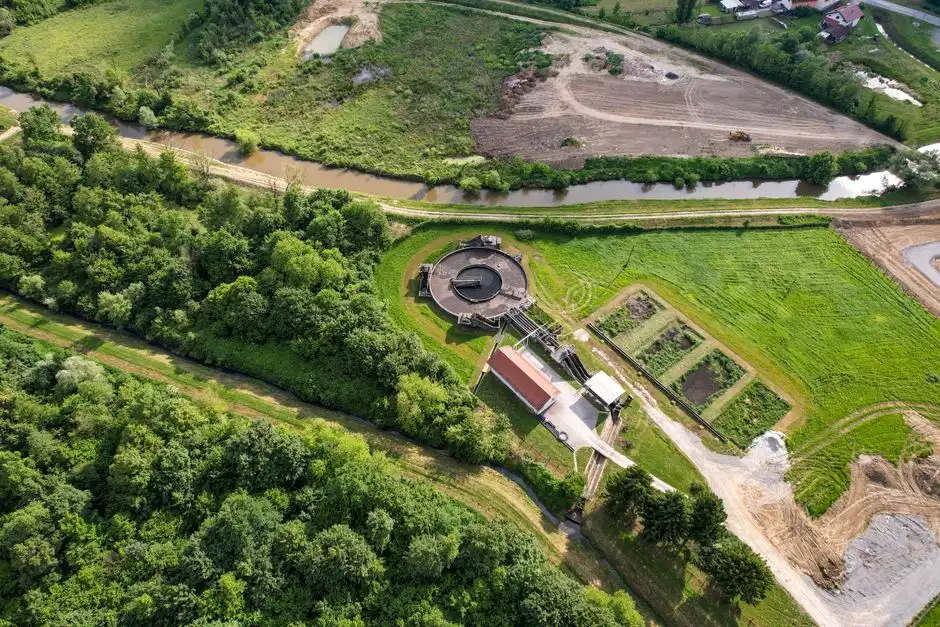
Translating the regulatory stack into day-to-day action is where F&B plants actually win or lose compliance. In Springfield, OR, permitted industries are monitored for compliance on a regular basis through sampling and analysis, spill-control plans, and routine facility inspections, per the City of Springfield Industrial Pretreatment program (springfield-or.gov, 2024-06-24). Significant and Non-Significant Industrial Users are required to submit reports to Springfield's Industrial Pretreatment program; the frequency and content are spelled out in each discharge permit (springfield-or.gov).
Enforcement ranges from warning letters to administrative penalties and an order to stop discharging. The City is required to report annually the facility name and type of significant noncompliance committed by violators (springfield-or.gov). The best FOG strategy remains source control: a properly sized grease interceptor on a maintenance cycle, with all food and beverage service drains routed to it, per the City of Springfield (springfield-or.gov).
F&B plants should expect permit-driven limits on BOD, TSS, pH, oil and grease, and increasingly on nitrogen and phosphorus (S5, ALAR Corp). USP Technologies (S2) adds that disinfection standards are becoming increasingly stringent, raising the operational cost and complexity of the disinfection step. The hazardous-waste notification rule under 40 CFR 403.12(p) is a separate compliance track: any facility discharging more than 33 lb (15 kg) per month of a material classified as hazardous waste under 40 CFR 261 must notify the POTW, the EPA Region, and the Oregon DEQ (springfield-or.gov).
2026 Pre-Purchase Checklist for a Springfield F&B Pretreatment Upgrade
This checklist converts the playbook into an RFQ-ready document. A buyer who can answer "yes" to each row is ready to scope a 2026 capital project with suppliers.
- Confirm which Springfield jurisdiction applies and pull both the federal categorical standard for the plant's F&B subcategory (40 CFR) and the local POTW's local limits and SIU/CIU permit conditions.
- Map influent variability: peak and average flows, batch/CIP schedules, FOG load, BOD/COD, TSS, pH range, TKN/NH₃, total P, and temperature. These numbers drive tank sizing, DAF rating, and biology selection; suppliers cannot size equipment without them.
- Decide whether a DAF-only physical line is sufficient or whether a biological step (MBR vs MBBR/IFAS/activated sludge) is needed to reliably meet BOD/TSS limits, with BNR if N or P are permit drivers. The decision lens is the DAF-vs-MBR-vs-BNR comparison above.
- Plan source control first — grease interceptors, screens, and equalization — before sizing downstream equipment. The City of Springfield explicitly identifies source control as the most effective FOG strategy (springfield-or.gov).
- Build in sludge dewatering (filter press or rotary vacuum drum) to control hauling cost, and disinfection (chlorine dioxide, UV, or ozone) to meet the tightening effluent standard (S2, S5). A chlorine dioxide generator or a UV sterilizer covers the disinfection step.
- Prepare the permit application: in Springfield, OR, the Wastewater Discharge Permit Application for an SIU or CIU is due at least 90 days before any process-water discharge (springfield-or.gov).
| RFQ input | Why the supplier needs it | Source |
|---|---|---|
| Federal categorical standard for F&B subcategory | Sets the federal floor for BOD, TSS, pH, O&G, etc. | 40 CFR |
| Local POTW local limits + SIU/CIU permit conditions | Layered on top of the federal floor; site-specific | Springfield, OR pretreatment program (springfield-or.gov) |
| Peak and average flow + batch/CIP schedule | Drives EQ sizing and hydraulic margin | Plant data |
| FOG load, BOD/COD, TSS, pH range, TKN/NH₃, total P, temperature | Drives DAF rating, biology selection, BNR scope | Plant data; framework in S1, S2, S5 |
| Target effluent quality (reuse vs sewer discharge) | Determines whether MBR/RO polishing is required | S1, S4 |
| Site constraints (footprint, height, utilities) | Drives MBR vs MBBR/IFAS vs activated-sludge choice | Plant data |
Frequently Asked Questions
What does a complete 2026 F&B pretreatment line for a Springfield-area plant actually include?
A complete line typically runs screening → flow equalization → pH and alkalinity adjustment → coagulation and flocculation → dissolved air flotation → biological treatment (MBR, MBBR/IFAS, or activated sludge, with BNR if N or P are permit drivers) → nutrient polishing → disinfection (chlorine dioxide, UV, or ozone) → sludge dewatering (S1, S2, S4, S5; springfield-or.gov). The exact sequence and capacity depend on the plant's flows, FOG and BOD/COD profile, and the local POTW's local limits.
How should a buyer compare DAF, MBR, and BNR for an F&B stream?
DAF is a physical FOG and suspended-solids removal step that sits upstream of the biology and is required wherever FOG is a permit or operational issue (S2, S5). MBR is an advanced biological step that combines activated sludge with membrane filtration for higher and more consistent BOD, COD, TSS, and microbiological removal in a smaller footprint (S1, S4). BNR is a configuration of the biological step that targets nitrogen and phosphorus and is becoming a permit expectation in nutrient-sensitive jurisdictions such as Florida (S1). Most Springfield F&B plants need DAF plus one biological option, with BNR added only if N or P are permit drivers. A side-by-side comparison is in the DAF-vs-MBR-vs-BNR table above.
How much does a 2026 F&B pretreatment upgrade cost, and what drives the budget?
Neither the supplied research nor the City of Springfield pretreatment page provides a price or a price range for an F&B pretreatment train, so no number should be quoted. A buyer should request a quotation based on the RFQ inputs in the checklist above: federal categorical standard, local POTW local limits, peak and average flow, batch/CIP schedule, FOG load, BOD/COD, TSS, pH range, TKN/NH₃, total P, temperature, target effluent quality, and site constraints. Without those inputs, any quoted price range would be an assumption, not evidence.
How do I choose a supplier for a Springfield F&B pretreatment upgrade, and what compliance risk should I plan for?
Shortlist suppliers who can size equipment against the local POTW's local limits and the federal categorical standard for your F&B subcategory, who can provide reference plants with similar FOG and BOD/COD profiles, and who can support the SIU/CIU permit application process (in Springfield, OR, the Wastewater Discharge Permit Application is due at least 90 days before any process-water discharge) (springfield-or.gov). Confirm in writing that the proposed train can meet the specific parameters listed in the discharge permit you will receive, and that the supplier can support the periodic compliance reports Springfield requires of SIUs and Non-Significant Users. The compliance risks to plan for are: missing the 90-day pre-discharge application window, FOG carry-through that blocks collection-system piping (springfield-or.gov), pH-driven nitrification failure from CIP swings (S2), and 40 CFR 403.12(p) hazardous-waste notification if any stream exceeds 33 lb (15 kg) per month of a 40 CFR 261 hazardous waste (springfield-or.gov).