Why Asphalt Paving and Petroleum Bulk Station Wastewater Is a Hard Biological Feed
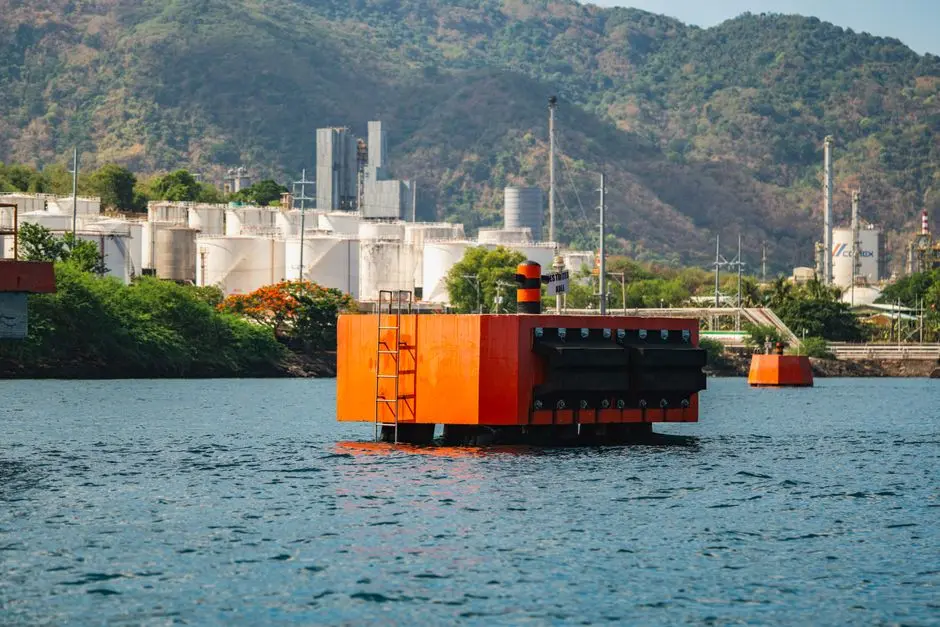
Asphalt paving mixtures/blocks plants and petroleum bulk stations in or near Perry, US generate a wastewater envelope that the supplied research does not quantify with influent numbers, so engineers must characterize it qualitatively before sizing any biological train. The stream carries bitumen emulsions from mix cleanup and silo flushing, dissolved and free fuel sheen from loading-rack drips and tank-bottom draws, polycyclic aromatic hydrocarbons (PAHs) carried in with fuel oils, and FOG in the hundreds to thousands of mg/L range during upset events, all riding on a base of suspended mineral fines from aggregate handling. Flows are typically low to moderate in volume but spiky: a single fuel-transfer spill or hot-mix equipment washdown can drive a hydrocarbon slug that doubles influent load for several hours.
Clarifier-based systems are particularly susceptible to these shock loads. S2 states the secondary clarifier is the single point of failure in CAS, collapsing under sludge bulking, rising sludge, or hydraulic overload — exactly the conditions a shock-loaded FOG stream creates. Treatment trains in this service therefore almost always begin with oil/water separation followed by a DAF system before any biological step, and S5 explicitly recommends DAF upstream of MBR for FOG and oily wastewater to protect membrane performance. The practical consequence: the biological reactor is downstream of a FOG-removal step in both CAS and MBR trains, so the real comparison for a Perry plant is CAS plus tertiary filtration versus DAF followed by an integrated MBR membrane bioreactor system with optional RO polish.
How MBR and CAS Treat That Feed Differently
Conventional activated sludge (CAS) is a two-stage biological-plus-gravity process: an aeration tank where heterotrophic bacteria convert BOD into biomass and CO₂, followed by a secondary clarifier that depends on sludge settleability to return activated sludge and discharge clarified effluent (S2, S5). The clarifier is the load-bearing element — when it works, the plant works; when bulking or hydraulic overload tips the sludge volume index, the whole train loses solids to the effluent.
MBR replaces that clarifier with submerged MF/UF membranes at 0.1–0.4 μm pore size, most commonly PVDF, and operates at 8,000–12,000 mg/L MLSS versus 2,000–5,000 mg/L for CAS (S2). Because membranes retain biomass by a defined pore size rather than by gravity settling, MBR can decouple HRT from SRT, run at F/M ratios of 0.05–0.15 d⁻¹, and tolerate the shock loads that would wash out a clarifier (S2). CAS effluent typically runs 10–30 mg/L TSS under normal conditions and needs tertiary filtration or cloth-media disc filters to reach reuse criteria (S5); MBR permeate is <5 mg/L TSS, <1 NTU turbidity, with an SDI typically <3, which is the threshold below which RO membranes can be fed without additional clarification (S2).
MBR's higher SRT and physical barrier improve removal of suspended-bound and larger molecular weight micropollutants, while polar low-MW species pass through both processes at similar rates (S2). For a Perry asphalt or petroleum site, the practical advantage is operational robustness: when a fuel sheen event reaches the bioreactor, MBR holds its MLSS and keeps producing clear permeate, while a CAS basin risks a clarifier crash and a TSS excursion through the discharge.
Head-to-Head Parameters for a Perry Plant Design Basis
The table below consolidates the engineering envelope for a design basis memo for a Perry asphalt or petroleum bulk station, with every value traceable to the supplied research. All figures are 2026 ranges for municipal and light-industrial service; high-strength industrial streams shift MBR toward the upper MLSS and SRT limits per S2.
| Parameter | MBR | CAS | Source |
|---|---|---|---|
| MLSS | 8,000–12,000 mg/L | 2,000–5,000 mg/L | S2 |
| Effluent TSS | <5 mg/L | 10–30 mg/L normal operation | S2, S5 |
| Effluent BOD | <5 mg/L | Typically 10–30 mg/L without tertiary | S2 |
| F/M ratio | 0.05–0.15 d⁻¹ | 0.2–0.5 d⁻¹ typical | S2 |
| SRT | 20–60 days (up to 40–60 d extends CIP interval) | 5–15 days typical | S2 |
| Footprint vs CAS | 40–60% smaller (DF series rated ~60% smaller) | Baseline | S2 |
| Energy premium | 30–50% higher per m³ than CAS | Baseline | S2, S5 |
| Turnkey CAPEX | $180–$420 per m³/d | $80–$220 per m³/d | S2 |
| OPEX | $0.18–$0.42/m³ | $0.10–$0.22/m³ | S2 |
| Membrane replacement | Every 7–12 years (S5) / amortized 5–8 years (S2) | N/A | S2, S5 |
| CIP chemicals | NaOCl 300–500 mg/L then citric/oxalic acid, 1–4 week cycle | N/A | S2 |
Membrane cassettes for this duty are typically a DF series PVDF flat sheet membrane module; the 60% footprint reduction S2 attributes to that module is a defensible 2026 benchmark for modular MBR skids in space-constrained industrial service.
CAPEX, OPEX and Payback for a Perry Retrofit
S2 lists 2026 turnkey CAPEX at $80–$220 per m³/d for CAS and $180–$420 per m³/d for skid-integrated MBR, with OPEX landing at $0.10–$0.22/m³ for CAS and $0.18–$0.42/m³ for MBR. The CAPEX gap narrows once the CAS baseline includes the tertiary filtration or DAF polishing required to reach reuse quality. S2 flags this as a hidden CAPEX line that should be priced into any CAS baseline before declaring MBR more expensive.
CAS-to-MBR payback is typically 3–6 years when the project needs reuse water, land cost is high, or discharge consents require <10 mg/L TSS (S2). For a Perry asphalt block or petroleum bulk station inside an existing shed, the footprint savings often make the MBR premium close faster at retrofits than at greenfield sites.
MBR permeate is feed-ready for RO with SDI typically <3, eliminating a separate multimedia filter or DAF polish and extending RO CIP intervals by 30–50% (S2, citing HydropureWater field data from 2025-Q4). Pairing an MBR skid with an industrial RO system is the standard reuse train for vehicle wash, cooling-tower makeup, or boiler feed at these sites. A retrofit of an existing CAS basin into an MBR zone is often feasible by adding submerged cassettes and removing the clarifier, though RAS piping, scum removal, and mixed-liquor distribution must be redesigned (S2). For a fuller cost walk, the 2026 MBR cost per m³ guide applies the same CAPEX/OPEX bands with line-item detail.
Decision Matrix: When MBR Wins, When CAS Still Wins

The choice between MBR and CAS for a Perry asphalt paving mixtures/blocks plant or petroleum bulk station depends on site constraints, reuse obligations, and feed variability. MBR is the default for industrial process water, factory discharge with a reuse duty, containerized or buried installations on constrained sites, and high-strength or shock-loaded feeds (S2, S5). CAS remains the lower-cost compliant option for greenfield municipal discharge to a sensitive receiving water, sites with ample land, and projects without a reuse or <10 mg/L TSS obligation (S2, S5).
If the site sits inside an existing shed on a tight footprint, has any reuse duty, or must hit a tight TSS/BOD consent, MBR is the correct choice. If the site is greenfield with no reuse duty and ample land for a clarifier and RAS pumping station, CAS with a cloth-media disc or sand filter polish is the lower-cost compliant option. For an existing CAS plant where the clarifier is the bottleneck, S2 supports repurposing the aeration basin, adding submerged cassettes, and removing the clarifier entirely. A parallel walk-through for a different industry and geography is in the Bay Minette MBR vs CAS guide; for a chemicals feed the matrix shifts further toward MBR, as discussed in the Titusville chemicals MBR vs CAS guide.
| Project profile | Recommended technology | Reason |
|---|---|---|
| Greenfield municipal < 50,000 m³/d, no reuse, ample land | CAS | Lower CAPEX, simpler operations, established operator skill base (S2) |
| Greenfield municipal > 50,000 m³/d, sensitive receiving water, no reuse | CAS | Lowest cost-to-compliance; MBR premium not justified (S2) |
| Industrial process water / factory discharge / reuse obligation | MBR | Reuse-grade effluent, modular, smaller footprint (S2, S5) |
| High-strength or shock-loaded feed (FOG slugs, fuel sheen, COD > 2,000 mg/L) | MBR | High MLSS tolerates shock loads; decoupled HRT/SRT (S2) |
| Retrofit of existing CAS plant, clarifier is the bottleneck, constrained site | MBR | Repurpose aeration basin, add cassettes, remove clarifier (S2) |
Frequently Asked Questions
What CAPEX band should a Perry asphalt or petroleum plant budget for an MBR skid in 2026?
Per S2, indicative 2026 turnkey CAPEX for skid-integrated MBR runs $180–$420 per m³/d, with OPEX at $0.18–$0.42/m³. The wide bands reflect influent strength and material selection (stainless versus carbon steel). For a design-grade number, request an EPC proposal sized to your site-specific flow and FOG envelope rather than anchoring on the band midpoint.
How do I compare MBR and CAS suppliers for a high-FOG hydrocarbon feed?
Per S5, the screening question is whether the supplier's reference list includes oily or FOG-laden industrial service with DAF upstream of the bioreactor; FOG and fuel sheen are the failure mode for both technologies, and a vendor without DAF-in-front-of-MBR experience will underprice the pretreatment. Ask each bidder for an operating plant on a comparable feed, the MLSS they target, and their CIP interval history at that plant.
Does MBR permeate need a DAF polish before RO at a petroleum bulk station?
Per S2, MBR permeate typically runs SDI <3, which is the threshold below which RO membranes can be fed without additional clarification, so a separate DAF polish is normally not required. Confirm by requesting a jar test or pilot SDI measurement on your actual MBR permeate during the proposal phase, especially if the FOG removal on the upstream DAF is not consistently below 50 mg/L.
What influent data do I need to finalize the MBR vs CAS decision for a Perry site?
Per S2, the design basis needs site-specific flow (average and peak