
What a Disk Filter Is and Where It Sits in a Treatment Train
A disk filter is a mechanical filtration device that uses a series of disks carrying filter media to capture suspended solids from water or wastewater as feed flows through the media. According to the U.S. Geological Survey, capsule and disk filters use a pleated or woven filter medium in a polypropylene or other plastic housing, and 0.45 µm is the pore size routinely used for most water-sampling studies (Skrobialowski, 2016).
The same mechanical principle is scaled up for continuous industrial duty, where larger disk stacks polish clarified water on a backwashable cycle. In a typical industrial treatment train, the disk filter sits after primary sedimentation and biological treatment, performing tertiary polishing on TSS and turbidity, or as a pre-RO barrier to reduce fouling load on downstream membrane systems. The Water Environment Federation has formally evaluated cloth-media disk filters for wastewater reclamation, confirming the configuration as a peer-reviewed, deployed option rather than an experimental one. USGS-style capsule and disk filters, by contrast, are disposable self-contained inline units for sample preparation, not continuous flow-through treatment (Skrobialowski, 2016). A common upstream pairing is a DAF system for suspended solids and oil/grease removal upstream of a disk filter; for plants that prefer a deep-bed alternative, a multi-media filter alternative for higher-flow polishing duties is often evaluated in parallel.
Core Components and How a Disk Filter Operates
The principal components of an industrial disk filter are a rotating disk stack, filter media (woven mesh or non-woven cloth), a central shaft, a pressure housing or vessel, a backwash pump or siphon, and inlet and outlet manifolds. Commercial disk filters consist of a series of rotating disks, each equipped with filter media, through which feed water passes; particles larger than the media pore size are retained on or within the media, while clarified water exits through the disk stack and out of the vessel. As solids accumulate, differential pressure across the media rises; at a set trigger, either time-based or pressure-differential, the disk stack rotates while a backwash flow is applied, dislodging the cake layer and restoring flux. The waste stream from the backwash cycle is routed to sludge handling, where a plate-frame filter press for backwash sludge dewatering is a typical downstream interface. The two media families behave differently in service: woven mesh gives precise, repeatable micron ratings and is the choice when the downstream target is a defined cutoff, while non-woven cloth (felt) gives higher solids-holding capacity and is the media basis of the cloth-media disk filter configurations evaluated by WEF. For chemically aggressive or higher-temperature wastewater, polypropylene housings are standard, but stainless frames and chemically compatible media must be specified against the actual pH, chlorine, and solvent exposure of the application.
Key Engineering Parameters for Specifying a Disk Filter

Turning the concept into a specification document means fixing six parameters before talking to a supplier: micron rating, media type, hydraulic capacity, backwash trigger and water budget, housing pressure class, and the operating envelope of the feed. The USGS protocols fix 0.45 µm as the routine pore size for trace-element sample work (Skrobialowski, 2016), but industrial polishing duties are commonly coarser and are chosen against the application's target effluent TSS and turbidity, which the buyer must define. WEF's cloth-media disk filter studies treat non-woven cloth as a credible choice for wastewater reclamation, where solids capacity matters more than absolute pore precision. Hydraulic capacity is sized by dividing the required feed flow (m³/h) by the effective disk area; the supplier must provide a per-disk or per-unit flow rating, because the supplied research does not publish a generic figure that can be quoted across duties. The backwash trigger should be specified explicitly, as time-based, pressure-differential, or volume-based, along with the maximum acceptable backwash water as a percentage of forward flow so overall recovery is not eroded. The housing pressure class and material — polypropylene standard, stainless optional — must be confirmed against working pressure and chemical exposure, and the operating envelope (feed TSS range, temperature, pH, oil and grease, fibers and rags) drives whether a DAF or a fine screen must precede the disk filter.
| Parameter | What to specify | Evidence / source |
|---|---|---|
| Micron rating | Match the downstream target (USGS uses 0.45 µm for trace-element samples; industrial polishing is typically coarser and set by target effluent TSS/turbidity). | USGS TWRI 9-A5 §5.2.1.A (Skrobialowski, 2016) |
| Media type | Woven mesh for precise, repeatable ratings; non-woven cloth for higher solids capacity in reclamation duty. | WEF cloth-media disk filter evaluation (S2, S4) |
| Hydraulic capacity | Required feed flow (m³/h) ÷ effective disk area; supplier must provide project-specific flow-vs-head-loss curve at actual feed TSS. | Buyer-defined input; no generic figure in supplied research |
| Backwash trigger | Time-based, pressure-differential, or volume-based; set maximum backwash water as % of forward flow. | Buyer-defined input; S5 commercial operating description |
| Housing / pressure class | Polypropylene standard; stainless for higher temperature or aggressive chemistry; confirm pressure rating vs. system working pressure. | S5 commercial specification language; Skrobialowski, 2016 |
| Feed envelope | TSS range, temperature, pH, oil/grease, fibers/rags — drives need for upstream DAF or bar screen. | Buyer-defined input |
Disk Filter vs Sand Filter vs Screen Filter vs Cloth-Media Disk
The four mechanical filtration options in routine industrial use are not interchangeable, and the right choice depends on whether the duty is polishing, protection, or both. A sand filter is a deep bed of granular media, well understood and forgiving on moderate TSS, but with a larger footprint and higher backwash water consumption than a disk stack. A screen filter performs coarse screening, typically above 50 µm, with low head loss and minimal backwash; it protects downstream equipment but cannot reach fine TSS targets on its own. A standard disk filter with woven or fine mesh media delivers tighter and more repeatable micron ratings than cloth media, at the cost of faster head-loss build-up and more frequent backwash on higher-TSS feeds. A cloth-media disk filter uses non-woven cloth as the media, giving higher solids-holding capacity than a fine mesh disk and is the configuration WEF evaluated for wastewater reclamation. The decision rule of thumb: choose cloth-media disk for high-TSS polishing where solids capacity matters, choose fine-mesh disk for low-TSS polishing where a precise micron rating matters, choose sand filter for very large flows and forgiving TSS targets, and choose a screen filter only for protection of downstream equipment, not for polishing. Choosing the correct filtration technology is essential for system efficiency, and for plants comparing a deep-bed route against a disk stack at higher flow, a multi-media filter alternative for higher-flow polishing duties is the conventional parallel evaluation.
| Criterion | Sand filter | Screen filter | Standard disk filter (woven / fine mesh) | Cloth-media disk filter |
|---|---|---|---|---|
| Typical removal target | Moderate TSS, polishing | Coarse debris, protection only | Fine, repeatable micron rating | High-TSS polishing with high solids capacity |
| Typical rating | Granular bed, no single pore | Typically > 50 µm | Tight, repeatable micron rating (industrial polishing is typically coarser than USGS 0.45 µm sample work) | Non-woven cloth, capacity over absolute pore precision |
| Footprint | Large | Compact | Compact (disk stack) | Compact (disk stack) |
| Backwash water use | High | Minimal | Moderate; set as % of forward flow | Moderate; set as % of forward flow |
| Evidence base | Long-established unit operation | Long-established unit operation | USGS pleated/woven media description (Skrobialowski, 2016); S5 commercial operating description | WEF cloth-media disk filter performance evaluation (S2, S4) |
| Best-fit duty | Large flows, forgiving TSS targets | Protection of downstream equipment | Low-TSS polishing where a defined cutoff matters | Tertiary wastewater reclamation on variable TSS |
Industrial Applications Where Disk Filters Are Specified in 2026
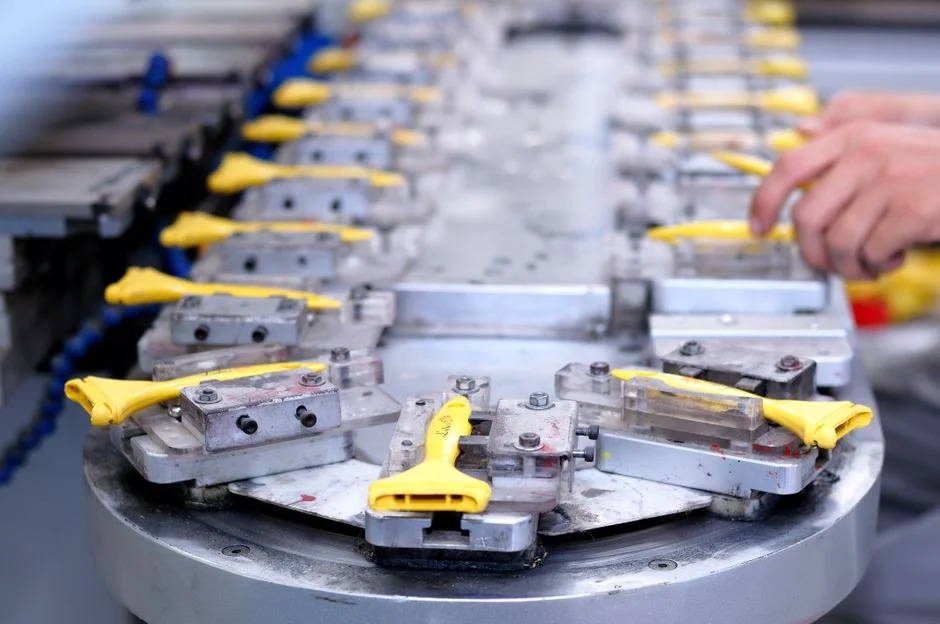
Disk filters appear in five recurring industrial duties in 2026. The first is tertiary polishing of municipal and industrial biological effluent to meet reuse or discharge TSS and turbidity limits, the duty for which WEF formally evaluated cloth-media disk filters. The second is pre-UF and pre-RO protection, where the disk filter reduces TSS and turbidity upstream of membrane systems to slow fouling and extend cleaning intervals. The third is in food and beverage, textile, pulp and paper, and metal-finishing effluents, where the disk filter typically sits downstream of a DAF and upstream of the final reuse or discharge step. The fourth is reuse-side polishing in cooling-tower makeup, boiler-feed pretreatment, and process-water loops, where consistent low-TSS water is required. Engineering teams must evaluate specific site requirements for each of these applications. For plants that need a tighter effluent than a disk filter alone can deliver, an MBR system when a tighter effluent quality than a disk filter alone is required is the conventional alternative. Across all five duties, the engineering inputs handed to the supplier are identical: influent TSS, target effluent TSS, peak flow, and the allowable backwash water budget.
Selecting a Disk Filter Supplier in 2026: Engineering Checklist
A 2026 procurement decision on a disk filter should be evidence-driven, project-specific, and written down before any unit is ordered. The first request is a flow-versus-head-loss curve at the project's actual feed TSS, not a generic catalog value, because the supplied research does not publish a generic figure that can be applied across duties. The second is confirmation of the media type (woven, non-woven cloth, or other), the micron rating, and the expected backwash frequency under the project's solids loading. The third is verification of materials of construction against the chemical exposure (pH, chlorine, solvents) and temperature, plus confirmation of the housing pressure class against the system's working pressure. The fourth is documented references in the same duty, industrial wastewater tertiary polishing or pre-RO, with a site visit or pilot data requested if available. The fifth is backwash water consumption expressed as a percentage of treated flow, the sludge handling interface with downstream valves and media and the controls scope, including PLC, differential pressure trigger, and remote monitoring, plus confirmation of membrane consumables if the system also feeds RO/UF membrane elements.
Frequently Asked Questions
What micron rating should I specify for a disk filter in industrial wastewater polishing?
The micron rating is set by the downstream target. USGS protocols use 0.45 µm for trace-element sample work (Skrobialowski, 2016), but industrial polishing duties are typically coarser and chosen against the target effluent TSS and turbidity, so the right input is your discharge or reuse limit, not a generic catalog value.
Where should a disk filter sit relative to DAF, MBR, UF and RO?
A disk filter is normally placed after primary sedimentation and biological treatment as a tertiary polishing step, or upstream of UF/RO as a pre-membrane barrier to cut TSS and turbidity loading. Plants that need a tighter effluent than a disk filter can deliver on its own should evaluate an MBR system in place of, or upstream of, the disk stage.
How much does a disk filter cost for an industrial wastewater project?
Unit price depends on flow, micron rating, media type, housing material, and the controls scope, and the supplied research does not publish a generic price. The actionable check is to request a project-specific quotation that itemizes the vessel, the disk stack, the media, the backwash pump, and the controls, and to compare it on a normalized basis of m³/h treated at the project's feed TSS.
What should I verify about a disk filter supplier before placing an order?
Verify documented references in the same duty, request a flow-versus-head-loss curve at the project's actual feed TSS, confirm materials of construction against chemical exposure and temperature, and ask