What 'sizing' a containerized MBR STP actually means in Surat
A containerized MBR STP is a pre-engineered biological-plus-membrane plant built inside an ISO 20' or 40' high-cube (HC) enclosure. Pure Aqua's MBR-C range ships in 40' or 20' HC containers with insulated walls, a 1.5 mm drum screen for pretreatment, fine-bubble aeration in the bioreactor, and submerged hollow-fibre UF cassettes at 0.04 µm nominal pore size (Pure Aqua product page, accessed 2026). MAK Water offers a related but physically different build: self-contained, corrosion-resistant FRP bioreactor modules with aluminium access platforms, an automatic 2 mm inlet screen, flat-sheet membranes with air scouring and CIP, hypochlorite disinfection, and an AC 415 V / 3-phase / 50 Hz supply (MAK Water MBR product page, accessed 2026). Both qualify as "containerized" in Surat RFP language, and both constrain the engineering problem the same way.
Sizing is therefore not a product pick. It is a five-input calculation you must lock before a supplier can quote: (1) population equivalent, (2) per-capita sewage flow in Lpcd, (3) peak factor to convert average flow to peak hourly flow, (4) effluent target tied to disposal or reuse, and (5) the available Surat plot footprint expressed in container envelopes (20' HC vs 40' HC vs multi-container). The container envelope is the hard constraint, because every metre of anoxic + aerobic zone, every cassette slot, and every air-scour pipe must fit inside an ISO box with finite width, height and crane-lift weight. That is why a containerized MBR wastewater treatment system uses submerged UF cassettes — they sit inside the bioreactor rather than in external pressure vessels, which would never clear the container door.
Step 1 — Convert population in Surat to design flow (kLPD)
Start with the per-capita anchor. Pure Aqua's MBR-C reference table sizes capacity on 50 gpd per capita, which converts to roughly 190 Lpcd for approximate population sizing of containerized MBR (Pure Aqua product page, accessed 2026). 50 gpd ≈ 190 Lpcd is a sizing reference, not a regulatory number, so the designer must cross-check it against the National Building Code of India per-capita sewage figure for the project class and against the developer's actual water-supply assumption, because Surat residential colonies and construction camps generate very different wastewater profiles — colony occupants run flushing, bathing and kitchen loads continuously, while a labour camp has sharp morning and evening peaks.
Worked example for a 200-person Surat construction/labour camp: 200 × 190 Lpcd ≈ 38,000 L/day, i.e. ~38 kLPD average dry-weather flow. A 200-flat residential block in Surat will sit in a similar average range only if non-potable reuse (flushing, gardening, common-area cleaning) is captured on-site; if reuse is not captured, the per-capita number rises because all water consumed becomes sewage rather than being split between sewage and an irrigation/reuse stream.
Next, convert the average to a peak hourly flow the membrane tank must handle. The exact peak factor for a Surat camp has to be confirmed from the CPHEEO manual and the project's plumbing fixture count, but the principle is non-negotiable: submerged UF cassettes are rated on instantaneous flux, and the MBR must be sized for peak, not average. The containerized MBR wastewater treatment system you specify must therefore be quoted on a peak-hour basis, with the average kLPD stated only as a daily reference.
Step 2 — Pick the container: 20' HC, 40' HC or multi-container
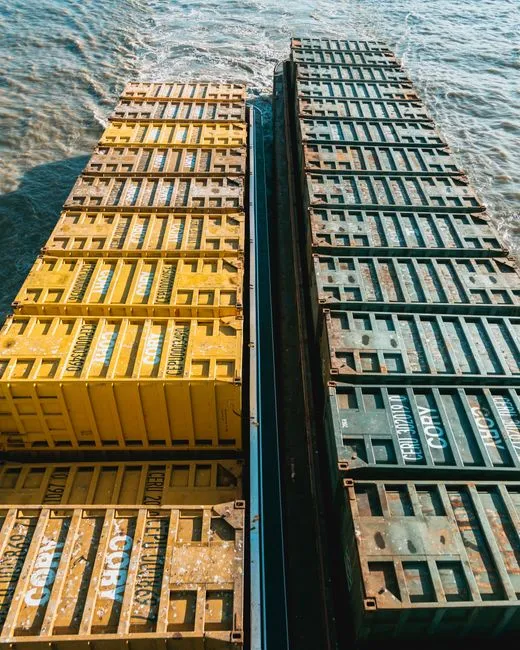
Container selection is a physical-fit decision, not a catalogue pick. Pure Aqua's MBR-C is offered in both 40' and 20' high-cube containers, with hydraulic capacity scaling with the container (Pure Aqua product page, accessed 2026). A single 40' HC box typically covers small Surat colonies and 100–250-person camps; township phases above that envelope usually need two or more containers in parallel because anoxic + aerobic residence time, the floor area required for the membrane cassette, and the headroom needed above the cassettes for access and air-scour piping each draw from the same finite internal height.
MAK Water's MBR is shipped as self-contained FRP modular systems with aluminium access platforms, designed for easy deployment to remote locations rather than inside a single ISO box (MAK Water MBR product page, accessed 2026). That is a useful proof point for a permanent Surat site — "containerized" does not strictly mean "shipping container" if the plant is built and stays. But for Surat labour camps that may be relocated or redeployed after the construction phase, the ISO 20'/40' HC envelope is the safer choice because the unit can be lifted off and trucked to the next site without dismantling the bioreactor.
Ask the vendor for the internal GA drawing before signing. The three constraints to verify are: (a) hydraulic residence time in the anoxic + aerobic zones at the Surat design temperature, (b) floor area for the membrane cassette including the U-bend and permeate manifold, and (c) clearance above the cassette for the air-scour pipe and the CIP connection. A supplier who answers in kLPD without an envelope drawing is selling a number, not a containerized MBR wastewater treatment system.
Step 3 — Size the membrane area and bioreactor to your flow
Translate kLPD into membrane area (m²) and bioreactor volume using the standard cassette envelope. PCI Membranes' HF-Z cassette range gives the realistic membrane-area envelope a containerized MBR will use: an S12 cassette carries up to 480 m² of PVDF membrane and an S40 up to 1,600 m², while U-type (taller) cassettes reach 624 m² and 2,080 m² respectively, and the 2022 second-generation cassette delivers +10% packing density and −5% scouring energy versus the first generation (PCI Membranes, accessed 2026). The Surat designer can map "peak kLPD ÷ design flux" directly onto one of these standard cassettes to sanity-check a vendor's quote.
Pure Aqua's MBR-C uses thermally induced phase separation (TIPS) PVDF submerged hollow-fibre modules with 0.04 µm nominal pore size, paired with a 1.5 mm drum screen for pretreatment, which is what allows the MBR to run at high mixed-liquor suspended solids and shrink the bioreactor volume (Pure Aqua product page, accessed 2026). MBR tolerates significantly higher MLSS than a conventional activated-sludge plant because the membrane replaces the secondary clarifier; PCI Membranes states that MBR delivers up to 50% smaller footprint than a CAS plant of the same treatment duty (PCI Membranes, accessed 2026).
Confirm the operating envelope before signing. Pure Aqua MBR-C is specified for 460V/3Ph/60Hz, an operating temperature range of 20–30 °C, and a 20 °C design point (Pure Aqua product page, accessed 2026). For Surat, the engineer should verify that membrane aeration and biological activity are not derated above 30 °C, and that the air-scour blower has margin because biological activity in the anoxic + aerobic zones rises with temperature and so does the membrane air-scour demand. The flat-sheet alternative — the DF series flat-sheet MBR membrane module — follows the same flux logic but in a different physical envelope, so the same flux check applies.
| Parameter | Value / Envelope | Source |
|---|---|---|
| Per-capita sewage anchor (sizing reference) | 50 gpd per capita ≈ 190 Lpcd | Pure Aqua MBR-C product page, accessed 2026 |
| Drum screen perforation | 1.5 mm | Pure Aqua MBR-C product page, accessed 2026 |
| Membrane pore size (MBR-C, hollow-fibre) | 0.04 µm nominal, TIPS PVDF | Pure Aqua MBR-C product page, accessed 2026 |
| HF-Z cassette membrane area (S12 / S40) | Up to 480 m² / 1,600 m² | PCI Membranes, accessed 2026 |
| HF-Z cassette membrane area (U12 / U40) | Up to 624 m² / 2,080 m² | PCI Membranes, accessed 2026 |
| Footprint reduction vs CAS (same duty) | Up to 50% smaller | PCI Membranes, accessed 2026 |
| Electrical supply (MBR-C) | 460 V / 3-phase / 60 Hz | Pure Aqua MBR-C product page, accessed 2026 |
| Operating temperature (MBR-C) | 20–30 °C range; 20 °C design | Pure Aqua MBR-C product page, accessed 2026 |
| Electrical supply (MAK Water MBR) | AC 415 V, 3-phase, 50 Hz | MAK Water MBR product page, accessed 2026 |
| Inlet screen (MAK Water MBR) | Automatic, 2 mm in two dimensions | MAK Water MBR product page, accessed 2026 |
Step 4 — Set the effluent target: discharge, reuse or both
The reuse-or-discharge question must be fixed before talking to suppliers, because that single decision changes disinfection dose, O&M cost and the membrane process chain. MAK Water's MBR is designed to produce "Class A+" effluent suitable for high-risk-category reuse, with BOD reduction to <40 mg/L (or <10 mg/L drop from influent) and a treatment chain that ends in hypochlorite dosing for disinfection (MAK Water MBR product page, accessed 2026). That is the reference target when the Surat project aims to reuse treated sewage for toilet flushing or landscape irrigation. For discharge-only projects, the Surat designer can usually accept a less aggressive target and a smaller disinfection dose, but the membrane and bioreactor sizing barely change because MBR is selected for its solids separation, not just its effluent numbers.
Where reuse is intended, MAK Water's standard chain — influent screening, balance tank mixing, anoxic + aerobic treatment, flat-sheet membrane filtration with air scouring and CIP, and effluent hypochlorite disinfection — is the minimum process scope a Surat engineer should expect a vendor to quote against (MAK Water MBR product page, accessed 2026). Any "shortcut" removing the anoxic zone or the CIP system will compromise reuse safety because the anoxic zone delivers denitrification and the CIP system keeps the membrane flux from collapsing under Surat's high-temperature operation. If a UV step is added for additional log credits, the UV sterilizer for reuse-grade disinfection should be specified as a polishing stage downstream of the MBR permeate, not as a replacement for it. The same sizing logic in other climates is detailed in the Accra containerized MBR sizing guide and the Hamburg containerized MBR sizing guide, which provide comparable worked examples for tropical and temperate operating envelopes.
Surat-specific considerations: climate, plot, power and approvals
Surat's hot semi-arid climate puts the MBR at the upper edge of its envelope. Pure Aqua MBR-C is rated for a 20–30 °C operating range with a 20 °C design point (Pure Aqua product page, accessed 2026), and Surat runs above 30 °C for a large part of the year. Before accepting the 20 °C design as the basis of warranty, the engineer should ask the supplier for a derating curve or for evidence of installations that have run continuously above 30 °C. Biological reaction rates rise with temperature, so aeration and air-scour demand rise with them, and the blower and diffuser selection must reflect the Surat operating point, not the catalogue default.
Plot constraints in Surat favour containerized MBRs over civil-constructed STPs because the unit arrives pre-commissioned and only needs a leveled hardstand, crane access for the ISO box, and a small control room — the rest of the MBR lives inside the container. Power is the second Surat-specific risk: Pure Aqua MBR-C ships as 460V/3Ph/60Hz while MAK Water's MBR ships as AC 415 V, 3-phase, 50 Hz (MAK Water MBR product page, accessed 2026). For Surat sites the engineer must confirm the local supply, the need for a step-down transformer, and whether standby power (diesel rotary UPS or solar-battery hybrid) is required to keep membrane air-scour and CIP from being interrupted — an interruption on a submerged UF cassette is a fouling event and a maintenance cost.
Approvals close the loop. A Surat STP that discharges to sewer or reuses on-site needs GPCB consent, and for reuse, an agreement with the local utility on the reuse end-use. The size and process class chosen in Steps 1–4 should be locked before this submission so the consent application matches the design and is not re-opened mid-tender. National policy direction on treated-wastewater reuse is covered in the SBM-U treated wastewater reuse push in Indian cities report, which frames the regulatory pressure that Surat developers should expect to follow.
Frequently Asked Questions
What is the budget envelope I should plan for a 200-person Surat camp STP?
The research supplied does not contain a price or quotation for a containerized MBR STP, so a defensible number cannot be quoted here. What a buyer should request from each shortlisted vendor is a written line-item quote against the same five inputs (population, per-capita flow, peak factor, effluent target, container envelope) plus a separate O&M cost per kL for two years, because membrane cassette replacement and CIP chemical cost dominate the lifecycle figure for a Surat camp more than the capex number does.
How do I shortlist a containerized MBR supplier for Surat, and what should I check on the GA drawing?
Use the same engineering inputs as a screening filter. Reject any vendor who quotes kLPD without showing the internal GA drawing of the 20' HC or 40' HC container, the cassette model and area (for example, an HF-Z S12 of up to 480 m² or a comparable TIPS PVDF hollow-fibre cassette), the operating-temperature envelope, and the electrical supply. Confirm separately that the vendor has a Surat or comparable hot-climate reference plant running above 30 °C, that they can deliver a 50 Hz electrical build if required, and that they can supply a documented CIP and air-scour sequence — see the MBR membrane module working principles reference for the process chain a credible quote must cover.
What is the realistic peak factor for a 200-person Surat labour camp, and how does it change the MBR size?
The exact peak factor for a Surat camp is not given in the supplied research and must be confirmed from the CPHEEO manual plus the project's plumbing fixture count. The sizing principle is fixed regardless of the number: design the membrane tank for the peak hourly flow, not the average daily flow, because submerged UF cassettes are rated on instantaneous flux. In practice this means the cassette count and the air-scour blower duty scale with the peak, while the equalization/balance tank is sized to clip the peak the membrane actually sees.
Can a 200-person Surat camp STP be designed for reuse, or is discharge-only cheaper?
Reuse is technically straightforward because MBR is the reuse-grade process. MAK Water's MBR is specified for "Class A+" reuse with BOD <40 mg/L (or <10 mg/L drop from influent) and hypochlorite disinfection, and Pure Aqua MBR-C's 0.04 µm UF membrane provides the solids and bacteria barrier upstream of any polishing step (MAK Water and Pure Aqua product pages, accessed 2026). The cost difference is not in the membrane or bioreactor sizing, which barely changes; it sits in the downstream disinfection dose, the treated-effluent tank and the irrigation pump set, so the reuse decision is really an end-use plumbing decision rather than a sizing one.