
What 'Mechanical MVR' Actually Means in Wastewater Treatment
Mechanical MVR is an evaporator design in which a rotary lobe or centrifugal blower compresses the water vapor leaving the boiling liquid just enough to raise its saturation temperature, so the same vapor can re-condense in the main heat exchanger and supply the latent heat for the next evaporation cycle. A documented Piller MVR retrofit at a European bio-ethanol plant reached a heating COP of 4.56, moving roughly 100 t/h of vapor across a 64 K saturated rise in two parallel trains, and ENCON, a commercial MVR vendor, quotes typical operating costs of about $0.01–$0.02 per gallon of distillate. The trade-off versus a steam-driven evaporator is electrical demand at the blower shaft, in the Piller case 5.9 MW of electricity replacing 33 MW of natural-gas-fired steam, and tighter limits on scaling as feed concentration rises.
The mental model that helps most engineers is to think of MVR as a heat pump applied to evaporation rather than as a "new" evaporator. The vapor that leaves a boiling liquid carries almost all of the energy that was put into making it; in a conventional evaporator that energy is dumped to a cooling-water condenser and lost. In a mechanical vapor recompression evaporator, a vapor compressor raises the pressure of that vapor by only a few mbar to a few hundred mbar, which raises its saturation temperature by a few Kelvin to tens of Kelvin, and that hotter vapor is then condensed on the process side of the same heat exchanger that drives the next boil. The compressor therefore does not create energy, it just bridges the small temperature gap that lets latent heat be reused.
It is important to keep three technologies separate. Mechanical vapor recompression (MVR), sometimes marketed as mechanical vapor compression (MVC), uses a mechanical blower or centrifugal compressor. Thermal vapor recompression (TVR) uses a steam-jet ejector to boost vapor pressure using high-pressure motive steam. Multi-effect evaporation (MEE) strings several steam-driven effects in series, each operating at a lower pressure and temperature than the last, with vapor from one effect becoming the heating medium for the next. The MVR/TVR/MEE split is the single biggest determinant of whether a plant's energy bill is dominated by electricity or by steam, and that is the first filter a buyer should apply.
Inside an MVR Evaporator: Blower, Heat Exchanger, Separation Tank, Controls
On a P&ID, a mechanical MVR evaporator looks like a forced-circulation loop with one extra piece of hardware compared to a steam-heated evaporator: a vapor compressor on the line leaving the separation tank, with its discharge piped back to the shell side of the main heat exchanger. ENCON's published MVR description breaks the hardware into four building blocks, and that map is useful when reviewing vendor drawings.
The vapor compressor is selected by capacity. ENCON offers high-alloy rotary lobe (roots-type) compressors for smaller units and corrosive streams, and duplex stainless steel centrifugal vapor compressors for larger units, which are continuous-flow machines with a spiral housing and rotating impeller. The choice matters because rotary lobe machines tolerate a wider range of vapor conditions and are easier to machine in corrosion-resistant alloys, while centrifugal machines scale to higher mass flow at higher efficiency but are more sensitive to off-design operation and to particulate in the vapor.
The main heat exchanger is the second block. Plate-and-frame exchangers give a compact footprint and high area per unit volume, which suits smaller MVR skids, but shell-and-tube exchangers are more resistant to scaling and fouling and are typically selected for waste streams with known scaling tendency. ENCON cites the larger shell-and-tube footprint as the trade-off for that fouling tolerance. In both cases, the latent heat released by the compressed vapor condensing on the process side is what drives evaporation in the circulating loop.
The third block is the forced-circulation flash arrangement, which is the configuration ENCON uses. Feed is mixed with a large circulating stream and pumped through the main heat exchanger at a pressure high enough to suppress boiling inside the exchanger. The hot liquid then passes through an orifice plate into a separation tank, where the sudden pressure drop flashes a fraction of the liquid to vapor; the vapor goes up to the compressor, and the concentrated liquid returns to the circulation loop and is periodically discharged as bottoms. Because no boiling occurs on the heat-transfer surface, fouling and scaling rates are reduced and uptime improves, which is why this topology dominates MVR wastewater designs.
The fourth block is the process vessel and controls package. ENCON builds its process vessels to ASME Section VIII pressure vessel codes with mechanical safeties such as rupture disks, and standard units are automated from start-up through clean-in-place using Allen-Bradley controls, monitoring temperature, pressure and water level continuously and triggering alarms on deviation. For a buyer, the controls scope is a useful line item to lock down early, because the same skid can be specified with anything from a local panel to full remote monitoring, and that drives both capital cost and operating labor. In plants where the MVR follows a dissolved air flotation (DAF) pretreatment step, the DAF removes the oils and suspended solids that would otherwise load the MVR's circulation loop.
How Much Energy Mechanical MVR Actually Saves
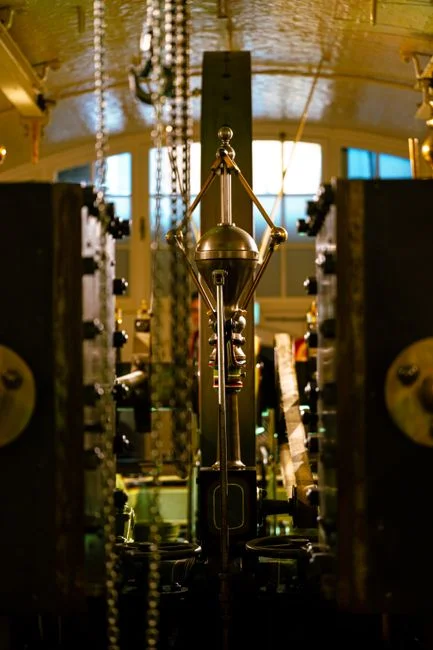
The strongest public reference point for MVR energy performance is the Piller MVR blower retrofit at what the authors describe as the largest single-site bio-ethanol plant in Europe, a Hungarian facility presented at the 2024 STAI Annual Convention (July 30–31, 2024). The retrofit installed two parallel compression trains, each with seven MVR blowers on a rectifier column, lifting roughly 100 t/h of 190-proof ethanol vapor from 340 mbar(a) and 53 °C to 3,000 mbar(a) and 108 °C saturation, with an eighth stage taking a slipstream to 4,000 mbar(a) and 140 °C superheat to feed molecular-sieve dehydration. The reported result is a heating COP of 4.56, with 33 MW of natural-gas-fired steam replaced by 5.9 MW of electricity, a 40+ t/h drop in steam demand from the boiler house, and a 6.75 t/h reduction in CO₂ emissions, effectively halving the plant's energy use on the retrofitted duty.
The thermodynamic reason is the same one that makes any heat pump work. Raising the pressure of a vapor by a few mbar only costs compressor work proportional to that small pressure lift, while regenerating the same vapor from liquid water would cost the full latent heat of vaporization. ENCON states the same principle in vendor language, noting that "mechanical vapor recompression requires significantly less energy than producing steam at the desired conditions from liquid water." The ratio between useful heat delivered and compressor work is the heating COP, and a COP of 4.56 means roughly 4.6 units of heat delivered for every unit of electricity into the blower shaft, with the balance coming from the latent heat already in the vapor.
For a wastewater evaporator, the energy case reduces to a simple operating-cost floor: electricity price multiplied by kWh per ton of water evaporated, with the kWh per ton set by compressor efficiency and temperature lift. ENCON uses that floor to quote a typical operating cost of about $0.01–$0.02 per gallon of distillate, which works out to roughly $3–$6 per cubic meter depending on local electricity tariffs. A buyer reading that number should treat it as a vendor benchmark for off-the-shelf MVR units, not as a guaranteed site-specific number, because specific energy consumption is sensitive to feed boiling-point elevation, temperature lift required, and compressor part-load behavior.
When Mechanical MVR Is — and Isn't — the Right Technology
The cleanest way to place MVR on a process flow diagram is to map it against the three things that determine its fit: feed water content, target concentration, and the relative cost of electricity versus steam or waste heat on the site. The Piller case is useful because it shows the technology working at very high mass flow (about 100 t/h) and a moderate temperature lift (64 K saturated), with a COP of 4.56, and the ENCON product line shows it working at much smaller scales on corrosive industrial wastewater streams where the goal is volume reduction for disposal cost savings.
| Feed / Site Condition | Mechanical MVR Fit | Reason |
|---|---|---|
| High-water-content industrial wastewater, modest TDS, goal is volume reduction or water reuse | Strong fit | Compressor only has to lift a few Kelvin of saturation temperature; COP benefit is largest here. |
| Multi-stage temperature lift (e.g. rectifier overhead to dehydration duty) | Strong fit, proven in Piller 8-stage 53 °C → 140 °C train | Multi-stage blower trains scale the technology to higher temperature lifts. |
| High-TDS brine targeting zero liquid discharge (ZLD) | Partial fit only | Scaling risk and compressor work both climb sharply with concentration; MVR is usually paired with a crystallizer or agitator dryer for the final salt recovery. |
| Site with abundant waste heat and expensive electricity | Poor fit | Operating-cost math inverts; TVR or MEE will typically be cheaper. The Piller authors flag this directly. |
| Site with moderate electricity cost and high gas/steam cost or CO₂ reduction targets | Strong fit | Piller authors note further compression for higher temperature demand is "more likely to be considered in regions with high gas prices or high ambitions on CO₂ reduction." |
The practical rule of thumb, supported by the Piller and ENCON evidence, is to use MVR for the bulk water-removal step, and to add a downstream crystallizer or agitated thin-film dryer when the goal is true ZLD with salt recovery. MVR is not normally specified as the only unit in a ZLD train, because the compressor work and scaling risk both rise non-linearly as the concentration factor increases.
MVR vs Multi-Effect Evaporation (MEE) vs Thermal Vapor Recompression (TVR)
For a buyer shortlisting technology rather than vendor, three parameters do most of the work: the energy driver, the achievable temperature lift, and the tolerance to fouling. The table below summarizes the comparison using the Piller MVR evidence and the ENCON MVR product description as the reference points for MVR, and the standard definitions of MEE and TVR for the other two columns.
| Parameter | Mechanical MVR | Multi-Effect Evaporation (MEE) | Thermal Vapor Recompression (TVR) |
|---|---|---|---|
| Energy driver | Electricity to the vapor compressor (5.9 MW in Piller case) | Fresh steam to first effect, vapor reused downstream | High-pressure motive steam to a steam-jet ejector (thermocompressor) |
| Typical temperature lift | Modest per stage; multi-stage trains deliver large lifts (Piller 8-stage train delivers 53 °C → 140 °C, i.e. 87 K total) | Vapor close to feed boiling point; lift comes from pressure staging across effects | Vapor close to feed boiling point; limited by motive steam pressure |
| Fouling/scaling tolerance | Forced-circulation flash design avoids boiling in heat exchanger; shell-and-tube exchangers typically selected for scaling streams | Depends on effect design; falling-film MEE is common for scaling streams | Similar to MEE; thermocompressor sees vapor, not liquid |
| Operating cost driver | Electricity price per kWh × kWh per ton evaporated | Steam price per ton × tons of steam per ton evaporated | Motive steam price per ton × motive steam ratio |
| Standard off-the-shelf capacity envelope | 500–1,350 gph standard configurations per ENCON; custom-engineered above that | Typically engineered per project | Typically engineered per project |
The single most important takeaway from this comparison is that MEE and TVR move the operating-cost burden to the steam header, while MVR moves it to the electrical bus. A site with cheap electricity, a constrained steam boiler, or a CO₂ reduction target will tend to favor MVR; a site with cheap waste heat in the form of low-pressure steam will tend to favor MEE or TVR. The Piller authors make exactly that point when they note that further compression for higher temperature demand is more attractive in regions with high gas prices or strict CO₂ targets.
2026 Buyer's Checklist: What to Put in the RFQ
The fastest way to get a meaningful quote on a mechanical MVR evaporator is to send suppliers a complete feed and utility characterization, not a generic "we need an evaporator" inquiry. ENCON's published process begins with a complimentary bench-scale boil analysis of the actual waste stream to determine scaling tendency, achievable concentration, and expected distillate quality, and most MVR vendors will expect the same conversation before they will commit to a configuration.
The minimum RFQ package should include: a full feed characterization (TDS, scaling ions, suspended solids, oils, pH, temperature), target distillate quality and target concentrate solids, available electrical capacity in kW and voltage, any available steam pressure, cooling-water temperature and flow, and any heat-integration streams that could be tied into the loop. The Piller retrofit was only viable because the rectifier overhead sat at a much lower temperature than the dehydration duty, so the buyer's site needs a comparable temperature gap to exploit. A useful reference benchmark is the Piller 4.56 COP for a 64 K saturated lift, which gives a sanity check against any vendor's promised specific energy consumption in kWh per ton evaporated.
On the engineering side, lock down materials of construction for the wetted parts (high-alloy rotary lobe versus duplex stainless centrifugal, for example, with the choice driven by chloride and pH on the actual feed), the pressure-vessel code (ENCON cites ASME Section VIII, which is the standard expectation for North American builds), the automation scope (CIP, remote monitoring, alarm philosophy), and the documented specific energy consumption in kWh per ton of water evaporated at the design point. The economics of an MVR are unusually sensitive to operating hours per year because the compressor is the dominant electrical load, so request a reference list of installations on similar waste streams and ask about mean time between cleanings.
For a complete picture of how MVR operating cost feeds into a broader treatment train economics, the wastewater treatment cost per gallon breakdown walks through how pretreatment and sludge handling change the headline per-gallon number, and the dissolved air flotation (DAF) pretreatment skid is the upstream step most often paired with an MVR to keep the circulation loop clean.
Frequently Asked Questions
How is a mechanical MVR evaporator different from a multi-effect evaporator (MEE)?
An MEE uses fresh steam to drive the first effect and reuses the vapor from each effect as the heating medium for the next lower-pressure effect, so its operating cost is set by steam price. A mechanical MVR uses a vapor compressor to lift the pressure and saturation temperature of the vapor leaving the boiling liquid, so its operating cost is set by electricity price and compressor efficiency. The Piller MVR case study reports a heating COP of 4.56, with 5.9 MW of electricity replacing 33 MW of natural-gas-fired steam on a bio-ethanol distillation and dehydration train.
What does it cost to run a mechanical MVR evaporator per gallon of distillate?
ENCON, a commercial MVR vendor, quotes a typical operating cost of about $0.01–$0.02 per gallon of distillate for its standard 500–1,350 gph MVR configurations. The actual site-specific cost is the electricity tariff in $/kWh multiplied by the specific energy consumption in kWh per ton of water evaporated, which is set by compressor efficiency and the temperature lift required, so a buyer should request kWh per ton at the design point from each vendor rather than relying on a generic per-gallon number.
When should an MVR not be specified for wastewater treatment?
MVR is a poor standalone choice on high-TDS brines targeting zero liquid discharge, because scaling risk and compressor work both rise sharply with concentration, and it is a poor choice on sites where electricity is expensive and waste heat in the form of low-pressure steam is abundant, because the operating-cost math favors MEE or TVR. The Piller authors make the second point directly, noting that further compression is "more likely to be considered in regions with high gas prices or high ambitions on CO₂ reduction." In typical ZLD architectures, MVR handles the bulk water removal and a crystallizer or agitated dryer handles the final salt recovery.
What should I confirm with a vendor before issuing a purchase order for an MVR?
Ask for documented specific energy consumption in kWh per ton of water evaporated at the design point (the Piller case gives a 4.56 COP as a reference benchmark), a wetted-parts materials list keyed to the actual feed analysis, the pressure-vessel code (ENCON cites ASME Section VIII), the scope of automation including CIP and remote monitoring, standard lead time on a unit sized to the requested gph, and reference installations on similar waste streams. A bench-scale boil analysis of the actual stream, which ENCON offers as a complimentary service, is the most reliable way to confirm scaling tendency and achievable concentration before the order is placed.
Related Equipment
- sludge dewatering filter press — specifications, capacity range, and technical data