

What Domestic Sewage Treatment in Gurgaon Actually Means
Domestic sewage treatment in Gurgaon involves installing a Sewage Treatment Plant (STP) that receives wastewater from bathrooms, kitchens, toilets and wash areas in residential societies, commercial buildings, hotels, hospitals and institutional campuses. These plants treat wastewater through screening, equalisation, biological treatment (commonly MBBR, SBR or MBR), solids separation and disinfection so the water can be reused for toilet flushing, gardening, landscaping and other approved non-potable uses. STP capacity is expressed in KLD, where 1 KLD equals 1,000 litres per day, and the right capacity depends on the site's hydraulic load and organic load rather than a generic average. Real Gurgaon plants at Dhanwanpur have demonstrated 87–90% removal of BOD, COD, TSS and VSS against CPCB expectations (per the accscience.com comparative study of Gurgaon STPs).
Gurgaon's residential, commercial, hotel, hospital, educational and retail growth generates large volumes of wastewater, while groundwater depletion and underuse of municipal sewage infrastructure make on-site recycling a practical part of daily water management (per the Zenodo commercial STP manufacturer guidance for Gurgaon, 2025). The basic objective is straightforward: take wastewater, treat it properly, and produce treated water suitable for the intended reuse or disposal route. The exact treatment stages depend on the incoming sewage quality and the required quality of the treated water, which is why a good STP manufacturer does not use the same design for every project.
How a Typical Domestic STP Sequences Its Treatment Stages
Wastewater first passes through screening, where screens remove larger materials such as plastic pieces, cloth, paper and other debris to protect pumps and downstream treatment equipment (per the Zenodo commercial STP manufacturer guidance, 2025). The flow then enters an equalisation tank, which balances variations in flow and pollutant concentration so the biological stage receives a more consistent wastewater stream — a critical step because residential, commercial and institutional flows behave very differently across a 24-hour cycle.
Biological treatment is the heart of the plant. Microorganisms consume biodegradable organic matter present in sewage, with common technology options including MBBR, SBR and MBR systems. After biological treatment, water passes through a settling process or membrane separation stage to separate treated water from biological solids. The final treatment stage depends on required reuse quality and can include filtration and disinfection, with a UV sterilizer for the disinfection stage commonly selected by application.
After treatment, water is stored in a treated-water tank and supplied for approved non-potable uses such as flushing or landscaping, with the final use always matched to actual water quality and applicable requirements. Underground or above-ground installation is a project-specific decision driven by site constraints such as available land and landscaping needs; an underground package sewage treatment plant is a common option where footprint is limited. A typical Gurgaon site sequence therefore reads: screening → equalisation → biological treatment → solids separation → filtration/disinfection → treated-water storage → reuse.
Sizing the Plant: From Wastewater Generation to a KLD Number
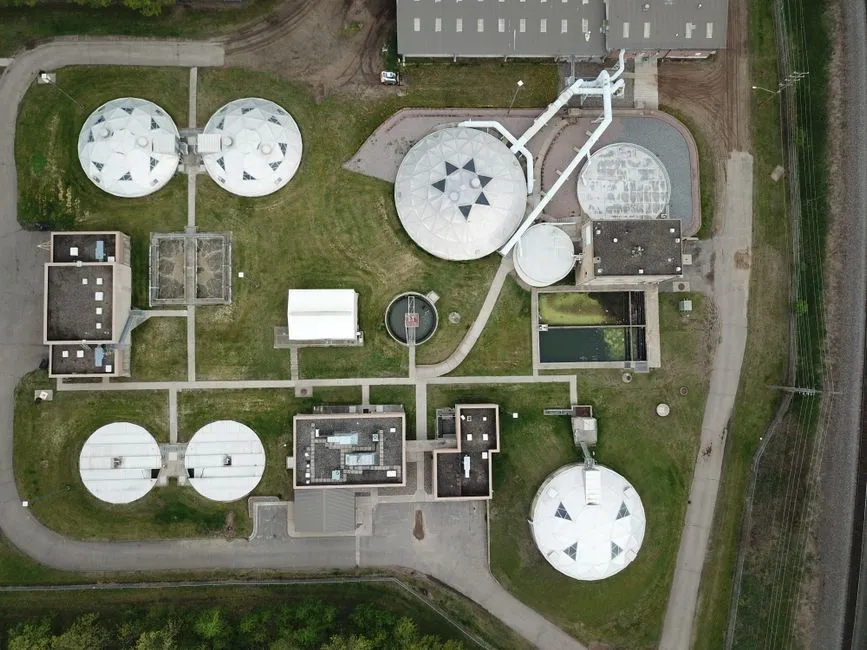
Manufacturers express STP capacity in KLD, which means kilolitres per day; 1 KLD represents 1,000 litres of wastewater per day (per the Zenodo commercial STP manufacturer guidance, 2025). The required capacity depends on the number of users, the type of property, fixture count, occupancy profile, and intended reuse volume. Designing only around an estimated average flow can create operational problems because an office building may generate more wastewater during working hours and much less at night, while a residential complex has its own distinct flow pattern.
The distinction between hydraulic load (flow volume) and organic load (pollutant concentration) is critical: both must be studied before finalising the plant. A hotel, for example, carries a different organic load because of kitchens and laundry; a hospital adds pathological and chemical inputs; a housing society is dominated by bathroom and kitchen flows. As a worked example of how a campus-scale domestic sewage plant is sized for reuse, a 90 KLD SBR-based STP at Great Lakes Institute of Management in Gurgaon was designed to treat wastewater generated across the campus and support reuse for applications such as flushing and landscaping (per the Zenodo manufacturer case study, 2025).
The common sizing mistakes are undersizing for peak loads and oversizing on the basis of generic averages — both raise lifetime cost. Rather than asking a vendor for a single KLD number, a buyer should ask the manufacturer to show the assumed per-capita flow, the peak factor, the influent BOD and the reuse demand used to arrive at the figure.
MBBR, SBR or MBR: Choosing the Right Biological Process
MBBR (Moving Bed Biofilm Reactor) uses specially designed media that provide a surface for microorganisms to grow, and is commonly considered for residential and commercial projects where a relatively compact biological treatment system is required (per the Zenodo commercial STP manufacturer guidance, 2025). SBR (Sequencing Batch Reactor) performs different treatment stages within a controlled sequence, can handle variations in wastewater flow, and is useful where automation and controlled treatment cycles are important. MBR (Membrane Bioreactor) combines biological treatment with membrane separation, can produce high-quality treated water, and may be useful where water reuse is a major objective or available space is limited — a typical MBR membrane bioreactor system is sized for higher effluent quality with a smaller aeration tank footprint.
Selection criteria, in order, are: wastewater characteristics, land availability, required treated-water quality, energy consumption and operating requirements. The Dhanwanpur comparative study in Gurgaon provides concrete proof that biological treatment works in local conditions: the ASP plant achieved 90.07% BOD, 88.8% TSS, 84.15% COD and 90.5% VSS removal, while the UASB plant achieved 90.2% TSS, 87.4% BOD, 86.96% COD and 86.4% VSS removal (per the accscience.com comparative study, citing CPCB document CUPS/68/2007). Both technologies were adequate against CPCB expectations for TSS, BOD, COD and VSS. The caveat is that the Dhanwanpur study compares UASB and ASP, not MBBR or MBR; selection between MBBR, SBR and MBR for a new Gurgaon project should be based on the site's actual wastewater characteristics, available space and intended reuse requirements. For a broader parameter framework, the MBR wastewater treatment system engineering specifications and cost guide covers spec ranges in another jurisdiction.
| Parameter | MBBR | SBR | MBR |
|---|---|---|---|
| Core mechanism | Biofilm on moving carrier media in a continuous-flow tank | Time-based batch cycle in a single tank | Activated sludge with membrane solids separation |
| Typical footprint | Compact for the capacity | Moderate; multiple tanks for larger flows | Smallest biological-tank footprint of the three |
| Flow variation handling | Moderate | Good — sequence is programmable | Moderate; sensitive to shock loads |
| Effluent clarity | Secondary-treated; needs tertiary filtration for reuse | Secondary-treated; needs tertiary filtration for reuse | High — suitable for direct reuse with disinfection |
| Automation / controls | Lower than SBR or MBR | High — cycle timing is critical | High — membrane integrity and backwash must be managed |
| Operating sensitivity | Robust to hydraulic variation | Sensitive to cycle and decant control | Sensitive to fouling and MLSS |
| Best-fit Gurgaon use case (qualitative) | Residential society, commercial building, hotel | Campus, institution, projects with strong flow swings | Hospital, hotel, or any site where reuse water quality is the priority |
Matching Treated-Water Quality to Reuse Applications
Treated water from a domestic STP can be used for toilet flushing, gardening, landscaping and other approved non-potable uses, reducing demand for freshwater (per the Zenodo commercial STP manufacturer guidance, 2025). A residential society typically needs treated water mainly for flushing and gardening; a commercial building has similar requirements but different flow patterns; an institution may experience significant variations between daytime and nighttime wastewater generation. Domestic sewage characteristics include easily degradable organic compounds such as fibres, proteins and sugars, plus other contaminants from soaps, shampoos, detergents and laundry products (per the Sustainability journal study of domestic wastewater characteristics, 2023).
Treated-water quality must always match the actual end use, and reuse should follow the required quality standards and site-specific permissions. Discharge to inland surface water in India must respect IS 4764 tolerance limits for sewage effluent, and sampling and testing follow IS 4733 (per the accscience.com study's reference list citing Bureau of Indian Standards). A reuse plan should be drawn up before technology selection: if the dominant end use is toilet flushing, secondary-treated water with disinfection is generally adequate; if the use extends to spray irrigation or landscape features with public exposure, the design bar rises and tertiary filtration or membrane separation should be specified from the outset.
Automation, Energy and Sludge: Operating-Cost Levers
Modern STPs can include automation for better process control, monitoring parameters such as flow, dissolved oxygen and treated-water quality; automation helps identify abnormal conditions sooner (per the Zenodo commercial STP manufacturer guidance, 2025). For larger facilities, automation supports more systematic plant management and tighter compliance reporting. An automatic chemical dosing system is one of the items that typically shows up on a quotation for this layer of control.
Energy matters because pumps, blowers and other mechanical equipment contribute significantly to operating costs; design should consider both treatment performance and energy demand. Buyers should evaluate lifecycle cost rather than focusing only on the initial installation price, because a slightly cheaper plant can become expensive if it consumes excessive electricity or requires frequent repairs. Sludge must be planned from day one: depending on plant design, sludge may undergo thickening, dewatering or other suitable treatment before final handling, and IS 8403 covers construction of clarification digesters for sewage treatment (per the accscience.com study reference list). A plate and frame filter press for sludge dewatering is commonly specified for the solids-handling line; ignoring sludge handling in the original scope is one of the most common reasons a plant underperforms in years two to five.
What to Ask a Gurgaon STP Manufacturer Before You Sign
Ask how the proposed KLD capacity was calculated and whether it accounts for peak flows and organic load, not just an average (per the Zenodo commercial STP manufacturer guidance, 2025). Ask why MBBR, SBR, MBR or another process is being proposed; the answer should relate to process design and intended reuse. Clarify whether the quotation includes manufacturing, installation, commissioning, electrical work, automation and operator training. Ask about spare parts, servicing and Annual Maintenance Contract options, which are an important part of long-term STP operation. Ask for evidence of similar Gurgaon installations, such as a 90 KLD SBR-based STP at a management campus designed for flushing and landscaping reuse, and request reference performance data against CPCB expectations (per the Zenodo manufacturer case study, 2025, and the accscience.com CPCB reference). A structured enquiry should also state the property type, occupancy, daily flow estimate, peak factor, influent BOD/COD if known, available footprint, and target reuse end uses. For a parallel framework on capacity planning at municipal scale, the municipal sewage treatment plant capacity and compliance engineering guide walks through a similar checklist from the buyer's side.
Frequently Asked Questions
What does KLD mean, and how do I estimate the right size for a residential society in Gurgaon?
KLD stands for kilolitres per day, where 1 KLD equals 1,000 litres of wastewater per day. For a residential society, a defensible estimate starts with the number of residents, an assumed per-capita sewage flow, a peak factor for morning and evening overlap, and any non-domestic load from shops, clubhouses or staff. A buyer should request that the manufacturer show the assumed per-capita flow, the peak factor, and the influent BOD used to arrive at the proposed KLD figure. A 90 KLD SBR-based STP at a Gurgaon management campus (per the Zenodo manufacturer case study, 2025) is a useful reference scale for a mid-sized institutional or large society, but it should not be copied without your own flow audit.
How do I choose between MBBR, SBR and MBR for a domestic STP in Gurgaon?
Selection should follow the site's actual wastewater characteristics
Frequently Asked Questions
What KLD capacity of STP do I need for a residential society in Gurgaon?
The capacity is calculated based on the occupancy rate and per capita water consumption. In Gurgaon, the standard design criteria follow the National Building Code (NBC), which assumes a water consumption of 135 liters per capita per day (LPCD). Typically, 80% of this water enters the sewage system as effluent.
For a residential society, estimate 100-110 liters of sewage generation per person per day. Multiply this by the total number of residents and add a 10-15% safety buffer for guest occupancy. For example, a society of 1,000 residents would require an STP capacity of approximately 100-110 KLD.
MBBR vs SBR vs MBR — which is best for domestic sewage treatment in Gurgaon?
Moving Bed Biofilm Reactor (MBBR) is the most common for Gurgaon societies due to its ease of operation and resilience to flow fluctuations. It is cost-effective and requires moderate space. Sequencing Batch Reactor (SBR) is preferred for larger societies where consistent effluent quality is required, as it performs biological treatment and clarification in a single tank, reducing the footprint.
Membrane Bioreactor (MBR) technology is the gold standard for high-density areas where space is severely constrained. It provides superior water quality suitable for high-end reuse, but it comes with higher capital expenditure and operational costs due to membrane cleaning and replacement requirements.
Can treated STP water really be reused for toilet flushing and gardening?
Yes, provided the STP is operated and maintained correctly to meet the treated water quality parameters. Treated effluent from an MBR or well-maintained MBBR system can reach BOD levels of less than 10 mg/L and Total Suspended Solids (TSS) of less than 5 mg/L, making it safe for non-potable applications.
To use this water for flushing and gardening, the distribution system must be dual-piped to prevent cross-contamination with the fresh water supply. Regular testing for fecal coliforms is mandatory to ensure the water is safe for human exposure in landscaping and flushing circuits.
What should be included in a domestic STP quotation and AMC from a Gurgaon manufacturer?
A comprehensive quotation must specify the technology type, MOC (Material of Construction) such as MS-FRP or RCC, and the specific capacity in KLD. It should include a detailed bill of materials for blowers, pumps, diffusers, and the control panel (PLC/SCADA), along with civil works requirements and commissioning timelines.
An Annual Maintenance Contract (AMC) should explicitly cover the frequency of site visits, supply of essential chemicals (coagulants, disinfectants), periodic water quality testing at NABL-accredited labs, and a guaranteed response time for mechanical breakdowns. It should also specify whether the AMC is "comprehensive" (including spare parts) or "non-comprehensive" (labor only).
Which Indian standards and CPCB norms apply to a domestic sewage treatment plant in Gurgaon?
STPs in Gurgaon must strictly adhere to the standards set by the Haryana State Pollution Control Board (HSPCB) and the Central Pollution Control Board (CPCB). Current discharge norms require the treated water to meet a BOD of ≤ 10 mg/L, TSS of ≤ 20 mg/L, and pH levels between 6.5 and 9.0.
Additionally, designers must comply with IS 10500:2012 for water quality parameters and IS 3025 for testing methodologies. Systems must also integrate with the local municipal guidelines for treated water discharge and ensure that noise levels from blowers and pumps comply with the Environment (Protection) Rules, 1986.