Why Quezon City Rewrites the Standard Blowdown Equation
Quezon City's tropical climate breaks the standard blowdown balance that most engineering references assume. PAGASA records mean annual relative humidity between 78% and 85%, which suppresses evaporative cooling efficiency and forces operators to push cycles of concentration (CoC) higher to reject the same heat load, concentrating blowdown faster than dry-climate benchmarks (HydropureWater, 2026). Source-water quality is the second variable. Manila Bay salinity intrusion during the dry season (February–May) elevates TDS in surface intakes to 300–600 mg/L, and Laguna Lake sources swing similarly through the southwest monsoon (habagat).
When that makeup water is concentrated 4–6 times, blowdown routinely lands at 1,200–6,000 mg/L TDS, which puts a Quezon City site on the wrong side of DENR DAO 2021-19 industrial effluent limits from day one of operation. The third variable is tariff. Maynilad's commercial and industrial rates have moved with Philippine inflation over the last decade, paralleling the 43% rise in commercial potable rates seen across major U.S. data center markets (Genesis Water Technologies, 2025-12). That cost pressure, combined with DENR DAO 2021-19 ceilings on TDS, chloride, and sulfate in industrial discharge, plus LLDA clearance exposure for any facility draining toward the Marikina–Tullahan–Pasig–Laguna Lake system, makes freshwater-as-baseline the wrong assumption for any QC greenfield or retrofit.
The Four Wastewater Streams a QC Data Center Actually Produces
A tropical QC data center produces four distinct wastewater streams that require a comprehensive treatment train. Cooling-tower blowdown is the largest by volume: 25–30% of makeup water at 4 cycles of concentration, with TDS of 1,200–6,000 mg/L, suspended solids 10–50 mg/L, plus accumulated biocides, scale inhibitors, and corrosion products (Genesis Water Technologies, 2025-12; HydropureWater, 2026). RO reject from humidification and process-water polishing arrives at 20–30% of feed flow with elevated TDS concentrate that re-enters the waste train and must be co-treated or separately discharged. Diesel-generator cooling water, floor wash, and humidifier bleed are intermittent and often oily; they cannot share the membrane train with blowdown without oil-removal pretreatment, so the RFQ needs an oil/water separator on this branch. Habagat and typhoon-season stormwater contacting outdoor equipment pads is seasonal but high-volume with suspended-solids spikes during typhoon events; it needs diversion or equalization to keep peak flow from overwhelming the treatment train. Administrative-office sanitary sewage is a fifth, lower-volume stream that typically routes to a packaged STP rather than the industrial blowdown train. Treating blowdown in isolation and ignoring the other three is the most common scoping error on Philippine sites (HydropureWater, 2026).
| Stream | Typical flow (% of makeup) | TDS (mg/L) | Suspended solids (mg/L) | Key contaminants |
|---|---|---|---|---|
| Cooling-tower blowdown | 25–30% at 4 CoC | 1,200–6,000 | 10–50 | Biocides, scale inhibitors, corrosion products |
| RO reject (humidification, process) | 20–30% of RO feed | Elevated concentrate | Low | Dissolved salts, silica |
| DG cooling, floor wash, humidifier bleed | Intermittent, low volume | Variable | Variable (often oily) | Hydrocarbons, metals |
| Habagat/typhoon stormwater | Seasonal peak | Low–moderate | High (event-driven) | Sediment, debris |
Reuse Targets and DENR DAO 2021-19 Compliance Bands
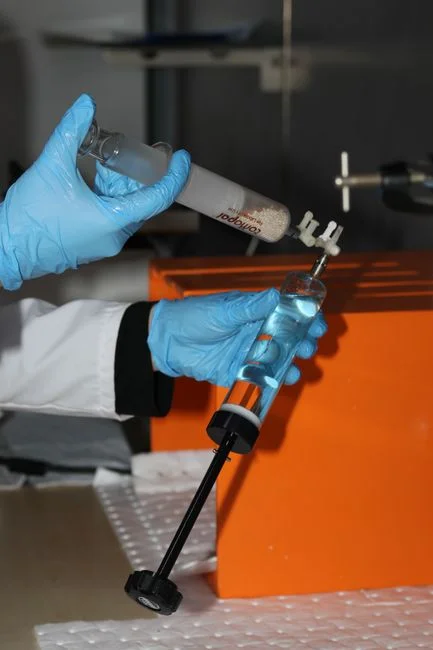
Reuse targets are tighter than discharge targets, and the table below maps every stream to a number an engineer can put in an RFQ. Cooling-tower makeup should land at TDS 500–1,500 mg/L, suspended solids 10–25 mg/L, pH 6.5–8.5, and silica below 150 mg/L to keep scaling risk manageable at 4–6 CoC (Genesis Water Technologies, 2025-12; HydropureWater, 2026). Pushing from 4 to 6+ CoC cuts blowdown volume but raises scaling risk and pushes blowdown TDS toward the 6,000 mg/L upper bound, so the antiscalant program must be tuned for silica and calcium sulfate. The DENR DAO 2021-19 industrial effluent ceiling is typically 1,500 mg/L TDS; chloride, sulfate, and biocide-residual limits apply per receiving-water classification and LGU ordinance (HydropureWater, 2026). MVC distillate target is below 10 mg/L TDS, suitable for direct cooling-tower makeup or blending; ZLD solid residue is handled as solid waste for disposal. Biocide and corrosion-inhibitor residuals accumulate proportionally with CoC, which is why downstream membrane pretreatment cannot rely on the same chemical program used in the open loop.
| Parameter | Cooling-tower makeup reuse target | DENR DAO 2021-19 effluent ceiling | MVC distillate |
|---|---|---|---|
| TDS (mg/L) | 500–1,500 | 1,500 (typical industrial cap) | <10 |
| Suspended solids (mg/L) | 10–25 | Per receiving-water class | Negligible |
| pH | 6.5–8.5 | 6.0–9.0 typical | Neutral |
| Silica (mg/L) | <150 | Per LGU ordinance | <1 |
| Chloride, sulfate, biocide residuals | Program-dependent | Per receiving-water classification | Negligible |
Four Realistic Treatment Trains for a QC Data Center
Four trains cover the range from minimum compliance to full ZLD based on site water stress, permit stringency, and CapEx appetite. Option 1 — Side-stream filtration only uses a 10–25 µm self-cleaning filter on 1–5% of circulation flow, with CapEx of $50,000–200,000 for typical data center flow; it enables higher CoC but does not by itself solve a DENR DAO 2021-19 TDS exceedance (Genesis Water Technologies, 2025-12; HydropureWater, 2026). Option 2 — UF + BWRO is the default Manila/QC train: a HydropureWater UF pretreatment skid ahead of a HydropureWater industrial RO system, recovering 50–85% of blowdown at 10–50 mg/L TDS permeate, with OpEx of $1.50–3.00 per 1,000 gal; this is the train that brings most QC sites inside DENR DAO 2021-19 discharge limits. Option 3 — UF + BWRO + NF polish targets sites where hardness rather than total TDS is the binding constraint; NF recovery sits at 70–85% at 75–150 psi with permeate TDS 30–50% of feed, and the NF permeate blends with RO permeate to raise overall reuse volume. Option 4 — UF + BWRO + MVC brine concentrator is the ZLD path: 95–98% recovery, distillate below 10 mg/L TDS, energy 15–25 kWh per 1,000 gal, CapEx $1–3 million for 10,000–30,000 GPD; justified when LLDA clearance is restricted or when a hyperscale tenant contractually requires zero liquid discharge (Genesis Water Technologies, 2025-12; HydropureWater, 2026).
| Option | Core equipment | Recovery | Permeate/distillate TDS | CapEx band | OpEx ($/1,000 gal) |
|---|---|---|---|---|---|
| 1 — Side-stream filtration | 10–25 µm self-cleaning filter, 1–5% circ. flow | No volume reduction | N/A (filtration only) | $50,000–200,000 | Minimal |
| 2 — UF + BWRO | UF pretreatment skid + industrial RO | 50–85% | 10–50 mg/L | $250,000–500,000 (50,000 GPD) | $1.50–3.00 |
| 3 — UF + BWRO + NF polish | NF at 75–150 psi blended with RO permeate | 70–85% (NF); overall higher | 30–50% of feed (NF); 10–50 mg/L (RO) | RO + NF adder | $1.50–3.00 + NF incremental |
| 4 — UF + BWRO + MVC | MVC brine concentrator, 10,000–30,000 GPD | 95–98% | <10 mg/L (distillate) | $1–3M (MVC only); $3–8M full ZLD | $5–15 (full ZLD) |
Tropical Fouling Controls That Keep the Membrane Train on Schedule
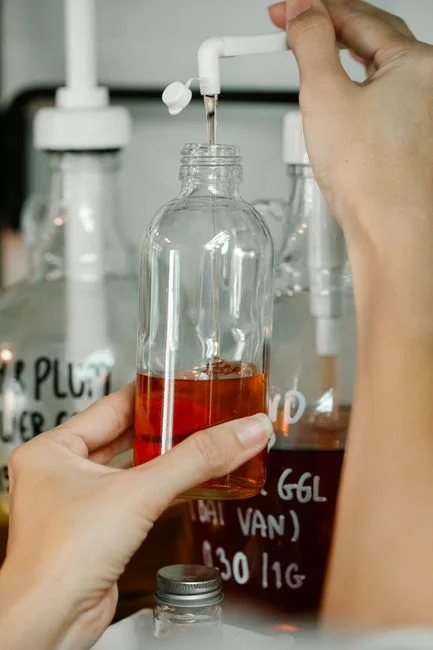
Membrane fouling is the dominant failure mode on Philippine sites due to warm, humid, biologically active feed water. Self-cleaning side-stream filtration at 10–25 µm holds blowdown suspended solids below 15 mg/L before the HydropureWater UF pretreatment skid, and pairing it with a multi-media pre-filter ahead of the UF stage is the lowest-cost insurance for consistent membrane feed quality (Genesis Water Technologies, 2025-12; HydropureWater, 2026). Bio-organic flocculant dosing aggregates colloidal solids and biofilm fragments that bypass conventional filtration, a real problem in 28–32°C QC loop water. Conventional BWRO caps at 75–80% recovery before scaling becomes unmanageable, so an automatic antiscalant and biocide dosing skid sized for silica- and calcium-sulfate-rich Manila/QC source water is what pushes recovery toward 85% (Genesis Water Technologies, 2025-12; IDE Tech, 2025-12). Finally, a chemical-free UV sterilizer or chlorine dioxide on the warm loop controls planktonic bacteria and biofilm precursors without adding residuals that would accumulate at high CoC. Skipping any one of these four pretreatment steps is what drives membrane replacement intervals from 3–5 years down to 12–18 months in tropical service (HydropureWater, 2026).
CapEx, OpEx, and Payback for a Quezon City Hyperscale Build
A defensible CapEx/OpEx case for a Quezon City hyperscale build sits in a narrow band. An RO train sized at 50,000 GPD runs $250,000–500,000 CapEx and $1.50–3.00 per 1,000 gal OpEx; a ZLD overlay adds $3–8 million and $5–15 per 1,000 gal OpEx (Genesis Water Technologies, 2025-12; HydropureWater, 2026). Avoided Maynilad commercial purchases plus avoided discharge fees—typically $5–15 per 1,000 gal in water-stressed basins—recover an RO-only CapEx in roughly 3–5 years for a QC-scale facility. A 100 MW hyperscale tenant drawing up to 2 million liters per day reaches payback faster through sheer volume and converts the 60–85% blowdown recovery directly into a Scope 3 water-withdrawal reduction reportable under CDP and IFRS S2 (IDE Tech, 2025-12; HydropureWater, 2026). Binding compliance instruments on a QC site: DENR DAO 2021-19 for industrial effluent quality, LLDA clearance for any drainage toward the Marikina–Tullahan–Pasig–Laguna Lake system, and PEOS/EIS requirements for hyperscale builds. For a broader Philippines cost benchmark, the HydropureWater 2026 Metro Manila blowdown guide and the 2026 ZLD adoption trends analysis provide data for pressure-testing before committing to MVC. A closed-loop cooling water treatment guide covers the discharge-compliance side of the same decision tree.
| Train | CapEx (USD) | OpEx ($/1,000 gal) | Indicative payback vs. Maynilad + avoided fees |
|---|---|---|---|
| Side-stream filtration only (Option 1) | $50,000–200,000 | Minimal | Short, but no TDS reduction |
| UF + BWRO (Option 2, 50,000 GPD) | $250,000–500,000 | $1.50–3.00 | ~3–5 years (QC scale) |
| UF + BWRO + NF polish (Option 3) | RO + NF adder | $1.50–3.00 + NF incremental | Site-dependent |
| UF + BWRO + MVC ZLD overlay (Option 4) | $3–8M total ZLD | $5–15 | Longer; justified by ZLD mandate or LLDA restriction |
Frequently Asked Questions
What is the typical CapEx range for cooling blowdown treatment at a Quezon City data center?
An RO-only train sized at 50,000 GPD runs $250,000–500,000 CapEx, while a full ZLD overlay (UF + BWRO + MVC + crystallizer) adds $3–8 million on top (Genesis Water Technologies, 2025-12; HydropureWater, 2026). The largest cost driver is the recovery target, not the feed flow: a QC site that only needs to meet DENR DAO 2021-19 at 50–85% recovery is in the RO-only band, whereas LLDA-restricted or tenant-mandated ZLD sites enter the multi-million-peso range. Buyers should request a capacity-normalized proposal that itemizes the UF pretreatment skid, the industrial RO system, and any MVC or crystallizer separately so the MVC premium is visible before commitment.
How do I select a treatment supplier for a Quezon City data center?
Ask each bidder for three auditable references on tropical, high-humidity sites where the proposed RO train has run at 75%+ recovery for at least 12 months without membrane replacement, plus documented compliance with DENR DAO 2021-19 industrial effluent limits (HydropureWater, 2026). Confirm in writing that the proposed antiscalant program is sized for silica- and calcium-sulfate-rich Manila/QC source water, because generic U.S. programs cap at 75–80% recovery and will not survive QC loop chemistry (IDE Tech, 2025-12). Finally, require the supplier to name the LLDA clearance pathway they will support if the site drains toward the Marikina–Tullahan–Pasig–Laguna Lake system, since that clearance is site-specific and not transferable from a Metro Manila reference plant.
What DENR DAO 2021-19 limits apply to QC data center discharge?
The binding ceiling is typically 1,500 mg/L TDS for industrial effluent, with parallel chloride, sulfate, and biocide-residual limits that vary by receiving-water classification and LGU ordinance (HydropureWater, 2026). For Class C receiving waters the TDS cap can be tighter at around 1,000 mg/L depending on the local drainage basin. Because Maynilad or deep-well makeup already concentrates 4–6× into blowdown at 1,200–6,000 mg/L TDS, an untreated QC site is over the cap from day one, which is why the default 2026 train is UF + BWRO with 50–85% recovery and 10–50 mg/L permeate (HydropureWater, 2026).
Which antiscalant program prevents the 12–18 month membrane failure seen on Philippine sites?
An automatic antiscalant and biocide dosing skid tuned for silica and calcium sulfate, paired with bio-organic flocculant dosing to aggregate colloidal solids that bypass conventional filtration, is what pushes BWRO recovery from the conventional 75–80% ceiling toward 85% in 28–32°C QC loop water (Genesis Water Technologies, 2025-12; IDE Tech, 2025-12). A chemical-free UV sterilizer or chlorine dioxide on the warm loop controls planktonic bacteria and biofilm precursors without leaving residuals that accumulate at high CoC. Generic antiscalant programs designed for low-silica U.S. source water will foul within 12–18 months on a QC site, which is why the dosing skid must be specified as silica- and calcium-sulfate-rated rather than ordered as a default option (HydropureWater, 2026).