Why Boerne Pharma Plants Are Asking the DAF-vs-Clarifier Question in 2026
A Boerne pharmaceutical preparations plant in 2026 is rarely deciding between two brands of the same machine. The streams coming off formulation, API finishing, capsule coating and ointment lines are a mix of suspended excipient fines, FOG from soft-gel and suppository lines, cleaning residues, and dissolved active pharmaceutical ingredients that pass through any primary clarifier untouched. Vendor catalogues consistently position DAF as a pretreatment step for industrial wastewater, and the ClearFox industry table explicitly flags pharmaceutical effluent as a stream where DAF is "limited by dissolved dyes and soluble organics" and is "better used as pretreatment than as a full COD solution" (S4, clearfox.com).
The real dilemma is whether to use DAF or a clarifier as the primary unit in front of a downstream biological, MBR or membrane polish that must carry the soluble API and COD load. The 2026 decision is being driven by tighter pretreatment scrutiny on trace APIs, water-reuse targets tied to Boerne's San Antonio Water System discharge path, and OPEX pressure on polymer and sludge handling. Plants that over-spec a DAF to solve a dissolved-API problem end up over-dosing polymer, generating wet sludge, and still missing effluent targets. A DAF oil-water separator design criteria primer frames the upstream oil and TSS problem, but the soluble-API reality must be priced into the train.
How Each Unit Operation Actually Works
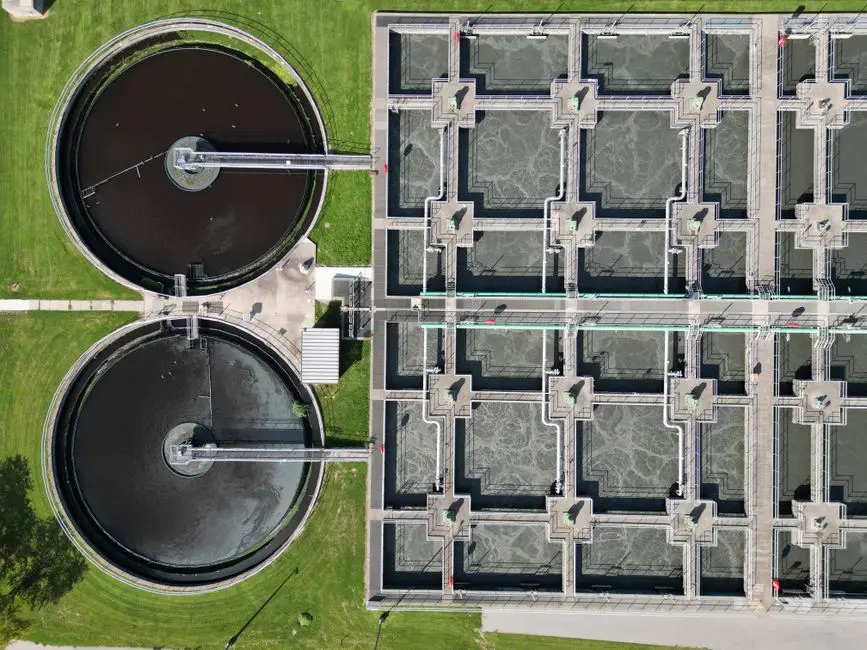
DAF is a bubble-driven separator that uses a recirculated side stream of clarified water pressurized with air to lift contaminants. The depressurized air forms 30–50 µm micro-bubbles that attach to flocculated particles, oils and greases, lifting them to the surface where a skimmer pulls the float layer into a collection trough, while heavier sludge is augered from the bottom (S2, S3, clearwaterind.com). The tank requires a chemically conditioned stream—coagulant and pH adjustment first, then polymer flocculant—mixed in serpentine floc tubes or staged impeller mix tanks (S2, S3). Bubble attachment makes DAF effective at floating FOG, light sloughing biomass, and low-density excipient fines with a specific gravity close to water. A lamella clarifier uses gravity to settle solids: coagulated water flows upward through a pack of inclined plates, solids settle onto the plate surfaces and slide into a hopper, and clarified water exits from the top. There is no air phase, no bubble attachment, and no float layer. Inclined plates multiply the effective settling area in a small footprint. DAF handles FOG, light suspended fines and floc-bound excipients that lamella plates cannot trap; lamella handles dense, settleable inorganics like silica, hard-water scale, and fermentation cell debris. Both technologies require upstream chemical conditioning, but the chemistry is tuned to different physical mechanisms.
DAF vs Lamella Clarifier: The 2026 Comparison Matrix for Pharma Effluent
Score your stream against the following matrix before evaluating vendor pitches. The columns represent pollutant fractions common in a Boerne pharma preparations plant, and the rows compare the two competing primary steps.
| Pollutant fraction | DAF (30–50 µm bubbles, S2/S3/S4) | Lamella clarifier (inclined plates, 20–40 m/h) | Why it matters for pharma |
|---|---|---|---|
| TSS (suspended fines, excipients) | Strong — bubbles lift flocculated particles once coagulation/flocculation is tuned | Moderate — settles only the denser fraction; light fines carry over | Coating, capsule and tablet streams shed fines that must be removed before the bioreactor |
| FOG (oils, greases, ointment base) | Strong — primary design target; float layer is skimmed | Weak — emulsified oils pass between plates and overload downstream biology | Ointment and soft-gel lines are the dominant FOG source |
| Colloids and floc-bound organics | Strong — same bubble mechanism that removes TSS also captures colloids once flocculated | Weak — colloids are the classic clarifier bypass fraction | Polymer dose and pH stability are the gatekeepers |
| Settleable inorganics (silica, scale, cell debris) | Moderate — heavier fraction drops to the bottom auger; not the design target | Strong — plate surfaces are exactly what settleable inorganics need | API synthesis and fermentation prep lines |
| Dissolved API | Negligible removal | Negligible removal | Active ingredients stay in solution through both unit ops; this drives the downstream train |
| Soluble COD / BOD | Negligible direct removal — ClearFox notes pharma is "limited by dissolved dyes and soluble organics" (S4) | Negligible direct removal | Must be carried by biology or membrane polish, not by the primary step |
| Footprint per m³/h | Moderate; round-tank polypropylene designs are space-efficient (S4) | Small — inclined plates give high surface loading in a compact footprint | Boerne plant layouts are often retrofit, footprint is a real constraint |
| OPEX drivers | Polymer dose, saturator pump energy, sludge dewatering; chemical conditioning is mandatory | Lower polymer demand, smaller chemical skid; OPEX dominated by sludge withdrawal and plate cleaning | Polymer is the largest variable cost on the DAF line |
| Downstream polishability | Hand-off to biology or MBR is standard; protects membranes from oil fouling | Hand-off to biology is standard; does not protect membranes from oil fouling | If UF/RO is in the reuse train, oil must already be gone |
The matrix collapses to a single engineering rule for a 2026 Boerne pharma preparations plant: a stand-alone DAF or a stand-alone lamella will fail the soluble-API bar. The realistic train is a primary DAF (or lamella where the stream is mostly settleable inorganics) feeding an MBR bioreactor for the polish step, with UF polishing on the MBR permeate only if on-site reuse is in scope. Vendor evidence reinforces that hybrid framing: the ClearFox industry table recommends DAF as pretreatment for the soluble COD that biology or membranes must carry (S4, clearfox.com), and the Clearwater catalogue markets the COMPACT DAF as "a pre-assembled turnkey system with chemical conditioning equipment" rather than a stand-alone discharge solution (S2, S3).
Sizing a DAF for a Boerne Pharma Plant: What Vendors Actually Ask For
Shortlisting suppliers is faster when the spec sheet and the influent data sheet are already aligned. Use the catalogue capacity bands below as the conversation anchor with any DAF vendor, and pull together the influent data the application engineer will demand before quoting.
| Parameter | What the vendor catalogue gives you | What you must hand the vendor |
|---|---|---|
| Flow band | ClearFox DAF 1–250 m³/hr (S4); HydropureWater industrial DAF system 4–300 m³/h across 13 standard models; COMPACT DAF single skid ≤66 GPM, modular two-skid above 66 GPM (S2, S3) | Peak and average flow, daily diurnal pattern, future expansion allowance |
| Influent characterisation | Vendor will assume a generic industrial profile unless you give one | pH range, temperature, TSS, FOG, BOD, COD, TDS, plus a list of active ingredients and solvents present |
| Dissolved API load | Not in any vendor catalogue — this is your number | Concentration of each active and its log Kow / biodegradability, because this decides whether DAF is enough or you need MBR/RO |
| Material of construction | 304SS / 316SS / polypropylene; ClearFox flags polypropylene for "higher resistance to various liquids and chemicals compared to steel" (S4) | Chloride, acid and solvent exposure profile from CIP and formulation lines |
| Chemical conditioning package | Floc tubes (15–45 s) for fast chemistries or mix tanks for longer contact (S2, S3) | Target coagulant and polymer, expected dose ranges, jar-test data |
| Sludge narrative | ClearFox reports "up to twice the dry solids content in the generated sludge compared to conventional systems" (S4) | Confirm with jar testing on the actual stream before sizing the downstream dewatering press |
The dissolved-API number is the variable that flips the design from a stand-alone DAF to a DAF-plus-MBR train—quote it explicitly in the enquiry. The chemical conditioning skid should be specified and priced in the same package as the DAF. A PLC-controlled coagulant and polymer dosing skid that shares interlocks with the saturator pump and skimmer drive keeps TSS removal stable when the influent swings, which is what the COMPACT DAF design integrates by default (S2, S3).
When a Lamella Clarifier Is the Right Answer Instead
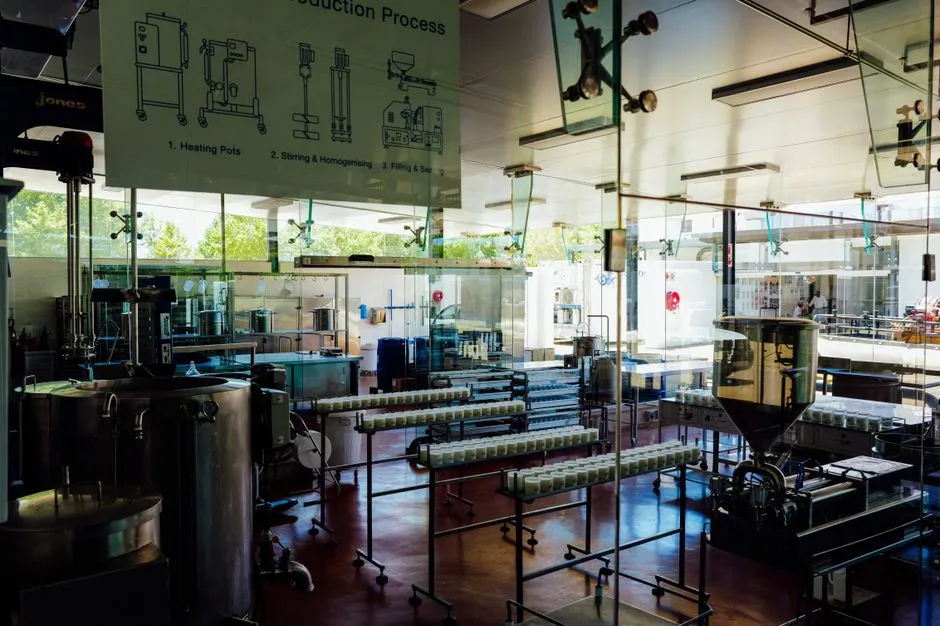
A lamella clarifier is the right primary step when the Boerne plant's stream is dominated by settleable inorganics rather than oils and light fines. Hard-water scale, silica carryover from glass-lined reactors, cell debris from fermentation prep, and catalyst fines from API synthesis are the classic lamella feedstocks; a lamella clarifier running at 20–40 m/h surface loading with sludge recirculation will pull these out with a smaller chemical skid and lower polymer demand than a DAF. If a plant runs an API synthesis line and a formulation/ointment line, the two streams often converge in a common header; in that case, place a lamella upstream as a guard filter for dense inorganics and a DAF downstream as the oil and fines polisher. Reject lamella as a primary step for any line carrying emulsified oils, silicone antifoam residues, or PEG/Polysorbate excipients, as these will pass through the inclined plates and overload the downstream biology. While the lamella unit's lower chemical demand is an OPEX advantage on a low-oil, high-inorganic side stream, it is a poor fit as a stand-alone primary on a true formulations effluent.
Building the 2026 Boerne Discharge Train Around Either Primary Step
The 2026 Boerne discharge train follows a standard downstream skeleton because the dissolved-API and soluble-COD problems remain consistent regardless of the primary step. The sequence typically involves screening, equalization, DAF or lamella primary, biological treatment (MBBR or MBR), UF or RO for reuse, and disinfection via UV or chlorine dioxide. The ClearFox industry table confirms that pharmaceutical effluent requires biological polishing after DAF because the dissolved fraction will not settle in a primary clarifier (S4). The MBR step carries the dissolved actives; research on pre-DAF wastewater with 0.3 µm PVDF membranes has demonstrated 34% total-solids reduction and 89% COD reduction, with 100,000 MWCO ultrafiltration delivering the strongest COD cut (S5, ASABE 2012, Abboah-Afari & Kiepper). Send the sludge to a plate-and-frame filter press for dewatering, and let the chemical dosing on the DAF (or lamella) and the press share a single PLC-controlled skid to minimize polymer consumption. For final disinfection, UV is the default for reuse, while ClO₂ is preferred when trace API oxidation is a target. The primary step only earns its footprint if it leaves a polishable effluent for the biology and membranes behind it.
Frequently Asked Questions
What is the realistic 2026 OPEX difference between a DAF and a lamella clarifier for a Boerne pharma plant?
Vendor catalogues do not publish dollar-per-m³ OPEX figures for DAF versus lamella, and any number quoted without a jar test is not defensible. DAF OPEX is driven by polymer dose, the saturator pump, and sludge dewatering, with ClearFox reporting up to 15% lower chemical usage from its round-tank vertical-flow design (S4); lamella OPEX is driven by lower polymer demand and sludge withdrawal. Ask each shortlisted vendor for an itemised OPEX build based on your specific flow and TSS band, and require jar-test confirmation of polymer dose.
How do I shortlist DAF or lamella clarifier suppliers for a Boerne pharmaceutical preparations plant without getting burned?
Use four filters. First, check the material of construction: polypropylene or 316SS where chloride, acid or solvent exposure is documented (S4, clearfox.com). Second, ensure
Frequently Asked Questions
Should a Boerne pharmaceutical preparations plant choose DAF or a clarifier in 2026?
The choice depends on the specific gravity and solubility of your API waste stream. For Boerne facilities, DAF is generally preferred if your wastewater contains high concentrations of oils, fats, greases, or light suspended solids with a specific gravity near or below 1.0. If your process generates heavy, settleable solids or inorganic precipitates, a clarifier is more effective. As of 2026, many pharmaceutical plants in the region are opting for DAF units to better manage the emulsified organic loads common in modern formulation wash-down cycles.
What removal efficiency does a DAF actually achieve on pharmaceutical wastewater with dissolved APIs?
While a DAF is highly effective for suspended solids and emulsified oils, it is not a primary technology for dissolved APIs. When paired with proper chemical coagulation and flocculation, a DAF can achieve 80-95% removal of Total Suspended Solids (TSS) and 60-80% reduction in Oil and Grease (O&G). However, dissolved pharmaceutical active ingredients typically require downstream tertiary treatment, such as Advanced Oxidation Processes (AOP) or activated carbon, as DAF removal rates for truly dissolved molecules are negligible.
How do I size a DAF system for a pharmaceutical formulations line in Boerne, Texas?
Sizing is dictated by the hydraulic loading rate, typically ranging from 2 to 6 m³/m²/h for pharmaceutical applications. You must calculate your peak hourly flow—accounting for batch cleaning cycles—and apply a safety factor of 1.2 to accommodate surges. Additionally, the Air-to-Solids (A/S) ratio is critical; for pharma wastewater, an A/S ratio of 0.02 to 0.05 ml of air per mg of solids is standard to ensure adequate flotation of complex chemical matrices.
Is a lamella clarifier enough as a primary step for pharma wastewater, or do I need DAF upstream?
A lamella clarifier alone is often insufficient for pharmaceutical wastewater because it relies on gravity sedimentation, which struggles with the fine, buoyant particles typical of surfactant-heavy wash waters. Using a DAF upstream acts as a primary clarifier that removes low-density contaminants, significantly reducing the sludge load and preventing biological fouling in downstream secondary treatment processes. Many 2026-compliant designs utilize a DAF for primary pretreatment followed by a lamella clarifier to capture any remaining heavy floc.
What is the typical OPEX difference between a DAF and a lamella clarifier for a 50 m³/h pharma stream?
A DAF system typically carries a 30-50% higher OPEX than a lamella clarifier due to the costs associated with air saturation pumps, chemical dosing for flocculants, and electricity for the scraper mechanism. For a 50 m³/h flow, a lamella clarifier requires minimal energy but higher labor costs for sludge management. Conversely, the DAF produces a more concentrated sludge, which can reduce off-site disposal costs, potentially offsetting the higher energy and chemical consumption in facilities with high-volume, low-density waste streams.