The 2026 Compliance Framework for Organic Chemicals Plants Near Lake Charles
An organic chemicals plant on the Calcasieu Parish sewer line operates inside three overlapping permit regimes at once: a federal NPDES permit, a local Calcasieu Parish POTW pretreatment permit, and the EPA Organic Chemicals Manufacturing Point Source Category effluent guidelines that historically covered SIC 2865 (cyclic intermediates and crudes) and SIC 2869 (industrial organic chemicals), with ethylene, benzene, and propylene named as the lead tonnage feedstocks in the 1978 Westinghouse/WESD energy impact study for DOE.
The Lake Charles Plant C facility that anchors the receiving POTW serves about 50,000 people in the Calcasieu Parish service area and operates under the US Clean Water Act NPDES permit program (Utility Radar). That municipal permit sets the receiving-water quality floor; the industrial user's own pretreatment permit then layers site-specific sewer-use limits on top of it. The federal Organic Chemicals category guidelines sit above both and govern the treatment technology baseline. In practice a single plant must satisfy whichever limit is tighter for each parameter, which is why the design target is never just one number — it is the intersection of three documents that have to be read together before any equipment is selected.
The Calcasieu Parish POTW issues sewer-use ordinances that name the parameters the treatment train has to hit, typically BOD, COD, TSS, oil and grease, pH, heavy metals, and sometimes sulfides and phenols, with compliance measured on a 24-hour composite sample basis. A new permittee should request the local limits table and the local surcharge schedule before scoping a single pump, because those two documents set the design floor and the cost ceiling for the rest of the project. If a project team cannot show leadership the line-by-line intersection of the NPDES permit, the POTW ordinance, and 40 CFR Part 414 in a single table, the capex request is going to bounce.
Why Pretreatment Is Harder Here: Calcasieu Parish Wastewater Characteristics
EPA's 1971 industry survey of 53 organic chemicals plants documented wastewater generation ranging from less than 100 gallons to more than 100,000 gallons per ton of product, so flow equalization is the first thing any Calcasieu facility has to budget for (EPA, 1971). The same survey identified the principal contaminants in the industry's wastewaters as BOD, COD, oil, suspended solids, acidity, heavy metals, color, taste-and-odor-producing compounds, and residual organic products and by-products (EPA, 1971). That list reads almost identically to a Calcasieu POTW sewer-use ordinance, which is why the design has to handle all of those parameters rather than optimising for one. The wastes are generally biodegradable, with relatively high BOD values, which is why biological treatment is the most widely used approach in the industry, but the influent variability pushes designers toward robust, well-buffered reactors rather than the leaner biological trains that work for municipal sewage (EPA, 1971).
On the Gulf Coast, petrochemical operations around Calcasieu Parish share feedstocks — ethylene, propylene, and benzene — with the broader Gulf Coast petrochemical complex, so influent fingerprints tend to line up with the 'Major Organic Products Segments' characterization that EPA developed when it wrote the Development Documents for the (Phase I) Major Organic Products Segments of the Organic Chemicals Manufacturing Point Source Category (Westinghouse/WESD, 1978). For an engineer sizing equipment that means the design envelope is well-characterized, but the envelope is also wide. The treatment train has to be built for the worst credible stream, not the median one, and the only honest way to find the worst credible stream is a flow-and-load monitoring campaign on the actual sewer before the pipe sizing is frozen.
Step 1 — In-Plant Source Control Before Anything Hits the Sewer
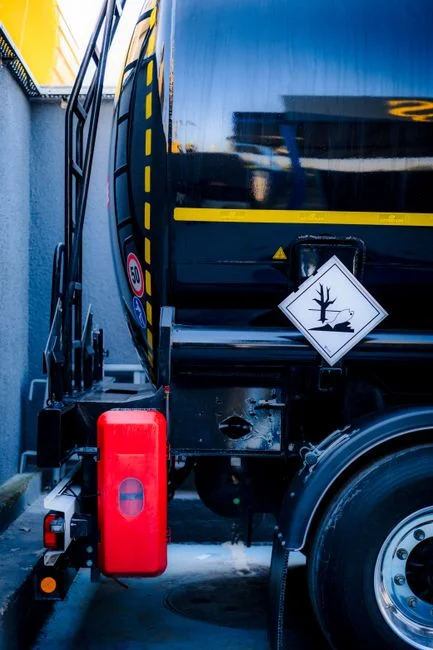
The cheapest contaminant is the one that never enters the sewer, and EPA lists the first-line controls as salvage of unreacted chemicals, recovery of by-products, multiple reuse of water, good housekeeping to reduce leaks and spills, and changes in processing methods (EPA, 1971). The 1978 Westinghouse report elaborated a parallel set of process-change levers that are still useful in a 2026 audit: separation of sewer systems, segregation of process waste from less contaminated streams, use of non-aqueous quench media where direct-contact water quench is not required, recycle of process water, recovery of spent acids/caustic/catalyst, and use of non-aqueous solvents for product extraction (Westinghouse/WESD, 1978). Both lists are old, but the engineering principle behind them is the one EPA leaned on: in-plant control is the first step in instituting treatment practices, and these controls reduce both the concentrations and the volumes of wastewater requiring end-of-pipe treatment (EPA, 1971).
A practical Lake Charles audit checklist, drawn directly from EPA and Westinghouse guidance, runs as follows: are storm, process, and sanitary sewers physically separated? Are high-strength reactor bottoms recovered for sale or fuel value rather than flushed? Is non-contact cooling water kept out of the process sewer? Are spent acid, caustic, and catalyst streams segregated for recovery? The 1978 study also observed that systems of 'process management control' or 'best management practices' can be most effective in reducing effluents from all types of operations and in reducing energy consumption, and noted that the organic chemicals industry had cut electrical energy use about 2% per year since 1972 even as treatment loads grew (Westinghouse/WESD, 1978). A 2026 capex case is materially stronger when the in-plant controls are quantified first, because every gallon kept out of the sewer is a gallon the end-of-pipe train does not have to be sized for.
Step 2 — Physical Pretreatment: API Separators, Bar Screens and DAF
Coarse screening is the cheapest insurance on the whole plant. A rotary mechanical bar screen at the headworks removes rags, plastics, and fibrous debris that would otherwise foul pumps, valves, and biological reactors downstream, and it does so with a footprint small enough to retrofit into an existing headworks without taking the sewer out of service. Free-oil removal is the next step and is typically done with a corrugated-plate or API separator ahead of biological treatment, because dispersed and emulsified oil is one of the main reasons Calcasieu plants fail TSS and oil and grease limits on a 24-hour composite. For emulsified oil, colloidal solids, and FOG, dissolved air flotation is the workhorse: a dissolved air flotation (DAF) system provides high oil-removal efficiency in a small footprint and is explicitly listed as an applicable treatment option in the 1978 Westinghouse table for organic chemicals streams (Westinghouse/WESD, 1978). When the goal is mainly TSS reduction rather than oil removal, a high-efficiency lamella clarifier is the lower-cost alternative and is commonly used as a primary clarifier before biological treatment.
| Unit | Primary function | Typical influent target | Where it sits in the train |
|---|---|---|---|
| Rotary mechanical bar screen | Rags, plastics, fibrous debris | All flows | Headworks, first unit on the sewer |
| API / corrugated-plate separator | Free and dispersed oil | High oil and grease | After screening, before DAF or biological |
| Dissolved air flotation (DAF) | Emulsified oil, FOG, colloidal solids | High oil and grease, fine colloids | After API, before equalization or biological |
| Lamella clarifier | Suspended solids | Predominantly TSS, low oil | Primary clarifier before biological treatment |
Step 3 — Chemical Conditioning: pH, Coagulation and Equalization
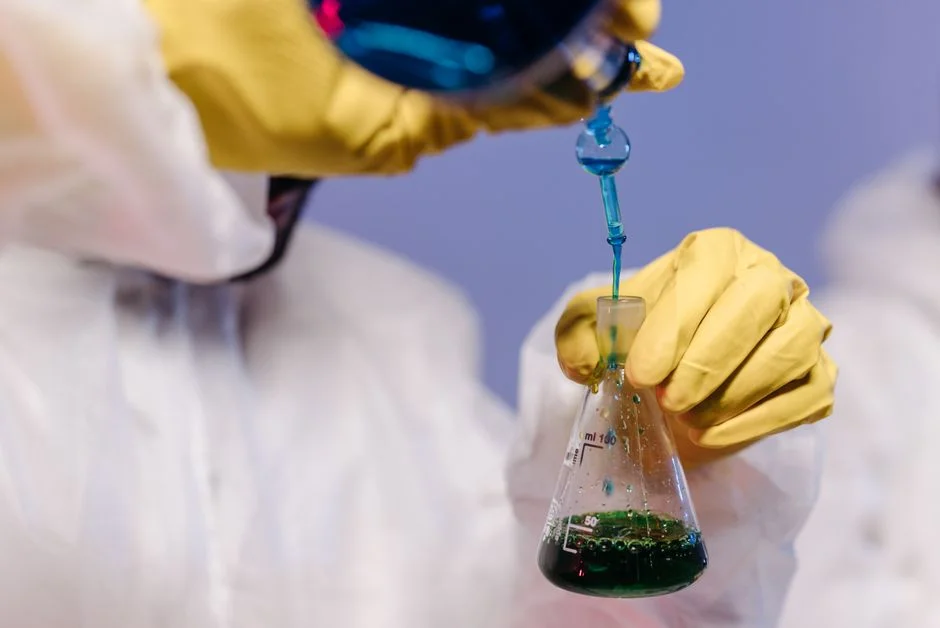
Equalization tanks are mandatory given the flow variability documented by EPA — 100 to 100,000+ gallons per ton of product — and they protect downstream biology from hydraulic and contaminant shock loads (EPA, 1971). pH adjustment with acid or caustic is required because EPA identifies acidity as one of the principal contaminants in the surveyed plants and most downstream biological processes need a stable range to function (EPA, 1971). EPA's 1971 report lists neutralization and chemical pretreatment as standard practice ahead of sedimentation, filtration, or biological treatment (EPA, 1971). Coagulant and flocculant dosing — typically polymer or metal-salt based — is usually controlled by an automatic chemical dosing system tied to flow and to inline streaming-current or pH signals, so the dose tracks the actual feed condition rather than a fixed setpoint. In a 2026 retrofit, the equalization basin, the pH adjustment stage, and the dosing skid are often the lowest-cost items on the equipment list and the highest-impact items for biological stability, so they are the first place to defend against scope cuts.
Step 4 — Biological Treatment: Activated Sludge, Anaerobic, or MBR
Biological treatment is the most widely used approach in the organic chemicals industry because the wastes are generally biodegradable, with relatively high BOD values per the 1971 EPA survey (EPA, 1971). Conventional activated sludge (CAS) remains the lowest-capex baseline. The new Lake Charles WWTP itself uses multi-channel oxidation ditches with activated sludge, three clarifiers, UV, and SCADA at 6.2 MGD average daily flow and 38 MGD peak (Waggoner), which confirms the technology's local acceptance. Anaerobic lagoons or UASB-style reactors are energy-favoured for high-strength, soluble streams where methane recovery beats aeration economics. Submerged MBR membrane bioreactor systems with PVDF flat-sheet or hollow-fibre modules — paired with the MBR membrane bioreactor module — are increasingly specified when the plant wants near-reuse quality in a much smaller footprint than CAS, or when tightening Calcasieu discharge limits push total suspended solids below detection. The 1978 Westinghouse study also lists pure-oxygen activated sludge, trickling filters, and biodisc processes as options for organic chemicals streams, with the caveat that treatment design for the industry is best based on pilot plant studies (Westinghouse/WESD, 1978).
| Option | Best-fit influent | Capex | Footprint | Effluent TSS |
|---|---|---|---|---|
| Conventional activated sludge (CAS) | Moderate-to-high BOD, biodegradable | Lowest baseline | Large | 10–30 mg/L typical |
| Anaerobic lagoon / UASB | High-strength, soluble, warm streams | Low (with land available) | Very large | Higher; needs polishing |
| Submerged MBR | Tight TSS limits, reuse target, constrained site | Premium | ~60% smaller than CAS | Near detection / <1 μm filtration |
Step 5 — Polishing and Residuals: Carbon, Disinfection and Sludge Dewatering
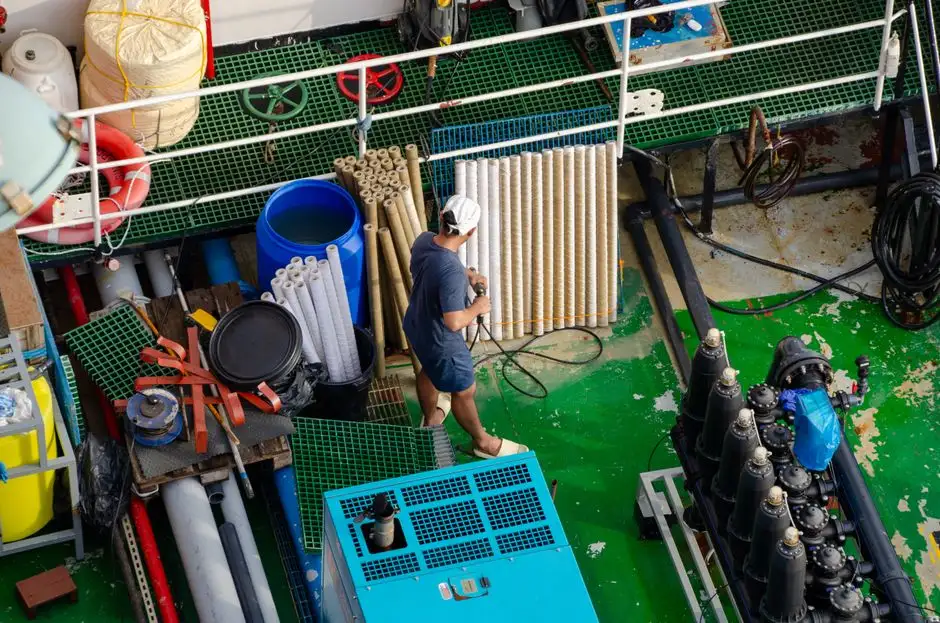
Carbon adsorption — with steam, biological, or chemical regeneration — is EPA-listed for removing residual dissolved organics, colour, and taste-and-odor compounds that survive biological treatment (Westinghouse/WESD, 1978). Disinfection options for the final effluent before sewer discharge include a pipeline UV sterilizer, which is chemical-free and favoured where the receiving POTW wants no residual oxidant to interfere with its own biology, and an on-site chlorine dioxide generator, which gives a longer residual but has to be balanced against the receiving POTW's own discharge. Sludge from DAF, clarifiers, and biological wasting is dewatered on a plate-and-frame filter press to reach a handleable cake for off-site disposal or incineration. EPA's 1971 cost data show dewatering and sludge handling become a material share of total capex once removal targets exceed the 90%+ range, which is the same band where Calcasieu sewer-use ordinances usually start demanding tighter TSS and metals limits (EPA, 1971).
Sizing the Bill: 2026 Planning Anchors from EPA's Industry-Wide Curves
EPA's 1971 industry survey of 53 organic chemicals plants documented an average large plant treating 2.8 mgd of wastewater, and that figure is still used as a planning anchor (EPA, 1971). Capital cost per 1,000 gpd at the 2.8 mgd basis rises from $147 (Level 1, gross pollutant removal) to $1,648 (Level 6, 100% BOD/COD/SS removal) in 1968 dollars, on a removal ladder that goes Level 1 = 10% BOD / 10% COD / 65% SS up to Level 6 = 100% BOD / 100% COD / 100% SS (EPA, 1971). These are 1968-dollar values, not adjusted for inflation in this article, and EPA itself warned that plant-by-plant costs can run 40% or more above the published unit figures once sewer segregation, monitoring, process changes, and older-plant retrofits are added (EPA, 1971). For a 2026 budget case the curve is a defensible starting point; the 40% contingency that EPA built in is the more important number, because it is the gap between the textbook figure and the figure a Calcasieu plant will actually pay.
| Level | BOD removal | COD removal | SS removal | $/1,000 gpd (1968$) | 2.8 mgd total (1968$) |
|---|---|---|---|---|---|
| 1 | 10% (gross pollutants) | 10% | 65% | $147 | $411,600 |
| 2 | 83% | 13% | 71% | $176 | $492,800 |
| 3 | 98% | 30% | 89% | $250 | $700,000 |
| 4 | 99% | 33% | 99% | $700 | $1,960,000 |
| 5 | 99% | 33% | 100% | $751 | $2,102,800 |
| 6 | 100% | 100% | 100% | $1,648 | $4,614,400 |
2026 Buyer's Decision Framework for Lake Charles Pretreatment Equipment
The first decision is the primary removal goal: free-oil and TSS pushes the design toward a dissolved air flotation (DAF) system or a lamella clarifier, colloidal and dissolved organics pushes it toward biological treatment (CAS or MBR membrane bioreactor system), and polishing pushes it toward carbon and UV. Trying to do everything in one vessel is the most common 2026 retrofit mistake, and EPA's own 1971 caveat — that treatment design for the organic chemicals industry is best based on pilot plant studies — supports a staged design over a single-vessel bet (EPA, 1971). The second decision is packaged versus stick-built. Smaller flows at remote or temporary sites can use an underground integrated package plant; larger Calcasieu plants typically spec stick-built DAF, MBR, and filter press for service access and for the option to swap modules without disturbing the rest of the train. The third decision is single-supplier versus multi-vendor. The 1978 Westinghouse report endorsed 'systems of process management control or best management practices' as the most effective way to reduce effluents, and that argument works best with one accountable process integrator covering headworks through sludge (Westinghouse/WESD, 1978). The fourth decision is automation level. A PLC-controlled chemical dosing system and SCADA are no longer optional for NPDES-tracked plants, and EPA noted that the most frequently reported basis for treatment decisions in the industry was the existence of a legal requirement, so the design has to be audit-ready from day one (EPA, 1971).
| Decision | If the answer is A | If the answer is B | Implication for Calcasieu scope |
|---|---|---|---|
| Primary removal goal | Oil and FOG dominant | Dissolved organics dominant | DAF-led train vs biological-led train |
| Packaging | Small flow, temporary, remote | Large flow, permanent, on sewer | Package plant vs stick-built DAF + MBR + press |
| Supplier model | One process integrator | Multiple vendors, plant assembles | Single audit trail vs split responsibility |
| Automation | NPDES-tracked, audit exposure | Non-discharge, low risk | PLC + SCADA vs manual dosing |
For a related cost framing that complements EPA's 1968-dollar curve with 2026 cost benchmarks, see 2026 cost benchmarks per MGD for water treatment infrastructure, and for a comparison of dosing technologies that affect the chemical-conditioning stage, see polymer dosing system vs alternatives comparison. Adjacent pretreatment contexts for related Gulf Coast and specialty-chemical sites are covered in how industrial inorganic chemicals plants near Middlesex meet 2026 pretreatment limits and petroleum bulk plants near Subiaco meeting 2026 pretreatment limits.
Frequently Asked Questions
What permits does an organic chemicals plant near Lake Charles need before discharging to the Calcasieu Parish sewer?
It needs both a federal NPDES permit and a local Calcasieu Parish POTW pretreatment permit, and it also has to satisfy 40 CFR Part 414, the EPA Organic Chemicals Manufacturing Point Source Category effluent guidelines. The receiving Lake Charles Plant C operates under the US Clean Water Act NPDES permit program and serves about 50,000 people in the Calcasieu Parish service area (Utility Radar), which sets the receiving-water quality floor that the industrial user's permit has to beat on every shared parameter.
What is a realistic 2026 capital cost range to build an organic chemicals pretreatment train in Calcasieu Parish?
Use the 1971 EPA curve (2.8 mgd basis, Levels 1 through 6) as a starting reference and escalate the figure conceptually for 2026 conditions, then add the 40% contingency that EPA itself flagged for sewer segregation, monitoring, process changes, and older-plant retrofits (EPA, 1971). The curve is in 1968 dollars and is not inflation-adjusted in this article, so request current vendor quotes for the specific flow and target removal band before locking the budget.
Should we choose DAF or a lamella clarifier as primary solids removal?
DAF is preferred when oil, FOG, or colloidal matter dominate the influent, because it is listed by EPA as an applicable treatment option for organic chemicals streams (Westinghouse/WESD, 1978). A lamella clarifier is the lower-cost choice for predominantly TSS streams with low oil content, and it is commonly used as a primary clarifier before biological treatment.
Is MBR worth the premium over conventional activated sludge for an organic chemicals wastewater?
Yes, when discharge TSS limits are near-zero, when the plant wants reuse-quality water, or when the site footprint is constrained. Conventional activated sludge remains the lowest-capex baseline for most Calcasieu flows and is the technology the new Lake Charles WWTP itself uses at 6.2 MGD average daily flow with multi-channel oxidation ditches, three clarifiers, and UV (Waggoner).
How do we select a B2B wastewater equipment supplier for a 2026 Lake Charles project?
Look for documented experience with petrochemical and organic chemicals streams, in-house scope from headworks through sludge dewatering, PLC and SCADA capability, and a willingness to support the NPDES audit trail. These are the same criteria EPA historically used to evaluate plant-level treatment decisions, since the most frequently reported basis for those decisions was the existence of a legal requirement (EPA, 1971). Ask each shortlisted supplier for a reference list on SIC 2869 streams and a sample compliance report before issuing a PO.