The Pretreatment Authority Chain in Middlesex County
EPA sets the General Pretreatment Regulations at 40 CFR Part 403, which define pretreatment standards and requirements for Industrial Users (IUs) that discharge to a publicly owned treatment works (POTW) (EPA, epa.gov/npdes/pretreatment-standards-and-requirements-local-limits). Each POTW develops site-specific local limits under 40 CFR 403.5(c) that are enforceable as pretreatment standards and applied at the end-of-pipe discharge—the point of connection to the POTW's collection system. For most Middlesex County, NJ facilities, the receiving POTW is the Middlesex County Utilities Authority (MCUA) or a neighboring municipal sewer authority; in either case, the local-limit letter the IU receives governs day-to-day compliance.
One level above the POTW sits EPA's NPDES permitting program, which sets the POTW's own discharge limits to the receiving stream. Local limits exist so that IU discharges do not cause the POTW to violate its NPDES permit—the framework targets three failure modes: pass-through, where a pollutant exits the POTW into U.S. waters; interference, which disrupts POTW treatment or sludge processes; and the general prohibited discharge standards at 40 CFR 403.5 covering flammables, corrosives, and slug loads (EPA, epa.gov/npdes/pretreatment-standards-and-requirements-local-limits). When limits appear to conflict, the hierarchy is: federal categorical standards → federal prohibited discharge standards → POTW local limits → permit conditions.
A research gap exists: EPA pages and eCFR scraping do not publish MCUA's numeric local-limit values. Any plant engineer planning a compliance upgrade in 2026 must request the current local-limit letter, headworks loading analysis, and any pollutant-of-concern study directly from the receiving POTW—assuming a number from a peer plant or a generic table is a common procurement mistake.
What Inorganic-Chemicals Plants Are Discharging
Inorganic chemical manufacturing generates acidic or alkaline process water that swings across the pH range, high total suspended solids from reagent dosing and product washing, plus fluoride, sulfate, chloride, ammonia, and trace heavy metals (EPA, epa.gov/npdes/pretreatment-standards-and-requirements-local-limits). An EHS lead mapping their own effluent should expect the receiving POTW to ask about every one of these categories before issuing or renewing a permit.
For the heavy metals of greatest interest, the EPA National Primary Drinking Water Regulations table provides the canonical source-and-effect framing a pretreatment program inherits. Arsenic sources include runoff from glass and electronics production wastes, with effects of skin damage, circulatory problems, and increased cancer risk (EPA NPDWR). Lead sources include discharge from metal refineries and corrosion of plumbing, with effects of developmental delays in children and kidney problems and high blood pressure in adults (EPA NPDWR). Cadmium sources include discharge from metal refineries and runoff from waste batteries and paints, with effects of kidney damage (EPA NPDWR). Mercury sources include discharge from ore processing, electronics, glass, and drug factories, with effects of nervous system damage (EPA NPDWR). Chromium sources include discharge from metal refineries and agricultural chemical factories, with effects of liver or kidney problems and increased cancer risk (EPA NPDWR). Selenium, with sources including discharge from petroleum refineries and mines and effects of hair or fingernail loss, numbness in fingers or toes, and circulatory problems, sits on the watch list for inorganic chemistry plants that also run mineral or pigment operations (EPA NPDWR).
Conventional pollutants—TSS, BOD, oil and grease, and pH—are almost always present in any local-limit set. Non-conventional pollutants such as ammonia, phosphorus, total nitrogen, fluoride, and sulfate are added based on the POTW's pollutants-of-concern analysis under 40 CFR 403.5(c) (EPA, epa.gov/npdes/pretreatment-standards-and-requirements-local-limits). If your process touches fluoride, sulfate, or any of the six NPDWR metals above, expect those parameters in the local-limit letter.
Inside a Typical Local-Limit Document
Local limits are numeric effluent limits or narrative BMP-based requirements applied at the point of connection to the POTW's collection system (EPA, epa.gov/npdes/pretreatment-standards-and-requirements-local-limits). EPA's local-limit guidance requires the POTW to identify pollutants of concern, calculate maximum allowable headworks loadings, perform annual reviews and periodic reevaluations, and design limits so IU discharges do not cause pass-through, interference, or sludge-quality violations. The document a plant engineer receives is not a static sheet; the POTW must re-evaluate it on a defined cycle, and values on file from prior years may have shifted.
Local limits are typically grouped by pollutant category and enforced through self-monitoring, POTW sampling, and surcharges. The table below summarizes the structure most local-limit letters follow; the specific numeric values must be obtained from the receiving POTW.
| Pollutant category | Typical parameters | Regulatory anchor | Enforcement mechanism |
|---|---|---|---|
| Conventional | BOD, TSS, oil & grease, pH | 40 CFR 403 local limits; 40 CFR 403.5 prohibited discharge standards | Numeric limit, self-monitoring, POTW sampling |
| Non-conventional | Ammonia, total nitrogen, phosphorus, fluoride, sulfate | 40 CFR 403.5(c) pollutants-of-concern analysis | Numeric limit, surcharges, periodic reevaluation |
| Metals | Arsenic, cadmium, chromium, lead, mercury, selenium, plus others as identified | NPDWR pollutant list; 40 CFR 403 categorical standards where applicable | Numeric limit, composite sampling, sludge-quality review |
| Prohibited discharges | Flammables, corrosives, slug loads, specific process chemicals | 40 CFR 403.5 narrative standards | Narrative BMPs, slug-control plan, immediate enforcement |
General prohibited discharge standards at 40 CFR 403.5—no flammable or explosive discharges, no corrosive discharges that could damage the collection system, no slug loads that exceed design capacity—are narrative and apply in addition to numeric limits (EPA). The consequence framework, derived from EPA's enforcement language, runs from significant non-compliance through formal enforcement action by EPA or the POTW, including administrative orders, penalties, and ultimately loss of discharge authorization. The procedural analogue is well documented at the municipal level: the Carlisle Borough WPC lab performs permitting, inspecting, and sampling of Significant Industrial Users, runs daily analyses on plant effluent, and recovers cost through permit fees, fines, surcharges, and monitoring costs charged to the IU (carlislepa.org wastewater & water plant lab page).
Pretreatment Unit Operations That Get Inorganic Plants to Compliance
The standard process train for an inorganic chemicals plant discharging to a POTW is a sequence designed to neutralize the failure mode the previous step could not catch.
- Equalization (EQ) and flow/load buffering first. EQ stabilizes pH swings and slug loads before downstream unit operations see them. It is the primary control against 40 CFR 403.5 prohibited discharges and most pH-related local-limit excursions (EPA, epa.gov/npdes/pretreatment-standards-and-requirements-local-limits).
- pH correction. Acid or caustic dosing—typically through a PLC-controlled chemical dosing system—brings the stream into the band required by the local limit. The specific pH range is set by the POTW and must be obtained from the receiving authority.
- Chemical precipitation of dissolved metals. Raise pH and dose hydroxide, sulfide, or DTPA-type precipitants depending on the target metal. A solids-separation step follows—a DAF system for colloidal precipitates, FOG, and oil and grease, or a lamella clarifier for higher-solids streams. The chemistry is metal-specific; selection of precipitant and pH setpoint should be confirmed against the metals actually present in your effluent characterization.
- Filtration / polishing. A multi-media filter drops residual TSS to the local limit and protects any downstream reuse loop. Where the limit is tight or the stream feeds a process reuse, an ultrafiltration step can be added; the process flow should be sized against the actual TSS target in the local-limit letter.
- Sludge handling. Metal-laden sludge from precipitation and DAF must be dewatered with a plate-and-frame filter press before disposal, because inorganic precipitates can disqualify biosolids from land application—the specific sludge-protection outcome the local-limit framework is designed to safeguard (EPA, epa.gov/npdes/pretreatment-standards-and-requirements-local-limits).
On top of the process train, a BMP layer should run continuously: spill containment, dedicated chemical storage, calibrated meters, composite samplers, and a written slug-control plan. The auto-dosing engineering guide covers the dosing side, and the 2026 chromium discharge limit reference is the relevant cross-reference if chromium is in your effluent envelope.
Sampling, Reporting, and the 2026 Compliance Loop
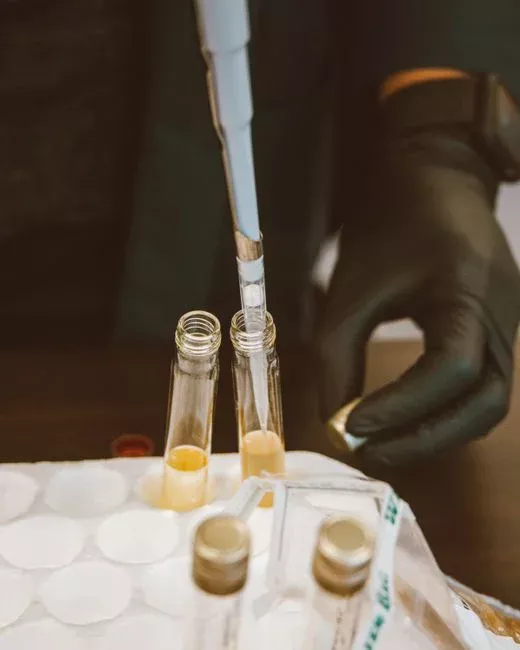
EPA's local-limit guidance calls for routine sampling and analysis by both the IU and the POTW, including the use of composite samplers to capture variability rather than relying only on grab samples (EPA, epa.gov/npdes/pretreatment-standards-and-requirements-local-limits). A 2026 Middlesex plant should expect the same enforcement scaffolding from its receiving POTW as seen in other municipal jurisdictions, where permit fees, fines, and monitoring costs are charged to the IU to recover the cost of compliance enforcement.
POTWs are required to perform an annual review of their local limits and a periodic reevaluation, meaning values on file from prior years may have shifted and should be reverified each planning cycle (EPA, epa.gov/npdes/pretreatment-standards-and-requirements-local-limits). For a 2026 compliance upgrade, the evidence package a plant should be able to produce on demand includes: a baseline characterization report, daily flow and pH logs, weekly composite-sampler results for metals and conventionals, calibration records for online pH and conductivity meters, and a written slug-control plan submitted to the POTW. The sampling hardware side of that package is covered in the composite sampler buyer's guide; a PLC-controlled chemical dosing system typically feeds the calibration and logging chain for pH and conductivity.
Frequently Asked Questions
What does it actually cost to bring an inorganic chemicals plant into pretreatment compliance in Middlesex?
The research does not supply a cost figure for Middlesex-specific compliance upgrades. The actionable check is to request a written budgetary envelope from the receiving POTW covering permit fees, surcharges, and monitoring cost recovery, then request itemized capital quotations from at least three pretreatment equipment vendors against the same influent characterization—equalization volume, peak pH excursion, target metal set, and target TSS at the local-limit envelope. Without those four inputs, any vendor quote is a guess.
How do we choose a pretreatment equipment supplier without locking into the wrong process train?
The actionable check is supplier qualification against three documents: a current local-limit letter from the receiving POTW, a baseline characterization of your actual effluent, and a written slug-control plan. A qualified vendor should be able to map each unit operation—equalization, pH correction, precipitation, DAF, filtration, sludge dewatering—to a specific line item in the local-limit letter and justify the sizing basis from the characterization data. Ask for reference plants of similar influent matrix, and confirm the vendor will support the documentation package the POTW will request during commissioning.
Which metals and parameters are most likely to be in our local-limit letter?
Conventional pollutants—TSS, BOD, oil and grease, and pH—will be present. The six NPDWR metals most often invoked for inorganic chemistry are arsenic, lead, cadmium, mercury, chromium, and selenium, each with documented sources and health effects in the EPA NPDWR table. Non-conventional pollutants such as fluoride, sulfate, ammonia, and total nitrogen appear when the POTW's pollutants-of-