Why Pretreatment Compliance Matters for Petroleum Bulk Plants Near Subiaco
Petroleum bulk plants near Subiaco meet pretreatment limits before sewer discharge by combining source control with a treatment train of API oil-water separation, dissolved air flotation, and polishing filtration, sized to satisfy local technically based local limits under 40 CFR Part 403. Numeric limits typically target oil and grease (often 100 mg/L or less), TRPH, BOD, and TSS; categorical standards from 40 CFR Parts 405–471 may also apply. Compliance is enforced jointly by the EPA, the Arkansas DEQ, and the local control authority through permits, self-monitoring, and BMPs.
A petroleum bulk plant—which manages the receipt, storage, and truck loading of gasoline, diesel, and middle distillates—generates oily wastewater at tank water draws, loading racks, and truck wash bays. Every one of those drain points is a potential discharge to the sanitary sewer, and the federal Clean Water Act §307(b) gives the EPA authority to require pretreatment before those streams reach a publicly owned treatment works. In Arkansas, that authority is delegated to the Arkansas Department of Energy and Environment, Division of Environmental Quality (DEQ), which administers the NPDES program and oversees local control authorities.
Even a plant that is not a Categorical Industrial User is an Industrial User under 40 CFR 403.3(j), and may still trigger Significant Industrial User (SIU) status at 25,000 gpd of process flow or 5% of POTW capacity, or by POTW designation under 40 CFR 403.8(f)(6) (per EPA pretreatment applicability guidance, 2025). Pass-through or interference violations can trigger POTW enforcement actions, administrative fines, and permit revocation. The defensible posture is to engineer to the most stringent applicable limit before discharge begins.
Which Federal Standards Apply to a Petroleum Bulk Plant
The EPA structures pretreatment into three layers, and a Subiaco-area bulk plant must address all three before designing the treatment train.
Layer 1 — General and Specific Prohibitions (40 CFR 403.5). This layer prohibits discharge of any substance that creates a fire or explosion hazard, causes corrosive damage, or causes pass-through or interference at the POTW. Free oil and petroleum products fall directly into this layer, regardless of whether a numeric limit exists in the permit (per 40 CFR 403.5(a) and (b)).
Layer 2 — Categorical Pretreatment Standards. These are subcategory-specific numeric limits published in 40 CFR Parts 405–471. 40 CFR Part 419 (Petroleum Refining) typically applies to integrated refineries rather than distribution terminals, but a terminal whose tank farm is operationally tied to a refinery process can be reclassified. Confirm with the control authority before assuming Part 419 does not bind your site (per EPA pretreatment applicability guidance, 2025).
Layer 3 — Technically Based Local Limits (TBLLs). These are derived by the control authority under the EPA's Maximum Allowable Headworks Loading (MAHL) approach, set out in Chapter 2 of the Local Limits Development Guidance (EPA, 2021-06), and are the most common compliance driver for Subiaco-area bulk plants. TBLLs are derived from the POTW's headworks capacity, removal efficiency, and any applicable water quality or sludge criteria for the receiving stream.
All three layers can be enforced by the EPA, the state, and the local control authority, and are typically expressed as numeric limits, narrative prohibitions, or BMPs. Where multiple provisions apply, the control authority enforces the most stringent (per EPA pretreatment applicability guidance, 2025).
Wastewater Streams a Subiaco Bulk Plant Must Pretreat
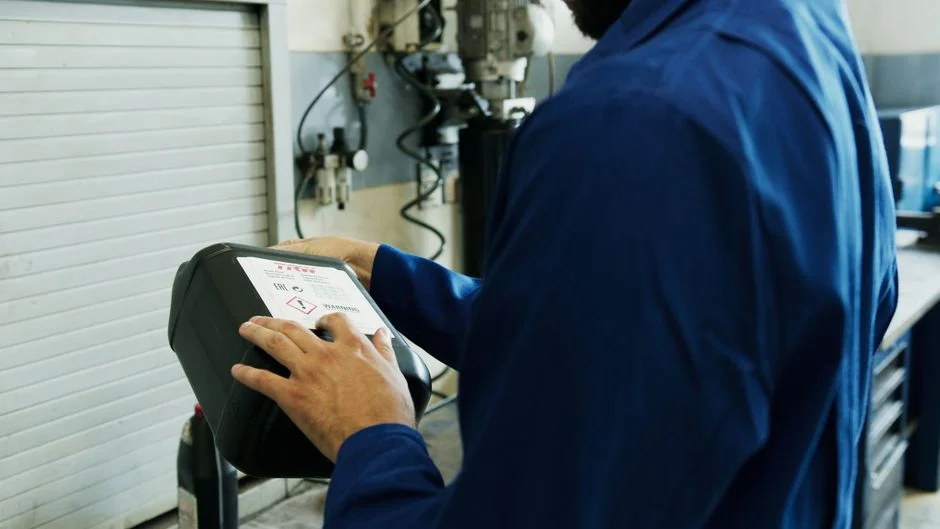
A pretreatment program fails when a drain is missed, so the drain map at a petroleum bulk plant must include every one of the following streams before the treatment train is sized.
Tank bottom draws and periodic water draws. Storage tanks accumulate free water and sludge; water draws from gasoline and diesel tanks typically run several hundred to a few thousand ppm oil and grease, plus dissolved hydrocarbons.
Truck loading rack drip and wash water. Spillage at load arms and surfactant-based cleaners from hose wash bays generate emulsified oil that does not separate readily by gravity. This stream is often the most variable in flow and concentration.
Equipment washdown. Pump pads, valve manifolds, and meter skids generate low-volume but high-strength oily wash water that must be captured and routed to treatment.
Stormwater commingled with process areas. Stormwater that contacts product, equipment, or loading areas must be segregated by curbing and routed to a dedicated API first-flush system—not the sanitary sewer. Uncontaminated rooftop and pavement stormwater should bypass treatment entirely.
Hauled waste and remediation waste from off-site sources require separate evaluation per EPA Local Limits Guidance §3.2.10–3.2.11 (EPA, 2021-06) and should not be co-mingled with routine terminal wastewater without control authority approval.
Typical Numeric Limits an Arkansas POTW Will Apply
Parameter ranges typically seen at petroleum-handling facilities discharging to Arkansas POTWs are summarized in the table below, serving as a defensible design target until the control authority's current TBLL analysis is finalized.
| Parameter | Typical local limit range | Basis |
|---|---|---|
| Oil and grease | 50–100 mg/L | MAHL allocation per EPA Local Limits Guidance §5.3.3 (EPA, 2021-06) |
| TRPH (total recoverable petroleum hydrocarbons) | 10–15 mg/L | Narrative prohibition plus local limit |
| TSS | 200–250 mg/L | MAHL allocation; SAWS uses 250 mg/L as surcharge trigger (per SAWS pretreatment program) |
| BOD5 | 200–250 mg/L | MAHL allocation; conventional pollutant per EPA guidance §5.3.1 (EPA, 2021-06) |
| Benzene | Trace monitoring; report only in many programs | Priority pollutant scan; flagged in TBLL if pass-through risk exists |
| pH | 6.0–9.0 (instantaneous) | 40 CFR 403.5 specific prohibition |
Oil and grease, BOD, and TSS are conventional pollutants allocated through the MAHL framework per EPA guidance §5.3 (EPA, 2021-06). The San Antonio Water System, for example, applies a 250 mg/L threshold for BOD and TSS above which an industrial waste surcharge applies (per SAWS pretreatment program guidance)—a similar structure is common in Arkansas POTW ordinances. Local limits are not generic: request the control authority's most recent TBLL analysis and the receiving POTW's NPDES fact sheet from the Arkansas DEQ before final design.
The Standard Pretreatment Treatment Train

The engineered treatment train for a Subiaco-area bulk plant discharging to a Fourche Creek watershed POTW is well-established, with unit processes run in the sequence below to meet permit limits.
| Step | Unit process | Typical removal target |
|---|---|---|
| 1 | Equalization / surge tank | Dampens slug loads; stabilizes pH to within 6.0–9.0 |
| 2 | API or CPI oil-water separator | Removes free oil down to ~100–150 mg/L; skimmed oil recycled to slop |
| 3 | Dissolved air flotation (DAF) | Captures emulsified oil and suspended solids; oil & grease below 50 mg/L on the outlet |
| 4 | Multimedia or activated carbon polishing | Reduces residual hydrocarbons, trace organics, and TSS to discharge targets |
| 5 | pH adjustment and flow monitoring | Final compliance at the monitored outfall before the POTW sampling point |
An API oil-water separator sized to API Publication 421 criteria handles bulk free-oil removal; a properly operated DAF unit—such as the HydropureWater DAF system—typically achieves 90–95% oil and grease removal on the inlet from the API stage, with hydraulic residence times of 20–40 minutes. Polishing with a HydropureWater multimedia polishing filter brings residual TSS and trace hydrocarbons within permit targets, while a HydropureWater PLC-controlled chemical dosing skid supports pH trim and coagulant feed ahead of the DAF. For facilities evaluating biological polishing, the tradeoffs between MBR and conventional activated sludge are detailed in a comparable review of MBR vs conventional activated sludge for petroleum wastewater.
Best Management Practices the Control Authority Expects
Treatment hardware alone does not satisfy 40 CFR 403.5(b); the control authority expects documented operating discipline alongside the equipment.
Source control. Drip pans at every hose connection, curbing around load arms and fill ports, and dedicated spill kits at each transfer point are recognized compliance tools under 40 CFR 403.5(b) and appear in nearly every approved POTW pretreatment program.
Stormwater segregation. Only sanitary and clean process water should enter the treatment train, while first-flush stormwater from process areas is segregated to a dedicated API system.
SPCC alignment. The Spill Prevention Control and Countermeasure (SPCC) plan required by 40 CFR Part 112 must be aligned with the POTW's BMP expectations—particularly the slug-load prevention narrative, which the control authority will review during permit issuance and renewal.
Sampling and self-monitoring. Per the Industrial Wastewater Discharge permit, composite sampling at the monitored outfall with chain-of-custody and 24-hour composite preservation is standard. Flow totals, calibration logs, and slug-load event reports are part of the recordkeeping package and should be retained for at least three years.
The 2026 Compliance Checklist for a Subiaco Petroleum Bulk Plant
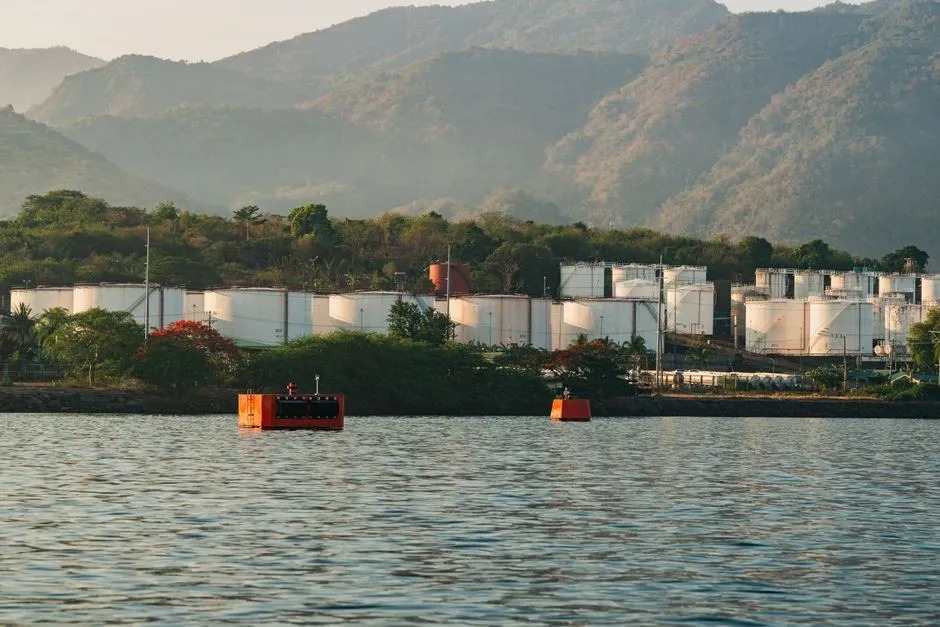
Terminal managers should complete the following action list before the next permit cycle to ensure operational compliance.
| Action | Reference |
|---|---|
| Confirm IU status with the control authority; document whether the facility meets the 25,000-gpd SIU threshold | 40 CFR 403.3(v) |
| Pull the most recent TBLL analysis and the Arkansas DEQ NPDES fact sheet for the receiving POTW | EPA Local Limits Guidance, 2021-06 |
| Characterize each wastewater stream for oil & grease, TRPH, BOD, TSS, pH, and target VOCs/PAHs | 40 CFR 403.5; permit application |
| Verify the treatment train is sized for peak hourly flow with a 1.5× safety factor | EPA Local Limits Guidance §6.2.3 (EPA, 2021-06) |
| Renew or apply for the Industrial Wastewater Discharge Permit before any new discharge connection | Control authority sewer use ordinance |
| Schedule a slug-load prevention walk-down and update the SPCC narrative | 40 CFR Part 112; 40 CFR 403.5(b) |
The TBLL and BMP framework applies across SIU categories, with specific numeric limits and unit operations shifting by wastestream, as shown in comparable walkthroughs of chemical plant pretreatment compliance in 2026 and food and beverage plant pretreatment compliance.
Frequently Asked Questions
Does 40 CFR Part 419 apply to a petroleum bulk storage terminal near Subiaco?
Part 419 (Petroleum Refining) typically applies to integrated refineries rather than distribution terminals
Frequently Asked Questions
What pretreatment limits apply to a petroleum bulk plant discharging to a POTW sewer?
Petroleum bulk plants must adhere to both federal General Pretreatment Regulations (40 CFR Part 403) and specific local limits established by the Publicly Owned Treatment Works (POTW). While federal standards prohibit the discharge of pollutants that cause "pass-through" or "interference" at the treatment plant, most bulk plants face specific numerical limits for Total Petroleum Hydrocarbons (TPH) or Oil and Grease (O&G), typically ranging from 50 mg/L to 100 mg/L depending on the local sewer use ordinance.
Do petroleum bulk plants need a categorical pretreatment permit under 40 CFR Part 419?
No. 40 CFR Part 419 (Petroleum Refining Point Source Category) applies specifically to facilities engaged in petroleum refining, which involves the production of gasoline, kerosene, distillate fuel oils, or residual fuel oils from crude oil. Bulk plants that only store and distribute finished petroleum products do not meet the definition of a refinery and are therefore not subject to categorical pretreatment standards, though they remain subject to local limits and general prohibitions.
How is oil and grease removed before sewer discharge at a fuel terminal?
Oil and grease are primarily removed through physical separation using API (American Petroleum Institute) oil-water separators or coalescing plate separators. These systems utilize gravity separation to capture free-phase hydrocarbons; for facilities requiring more stringent compliance, dissolved air flotation (DAF) units or organoclay filtration systems are utilized to reduce emulsified oil and grease levels to meet stringent 2026 discharge concentration requirements.
What is a technically based local limit and how does a POTW set one?
A technically based local limit is a discharge restriction developed by a POTW to ensure its effluent meets NPDES permit requirements and to prevent sludge contamination. POTWs set these limits by conducting a "Headworks Analysis," which calculates the maximum allowable headworks loading (MAHL) based on the plant's capacity, existing background concentrations, and safety factors, ensuring that industrial discharges do not inhibit biological treatment processes or violate state water quality standards.
How often does a Subiaco bulk plant have to self-monitor for sewer discharge compliance?
Self-monitoring frequency is determined by the facility's individual industrial user permit issued by the local control authority. For significant industrial users, compliance sampling for oil and grease, pH, and volatile organic compounds is typically required on a monthly or quarterly basis, with results submitted via a certified Discharge Monitoring Report (DMR) to ensure ongoing adherence to the 2026 pretreatment limits.