Why the Elizabethtown, KY POTW Shapes Every Chemical-Plant Discharge Decision
The Elizabethtown Wastewater Treatment Plant is a Class IV facility with a design flow of 13 MGD, drawing from commercial, residential, and industrial sources and operating around the clock (source: elizabethtownky.org). The treatment train runs automated bar screens → aerated oxidation ditches → clarification → chlorination/dechlorination → solids removal, and the site accepts hauled septic, grease-trap, and RV waste alongside the sanitary stream. Critically, the plant runs a State-approved pretreatment program backed by a State-certified laboratory, which is what authorizes random grab sampling, surcharge billing, and Significant Noncompliance (SNC) listings against industrial users (source: elizabethtownky.org). For a chemical plant engineer, this means the local program is the binding enforcement arm, not a layer of bureaucracy to be ignored.
Under the Clean Water Act, this local program is the enforcement arm of EPA's National Pretreatment Program, a cooperative effort of EPA, authorized states, and POTWs to control industrial discharges into municipal systems (per EPA NPDES National Pretreatment Program, Attachment 2-1, Dec 2024). The practical implication is that local limits in the Sewer Use Ordinance can be more stringent than the federal categorical floor, and the POTW enforces whichever value is stricter. The three layers that govern every chemical-plant discharge near Elizabethtown are: 40 CFR 403.5(a)/(b) general and specific prohibitions, the 40 CFR Parts 405–471 categorical standards (with chemical-sector subparts covered in the next section), and site-specific local limits published in the City's Sewer Use Ordinance. The strictest applicable value controls. The rest of this article walks through each layer, the subparts a chemist actually has to hit, the six streams a chemical plant must treat, and the equipment train that consistently satisfies all three.
The 40 CFR Part 403 Stack: Pass-Through, Interference, and SIU Status
The two legal triggers every chemical-plant engineer must internalize are pass-through and interference. Pass-through is defined at 40 CFR 403.3(p) as "a discharge that exits the POTW into waters of the United States in quantities or concentrations that, alone or in conjunction with a discharge or discharges from other sources, is a cause of a violation of any requirement of the POTW's NPDES permit (including an increase in the magnitude or duration of a violation)" (per EPA, 2026). Interference is defined at 40 CFR 403.3(k) as a discharge that, alone or with other sources, both (1) inhibits or disrupts the POTW, its treatment processes, or its sludge processes, use, or disposal, and (2) therefore is a cause of an NPDES permit violation or a violation of sewage sludge use or disposal requirements under CWA §405 or RCRA (per EPA, 2026). If either trigger fires, the industrial user is in violation even if every numeric limit on the page was met.
A Significant Industrial User (SIU), defined at 40 CFR 403.3(v), is the subset held to a heavier monitoring and reporting bar. Three triggers qualify an IU as an SIU: (1) being subject to categorical pretreatment standards; (2) discharging an average of 25,000 gpd or more of process wastewater; or (3) contributing a process waste stream making up 5% or more of the POTW's average dry-weather hydraulic or organic capacity (per EPA, 2026). Against a 13 MGD design-flow POTW like Elizabethtown's, 5% hydraulic capacity is roughly 650,000 gpd — well above most single chemical plants — but the categorical-standard trigger alone is enough to put virtually every chemical manufacturer in SIU status. That status brings a defined set of obligations: a Baseline Monitoring Report (BMR) at the point of categorical standard promulgation or new-discharge startup, 90-day compliance reports on a defined cadence, a written control mechanism from the POTW, routine inspections and sampling under 40 CFR 403.12, and a slug load control plan under 40 CFR 403.8(f) for any batch operator with the potential to discharge a non-routine surge.
| Layer | Citation | What it controls | Enforcement reality |
|---|---|---|---|
| General and specific prohibitions | 40 CFR 403.5(a)/(b) | Pass-through, interference, ignitable/corrosive/toxic gases | Qualitative; triggers a violation without a numeric exceedance |
| Categorical standards | 40 CFR Parts 405–471 (e.g., 414, 415, 417, 419) | Numeric effluent limits for specific industry categories | Federal floor; subject to multi-year revision cycles |
| Local limits | Sewer Use Ordinance / approved pretreatment program | Site-specific numeric limits, often stricter than federal | Binding value when stricter; enforced by POTW staff |
| SIU obligations | 40 CFR 403.3(v), 403.8(f), 403.12 | BMR, 90-day reports, control mechanism, slug plan, monitoring | Failure to file is itself a SNC listing |
Which Categorical Subpart Governs Your Chemical Plant Near Elizabethtown
Chemical manufacturers near Elizabethtown are governed by subparts that differ sharply from the metal-finishing ceiling table (40 CFR Part 433) that the transportation-equipment template cites. The subparts that actually govern the chemical sector are 40 CFR Part 414 (organic chemicals, plastics, and synthetic fibers), 40 CFR Part 415 (inorganic chemicals), 40 CFR Part 417 (soap and detergent manufacturing), and 40 CFR Part 419 (petroleum refining) (per EPA, 2026). 40 CFR Part 433 (metal finishing) layers on only when the plant runs an on-site metal-finishing line, and the chemical-sector subparts control the typical pollutant envelope a chemist actually generates.
The pollutant envelope differs by subpart: 414 controls organics and BOD/COD from organic-chem, plastics, and synthetic-fiber reactors; 415 controls dissolved metals and TSS from inorganic-chem operations; 417 controls surfactants, BOD, and oil/grease from soap and detergent lines; 419 controls oil, phenols, sulfides, and ammonia from petroleum refining. Confirm the current numeric values directly in 40 CFR rather than relying on memory, because EPA revises subparts on a multi-year cycle. Confirm applicability with the Elizabethtown pretreatment coordinator before submitting a permit application, because the local program issues the binding control mechanism. Where a single facility runs multiple product lines — for example, a chemical plant with a small parts-washer line — multiple subparts can layer on the same discharge, and the strictest applicable limit still controls (per EPA, 2026).
| Subpart | Industry covered | Primary pollutant envelope | Notes for the local program |
|---|---|---|---|
| 40 CFR Part 414 | Organic chemicals, plastics, synthetic fibers | Organics, BOD, COD, TSS | Most common for batch-reactor operations |
| 40 CFR Part 415 | Inorganic chemicals | Dissolved metals, TSS, pH | Drives the chemical precipitation step |
| 40 CFR Part 417 | Soap and detergent manufacturing | Surfactants, BOD, O&G | Treatability hinges on emulsion breaking |
| 40 CFR Part 419 | Petroleum refining | Oil, phenols, sulfides, ammonia | Closest match to a DAF-first train |
| 40 CFR Part 433 | Metal finishing | Cd, Cr, Cu, Pb, Ni, Ag, Zn, CN | Layered on only for on-site metal-finishing lines |
The Six Streams a Chemical Plant Has to Treat Before the Sewer
Six streams typically converge at a chemical-plant pretreatment system, each with its own parameter envelope. Reactor and batch centrifuge decant carries the highest COD and the most variable pH; caustic/acid wash and neutralization effluent swings pH and contributes dissolved salts; solvent recovery condensate and parts-washer emulsion arrives low-pH and high in oil and grease; scrubber bleed and absorber blowdown carries inorganics and suspended solids; cooling-tower and boiler blowdown is low-TDS but intermittent; floor washdown is a mixed dilute stream that ties everything together. The composite design envelope a chemical-plant engineer should size against is roughly pH 4–12 swings, TSS up to 500 mg/L, O&G up to 1,000 mg/L, COD 200–2,000 mg/L, and individual metals typically <10 mg/L before precipitation (HydropureWater field data, 2026).
Each stream has a parameter that triggers an exceedance: reactor decant drives COD/BOD, caustic wash drives pH, parts-washer drives O&G, scrubber bleed drives TDS and metals, and floor washdown blurs them all. Batch operations are the dominant risk pattern, and the equalization and slug-load control plan requirements exist precisely to absorb those swings. Under-sizing equalization is the single most common root cause of compliance failures at chemical plants — the same root cause the Six-Unit Treatment Train section addresses next.
| Stream | Primary parameter | Typical range | Drives which unit operation |
|---|---|---|---|
| Reactor / batch centrifuge decant | COD, pH | 500–2,000 mg/L COD; pH 3–11 | Equalization, biological or DAF |
| Caustic / acid wash effluent | pH, TDS | pH 1–13; TDS 1,000–5,000 mg/L | pH neutralization, precipitation |
| Solvent / parts-washer emulsion | O&G, low pH | 200–1,000 mg/L O&G | Emulsion breaking, DAF |
| Scrubber bleed / absorber blowdown | TDS, metals | Metals <10 mg/L pre-precipitation | Precipitation, lamella or DAF |
| Cooling-tower / boiler blowdown | TDS, intermittent | Low TDS, variable flow | Equalization, side-stream polish |
| Floor washdown | Mixed dilute | Variable | Equalization, main train |
The Six-Unit Treatment Train That Satisfies Both EPA and the Local Ordinance
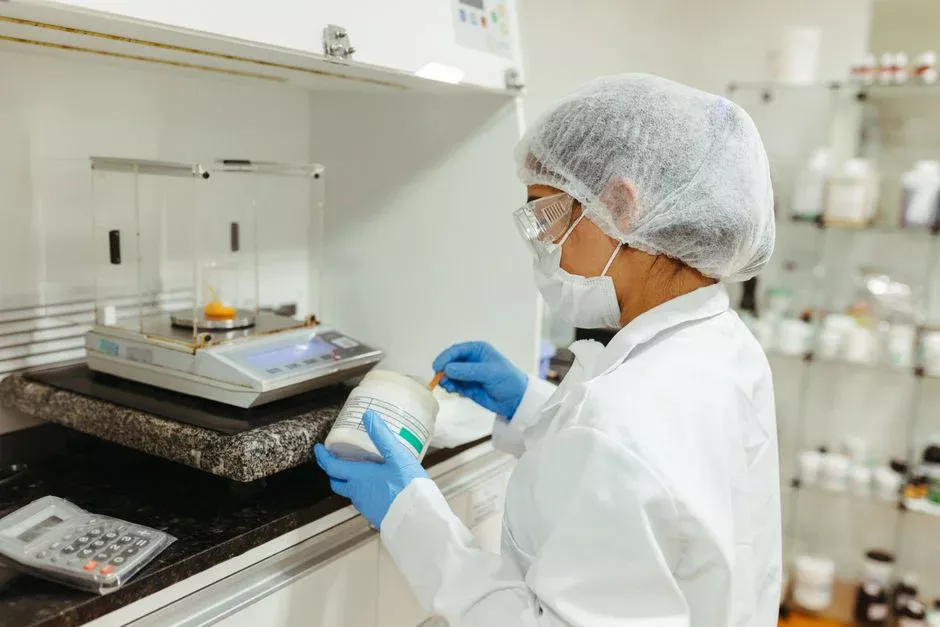
A defensible pretreatment train for a chemical plant under 40 CFR Part 414, 415, 417, or 419 follows a six-step sequence that mirrors the headworks technology the Elizabethtown WWTP uses at larger scale (source: elizabethtownky.org). Each step solves a specific influent problem and protects the next unit operation from overload.
Step 1 — Rotary mechanical bar screen. A rotary mechanical bar screen at the headworks with a 2–6 mm aperture protects downstream pumps and breaks rags, plastics, and any solids carryover from upstream reactor or batch operations. Skipping this step is a common shortcut that drives pump and seal failures within the first year.
Step 2 — Equalization tank. Sized for 8–24 hours of retention with aeration, the EQ basin damps pH, flow, and concentration swings from batch operations; aerated EQ also strips volatile solvents before they reach the sewer. Under-sizing equalization is the most common root cause of failed compliance events at chemical plants (HydropureWater field data, 2026), and the cost penalty for over-sizing is small compared with the cost of a single pass-through excursion.
Step 3 — PLC-controlled pH neutralization. A PLC-controlled chemical dosing loop with a 4–20 mA pH probe targets pH 6.5–8.5 before metals precipitation, dosing NaOH or lime as required. Manual caustic dosing is the second most common root cause of compliance failures and should not be specified for a chemical-plant effluent envelope.
Step 4 — Chemical precipitation and DAF. Chemical precipitation with NaOH or lime for metals, anionic polymer for floc, followed by a HydropureWater DAF system for O&G and TSS removal. DAF delivers 90–95% O&G removal on free and emulsified oil and covers 4–300 m³/h across standard models (HydropureWater field data, 2026), making it the workhorse for chemical-plant batch streams.
Step 5 — Sand or multimedia filtration. Optional but recommended for TSS carryover polish and to protect downstream polishing (RO or MBR) if the plant is moving toward reuse. This step is where most pass-through events are caught before they reach the sewer.
Step 6 — Sludge dewatering. A plate-and-frame filter press brings solids to 20–35% DS for off-site disposal. Watch the polymer make-down freshness — typical shelf life is 7–14 days for working solutions at 0.1–0.5% — and the sludge blanket level daily; both are leading indicators of dewatering performance and downstream compliance.
| Step | Unit operation | Influent problem solved | Key parameter |
|---|---|---|---|
| 1 | Rotary mechanical bar screen | Rags, plastics, carryover solids | 2–6 mm aperture |
| 2 | Equalization (aerated) | Batch pH, flow, and concentration swings | 8–24 h retention |
| 3 | PLC-controlled pH neutralization | Strong acid/caustic batches | pH 6.5–8.5 |
| 4 | Precipitation + DAF | Metals, O&G, TSS | 90–95% O&G removal |
| 5 | Multimedia filtration (optional) | TSS carryover | Polish to <30 mg/L TSS |
| 6 | Plate-and-frame filter press | Sludge volume reduction | 20–35% DS cake |
DAF vs. Lamella Clarifier: Choosing the Right Workhorse for Your Influent
The single most common equipment-selection question at this scale is DAF versus a lamella clarifier. The decision rule of thumb from HydropureWater field data, 2026: select DAF when inlet O&G exceeds ~150 mg/L or the stream is intermittent batch discharge; select a lamella clarifier for steady-state TSS polishing when O&G is already below ~100 mg/L and the priority is minimum chemical cost. For most chemical plants with batch reactor or parts-washer streams, the inlet envelope exceeds the DAF threshold, so DAF is the more common choice; lamella fits the dilute, steady cooling-tower and boiler-blowdown streams. The same influent-driven logic is documented in a DAF vs. clarifier for chemicals wastewater selection guide.
DAF delivers 90–95% O&G removal, operates at surface loading of 5–15 m/h, and requires saturator recycle and white-water blanket management. A lamella clarifier operates at 20–40 m/h surface loading, requires no saturator recycle, and uses roughly 30% less chemical than DAF (HydropureWater field data, 2026). Chemical precipitation must precede the clarifier in either case to capture metals, and jar-testing every new chemistry against the existing precipitation program is the cheapest insurance against a limit exceedance after a process change — the same logic that prevents most SNC listings in the first place.
| Criterion | DAF | Lamella clarifier |
|---|---|---|
| O&G removal | 90–95% | 50–70% |
| Surface loading | 5–15 m/h | 20–40 m/h |
| Best-fit influent O&G | >150 mg/L or batch | <100 mg/L steady |
| Saturator recycle | Required | Not required |
| Relative chemical use | Baseline | ~30% lower |
CAPEX, OPEX, and the Cost of a Single Pass-Through Event
The CAPEX band for a 20–50 m³/h chemical-plant pretreatment system is USD 350,000–900,000 (HydropureWater field data, 2026), driven primarily by EQ volume, DAF or lamella size, optional filtration, and sludge dewatering. OPEX is dominated by polymer consumption at 0.5–3 mg/L in the DAF feed, NaOH or lime dose at 100–400 mg/L for metal precipitation, sludge hauling, and routine maintenance. Polymer make-down has a 7–14 day shelf life at 0.1–0.5% working concentration; exceeding it costs both chemical dollars and compliance headroom.
The cost of non-compliance is what should sharpen the conversation in a CAPEX review. A single slug-load pass-through event can trigger surcharge billing, an SNC listing, and 24-hour reporting consequences that easily exceed the marginal cost of adequate equalization. Position equalization and PLC-controlled dosing as the lowest-cost insurance in the entire train — under-sizing either is the most common root cause of compliance failures at chemical plants (HydropureWater field data, 2026). For a broader regulatory framework and the broader US chemical-plant pretreatment framework, the national article covers the legal stack in more detail, while a parallel Houston chemical-plant compliance guide shows how the same logic plays out against a different POTW capacity envelope.
Self-Monitoring, Reporting, and Records: What the Local Control Mechanism Will Require
The local control mechanism enforced by the Elizabethtown pretreatment program will require the following operational obligations, all of which should appear in a site compliance procedure and be auditable at any time.
- 24-hour reporting of any exceedance, with written corrective action documented and filed.
- Three years of chain-of-custody records for all compliance samples, including flow, pH, and any pollutant flagged in the control mechanism.
- A current slug-load control plan under 40 CFR 403.8(f) covering chemical storage areas, secondary containment, spill response BMPs, and the operating procedure for batch releases.
- BMR and 90-day compliance report cadence under 40 CFR 403.12, filed on the schedule defined in the control mechanism (per EPA, 2026).
- Routine POTW inspections and sampling — assume random grab sampling, not a heads-up, and design the operation to pass unannounced.
- Hauled-waste acceptance records: confirm the WWTP's hauled-waste acceptance rules (source: elizabethtownky.org) before scheduling outside sludge deliveries into your own treatment train, and document the generator, volume, and profile of every load.
Confirm site-specific design values against current permits, influent testing, and the final equipment proposal rather than relying on a generic template. The control mechanism, not the federal categorical default, is the binding number.
Frequently Asked Questions
Which 40 CFR subpart applies to a chemical plant near Elizabethtown, KY?
Chemical manufacturers are typically governed by 40 CFR Part 414 (organic chemicals, plastics, and synthetic fibers), Part 415 (inorganic chemicals), Part 417 (soap and detergent manufacturing), or Part 419 (petroleum refining), with Part 433 layering on only for an on-site metal-finishing line. Confirm applicability with the Elizabethtown pretreatment coordinator before submitting a permit application (per EPA, 2026).
What are the SIU triggers under 40 CFR 403.3(v) for a 13 MGD POTW?
Three triggers qualify an industrial user as an SIU: (1) subject to categorical pretreatment standards, (2) average ≥25,000 gpd process wastewater, or (3) process waste ≥5% of the POTW's average dry-weather hydraulic or organic capacity. Against the 13 MGD Elizabethtown WWTP, trigger 3 corresponds to roughly 650,000 gpd — but chemical plants almost always meet trigger 1 (per EPA, 2026).
DAF or lamella clarifier for a chemical plant with batch reactor and parts-washer streams?
Select DAF when inlet O&G exceeds ~150 mg/L or the stream is intermittent batch discharge; select a lamella clarifier for steady-state TSS polishing when O&G is already below ~100 mg/L and minimum chemical cost is the priority (HydropureWater field data, 2026). For most chemical plants, DAF is the more common choice.
What does the Elizabethtown Sewer Use Ordinance require for exceedance reporting?
Report any exceedance within 24 hours, document corrective action, keep three years of chain-of-custody records, and maintain a current slug-load control plan under 40 CFR 403.8(f) covering chemical storage and spill response BMPs. The Elizabethtown WWTP runs a State-approved pretreatment program with a State-certified laboratory and enforces these obligations through random grab sampling, surcharge billing, and SNC listings (source: elizabethtownky.org).