What "Water Consumption per kg Hydrogen" Actually Means for PEM
"Water consumption per kg of hydrogen" is not one number; it is three nested numbers, and the boundary you draw determines the answer. The narrowest definition is the stoichiometric minimum: the amount of water that must be split to liberate 1 kg of H2 from the reaction 2 H2O → 2 H2 + O2. This is a theoretical reference derived from the molecular mass of water (18.015 g/mol) and hydrogen (2.016 g/mol), and it is the only "exact" figure the mass balance allows. Any higher value reflects losses, not chemistry.
The second scope is the stack boundary, which is the water actually fed to the PEM cell. Stack-level consumption is higher than the stoichiometric floor because a fraction of feedwater is lost as entrained water in the oxygen and hydrogen product streams, as evaporation from thermal management, and as the periodic flushes the OEM prescribes to clear dissolved gases. The third scope is the site boundary, which is what the procurement team and the permitting authority care about: raw water drawn at the plant gate. Site-level consumption is higher still because it includes the reject streams from the pretreatment train, the cooling-tower make-up, the softener regeneration water, and staff/utility water.
For PEM specifically, the spread between the stack and site boundaries is wide because of feedwater purity. PEM stacks will not tolerate the dissolved metals, chloride, and particulates that an alkaline cell might shrug off, so PEM projects carry a much larger pretreatment train. That train is the dominant water user on site, not the stack. A buyer who quotes only the stoichiometric minimum to a finance team understates the real plant demand; a buyer who quotes a vendor's nameplate figure without disclosing the boundary understates the same risk in the other direction. Water quality, not litres, is the constraint that drives the 2026 specification.
Why PEM Feedwater Quality Dominates the 2026 Conversation
High-purity feedwater is necessary in proton exchange membrane (PEM) systems to prevent membrane degradation and catalyst poisoning. The May 2026 RSC Advances review of the "All Water to Hydrogen" field restates the consensus plainly: the dominant techno-economic challenge in electrolysis remains the high energy requirement associated with water splitting, while water quality mainly affects electrolyser durability and long-term operational stability (RSC Adv, 01 May 2026, 16(32):29073–29120). Two claims in that sentence matter for a project engineer. First, the review downgrades bulk water consumption as the binding constraint and elevates feedwater quality. Second, it ties water quality to lifetime and stability rather than to immediate output, which means a poor specification shows up as accelerated stack replacement in years three to seven.
The failure-mode logic is well established. Dissolved transition metals (iron, copper, nickel) plate out on the platinum-group catalysts and shift the half-cell potentials. Chloride ions attack the iridium and ruthenium oxide catalysts that carry the oxygen evolution reaction. Particulates and silica foul the flow fields and the membrane interface, raising cell resistance. Total organic carbon supports microbial growth in deionized loops, which then sheds biomass and endotoxin into the stack. Each of these is a different unit operation upstream, which is why the pretreatment train, not the electrolyser, is the asset the water-quality decision actually buys.
The 2026 review also formalizes a research lens it calls "All Water to Hydrogen," which positions freshwater, seawater, wastewater, and grey water as candidate feedstocks (RSC Adv, 01 May 2026, 16(32):29073–29120). The framing is deliberate: it argues that with the right pretreatment, corrosion-resistant materials, and electrochemical design, alternative water sources can be used. For a project engineer, the practical translation is that the OEM's feedwater specification, not the source water at the site gate, defines the pretreatment train you have to build.
PEM Feedwater Parameter Targets and Pretreatment Unit Operations
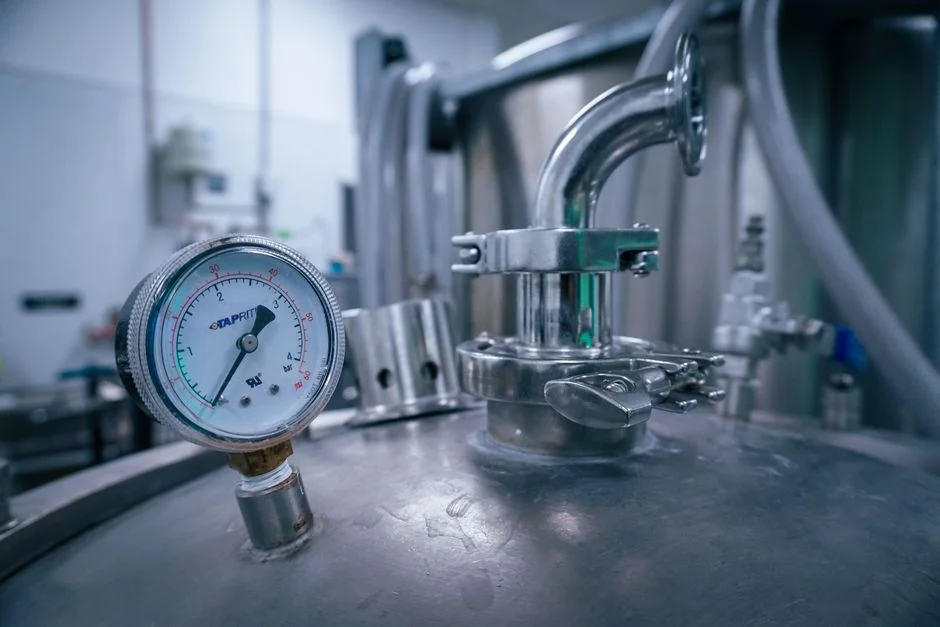
The parameter table below is the working specification a buyer should send to a pretreatment supplier. The research does not supply numeric limits for these parameters, so the table is presented as the checklist the buyer must complete with the electrolyser OEM and confirm against the source-water analysis. Do not treat the column layout as a finished specification; treat the rows as the questions to ask.
| Parameter family | What it controls in the stack | Typical unit operation |
|---|---|---|
| Conductivity / total dissolved solids | Cell resistance, osmotic drag, catalyst poisoning | Reverse osmosis followed by electrodeionization polishing |
| Hardness (Ca, Mg) and divalent ions | Scale on flow fields, membrane surface | Industrial water softener or weak-acid ion exchange |
| Silica | Irreversible fouling of RO membranes and the cell | RO with high rejection; EDI as a polish step |
| Total organic carbon (TOC) | Microbial growth, membrane attack | Activated carbon and UV at 185 nm |
| Free chlorine and oxidants | Membrane chemical degradation | Activated carbon and/or sodium bisulfite dosing |
| Suspended solids and turbidity | Mechanical fouling, blockages | Multi-media filtration with periodic backwash |
| Temperature window | Membrane hydration, catalyst stability | Heat exchanger and chiller on the feed loop |
| Feed pressure | BoP pump sizing, RO recovery | Booster pumps and pressure regulation |
The unit operations in the right column are not interchangeable. Conductivity/TDS is removed by an industrial RO system and polished further by the electrodeionization polishing stage; hardness is handled by an industrial water softener; turbidity and TSS are cut by a multi-media pretreatment filter; and microbial control on the deionized loop is a UV sterilizer on the feed loop. Each row of the table is also a contractual line: if the OEM does not give you a number, you cannot size the unit, and you cannot price the BoP.
Industrial Pretreatment Train for a PEM Electrolyser
A defensible PEM pretreatment train, drawn from the parameter table above, runs in this order: raw-water intake, multi-media filtration to drop turbidity and suspended solids, activated carbon for chlorine and oxidant removal, softening or ion exchange for hardness, an industrial RO system to remove the bulk of the dissolved solids, an electrodeionization polishing stage to reach the resistivity the stack requires, a UV sterilizer on the deionized loop for microbial control, and finally the electrolyser feed loop with its pressure and temperature trim. Each stage produces a reject stream; the softener regenerates on brine, the RO rejects a concentrate, and the EDI rejects a small bleed.
The RO and softener reject inflate site-level water consumption, not the electrolyser itself. A buyer who reports only the stoichiometric 9 kg figure to a finance team will be contradicted the first time the plant draws from the raw-water header. Two design choices limit the damage. First, the RO reject can be partially recycled in the plant utility loop, for example as cooling-tower make-up, which reduces net freshwater draw without sending reject water back to the stack. Second, the train is configurable: a site with already-softened boiler feedwater can skip the softener; a site near a seawater intake needs a different front end, often with additional chloride-selective stages, and a site drawing from a municipal potable supply usually starts at multimedia filtration rather than at raw surface water.
For the consumables side of the train, the RO membranes and the ion exchange resin are the assets that degrade and have to be replaced on a known cycle, and the RO membrane consumables programme should be sized off the OEM's stated water-recovery target. Recovery is also where the site-level water footprint moves: a 75% recovery RO behaves very differently from a 60% recovery RO when the plant is producing 1 t/day of hydrogen.
Sizing the Water System Against Hydrogen Output
The unit-conversion chain that takes a project from "kg of H2 per day" to "m3 of raw water at the plant gate" runs in four steps, and three of the four numbers must be provided by the vendor. Step one is the stoichiometric floor: 1 kg of H2 requires the mass-equivalent of water. Step two is the stack water demand factor, which the OEM states at nameplate and which is always above the stoichiometric floor because of product-stream losses, evaporation, and periodic flushing. Step three is the RO recovery rate, which determines how much raw water the pretreatment train must process to deliver a given litre of deionized water to the stack. Step four is the site-level multiplier, which adds softener regeneration, cooling-tower make-up, and utility water, and which depends on whether the plant is integrated with an existing utility loop or is a standalone greenfield.
The two inputs the buyer must obtain before any sizing is meaningful are the OEM's specific water consumption at nameplate and the RO recovery rate. Both are non-negotiable. With those two numbers, plus a source-water analysis, the procurement team can size the multimedia filter, the softener, the RO unit, the EDI polisher, and the UV sterilizer. Without them, the only defensible position is to ask, not to estimate. The pretreatment train is sized off the OEM water figure, not off the stoichiometric minimum, and a finance team that has been quoted only the stoichiometric number has been quoted a number that does not describe the plant.
For broader plant-level efficiency context, the same logic that drives RO recovery and reject reuse in a PEM plant is covered in a plant-level water efficiency guide, and the rationale for ion exchange as a front-end hardness step is laid out in an ion exchange pretreatment guide. Where the BoP includes a water-reuse loop, a UV disinfection comparison for reuse loops helps select the right unit. The point in all three is the same: the procurement decision lives in the pretreatment train, not in the electrolyser.
Frequently Asked Questions
How much water does a PEM electrolyser actually use per kg of hydrogen?
The stoichiometric reaction sets a theoretical minimum of roughly 9 kg of water per kg of H2, but the figure that matters for plant design is the OEM's specific water consumption at nameplate, which is always higher because of stack losses, balance-of-plant losses, and pretreatment rejects. The 2026 RSC Advances review confirms that bulk water quantity is not the binding constraint (RSC Adv, 01 May 2026, 16(32):29073–29120); the binding constraint is feedwater quality, and that is what inflates site-level draw through RO and softener reject.
What feedwater quality do I have to specify to a PEM OEM?
The buyer has to request a numeric specification for conductivity/TDS, hardness, silica, TOC, free chlorine, suspended solids, feed temperature, and feed pressure. These numeric limits must come from the OEM directly. Once those numbers are in hand, the parameter table above maps each parameter family to a unit operation and lets the pretreatment supplier quote a train.
What is a realistic pretreatment train for a 1 t/day PEM plant?
A realistic quote cannot be produced without a confirmed site-water analysis and an OEM nameplate figure. The buyer should request, in writing, the OEM's specific water consumption at nameplate in litres per kg of H2, the RO recovery rate the OEM expects, and the softener regeneration frequency implied by the source-water hardness. Those three values are the inputs the pretreatment supplier needs; without them, any budget number is a guess.
How do I select a pretreatment supplier for a PEM electrolyser project?
Ask the supplier to commit to the OEM's feedwater specification in writing, to warrant the conductivity and silica limits at the EDI outlet, and to size the RO unit off a stated recovery figure rather than off a default. Ask also for a consumables schedule (membranes, resin, UV lamps) with replacement intervals, because the operating cost of the train over a ten-year plant life is dominated by those consumables. A supplier who can answer those four items on the first call is one a procurement lead can put on the bid list.