What Cooling-Tower Blowdown Means for a Bamako Site
Cooling-tower blowdown is the concentrated wastewater stream left when an evaporative cooling system rejects pure water as vapor and leaves dissolved solids, treatment chemicals, and corrosion byproducts behind in the recirculating loop. For a Bamako data center, the makeup water is drawn from the Niger River through the SOMAGEP/SOMAGEP–SADE distribution network, and that source water determines both the inlet chemistry and the multiplier the blowdown will carry. A data-center cooling tower running 4 cycles of concentration loses roughly 25–30% of makeup water as blowdown, and for a facility using 10 million gallons per month, that translates into 2.5–3 million gallons per month of concentrate to dispose of or reuse, per Genesis Water Technologies (2026).
Two Bamako-specific conditions change how the design must be sized. First, the dry-season cycle in the upper Niger basin concentrates source water and elevates inlet TDS, which pushes blowdown toward the upper end of the 1,200–6,000 mg/L envelope reported by Genesis Water Technologies. Second, the city's municipal sewer was not sized for industrial loads, so any discharge path must be paired with on-site pretreatment that brings blowdown into a sewer-compatible envelope before the wastewater leaves the site.
Blowdown Chemistry the Treatment Train Must Handle
The chemistry of the blowdown stream is the central reason it requires dedicated handling. The water is not merely concentrated; it is also dosed with a chemical package — biocides, corrosion inhibitors, scale inhibitors, and dispersants — that becomes more reactive as cycles of concentration rise, per RSP Engineers (2026). Legacy or chromate/phosphate-based chemistries, still in use at older African facilities, create particular reuse and discharge risk because those species accumulate in the concentrate and pass through conventional filtration.
The table below shows the parameter envelope the design must hit. The 1,200–6,000 mg/L TDS range, the 4–8× multiplier over makeup water, and the 10–50 mg/L suspended-solids band are all drawn from Genesis Water Technologies (2026). The pH and temperature limits in the right column follow RSP Engineers (2026), who treat pH 6.0–9.0 and a maximum discharge temperature (often 150°F / ~65°C) as the operational envelope for sewer-acceptable discharge.
| Parameter | Typical Blowdown Range | Design Implication |
|---|---|---|
| Total Dissolved Solids (TDS) | 1,200–6,000 mg/L (4–8× makeup) | Drives RO sizing; some jurisdictions enforce TDS <1,500 mg/L for sewer discharge |
| Suspended Solids | 10–50 mg/L | Must be reduced below 10–15 micron before any RO membrane |
| pH | Often 5.0–10.0 from chemical dosing | Neutralize to 6.0–9.0 before discharge |
| Temperature | Up to 50–60°C at the basin | Cool or hold before sewer discharge to protect receiving biology |
| Residual chlorine / biocides | Variable, often 0.1–1.0 mg/L Cl₂ | Dechlorinate or substitute non-persistent biocides for sewer discharge |
| Heavy metals (Cu, Zn) | Trace, parts per billion | Chemical precipitation or ion exchange before sewer discharge |
| Scale-forming ions (Ca, Mg, silica) | Concentrated with cycles | Antiscalant + RO/NF; binding limit for membrane recovery |
The takeaway for the Bamako engineer is that blowdown is the dominant process wastewater stream at the site, not sanitary flow, and every equipment decision downstream is anchored to those numbers.
Matching the Treatment Train to Bamako's Discharge Realities
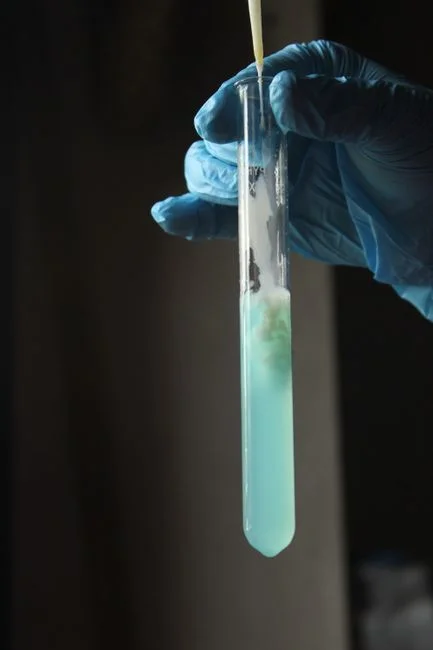
Three end-of-pipe options are realistic for a Bamako data center, and each one forces a different upstream train. The first is discharge to a municipal sanitary sewer under an industrial user permit, with limits on pH, residual chlorine, metals, and sometimes TDS, per RSP Engineers (2026) and Genesis Water Technologies (2026). Some jurisdictions now set TDS limits below 1,500 mg/L for industrial discharge, which effectively prohibits the release of untreated blowdown from a 4-cycle tower.
The second path is on-site reuse or tanker haul-off for landscape and dust-control applications, paired with dechlorination and biocide neutralization. This option is sensitive to inhibitor residuals and typically only carries a compliance envelope for periodic, lower-volume use, per RSP Engineers (2026).
The third path is on-site reuse back into the cooling loop, the highest-value option because AI workloads push cooling demand up, per the Water Utility Report (2026-04-14). The same source notes that AWS is expanding recycled-water use from 24 to more than 120 U.S. locations and expects the shift to preserve over 530 million gallons of drinking water annually. A February 2026 TNFD case study cited in the same report specifically flags blowdown mismanagement as a source of elevated salts, heavy metals, and pollutants — a reputational and permitting pressure that is real in a Sahel context where municipal regulators are scrutinizing industrial intakes on the Niger basin.
Pretreatment: Side-Stream Filtration and pH Adjustment
Side-stream filtration is the lowest-cost intervention that protects every downstream membrane and the receiving sewer. Self-cleaning spiral filters or multimedia units sized to 1–5% of circulation flow at 10–25 micron remove suspended solids, biofilm fragments, and corrosion products before they enter the blowdown stream, with CAPEX of $50,000–$200,000 per Genesis Water Technologies (2026). When paired with bio-organic flocculants, side-stream filtration efficiency increases substantially for colloidal solids that would otherwise pass through conventional media.
pH neutralization with acid or caustic dosing brings blowdown into the 6.0–9.0 sewer envelope, per RSP Engineers (2026). Dechlorination, or substitution with non-persistent biocides, addresses the strict residual-chlorine limits that apply to sewer discharge and is the simplest way to keep a discharge permit from being revoked. A HydropureWater DAF system downstream of neutralization removes precipitated metals and colloidal solids, while a HydropureWater automatic chemical dosing system holds antiscalant, biostat, and pH trim within target bands. A HydropureWater multi-media filter provides the final suspended-solids polish before the blowdown stream enters either a sewer tie-in or a membrane block.
Reuse Path: Reverse Osmosis and Optional MVC Polish
Reverse osmosis is the workhorse of blowdown reuse. RO delivers 95–99% dissolved-solids removal with permeate at 10–50 mg/L TDS, suitable for direct return to the cooling tower as high-quality makeup or for blending with standard makeup to raise overall cycles of concentration, per Genesis Water Technologies (2026). A 50,000 GPD RO system treating blowdown runs $250,000–$500,000 installed, with operating costs of $1.50–$3.00 per 1,000 gallons treated covering energy, antiscalant, membrane replacement, and maintenance.
RO recovery for blowdown is typically 50–85% because scaling limits concentrate as TDS rises. Operating pressures of 150–400 psi overcome the osmotic pressure of concentrated feed, and antiscalant injection — sometimes paired with a catalytic scale-inhibition program — is necessary to protect the membranes. A HydropureWater industrial RO system sized to the site's concentrate flow is the core asset, with a HydropureWater ultrafiltration system upstream as RO pretreatment, and HydropureWater replacement membrane elements held in stock for the 1–3 month chemical-cleaning cycle.
Nanofiltration operates at 75–150 psi with 70–85% recovery and is a lower-pressure alternative when hardness is the binding discharge limit rather than total TDS, per Genesis Water Technologies (2026). MVC polishing of RO concentrate reaches 95–98% recovery, producing distillate below 10 mg/L TDS at 15–25 kWh per 1,000 gallons of distillate — a thermal step that becomes harder to justify in Bamako when grid reliability is intermittent. The decision rule is simple: keep MVC off the critical path unless sewer capacity is constrained and the concentrate cannot be hauled.
Decision Matrix: Which Train Fits This Bamako Build
The matrix below maps the three Bamako discharge realities to the three realistic treatment trains. The reuse train assumes a 4-cycle cooling tower and a 50,000 GPD RO block, sized for 50–85% recovery and returning permeate to the cooling loop. The discharge-compliance train assumes a sewer tie-in with an industrial user permit and a focus on pH trim, metal precipitation, and dechlorination rather than TDS reduction. The partial-ZLD train adds MVC on the RO concentrate and is only justified when sewer capacity is constrained and grid power is reliable enough to run a thermal block.
| Discharge Reality | Treatment Train | Recovery | Best-Fit Condition |
|---|---|---|---|
| Sanitary sewer with industrial user permit | pH neutralization + chemical precipitation + dechlorination + MMF polish | N/A (compliance-driven) | Sewer authority accepts TDS <1,500 mg/L and low metals |
| On-site reuse to cooling loop | Side-stream filtration + pH neutralization + RO | 50–85% | Avoided discharge fees >$5–$15/1,000 gal; fresh water scarcity is a binding constraint |
| Partial ZLD with MVC | RO concentrate routed to MVC (95–98% recovery) | 85–95% overall | Sewer capacity constrained and grid power is reliable enough to justify the thermal step |
Common to all three trains: pretreatment protection of membranes, automated chemical dosing, and continuous monitoring for permit compliance, per RSP Engineers (2026) and Genesis Water Technologies (2026). Without those three, none of the trains will hold a permit or a recovery guarantee.
Cost Envelope and Phased Implementation
The cost numbers below are the realistic spend bands reported by Genesis Water Technologies (2026) and RSP Engineers (2026); they are not project-specific quotations. A pretreatment-only skid — side-stream filtration, chemical dosing, pH trim — runs $50,000–$200,000 in CAPEX with low OPEX beyond chemical consumption. A full RO reuse train adds $250,000–$500,000 for a 50,000 GPD RO block, plus $1.50–$3.00 per 1,000 gallons of OPEX covering energy, antiscalant, membrane replacement, and maintenance.
Direct-discharge fees above $5–$15 per 1,000 gallons in water-stressed regions are a real operating penalty that reuse avoids, per Genesis Water Technologies (2026). A full ZLD build with MVC at 10,000–30,000 GPD adds $1–$3 million in CAPEX and $5–$15 per 1,000 gallons in OPEX; treat it as a final-stage upgrade when sewer capacity is constrained, not as a first-build line item.
For a Bamako build, the practical phasing is: (1) install the pretreatment skid and discharge-compliance train to the sewer under an industrial user permit; (2) add the RO block once the inlet water profile is stable and the sewer authority's TDS limits are confirmed; (3) defer MVC until the third phase, when reuse economics are proven and grid power quality has been characterized. For a parallel view of source-water conditions in another Sahel-context data-center build, our Kinshasa data-center blowdown guide walks through the same envelope. Our Moscow data-center blowdown guide covers a colder-climate counterpoint, and our manufacturing water-use reduction guide is useful for the broader water-stewardship framing on the developer's side.
Frequently Asked Questions
Is cooling-tower blowdown the dominant wastewater stream at a Bamako data center?
Yes. RSP Engineers (2026) and Genesis Water Technologies (2026) both treat cooling-tower blowdown as the primary process wastewater stream, with sanitary flow secondary in volume. For a 10-million-gallon-per-month facility running 4 cycles of concentration, blowdown is 2.5–3 million gallons per month of concentrate that the sewer authority was not designed to accept without pretreatment.
What is the realistic RO recovery rate for a Bamako blowdown stream?
50–85% is the band reported by Genesis Water Technologies (2026) for blowdown RO, limited by scaling potential as concentrate TDS rises. Higher recovery is possible with advanced antiscalant programs and periodic cleaning, but the conservative design point for an EPC layout should sit in the middle of that range.
What CAPEX and OPEX should a developer budget for a reuse train versus discharge compliance?
Pretreatment-only discharge compliance runs $50,000–$200,000 in CAPEX, per Genesis Water Technologies (2026) and RSP Engineers (2026). A full RO reuse train adds $250,000–$500,000 in CAPEX for a 50,000 GPD block, with $1.50–$3.00 per 1,000 gallons of OPEX. Direct-discharge fees above $5–$15 per 1,000 gallons in water-stressed regions can flip that math within the first year of operation, so the buyer must request the local sewer authority's actual fee schedule before sizing.
Which discharge path is the lowest-risk permitting option for a Bamako site?
Discharge to the municipal sanitary sewer under an industrial user permit is the realistic low-bar option, per RSP Engineers (2026). Direct surface-water discharge under the U.S. NPDES framework is not the applicable path in Mali, and any tanker haul-off or on-site irrigation requires a separate compliance envelope. Engage the local sewer authority early in due diligence to confirm TDS, metals, and biocide limits before sizing the pretreatment skid.