The three-layer regulatory stack a Lynnwood fab must clear before discharge
Semiconductor plants near Lynnwood, Washington meet pretreatment limits before sewer discharge by operating under a three-layer regulatory stack: the EPA Industrial Pretreatment Program at 40 CFR Part 403, the semiconductor categorical effluent standard at 40 CFR Part 413, and the local Sewer Use Ordinance of the receiving POTW — with the strictest of the three governing in practice. The fab runs a four-stage train of source segregation, pH neutralization with chemical precipitation (calcium chloride or lime to drive CaF2), dissolved air flotation or lamella clarification, and ion exchange or RO polishing, supported by continuous online monitoring of pH, fluoride, and metals.
The 40 CFR Part 403 Industrial Pretreatment Program is the legal mechanism that makes any discharge from an "industrial user" to a POTW conditional: the user must remove pollutants that could pass through, interfere with, or contaminate the sludge of the receiving plant, per the EPA's own 2026 description of local-limit authority under 40 CFR 403.5(c). 40 CFR Part 413 then layers the semiconductor-specific categorical effluent limits on top of that general framework, per the hydropurewater.com 2026 compliance guide. The third ceiling is the receiving POTW's local Sewer Use Ordinance, which EPA notes is site-specific and can be numeric or narrative, and which EPA can enforce as a pretreatment standard once it is developed and approved under 40 CFR 403.5(c).
In practice the local SUO almost always controls the design. As the hydropurewater.com guide observes, "the strictest of the three governs, which in practice is almost always the local SUO," because the SUO is calibrated to the specific POTW's headworks, biomass, and receiving-water capacity rather than to a national category average. 2023 openRxiv research on US sewer connectivity reinforces the point that downstream POTW capacity is highly uneven, so a Lynnwood-area fab whose effluent clears the categorical floor can still fail a small-POTW local limit. The practical consequence is that reading the receiving POTW's SUO and most-recent IPP discharge permit line by line is the first engineering step on any project, before any equipment is sized.
What a fab actually has to treat: the pollutant map
Wet-etch, cleaning, and CMP tool drains carry fluoride (HF, NH4F), copper, and suspended solids. The hydropurewater.com 2026 guide records influent fluoride in the 50–500 mg/L range against POTW fluoride ceilings commonly set at 10–25 mg/L. BEOL metallization, plating, and photomask deposition add nickel, cobalt, chromium, lead, and silver at mg/L levels, with individual metals typically enforced at 1–3 mg/L and combined metals at ≤5 mg/L per the same source. Photoresist developer and wafer cleaning introduce TMAH (tetramethylammonium hydroxide) and NH3-N, with selected POTWs enforcing TMAH at 100–200 mg/L and NH3-N around 50 mg/L.
Fluoride is the single parameter that most often forces a dedicated treatment stage. The hydropurewater.com 2026 guide states the categorical toxicity threshold for downstream anaerobic digesters sits at 20–30 mg/L, because fluoride at that range already inhibits methanogenic activity. Removing fluoride to single-digit mg/L therefore requires a dedicated chemical precipitation step — almost always calcium-driven — that the rest of the train is then designed around. The Samsung Austin three-stream model — pH neutralization, fluoride treatment, and copper treatment — is the published real-world reference for how a US fab organizes these chemistries, per the ultrafacilityportal.io GWI Magazine January 2020 end-user perspective.
| Fab process source | Key pollutants | Commonly enforced range |
|---|---|---|
| Wet-etch, post-etch cleaning | HF, NH4F (fluoride) | Influent 50–500 mg/L; POTW ceiling 10–25 mg/L (hydropurewater.com, 2026) |
| CMP, plating, BEOL metallization | Cu, Ni, Co, Cr, Pb, Ag | 1–3 mg/L individual; ≤5 mg/L combined (hydropurewater.com, 2026) |
| Photoresist developer, wafer cleaning | TMAH, NH3-N | TMAH 100–200 mg/L at selected POTWs; NH3-N ~50 mg/L (hydropurewater.com, 2026) |
| CMP slurry, filter backwash, precipitation solids | Total suspended solids | SUO overflow 30–60 mg/L after Stage 3 (hydropurewater.com, 2026) |
The four-stage pretreatment train that meets the limits
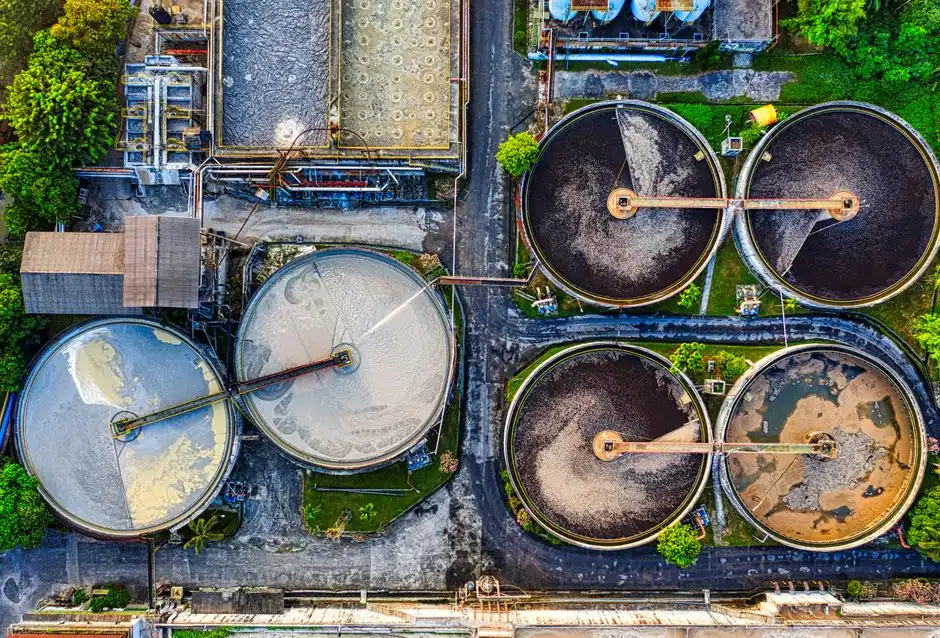
Stage 1 is source segregation. Fluoride-bearing streams from wet-etch and post-etch cleaning are kept separate from CMP slurry waste and from TMAH/ammonia developer streams, per the hydropurewater.com 2026 guide. The reason is pH: fluoride precipitates efficiently only in the 6–8 range, while metal-hydroxide precipitation from CMP waste works best at 9–10.5, and TMAH biodegradation is fastest outside the fluoride window. Segregation is a piping decision made at fab design time and is almost impossible to retrofit cheaply.
Stage 2 is pH neutralization and chemical precipitation. Calcium chloride — or alternatively lime — is dosed into the fluoride stream to drive CaF2 precipitation (Ksp ≈ 3.9 × 10⁻¹¹), and sodium hydroxide or lime is dosed into the metal stream. A PLC-controlled chemical dosing skid with pH and fluoride ISE feedback typically holds reagent addition within ±5% of setpoint, which is the difference between meeting a 15 mg/L fluoride cap and exceeding it. Background detail on reagent selection and contact-time design is in the fluoride removal technology guide.
Stage 3 is solids/liquid separation. DAF is preferred for high-flow, low-density, or oily streams at hydraulic loading rates of 4–25 m/h; lamella clarifiers are preferred where footprint is constrained and the solids are denser, with surface loading rates of 20–40 m/h. Both devices routinely deliver overflow TSS below 30–60 mg/L when the upstream chemistry is correct, per the hydropurewater.com 2026 guide.
Stage 4 is polishing. Ion exchange for trace metals and hardness polishing takes residual metals to single-digit µg/L on most parameters. For a fab with a reuse target, an industrial RO polishing system delivers 75–95% recovery per pass and brings TDS and residual fluoride down to levels suitable for non-critical rinsing, cooling-tower makeup, or scrubber feed. Samsung Austin's reported UPW reclaim is about 60% of UPW makeup volume, and a brine-recovery RO commissioned in late 2019 recovers 75% of the first-pass RO reject, reducing city-water makeup to the UPW system by 90 million gallons per year, per the ultrafacilityportal.io GWI Magazine January 2020 end-user perspective.
Samsung Austin's conversion of its copper system from chemical co-precipitation to ion exchange is reported to reduce chemical treatment by 2 million lb, eliminate 1.5 million lb of solids, and shrink the system footprint by 65% — a worked example of why source reduction plus polishing is preferred over brute chemical dosing, per the same GWI Magazine 2020 source. A rotary mechanical bar screen upstream of chemical dosing protects dosing pumps and the DAF recycle system from particulates, hair, and lint that ride in on utility-floor drains.
| Stage | Function | Operating range / output |
|---|---|---|
| 1 — Source segregation | Split fluoride, CMP/metal, TMAH-NH3 streams | Piping-level decision; pH 6–8 (fluoride), 9–10.5 (metal) windows |
| 2 — pH neutralization & precipitation | CaCl2/lime for CaF2; NaOH/lime for metal hydroxides | Dose held within ±5% of setpoint; effluent F < 15 mg/L target |
| 3 — Solids/liquid separation | DAF or lamella clarifier | DAF 4–25 m/h; lamella 20–40 m/h; overflow TSS 30–60 mg/L |
| 4 — Polishing | Ion exchange and/or RO | IX to single-digit µg/L metals; RO 75–95% recovery per pass |
Equipment selection: how an engineer actually sizes the train
For Stage 2, size the dosing skid on peak fluoride and metal mass load (kg/day), not average flow. The hydropurewater.com 2026 guide states that batch discharges from wet-etch tools and post-CMP cleaning can swing the instantaneous fluoride load by a factor of 3–5× over the daily average, and metering pumps should specify a turndown ratio of at least 10:1 with both 4–20 mA flow-pacing and pH/ISE feedback.
For Stage 3, the DAF-versus-lamella decision is driven by three numbers: peak flow (m³/h), influent TSS after coagulation, and footprint. An industrial DAF system handles 4–300 m³/h with float scraping and is the right answer for fluoride-rich or oily streams with high float loading. A lamella clarifier wins when flows are moderate, solids are denser, and the building bay is tight. For Stage 4, an industrial RO polishing system is selected when the fab has a documented reuse target of ≥50% recycle of the pretreatment effluent and a reject-stream management plan. Ion exchange is selected when the polishing duty is primarily trace metals and hardness, throughput is moderate (≤50 m³/h), and the operator is comfortable with resin regeneration cycles. For chromium-bearing streams, a dedicated Cr(VI) reduction step is required upstream.
Solids removed in Stage 3 — CaF2, metal hydroxides, and CMP residue — are thickened to 1–4% dry solids and dewatered in a plate-and-frame filter press sized from 1 m² (pilot) to 500 m² (full fab) to produce a 25–35% dry-solids cake for off-site hazardous-waste disposal, with filtrate returned to the head of the train. The Samsung Austin site reports that switching its copper system from co-precipitation to ion exchange eliminated 1.5 million lb of solids generated by the previous system — a concrete example of how polishing-stage decisions drive upstream chemistry-skid sizing, per the ultrafacilityportal.io GWI Magazine 2020 source.
Lynnwood and Puget Sound specifics: what the local permit actually adds
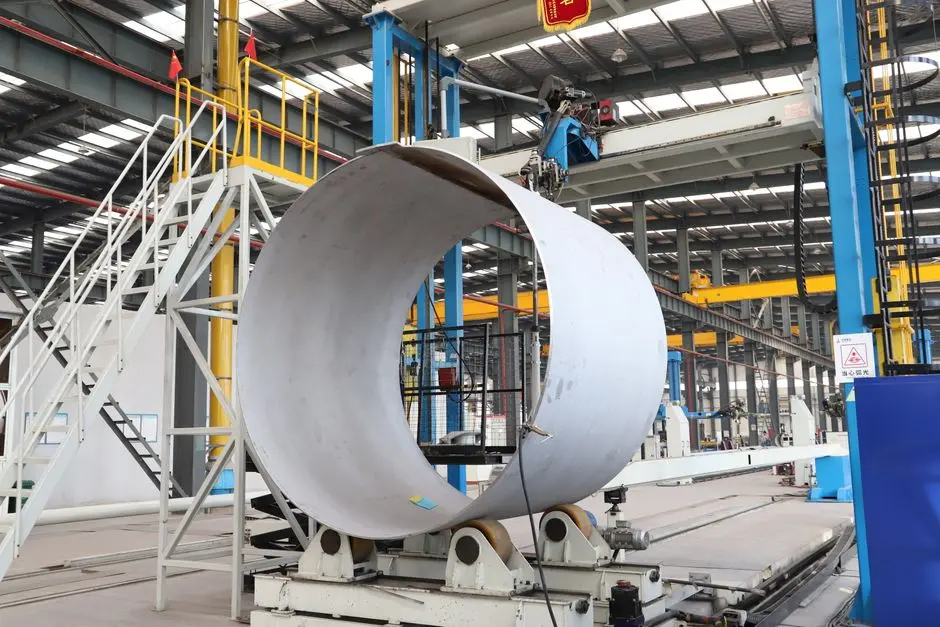
A Lynnwood-area fab discharges to a small Puget Sound POTW, and the hydropurewater.com 2026 guide explicitly flags that downstream POTW capacity in the US is highly uneven. A fab whose effluent clears the categorical floor can still fail a small-POTW local limit, which is why the first step on any project is reading the receiving POTW's SUO and most-recent IPP discharge permit line by line before any equipment is sized. Per the same guide, hauling liquid hazardous waste off-site is roughly 5–10× the cost per cubic meter of sewer discharge (industry benchmark, 2025-09), so a fab with a robust pretreatment train and a valid IPP permit has a structural cost advantage over a fab that trucks waste.
Fluoride-bearing streams in this region commonly target effluent below 15 mg/L via calcium precipitation, with the categorical toxicity floor for downstream digesters at 20–30 mg/L. Lynnwood's small-POTW context makes a continuous-monitoring instrumentation package — pH probe, fluoride ISE, and online total-metals analyzer on the combined effluent header — operationally more important than at a large metro POTW, because the local SUO almost always sets the controlling ceiling. Engineering and procurement teams that want to reduce net intake alongside compliance should review the broader reducing net water intake at a fab framework, which links the pretreatment train to overall water stewardship.
| Lynnwood / Puget Sound item | Action or value |
|---|---|
| Receiving POTW | Small municipal POTW; tighter headworks tolerance than the 40 CFR 413 categorical floor (hydropurewater.com, 2026) |
| First project step | Read the local SUO and most-recent IPP discharge permit line by line before equipment is sized (hydropurewater.com, 2026) |
| Effluent fluoride target | Commonly < 15 mg/L via Ca precipitation; categorical toxicity floor for digesters 20–30 mg/L (hydropurewater.com, 2026) |
| Cost lever | Off-site hauling is ~5–10× the cost per m³ of sewer discharge (hydropurewater.com, industry benchmark, 2025-09) |
| Monitoring emphasis | Continuous pH, fluoride ISE, and online total-metals analyzer on combined effluent header (hydropurewater.com, 2026) |
From equipment to a compliance program: monitoring, DMRs, and inspections
Equipment alone does not keep a fab in compliance; the online instrument suite and the IPP paperwork cycle do. The hydropurewater.com 2026 guide defines the minimum monitoring package for an IPP-regulated fab as a pH probe and a fluoride ion-selective electrode on the combined effluent header, plus a total-metals analyzer (on-line ICP-OES or XRF-on-line) for Cu, Ni, Cr, and any other metal the SUO specifically lists. Continuous monitoring satisfies the 24/7 expectation most POTWs now write into IPP permits and gives the operations team minutes of warning before a limit is exceeded, not hours.
The operational frame that turns equipment into a compliance program is the IPP permit cycle. A new or re-issued IPP permit typically runs 5 years and binds the fab to monthly Discharge Monitoring Reports (DMRs), routine POTW inspections (annual baseline, more frequent for Significant Non-Compliance facilities), and a slug-control plan for accidental releases. Every piece of equipment on the train must be backed by an SOP and a calibration record, because the POTW will inspect both the hardware and the paperwork. The 40 CFR 403 framework defines Significant Non-Compliance as a regulatory status with specific triggers (e.g., chronic permit-limit exceedances, failure to report, failure to comply with slug-control requirements), and engineers who treat pretreatment as a permit-driven engineering program rather than a black box are the ones whose plants stay out of SNC, per the hydropurewater.com 2026 guide.
Frequently asked questions
What regulatory ceiling actually controls the design for a Lynnwood-area fab?
The strictest of three ceilings controls: 40 CFR Part 403, 40 CFR Part 413, and the receiving POTW's local Sewer Use Ordinance. Per the hydropurewater.com 2026 guide, the local SUO almost always wins in practice because it is calibrated to the specific POTW's headworks, biomass, and receiving-water capacity. The first step on any project is therefore reading the SUO and the most-recent IPP discharge permit line by line before any equipment is sized.
What does a fab's pretreatment train actually look like, and which stage most often forces a dedicated step?
It is a four-stage sequence: source segregation, pH neutralization with chemical precipitation, solids/liquid separation (DAF or lamella), and polishing (ion exchange and/or RO). Per the hydropurewater.com 2026 guide, fluoride is the single parameter that most often forces a dedicated treatment stage because influent levels of 50–500 mg/L sit well above the 10–25 mg/L ceiling common in US POTW ordinances, and the 20–30 mg/L toxicity floor for downstream anaerobic digesters means the rest of the train is designed around the calcium precipitation step. Selection of the right Stage 3 device (an industrial DAF system versus a lamella clarifier) depends on peak flow, influent TSS, and footprint, while Stage 4 selection between an industrial RO polishing system and ion exchange turns on reuse target and reject-stream management.
How should a buyer size the dosing skid and select a polishing technology for a fab with a documented reuse target?
Size the dosing skid on peak fluoride and metal mass load (kg/day), not average flow, with a metering-pump turndown of at least 10:1 and both 4–20 mA flow-pacing and pH/ISE feedback, per the hydropurewater.com 2026 guide. For polishing, an industrial RO polishing system is the right answer when the fab has a documented reuse target of ≥50% recycle and a reject-stream plan; ion exchange is the right answer for moderate-throughput (≤50 m³/h) trace-metals and hardness polishing. Samsung Austin reports a 60% UPW-reclaim rate and a brine-recovery RO saving 90 million gallons per year of city water, per the ultrafacilityportal.io GWI Magazine 2020 source.
Is it cheaper to pretreat and discharge to the POTW or to haul waste off-site, and what should a buyer ask a vendor about the compliance program?
Per the hydropurewater.com 2026 guide (industry benchmark, 2025-09), hauling liquid hazardous waste off-site is roughly 5–10× the cost per cubic meter of sewer discharge, so a robust pretreatment train plus a valid IPP permit has a structural cost advantage. A buyer evaluating a vendor for a Lynnwood-area fab should request, before purchase: documentation that the proposed equipment is sized to the local SUO (not just the 40 CFR 413 categorical floor), evidence that the online monitoring package supports monthly DMR reporting and a slug-control plan, and a confirmed SOP/calibration record template set covering the equipment on the P&ID. Specific equipment pricing and lead time are project-dependent and must be requested as line-item quotes against the fab's design-day pollutant mass load.
Related Equipment
- industrial RO polishing system — specifications, capacity range, and technical data