What governs a mining or metals discharge near Fulton in 2026
Mining and metals plants near Fulton, NY that discharge to a POTW must satisfy a stacked rule set in 2026: the federal Mineral Mining and Processing Effluent Guidelines and Standards at 40 CFR Part 436, the New York State Pollutant Discharge Elimination System (SPDES) permit issued by NYSDEC, and the local sewer authority's own limits on metals, pH and TSS. Where the relevant subpart is reserved, there are no federal numeric limits and the local layer governs. The defensible train runs pH correction and metals precipitation first, then coagulation and DAF or lamella clarification, then multimedia filtration and a reverse-osmosis polish that reports >99% rejection of dissolved metals and salts.
The federal floor is the Mineral Mining and Processing Effluent Guidelines and Standards at 40 CFR Part 436, which EPA promulgated in 1975 and amended in 1976, 1977, 1978 and 1979; the regulation covers mine drainage, mineral processing and stormwater, and those Mineral Mining requirements are incorporated into NPDES permits (EPA, 2026-02). The rules do not apply uniformly to every mineral. The EPA list of reserved subparts — with no current numeric federal effluent limits — includes Dimension Stone (A), Lightweight Aggregates (H), Lithium (U), Ball Clay (AH), Feldspar (AI), Talc/Steatite/Soapstone/Pyrophyllite (AJ) and Garnet (AK) (EPA, 2026-02). When a Fulton operator's mineral sits in a reserved subpart, the federal numeric floor is silent on that parameter and the New York state and local POTW layers carry the load.
New York's layer is the SPDES permit administered by NYSDEC, which sets site-specific effluent limits and monitoring requirements for facilities discharging within the state. On top of that, the Fulton-area POTW runs its own pretreatment program with local discharge limits for heavy metals, pH and TSS. Both sets of numbers need to be on the table before any equipment is sized. 40 CFR Part 403 general pretreatment standards sit underneath everything as the always-on floor that governs industrial discharges to a POTW regardless of whether Part 436 is silent on a given parameter, so the operator cannot assume a reserved subpart means no rules.
Characterizing the four wastewater streams a Fulton mine actually generates
Acid mine drainage occurs wherever sulfide minerals are disturbed. When pyrite and pyrrhotite in waste rock and tailings are exposed to oxygen and water, oxidation produces sulfuric acid that leaches iron, manganese, copper, zinc, arsenic and cadmium at concentrations far exceeding regulatory limits (AMPAC USA, 2025-09). Process water from flotation, heap leach, cyanide gold extraction and chlorination circuits adds high total dissolved solids plus cyanide, ammonia or chloramines depending on circuit chemistry (AMPAC USA, 2025-09). Tailings-pond effluent carries fine solids, processing chemicals and leached metals. Dewatering discharge from open pits or underground workings is geology-dependent — relatively clean in some settings, heavily metal-loaded in others (AMPAC USA, 2025-09).
The practical consequence is that a copper site, a coal operation and a dimension-stone quarry cannot share a default train. The stream-by-stream sampling round defines the basis of design, and a supplier quoting on assumed feed chemistry is quoting the wrong job. Each stream drives different unit operations and different chemistry setpoints, and the engineer who hands a sampling report to the vendor is the engineer who gets a defensible scope back.
The defensible 2026 unit-operation sequence for Fulton-area operations
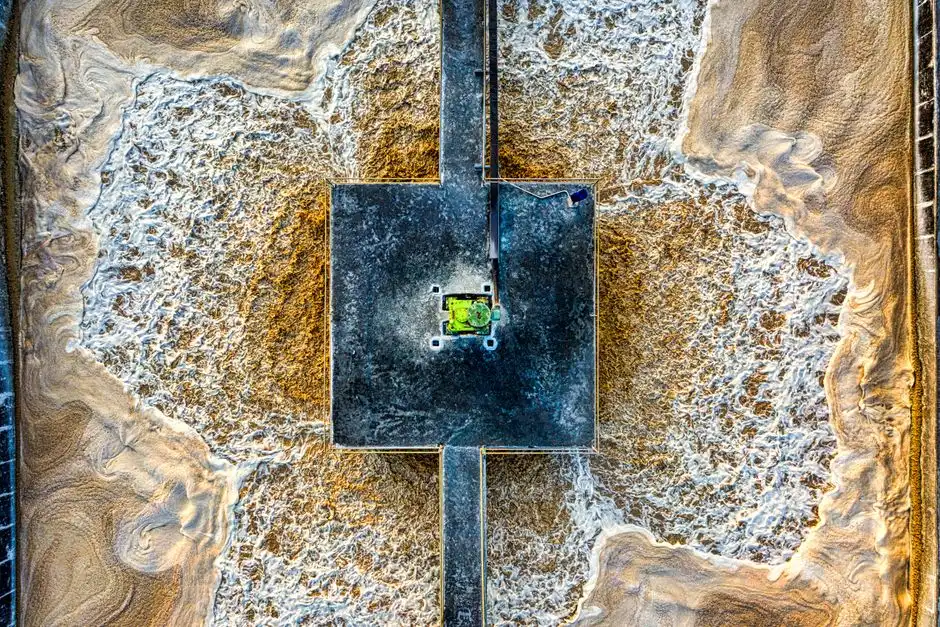
The literature and commercial flow sheets point to the same six-step sequence: pH correction, coagulation, solids separation, multimedia filtration, membrane polish, and PLC/HMI monitoring (Genesis Water Technologies, 2025-11; PMC review, 2024-02). Following this specific order is essential for regulatory compliance.
Step 1 — pH correction with lime to pH >10 so dissolved metals precipitate as hydroxides and gypsum drops out before thickening (PMC review, 2024-02). The dose is tied to influent acidity and the target metal solubilities, not to a recipe. Step 2 — coagulation and flocculation to aggregate suspended solids and fine metal particles into flocs sized for the next separation step (Genesis Water Technologies, 2025-11). The coagulant and flocculant have to be matched to the floc density that the downstream clarifier can actually handle. Step 3 — solids separation: a dissolved air flotation system for mining wastewater solids separation when the floc is buoyant or the stream carries oils and fines, or a lamella clarifier for metal hydroxide sludge when sludge volume and footprint are the constraint. Step 4 — multimedia filtration to drop turbidity and colloids, specified by a target silt density index (SDI) at the filter outlet rather than inlet turbidity, because the membranes downstream are protected by SDI, not by inlet appearance. Step 5 — UF to remove fine colloids and RO to remove dissolved salts and metals, with RO reported at >99% rejection of dissolved metals and salts, 50–70% recovery on AMD feed and 70–85% as the RO stage of a ZLD train (AMPAC USA, 2025-09). Step 6 — PLC/HMI monitoring with continuous pH, flow and conductivity plus the self-monitoring records the POTW will require (LiqTech, 2025-08). The confectionery wastewater sludge treatment process equipment guide walks through comparable thickening and dewatering steps for a related chemical-precipitation train.
| Step | Unit operation | Function | Key specification |
|---|---|---|---|
| 1 | pH correction (lime) | Precipitate dissolved metals as hydroxides; drop gypsum | pH >10 before thickening (PMC review, 2024-02) |
| 2 | Coagulation / flocculation | Aggregate suspended solids and fine metal particles | Match coagulant and flocculant to floc density (Genesis Water Technologies, 2025-11) |
| 3 | DAF or lamella | Remove bulk precipitated solids | DAF for buoyant floc or oil/fines; lamella for sludge volume and footprint |
| 4 | Multimedia filtration | Drop turbidity and colloids to protect membranes | Target outlet SDI, not inlet turbidity |
| 5 | UF + RO polish | Remove fine colloids (UF) and dissolved salts and metals (RO) | >99% rejection of dissolved metals and salts; 50–70% recovery on AMD feed, 70–85% on ZLD RO stage (AMPAC USA, 2025-09) |
| 6 | PLC/HMI monitoring | Hold chemistry setpoints; record POTW self-monitoring | Continuous pH, flow and conductivity (LiqTech, 2025-08) |
The dosing system that holds pH and floc chemistry on setpoint is the same automatic chemical dosing skid for lime, coagulant and flocculant that feeds every other step; specifying it PLC-controlled and pre-wired keeps commissioning fast and ties the chemistry into the same HMI the rest of the train reports through.
How to choose DAF or lamella for a Fulton mining site
The decision reduces to one question: is the floc buoyant or heavy? DAF is the right clarifier when floc density is below water or the influent carries oils, fines and floatables; the key specs are air-to-solids ratio and polymer compatibility, both of which the supplier sets against the characterization data. Lamella is the right clarifier when the constraint is sludge volume or footprint and there is no significant oil loading; the key specs are plate spacing and underflow solids. Both clarifier types feed the same downstream train — multi-media filter specified to a target SDI for RO protection, then an industrial RO system for the dissolved-metals polish — so the choice is made on floc behavior and site constraints, not on which unit the supplier stocks.
| Criterion | DAF | Lamella clarifier |
|---|---|---|
| Floc density | Below water (buoyant) | Above water (heavy) |
| Influent characteristics | Oils, fines, floatables | No significant oil loading |
| Site constraint | Higher footprint tolerated | Footprint-constrained sites |
| Key spec | Air-to-solids ratio; polymer compatibility | Plate spacing; underflow solids |
| Downstream | Multimedia filter → RO | Multimedia filter → RO |
Where the compliance investment pays back: reuse, RO and ZLD economics
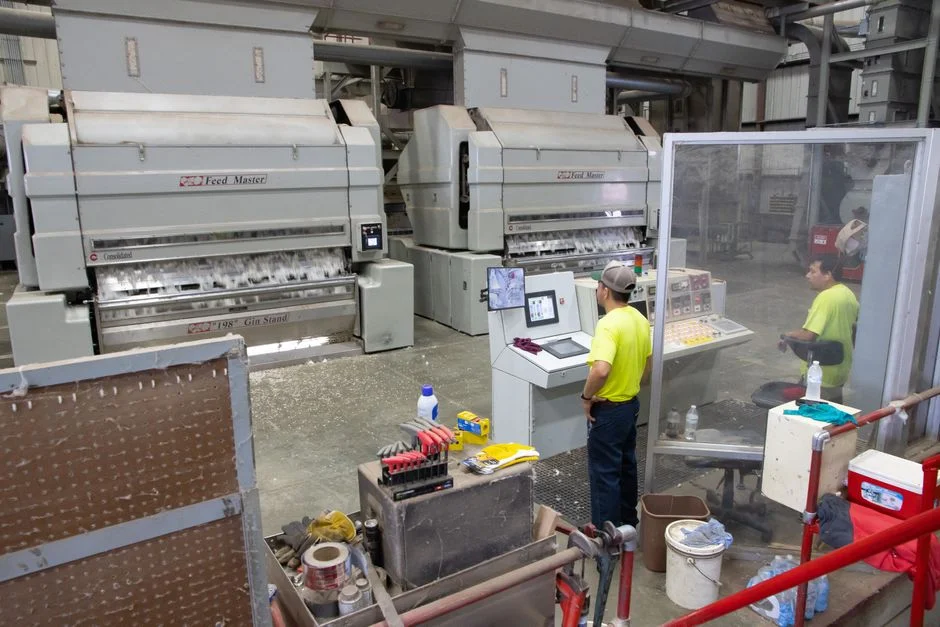
Reuse economics drive the return on investment for compliance capital expenditures. RO enables internal reuse that can reduce freshwater consumption by 40–60% versus once-through operation (AMPAC USA, 2025-09) — every cubic meter reused is one not drawn from a freshwater source and one not discharged. On a zero-liquid-discharge train, RO handles the bulk water recovery (70–85%) before the more energy-intensive thermal stages handle the remaining concentrate, and the operator should request a recovery curve, not a nameplate figure (AMPAC USA, 2025-09).
The sizing logic is "reuse as much as economics allow, then polish the rest to sewer quality." A compact integrated skid on a small Fulton site typically packages equalization, pH correction, precipitation, clarification, multimedia filtration and RO in one footprint. For sites with similar upstream chemistry, an AOP train for refractory COD in mining wastewater is sometimes added downstream of the RO concentrate loop when the concentrate is the harder stream to manage, but the cost-benefit still rests on the freshwater-saved number.
Basis-of-design inputs to put in a 2026 supplier RFQ
A comparable RFQ separates a defensible quotation from a guess. Put these inputs on the first page:
- Peak and average flow in m³/h, influent pH and metal profile from a representative sampling round.
- The Fulton-area POTW and NYSDEC SPDES discharge limits for metals, pH and TSS, plus the 40 CFR Part 436 subpart status (active or reserved) for the operator's mineral (EPA, 2026-02).
- Desired recovery percentage if reuse is in scope.
- Preferred control integration — confirm chemistry dosing, PLC/HMI and membrane skid report to one HMI (LiqTech, 2025-08).
- Reference installs at flows in the same order of magnitude as the Fulton site, covering the same unit operations.
Sludge handling closes the loop: chemical precipitation produces metal hydroxide sludge that has to be dewatered, and a filter press for chemical-precipitation sludge dewatering is the standard fit for the cake volumes a precipitation-based mining train produces. For a parallel reference on small-site pretreatment economics, see mining/metals pretreatment near Coyanosa, 2026 and Bettles mining pretreatment 2026.
Frequently Asked Questions
What is the federal floor for a mining or metals discharge in 2026?
The federal floor is the Mineral Mining and Processing Effluent Guidelines and Standards at 40 CFR Part 436, which EPA promulgated in 1975 and amended in 1976, 1977, 1978 and 1979; those Mineral Mining requirements are incorporated into NPDES permits (EPA, 2026-02). The operator identifies the subpart that matches the mineral being mined and confirms whether it is active with numeric limits or reserved.
Why does a reserved subpart change the compliance answer?
Frequently Asked Questions
What federal rules apply to a mining or metals plant discharging to a Fulton, NY POTW in 2026?
Mining and metals facilities discharging into the Fulton Publicly Owned Treatment Works (POTW) must comply with the Federal Clean Water Act through National Pollutant Discharge Elimination System (NPDES) pretreatment standards. Specifically, facilities must adhere to 40 CFR Part 436 (Mineral Mining and Processing Point Source Category) or 40 CFR Part 433 (Metal Finishing Point Source Category), depending on the specific industrial activity. These federal categorical standards establish mandatory effluent limitations for pollutants such as total suspended solids (TSS), pH (typically 5.0 to 11.0), and specific heavy metals like lead, copper, and zinc.
In addition to federal categorical standards, the facility must comply with local limits established by the Fulton POTW under the Pretreatment Program (40 CFR Part 403). These local limits are often more stringent than federal guidelines to protect the POTW’s biological treatment process, prevent pass-through of pollutants, and ensure compliance with the POTW's own SPDES permit issued by the New York State Department of Environmental Conservation (NYSDEC).
What happens if my mineral falls under a reserved subpart of 40 CFR Part 436?
If a specific mineral operation falls under a reserved subpart of 40 CFR Part 436 where no specific federal effluent guidelines have been promulgated, the facility is subject to Best Professional Judgment (BPJ) permitting. Under Section 402(a)(1) of the Clean Water Act, the permitting authority must establish case-by-case limitations based on the best available technology (BAT) economically achievable to ensure the discharge does not interfere with the Fulton POTW operations.
Operators in this situation should expect the Fulton POTW to impose strict local limits based on typical performance of similar mining operations elsewhere. It is advisable to conduct a pollutant characterization study to establish baseline concentrations, as the facility will likely be held to the same standards as regulated subparts to prevent heavy metal accumulation in the POTW's biosolids.
Which treatment train reliably hits typical Fulton POTW limits for heavy metals, pH and TSS?
A reliable pretreatment train for mining effluent typically involves a six-stage process: equalization and pH adjustment, chemical coagulation, flocculation, lamella clarification, multi-media filtration, and final pH polishing. pH adjustment is critical, as heavy metal precipitation often requires elevating pH to the 9.0–10.5 range to form insoluble metal hydroxides before settling.
To ensure consistent compliance with TSS limits—often set below 50–100 mg/L by municipal authorities—the inclusion of multi-media filtration or automated backwashing cloth media filters is essential to capture fine colloidal particles that pass through primary clarifiers. Monitoring with real-time pH and turbidity sensors integrated into a PLC-based control system ensures the system automatically adjusts chemical dosing based on influent loading variations.
What information should a Fulton-area mining plant put in a 2026 wastewater treatment RFQ?
An effective Request for Quotation (RFQ) must include a comprehensive characterization of the raw wastewater, including flow rates (average and peak GPM), chemical oxygen demand (COD), specific heavy metal concentrations, and total suspended solids (TSS) loading. The RFQ should explicitly state the Fulton POTW’s current local discharge limits and any projected 2026 compliance targets, including specific mass-loading constraints if applicable.
Additionally, the RFQ must specify site-specific constraints such as available footprint for the treatment equipment, existing electrical infrastructure, and environmental conditions. It is critical to require vendors to provide a performance guarantee that the proposed treatment train will meet the specified effluent targets consistently, along with a detailed maintenance plan and a list of spare parts needed to minimize downtime during critical production periods.
How long does it typically take to size, build and commission a six-step mining pretreatment train?
The timeline for a full-scale pretreatment project typically spans 9 to 14 months from the initial design phase to final commissioning. The initial 3 to 4 months are dedicated to engineering design, treatability studies, and securing necessary local permits from the City of Fulton or NYSDEC. Equipment procurement, particularly for specialized components like lamella clarifiers or automated filter presses, often has a lead time of 16 to 24 weeks.
On-site installation, plumbing, and electrical integration generally require 2 to 3 months, followed by a 4-week commissioning phase. The commissioning phase involves system shakedown, chemical dosing optimization, and bench-scale testing to verify that the effluent consistently meets the POTW's discharge limits before the plant is fully operational for industrial production.