Why a Kano Data Center Is a Different Water Problem Than Lagos
Operational data centre capacity in Nigeria was approximately 136.7 MW in 2024, with a projection to about 279.4 MW by 2030, and Kano is positioned as a regional hub for the North (Fronthill Controls, citing The Guardian Nigeria). A Lagos water design brief is not drop-in for Kano. Sudan-Sahel dry-bulb temperatures push cooling-tower evaporation rates higher than in Lagos for the same IT load, and borehole feed in the Sudan-Sahel belt runs harder and more silica-laden than Lagos groundwater, with no coastal aquifer option to dilute from.
The Lagos regulator stack (FMEnv, NESREA, LASEPA) is replaced in Kano by FMEnv plus the Kano State Ministry of Environment site permit. The Lagos FMEnv envelope — effluent TDS below 2,000 mg/L and ΔT less than 5 °C — is the de facto benchmark to design to as a precaution even though LASEPA does not formally apply in Kano (HydropureWater, 2026). With no continuous receiving water body on a Sahel-adjacent site, the most defensible 2026 posture is high-recovery reuse with zero-liquid-discharge intent, not open discharge.
Cooling-Tower Mass Balance: How Much Water a Kano Site Actually Pushes
The mass balance is the one thing an EPC engineer can scale to their own MW load without waiting for vendor selection. For a 50 MW heat load at 80% cooling-tower efficiency, evaporation is approximately 99,537 kg/h (HydropureWater, 2026). Blowdown equals evaporation divided by (COC − 1), so COC 4 produces about 33,000 kg/h of blowdown versus roughly 19,900 kg/h at COC 6. The blowdown stream itself runs 1,200–6,000 mg/L TDS — four to eight times the make-up — with elevated silica, calcium, magnesium, alkalinity, and accumulated biocides and corrosion inhibitors, plus 10–50 mg/L suspended solids from corrosion products and biofilm fragments (HydropureWater, 2026, citing Genesis Water Technologies, 2026).
On the demand side, a 15–20 MW Kano hyperscale build lands at 1.14–1.70 million L/day and a 100 MW facility can reach 2 million L/day (HydropureWater, 2026, citing Ecologix Environmental Systems, 2026 and IDE Water, 2026). The evaporation and blowdown numbers above scale linearly with the heat-rejection load, so a 15 MW site at 80% tower efficiency produces roughly 29,860 kg/h of evaporation and about 9,950 kg/h of blowdown at COC 6 — the figure a Kano operator can plug directly into a tank-sizing calculation.
| Parameter | Value | Source |
|---|---|---|
| Heat load reference case | 50 MW | HydropureWater, 2026 |
| Evaporation @ 80% tower efficiency | ~99,537 kg/h | HydropureWater, 2026 |
| Blowdown @ COC 4 | ~33,000 kg/h | HydropureWater, 2026 |
| Blowdown @ COC 6 | ~19,900 kg/h | HydropureWater, 2026 |
| Hyperscale demand (15–20 MW) | 1.14–1.70 million L/day | Ecologix Environmental Systems, 2026; IDE Water, 2026 |
| 100 MW facility demand | Up to 2 million L/day | Ecologix Environmental Systems, 2026; IDE Water, 2026 |
| Blowdown TDS | 1,200–6,000 mg/L | Genesis Water Technologies, 2026 |
| Blowdown suspended solids | 10–50 mg/L | Genesis Water Technologies, 2026 |
Reference Treatment Train for a Kano Site in 2026
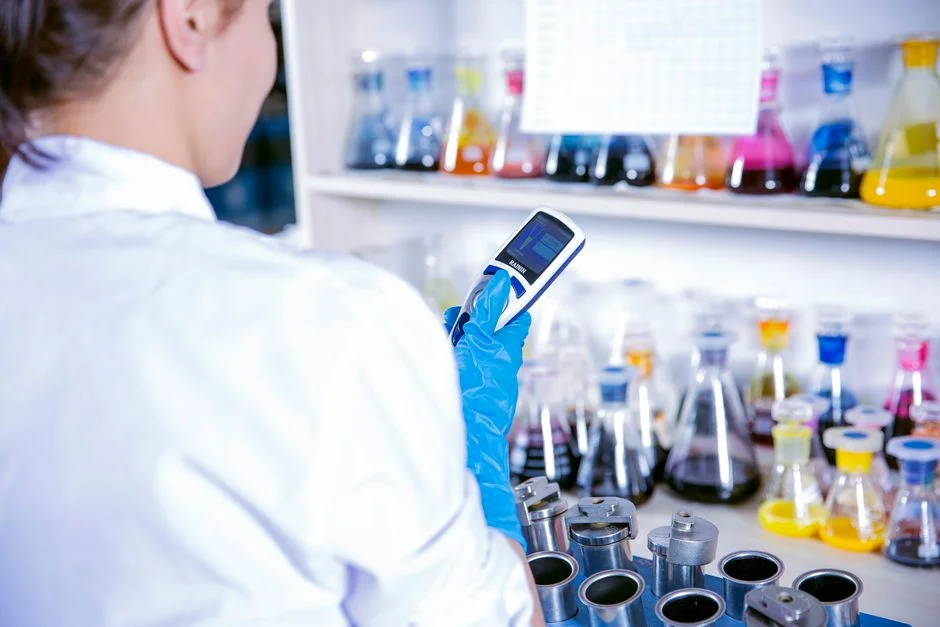
A four-stage train sized for Kano borehole feed and Sahel-belt blowdown runs: intake pretreatment → side-stream filtration → ultrafiltration → brackish RO with permeate blending. Each stage is sized for a specific failure mode the next stage cannot tolerate.
Stage 1 — Intake pretreatment. A multi-media filter for RO pretreatment cuts turbidity below 3 NTU and protects downstream RO; sizing 10–200 m³/h handles surface or borehole feed and is the standard first barrier (HydropureWater multi-media filter datasheet, 2026).
Stage 2 — Side-stream filtration. Self-cleaning 10–25 µm screen filters handle 1–5% of circulation flow, dropping blowdown suspended solids to membrane-friendly levels; capex for this stage is $50,000–$200,000 for a typical data center installation (HydropureWater, 2026, citing Genesis Water Technologies, 2026).
Stage 3 — Ultrafiltration. A PVDF hollow-fiber ultrafiltration system at 0.03–0.1 µm removes bacteria, colloids, and biofilm fragments; automatic backwash runs at 90–95% recovery. UF operates at 10–30 psi, so the energy penalty is small relative to the RO stage (HydropureWater, 2026).
Stage 4 — Brackish reverse osmosis. An industrial BWRO system for cooling-tower make-up runs at 75–85% recovery and produces 10–50 mg/L TDS permeate; concentrate at 5,000–8,000 mg/L TDS is routed to a side-stream softener or a small MVC polisher rather than discharged (HydropureWater, 2026, citing IDE Water, 2026 and Genesis Water Technologies, 2026). A PLC-controlled chemical dosing skid for antiscalant, biocide, and pH adjustment holds LSI neutral and protects membrane life.
| Stage | Function | Operating band | Failure mode prevented |
|---|---|---|---|
| Intake pretreatment (MMF) | Turbidity reduction to <3 NTU | 10–200 m³/h | RO membrane fouling by suspended solids |
| Side-stream filtration | Cut blowdown TSS to membrane-friendly level | 10–25 µm, 1–5% of circulation | UF membrane blinding |
| UF (PVDF) | Bacteria, colloids, biofilm removal | 0.03–0.1 µm, 90–95% recovery, 10–30 psi | RO biofouling |
| BWRO | Demineralization to make-up quality | 75–85% recovery, 10–50 mg/L TDS permeate | Cooling-tower scaling |
| Chemical dosing | LSI hold, antiscalant, biocide, pH | PLC-controlled | Scale and biological fouling |
How Should a Kano Operator Pick a Cycles of Concentration Target They Can Hold?
The Langelier Saturation Index (LSI) and Ryznar Stability Index (RSI) should be kept in the −0.5 to +0.5 LSI band to protect chillers and heat exchangers (HydropureWater, 2026, citing Ecologix Environmental Systems, 2026). Raising COC from 4 to 6 cuts blowdown volume by roughly a third and is the cheapest freshwater-saving move before any membrane capital is committed (HydropureWater, 2026, citing Ecologix Environmental Systems, 2026). With Kano borehole water at the upper end of the LSI scaling range, an unsoftened tower running at COC 5 will foul chiller barrels within one or two maintenance cycles, so make-up blending or side-stream softening is mandatory, not optional. The standard move is blending BWRO permeate at 10–50 mg/L TDS with softened municipal make-up through a twin-tank industrial water softener to push tower COC from 4 to 6 without scaling risk (HydropureWater, 2026).
Reuse vs. Zero-Liquid-Discharge: Choosing a Kano Posture
The decision framework for a Kano operator is straightforward. If a receiving water body or municipal sewer of adequate capacity exists, high-recovery reuse with a hauler manifest is enough. If neither exists — and most Sahel-adjacent Kano sites do not — full ZLD intent is the defensible 2026 posture.
Reuse case (5–10 MW). At WUE 1.8 L/kWh and PUE 1.2, a Kano 5–10 MW site implies 90,000–180,000 m³/year of cooling water; blowdown at COC 5 is roughly 18,000–36,000 m³/year, easily handled by a 50 m³/day BWRO skid at $250,000–$500,000 installed (HydropureWater, 2026, citing Genesis Water Technologies, 2026 and Ecologix Environmental Systems, 2026).
Hyperscale reuse case (15–20 MW). A 200–300 m³/day BWRO train with side-stream filtration, UF, and chemical dosing is the typical scope; full plant installed cost runs $1.2M–$2.5M depending on concentrate handling (HydropureWater, 2026, citing Ecologix Environmental Systems, 2026).
ZLD case. Full ZLD at $3M–$8M is reserved for water-scarce sites where alternative supplies are unavailable, which is the right posture for a Sahel-adjacent Kano site with no receiving water body (HydropureWater, 2026, citing Genesis Water Technologies, 2026 and Ecologix Environmental Systems, 2026). Brine management is the part of the scope most often under-designed: concentrate TDS typically 5,000–8,000 mg/L is non-hazardous but cannot be sent to a storm drain. The design assumes an on-site buffer tank plus a licensed hauler, an evaporation pond for an open site, or a small MVC polisher pushing system recovery to 95%.
| Site size | Recommended posture | Train scope | Installed capex |
|---|---|---|---|
| 5–10 MW (Kano) | High-recovery reuse | 50 m³/day BWRO skid + pretreatment | $250,000–$500,000 |
| 15–20 MW (Kano) | High-recovery reuse + brine handling | 200–300 m³/day BWRO train | $1.2M–$2.5M |
| Sahel-adjacent / no outfall | ZLD intent (MVC polisher + hauler) | Full ZLD system | $3M–$8M |
Capex, OPEX, and Payback for a 2026 Kano Build
Capital reference points for a Kano project land in the same bands as a Lagos build because the equipment is the same, though concentrate handling tends to push the upper end for inland sites: a 50,000 GPD RO skid at $250,000–$500,000 installed; side-stream filtration at $50,000–$200,000; a full 200–300 m³/day reuse plant at $1.2M–$2.5M; ZLD systems at $3M–$8M (HydropureWater, 2026, citing Genesis Water Technologies, 2026 and Ecologix Environmental Systems, 2026).
Operating cost runs $1.50–$3.00 per kgal treated at a Nigerian industrial site, dominated by energy; chemical dosing adds 10–15% (HydropureWater, 2026). Water savings: cutting fresh Kano municipal or borehole draw by 60–70% on a 15 MW site saves roughly 250,000–400,000 m³/year; at typical Nigerian industrial water tariffs, simple payback falls inside 3–4 years (HydropureWater, 2026). Risk-reduction value — avoided discharge fees, avoided permit penalties, and avoided freshwater-pumping energy — is not in the simple payback but is decisive in an ESG narrative and in conversations with hyperscale tenants. For more context on how a coastal Nigerian site is scoped, the Lagos data center blowdown treatment guide walks the parallel train for a 10 MW Africa Data Centres-style facility.
FMEnv and Kano State Compliance: What Auditors Will Check
The regulatory stack is Nigeria-specific. The FMEnv National Environmental (Effluent Limitation) Regulations, the NESREA Act, and Kano State Ministry of Environment site-specific permits all apply to any Kano discharge. LASEPA does not formally apply in Kano — the state regulator is the Kano State Ministry of Environment. Permit conditions typically require on-site flow metering, pH/temperature/conductivity logging, and a maintenance log (HydropureWater, 2026). The effluent envelope from the Lagos reference — TDS below 2,000 mg/L and ΔT less than 5 °C — is carried over as a design precaution because it is the most defensible benchmark for any FMEnv-facing auditor.
Reuse applications (cooling-tower make-up, landscape irrigation, toilet flushing) are encouraged by FMEnv guidance but require secondary disinfection; a chlorine dioxide generator for cooling-loop disinfection or a UV sterilizer for reuse polishing is standard practice before any non-cooling reuse (HydropureWater, 2026). The SCADA and PLC-controlled chemical dosing skid should be specified to export logs automatically — manual logs do not survive a FMEnv audit. For an inland Sahel site, the most defensible posture is to design for zero-liquid-discharge intent — even if the final concentrate is hauled off-site — so the discharge permit scope is reduced to a hauler manifest rather than a continuous outfall.
Frequently Asked Questions
What capex range should a Kano EPC put on the table for a 15–20 MW data center treatment train in 2026?
For a 15–20 MW Kano build hitting 1.14–1.70 million L/day, the 200–300 m³/day BWRO reuse plant lands at $1.2M–$2.5M installed depending on concentrate handling, per HydropureWater (2026), citing Ecologix Environmental Systems (2026). If the site has no receiving water body and ZLD intent is required, the envelope moves to $3M–$8M. Ask vendors for a line-item breakdown separating pretreatment, RO, chemical dosing, and brine/concentrate handling so the concentrate scope is not buried in the membrane line.
How do I select a treatment-train supplier for a Kano data center, and what delivery or compliance risk should I check first?
Verify three things before signing a PO. First, request evidence that the proposed BWRO skid has operated at 75–85% recovery on borehole feed with TDS at the upper end of the 1,200–6,000 mg/L blowdown band, not just on municipal feed (HydropureWater, 2026, citing Genesis Water Technologies, 2026). Second, confirm the supplier will deliver a SCADA package that automatically exports flow, pH, temperature, and conductivity logs — Kano State Ministry of Environment audits will reject manual logs. Third, ask for a concentrate-management plan sized to the 5,000–8,000 mg/L concentrate TDS band; an inland Kano site cannot send concentrate to a storm drain, and the hauler or MVC polisher scope should be in the supplier's proposal, not added later.
Why does the design target COC 5–6 instead of pushing higher?
Pushing COC past 6 with Kano borehole feed, which sits at the upper end of the LSI scaling range, fouls chiller barrels within one or two maintenance cycles without make-up blending or side-stream softening (HydropureWater, 2026, citing Ecologix Environmental Systems, 2026). COC 5–6 is the operating sweet spot: it cuts blowdown volume by roughly a third versus COC 4, and it keeps LSI and RSI inside the −0.5 to +0.5 band. Going higher is a maintenance liability, not a free lunch.
What does the BWRO maintenance look like once the plant is running, and where do I find the protocol?
The standard reference is the 12-step industrial protocol for BWRO membrane care, which covers CIP frequency, antiscalant dosing verification, permeate conductivity trending, and concentrate valve inspection (HydropureWater BWRO maintenance guide). For a Kano site running 24/7 in Sahel heat, plan a CIP every 8–12 weeks rather than the quarterly interval common in temperate climates, and budget replacement membranes on a 3–5 year cycle depending on feed silica loading.
Related Equipment
- multi-media filter for RO pretreatment — specifications, capacity range, and technical data
- PVDF hollow-fiber ultrafiltration system — specifications, capacity range, and technical data
- industrial BWRO system for cooling-tower make-up — specifications, capacity range, and technical data
- PLC-controlled chemical dosing skid — specifications, capacity range, and technical data
- twin-tank industrial water softener — specifications, capacity range, and technical data
- UV sterilizer for reuse polishing — specifications, capacity range, and technical data
- chlorine dioxide generator for cooling-loop disinfection — specifications, capacity range, and technical data