Why a Saint Petersburg data center has to design for blowdown first, not second
Water-based cooling remains the 2026 default architecture: 75–90% of global data centers still rely on it (KETOS, 2025, cited in the Moscow analog guide), so the blowdown stream is the design driver rather than the cooling-architecture choice. As pure water evaporates from the recirculating loop, dissolved solids, treatment chemicals, and the breakdown products of corrosion inhibitors stay behind, which means the discharge leaving the cooling system is more concentrated than the supply that entered it (Water Utility Report, 2026). The chemistry problem is not avoidable by better water management; it is intrinsic to evaporative cooling.
Saint Petersburg sits on the Neva / Baltic basin rather than Moscow's Volga system, and that geography changes both the supply-water profile the engineer must request from Vodokanal SPb and the receiving-water analysis under Rosprirodnadzor. The receiving basin drains to the Gulf of Finland, where salinity, dilution capacity, and ecological sensitivity differ materially from the inland Volga system used in the Moscow guide. A 2026 Saint Petersburg build must therefore be designed for the blowdown stream first, the regulatory package second, and the reuse-or-discharge decision third — the reverse of the order in most warmer-climate guides, and a different order from a generic European template that assumes neither Russian federal MAC limits nor a winter thermal-discharge constraint.
The two permit gates: Rosprirodnadzor federal MAC limits and Vodokanal Saint Petersburg pretreatment
A 2026 Saint Petersburg data center built on evaporative cooling must clear two separate regulatory gates before any blowdown can leave the site, and most engineering guides written for warmer climates only name one. The first gate is the federal water-quality framework administered by Rosprirodnadzor, which sets maximum allowable concentrations for the pollutants a blowdown stream typically carries — TDS, silica, metals, biocide residuals, and the breakdown products of corrosion inhibitors. These MAC limits apply when the reject ends up in a surface-water body, and they bind regardless of whether the site also holds a sewer-connection permit.
The second gate is the local sewer-connection and pretreatment acceptance regime run by Vodokanal Saint Petersburg, which controls both the quality and the daily volume a site can send to the municipal collector — a separate permit, not a substitute for the federal one (the same dual-gate logic applied to Moscow in the Moscow analog guide). The two instruments do not substitute for each other: passing Vodokanal SPb's discharge acceptance does not satisfy Rosprirodnadzor's water-body rules if the reject ends up in a surface-water body, and passing the federal limit does not bypass the local utility's connection rules if the reject goes to sewer.
The engineer should request a current supply-water certificate from Vodokanal SPb (TDS, hardness, silica) and the applicable local pretreatment limits from Vodokanal SPb's industrial discharge office before locking the train. The blowdown envelope at CoC 5–6 is a direct multiplier on those supply values, which are not in the supplied research, so the train must be sized against the certified supply rather than a generic range.
Sizing the blowdown stream: WUE, cycles of concentration, and the AI-driven oversizing rule
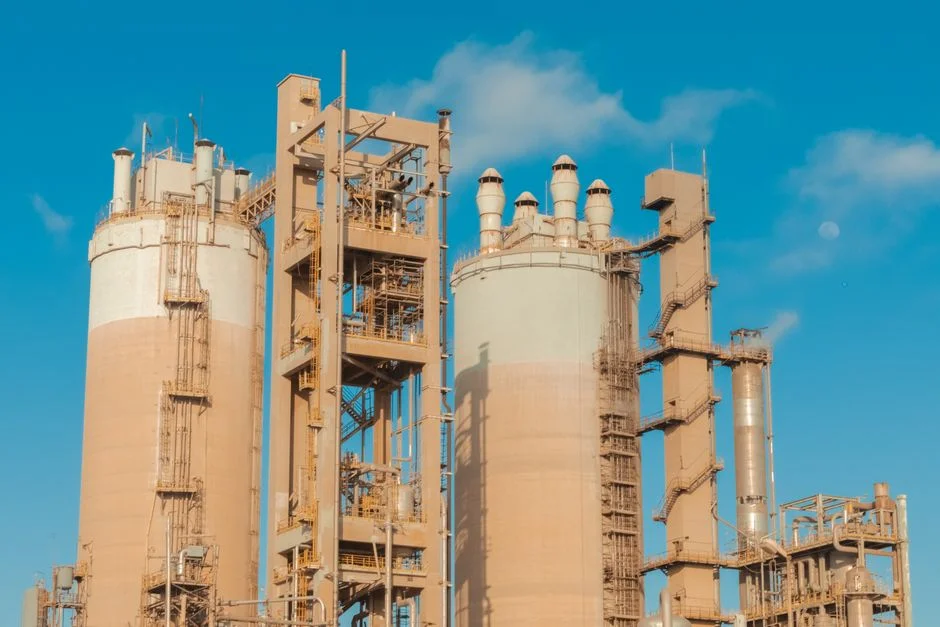
The first calculation the engineer locks in is the WUE-to-makeup conversion, because the liters-per-day number drives every downstream equipment-room dimension. At the industry-average WUE of 1.8 L/kWh, a 20 MW Saint Petersburg site needs roughly 720,000 L/day of makeup water; a 100 MW AI-ready campus at PUE 1.2 needs about 3,600,000 L/day (Ecologix, 2025, cited in the Moscow analog guide). Because 70–80% of that makeup evaporates in an open cooling tower, only 20–30% of withdrawal exits as blowdown, and that 20–30% is the stream the engineer must treat, meter, and either reuse or discharge under permit. Add ~0.02% of circulation as drift loss (Ecologix, 2025).
Blowdown volume follows B = E / (CoC − 1), where E is evaporative loss. At CoC 4 blowdown equals 25% of makeup, and at CoC 6 it drops to 20% (Genesis Water Tech, 2025; Ecologix, 2025). For a 20 MW Saint Petersburg site at CoC 5 the blowdown stream runs roughly 180,000–220,000 L/day; for a 100 MW AI-ready campus at CoC 5 it is ~900,000–1,100,000 L/day (Ecologix, 2025, cited in the Moscow analog guide). AI-dense racks now exceed 50 kW per rack and pull both PUE and WUE upward, so a 2026 design should be sized for the next rack generation rather than the current one; oversizing the equalization basin 20–30% above calculated blowdown is cheap insurance against the day the IT load shifts.
| IT load case | WUE / PUE | Makeup (L/day) | Blowdown at CoC 4 | Blowdown at CoC 5 | Blowdown at CoC 6 |
|---|---|---|---|---|---|
| 20 MW colocation | WUE 1.8 L/kWh | ~720,000 | ~25% (~180,000) | ~180,000–220,000 | ~20% (~144,000) |
| 100 MW AI-ready campus | PUE 1.2, WUE elevated | ~3,600,000 | ~25% (~900,000) | ~900,000–1,100,000 | ~20% (~720,000) |
Saint Petersburg-specific overlays: Neva supply profile, winter ΔT, and the Baltic basin
Saint Petersburg's municipal supply comes primarily from the Neva surface-water system delivered through Vodokanal SPb, and that supply profile sets both the makeup chemistry and the winter thermal-discharge problem the engineer has to solve. The specific TDS, hardness, and silica values for the Saint Petersburg distribution network are not in the supplied research, so the engineer should request a current supply-water certificate from Vodokanal SPb before locking the train, because the blowdown envelope at CoC 5–6 is a direct multiplier on those supply values.
The cold-climate winter profile is the second Saint Petersburg-specific overlay: blowdown exits the cooling loop at 30–40°C, and discharging that stream to a sewer or a receiving water body in January when ambient is −15°C is a permit risk no warmer-climate guide flags. This winter ΔT constraint changes the equalization basin design: it has to hold blowdown long enough either to let it cool or to buffer the slug before discharge, which is a separate HRT calculation from the chemistry-driven HRT.
The Baltic basin context is the third overlay. Saint Petersburg discharges to the Gulf of Finland via the Neva delta, a receiving environment with different salinity, lower dilution per cubic meter than an inland river, and ecological sensitivity that Rosprirodnadzor's NWFD overlay treats differently from a Volga or Moscow-river outfall. The receiving-water analysis under Rosprirodnadzor is therefore not a Volga calculation, and the engineer should plan the receiving-water modeling around Baltic / Neva-delta dilution and salinity conditions rather than reusing a Moscow template unchanged. Expected influent parameters for the treatment-train designer (Ecologix, 2025, cited in the Moscow analog guide): pH 7.5–9.0, silica 20–80 mg/L as SiO₂, temperature 30–40°C, plus residual biocides, phosphonates, and trace Cu/Zn from corrosion-inhibitor breakdown.
The defensible 2026 train for a Saint Petersburg blowdown stream
The defensible 2026 train for a Saint Petersburg blowdown stream runs equalization → DAF or lamella clarification → multi-media filtration → UF → RO, with reject branched either to brine concentration/crystallization (ZLD) or to controlled sewer under Vodokanal SPb permit (the Moscow analog train, applicable to Saint Petersburg with the same envelope, and consistent with the broader New York City analog guide for a comparable cold-climate six-step architecture). Equalization runs 24–48 hours of HRT with slow-speed paddles; avoid aeration to prevent CO₂ stripping that would shift the calcium carbonate equilibrium.
The DAF clarification stage for cooling tower blowdown handles variable solids, oils, and flocked metal hydroxides across a 4–300 m³/h envelope; lamella plates at 20–40 m³/m²·h are the alternative when footprint is tight. The multi-media filtration polishing stage (anthracite/sand/garnet) targets SDI <5 ahead of UF, and its job is to protect membrane life, not to remove dissolved solids. The 0.03 µm PVDF UF skid for RO pretreatment is rated for up to 300 NTU feed and delivers consistent SDI <3; skid range is typically 2,000–40,000 L/h.
The blowdown-to-cooling-tower RO unit is sized at 75–80% recovery as the conservative default; pushing past 90% requires controlled-salt-precipitation upstream, which is a CAPEX jump most 20 MW Saint Petersburg colocation builds do not need. A PLC-controlled chemical dosing skid handles pH correction, antiscalant, and biocide feed across all wet stages; for Saint Petersburg winter operations, the dosing envelope is the one process variable the operator can actually move at runtime. The capital and operating envelope of an RO system at this duty is documented in the 2026 RO maintenance cost guide.
| Stage | Function | Design parameter | Typical envelope |
|---|---|---|---|
| Equalization | Buffer TDS, pH, temperature swings | HRT, paddle speed, no aeration | 24–48 h |
| DAF / lamella | Remove TSS, oils, metal hydroxides | Loading rate | DAF 4–300 m³/h; lamella 20–40 m³/m²·h |
| Multi-media filter | Protect membrane life | SDI target | SDI <5 |
| UF (RO pretreatment) | Consistent feed quality to RO | Membrane rating, NTU tolerance | 0.03 µm PVDF; up to 300 NTU feed; 2,000–40,000 L/h skid |
| RO (blowdown-to-cooling-tower reuse) | Dissolved-solids removal, permeate reuse | Recovery | 75–80% (conservative default) |
| Reject management | Concentrate to ZLD or permitted sewer | Branch decision | Brine concentrator + crystallizer, or Vodokanal SPb permit discharge |
Reject management: sewer permit, brine concentration, or full ZLD
The three-trigger test (Ecologix, 2025, cited in the Moscow analog guide) makes on-site treatment mandatory when any one of the following applies: (1) effluent exceeds municipal limits, (2) the site is in a water-scarce sub-basin committing to ZLD or ≥70% recovery, or (3) the local WWTP cannot accept the daily volume. The engineer should walk through all three before sizing the train for a 2026 Saint Petersburg build. For most 2026 Saint Petersburg builds the default path is blowdown-to-cooling-tower reuse at 75–80% RO recovery, with reject to sewer under Vodokanal SPb permit — the lower-CAPEX, lower-parasitic-load option when none of the three triggers individually forces ZLD.
A high-rate sedimentation step can be substituted for DAF when the influent TSS profile is steady and oil load is low; DAF remains the safer default for the variable solids a blowdown stream typically carries. RO concentrate either feeds a brine concentrator plus crystallizer for ZLD or is discharged under Vodokanal SPb permit when salinity, temperature, and metals are within acceptance limits. ZLD is reserved for hyperscale builds, sewer-moratorium sub-basins, or corporate water-positive mandates, and the brine concentrator plus crystallizer CAPEX runs roughly 2–3× the reuse-only train. The PLC-controlled chemical dosing skid covers pH correction, antiscalant, and biocide feed across the wet stages regardless of which reject path is selected.
Saint Petersburg cost overlay and the worked example for a 20 MW build
A comparable water-stressed 15 MW build with 60% blowdown recovery shows ~$200,000 CAPEX and a 6.7-year simple payback on water alone (Genesis Water Tech, 2025, cited in the Moscow analog guide). Once avoided discharge fees ($5–15 per 1,000 gallons in water-stressed regions, Genesis Water Tech, 2025) and concentrate-side energy recovery are included, payback typically compresses to 3–5 years. A 50,000 GPD RO system treating blowdown can cost $250,000–$500,000 installed, with operating costs of $1.50–$3.00 per thousand gallons treated, including energy, chemicals, membrane replacement, and maintenance (Genesis Water Tech, 2025). The relevant blowdown-to-cooling-tower RO unit CAPEX and OPEX bands inherit this envelope.
For Saint Petersburg specifically, the engineer should overlay Vodokanal SPb industrial discharge fees, ruble-denominated industrial water tariffs, and any federal sustainability-disclosure pressure. These overlays must be requested from Vodokanal SPb and the client's sustainability office rather than fabricated from a generic range, because the Moscow guide's Mosvodokanal tariff values do not transfer to the Saint Petersburg rate card. Compliance value is the harder-to-quantify but larger line: meeting the relevant Rosprirodnadzor and Vodokanal SPb limits eliminates the shutdown exposure of a single non-compliance event, which is the number a 2026 Saint Petersburg finance committee should actually be underwriting.
Sizing checklist a Saint Petersburg engineer can hand to procurement
Lock the WUE-to-makeup conversion at the IT-load case the site will run at in 2027, not 2026, and oversize the equalization basin 20–30% above calculated blowdown to absorb AI-driven rack density uplift. Request a current Vodokanal SPb supply-water certificate (TDS, hardness, silica) and the applicable Vodokanal SPb industrial-discharge limits and fees before locking the train.
Apply the three-trigger test (effluent > municipal limits, water-scarce sub-basin with ZLD or ≥70% recovery commitment, local WWTP cannot accept daily volume) to determine whether reuse-only at 75–80% RO recovery is defensible or whether brine concentration is required. Validate winter ΔT separately from chemistry-driven HRT on the equalization basin: the basin must hold blowdown long enough to cool or buffer a discharge slug, which is a different calculation from the chemistry residence time. Specify a PLC-controlled chemical dosing skid covering pH correction, antiscalant, and biocide feed across the wet stages, with the dosing envelope sized for the Saint Petersburg winter operating window. For a process comparison on a different climate site, the same six-step train framing is set out in the Kinshasa analog guide.
Frequently Asked Questions
What size RO and UF train does a 20 MW Saint Petersburg data center actually need at CoC 5?
The blowdown stream at CoC 5 for a 20 MW site running WUE 1.8 L/kWh is roughly 180,000–220,000 L/day (Ecologix, 2025, cited in the Moscow analog guide). A 0.03 µm PVDF UF skid for RO pretreatment in the 10,000–20,000 L/h envelope and a blowdown-to-cooling-tower RO unit sized at 75–80% recovery covers that duty with margin; oversize the equalization basin 20–30% above calculated blowdown to absorb AI-driven rack density uplift.
Can a Saint Petersburg data center discharge blowdown straight to the Vodokanal SPb sewer, or does it need on-site treatment?
Direct discharge is only defensible if the three-trigger test comes back clean: effluent is within Vodokanal SPb pretreatment limits, the site is not in a sub-basin with a ZLD or ≥70% recovery commitment, and the local WWTP can accept the daily volume. If any one of those triggers fires, on-site treatment is mandatory; for most 2026 Saint Petersburg builds the default is blowdown-to-cooling-tower reuse at 75–80% RO recovery with reject to sewer under Vodokanal SPb permit. The dual-gate logic means passing Vodokanal SPb acceptance does not exempt the site from Rosprirodnadzor's MAC limits if any reject reaches a surface-water body.
What CAPEX should a Saint Petersburg data center budget for a blowdown-to-cooling-tower reuse train in 2026?
A comparable 15 MW water-stressed build with 60% recovery shows ~$200,000 CAPEX and a 6.7-year simple payback on water alone (Genesis Water Tech, 2025, cited in the Moscow analog guide); a 50,000 GPD RO system treating blowdown can cost $250,000–$500,000 installed with operating costs of $1.50–$3.00 per thousand gallons treated (Genesis Water Tech, 2025). For Saint Petersburg specifically, the engineer should overlay Vodokanal SPb industrial discharge fees, ruble-denominated industrial water tariffs, and any federal sustainability-disclosure pressure — these are inputs to request from Vodokanal SPb and the client's sustainability office, not values to assume from a generic range.
What should a Saint Petersburg EPC ask a wastewater equipment supplier to prove before signing the blowdown-train purchase order?
Three documents are the actionable check: (1) a current Vodokanal SPb supply-water certificate, since the blowdown envelope at CoC 5–6 is a direct multiplier on supply TDS, hardness, and silica; (2) dual-compliance evidence covering both Rosprirodnadzor federal MAC limits and Vodokanal SPb local pretreatment limits, including any required metals and biocide-residual data; and (3) a cold-climate operating case showing the train's winter ΔT envelope, equalization HRT under freezing conditions, and the dosing window the operator can actually move at runtime. Suppliers who can show reference Saint Petersburg or comparable Baltic-basin installations with documented cold-season performance are the defensible shortlist.