Why Textile Mills Choose Submerged MBR Over Conventional Activated Sludge
A submerged membrane bioreactor (MBR) is a biological wastewater treatment system in which the microfiltration or ultrafiltration membrane sits inside the aeration tank, immersed directly in the mixed liquor, so biomass and solids stay in the reactor and permeate leaves through pore sizes below 1 µm (Wikipedia, Membrane bioreactor). The immersed configuration replaced the secondary clarifier entirely and lets the system run at MLSS of 4–12 g/L, a roughly 300% higher range than the 2.5–3.5 g/L typical of conventional activated sludge (Wikipedia, Membrane bioreactor). For a textile mill, that step-change in mixed-liquor tolerance is what allows reactive, disperse, and vat dye streams — variable in colour, salt, and temperature — to be biodegraded and physically separated in a single, compact unit rather than across a clarifier, a sand filter, and a polishing stage.
The choice of submerged rather than side-stream matters for the same reason. The submerged layout became the preferred industrial option after 1989 because coarse-bubble aeration scours the membrane surface and controls fouling without high cross-flow pumping; as a result, the energy demand of a submerged system can be up to two orders of magnitude lower than that of a side-stream system, although it operates at a lower flux and needs more membrane area (Wikipedia, Membrane bioreactor). The Wikipedia MBR article explicitly lists textile among the sectors that adopt the immersed/submerged configuration, alongside food and beverage, oil and gas, mining, power generation, and pulp and paper (Wikipedia, Membrane bioreactor). On a dye-house site with limited plot area, intermittent batch discharges, and an effluent that is biologically active rather than refractory, that combination — high MLSS, low energy, compact footprint — is the reason submerged MBR wins over both CAS and a side-stream retrofit. A packaged option such as the HydropureWater integrated submerged MBR system delivers this configuration as a single skid with a 60% smaller footprint than conventional systems and supports flows from 10 to 2,000 m³/day.
How a Submerged MBR Treats Dye-House and Finishing Effluent
The process train for a textile submerged MBR follows a standard sequence: equalization → screening and grease removal → optional dissolved air flotation (DAF) for high FOG or reactive-bath overflows → anoxic/aerobic biology → submerged membrane tank → permeate for reuse or discharge. The biology is what destroys COD, BOD, and a meaningful fraction of the dye chromophores; the immersed membrane then physically retains biomass and almost all suspended solids, producing an effluent with very low turbidity and TSS (Wikipedia, Membrane bioreactor). The membrane pore size in flat-sheet modules is typically 0.1 µm, well below the 1 µm threshold that defines microfiltration, and the activated-sludge residence is decoupled from the hydraulic residence by operating at higher MLSS (Wikipedia, Membrane bioreactor). A DAF pre-treatment unit is often specified upstream of mills with high surfactant or reactive-bath overflow loads, because DAF strips FOG and reduces the colour shock that would otherwise hit the biology.
The two sizing levers that the engineer sets are hydraulic retention time (HRT) and mixed liquor suspended solids (MLSS). Typical submerged MBR operating windows are HRT 3–10 hours and MLSS 10–15 g/L, with a classical optimum near 10,000 mg/L for oxygen transfer and flux stability (Wikipedia, Membrane bioreactor). At that operating point, the operator can run long SRTs without pushing the aeration system past its mass-transfer ceiling, and the membrane sees a consistent mixed liquor that is easier to scour with coarse-bubble air. The BSI publication PD CEN/TR 15897 establishes that carbon removal is required and complete nitrification is recommended in MBR systems, while flagging short circuits, high concentrations of extracellular polymeric substances (EPS), or incomplete biodegradation as the three risks most likely to compromise filterability (BSI, Submerged MBR technology). For a textile mill, that means the equalization tank, the anoxic zone, and the F/M ratio must be sized to prevent EPS peaks and short-circuiting before the water reaches the membrane tank.
Submerged MBR Design Parameters for Textile Effluent

The design envelope below is the one a textile engineer should hand to procurement as a defensible shortlist. Every value is drawn from the research; ranges that the research does not support are left as qualitative notes so buyers know what to request from each bidder.
| Parameter | Textile submerged MBR design value | Source |
|---|---|---|
| Membrane material | PVDF (polyvinylidene fluoride), most prevalent due to chemical and mechanical resistance, with a five-year operating target across a wide pH range | Wikipedia, Membrane bioreactor |
| Module geometry | Flat sheet, 0.1 µm pore, integrated aeration box for continuous scouring; hollow-fibre also available | Wikipedia, Membrane bioreactor |
| MLSS operating window | 12,000–20,000 mg/L; classical optimum near 10,000 mg/L for oxygen transfer and flux | Wikipedia, Membrane bioreactor |
| MLSS vs. CAS (iMBR step-change) | 4–12 g/L (iMBR) vs. 2.5–3.5 g/L (CAS), ~300% higher range | Wikipedia, Membrane bioreactor |
| SRT | 10–20 days (recent trend; older plants ran 100 days at up to 30 g/L) | Wikipedia, Membrane bioreactor |
| HRT | 3–10 hours | Wikipedia, Membrane bioreactor |
| Energy demand (submerged vs. side-stream) | Up to 2 orders of magnitude lower; older side-stream units ~10 kWh/m³ product, modern low-energy side-stream ~0.3 kWh/m³ | Wikipedia, Membrane bioreactor |
| Installed base & market | >5,000 MBR plants worldwide; market USD 3.35 billion, projected USD 8.78 billion at 7.6% CAGR | Membranes, MDPI 2023 |
| BSI design thresholds | PD CEN/TR 15897 covers custom-designed MBR systems >500 PT; large MBR systems >10,000 m³/d typically designed with separated membrane tanks; the whole MBR system (not the module alone) is the unit of design | BSI, Submerged MBR technology |
| Module scale (example) | DF series flat-sheet modules in 80–225 m² configurations producing 32–135 m³/day per cassette, e.g. DF series PVDF flat-sheet membrane module | HydropureWater product catalog |
The membrane material and module geometry decision drives everything else. PVDF is the most prevalent material because of its long lifetime, chemical resistance, and mechanical resistance, including stable operation across a wide pH range and a five-year operating target (Wikipedia, Membrane bioreactor). Flat-sheet modules with integrated aeration boxes are a common textile choice because they tolerate the solids and backwash cycles that dye-house biology produces; the cassette scale shown in the table is the kind of standardized increment a buyer uses to size a plant in 32–135 m³/day steps. The BSI design rule matters for textile RFQs: above 500 PT, a system is treated as a custom design, and above 10,000 m³/d the membrane tank is typically separated from the biology, with the entire MBR system rather than the module alone treated as the unit of design (BSI, Submerged MBR technology). That is the threshold at which a textile mill stops buying "a membrane" and starts buying "a treatment line."
Fouling, Cleaning, and Operating Risks Specific to Textile Wastewater
Fouling is the variable that defines a submerged MBR's operating cost, and on a textile stream it has specific drivers that equalization and biology — not the membrane — must absorb. The three filterability risks PD CEN/TR 15897 flags are EPS peaks, hydraulic short circuits in the membrane tank, and incomplete biodegradation upstream (BSI, Submerged MBR technology). On a dye-house line, EPS peaks are triggered by reactive or disperse dye shocks, salt excursions from neutralization baths, and surfactant-rich overflows that disturb floc structure; short circuits appear when surge flows from batch discharges push water past the anoxic zone before biology has time to act; incomplete biodegradation is most often a temperature effect, because reactive azo dyes need warm, slow biology to cleave the chromophore. The control toolkit is standard: coarse-bubble air scouring, online or offline backwash, periodic chemical cleaning (typically sodium hypochlorite for organic fouling and a mineral acid for inorganic scale on PVDF), and HRT/flux optimization (Wikipedia, Membrane bioreactor). The operator's cleaning interval is the leading indicator of biological and hydraulic performance, because transmembrane pressure, energy use, and chemical consumption all move together when the upstream biology drifts.
The textile-specific watch-outs are colour, salt, temperature, pH variability, and surfactant chemistry. Reactive dye baths run hot and alkaline; disperse dye baths carry high salt and surfactant loads; pH swings between acid and alkaline between batches. These should be addressed in the equalization tank and the aeration basin — equalization for flow and pH, biology for salt acclimation and chromophore cleavage, and an automatic chemical dosing for CIP and pH control for cleaning recipes and pH correction at the membrane. The membrane is the last line of defence, not the first, and the buyer who plans fouling control at the front of the train will run a much longer cleaning interval than the one who treats the membrane as the only barrier.
Submerged vs. Side-Stream MBR: Choosing the Right Configuration for a Mill
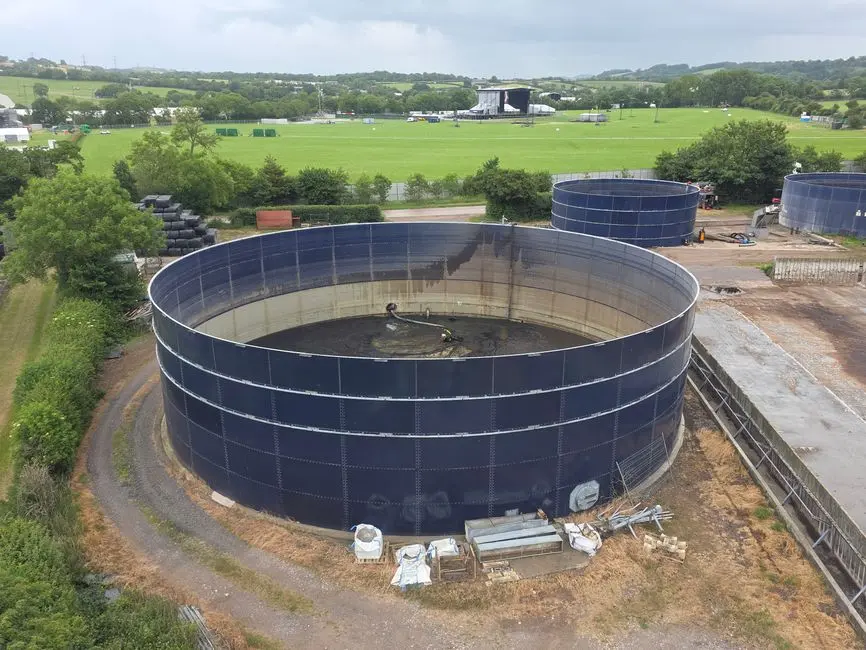
The configuration choice is a simple energy-versus-footprint trade-off once the application match is clear. A submerged MBR operates at lower flux and needs more membrane area, but its energy demand can be up to two orders of magnitude lower than a side-stream unit because fouling is controlled by coarse-bubble aeration rather than by high cross-flow recirculation (Wikipedia, Membrane bioreactor). Side-stream units are preferred for smaller, higher-strength, or harder-to-treat industrial flows; submerged units are preferred for larger-scale, lower-strength, biologically active streams — which is what most combined textile effluent is once it has passed through equalization (Wikipedia, Membrane bioreactor). A textile mill with a combined flow above 10,000 m³/d is therefore firmly in submerged territory, and a mill at 500 m³/d with high-strength reactive dye effluent is where the side-stream option still has a defensible case.
| Decision factor | Submerged MBR | Side-stream MBR |
|---|---|---|
| Typical scale match | Larger-scale, lower-strength, biologically active streams (e.g. combined textile effluent) | Smaller-scale, higher-strength or harder-to-treat industrial flows |
| Energy demand | Up to 2 orders of magnitude lower than older side-stream units | Higher; older units ~10 kWh/m³ product, modern low-energy designs ~0.3 kWh/m³ |
| Fouling control | Coarse-bubble aeration scours the membrane in situ | Cross-flow pump generates shear; periodic backwash |
| Module handling | Modules lifted to an offline cleaning tank for chemical soak | Modules installed on a lower floor, replaceable without lifting gear |
| Footprint and modularity | Compact, modular cassette design, smaller plant footprint than CAS + tertiary filtration | Tank and membrane sized separately; useful for unusual influents |
| Configuration rule (BSI) | Above 10,000 m³/d typically designed with separated membrane tanks | No specific scale threshold in PD CEN/TR 15897 |
For a multi-storey dye-house site, the maintenance posture is a real procurement factor. A side-stream module can be replaced on a lower floor without lifting equipment, which simplifies operator access; a submerged module has to be lifted to an offline cleaning tank, which is straightforward on a packaged plant with a monorail but more complex on a custom concrete tank (Wikipedia, Membrane bioreactor). Cross-reference the MBR for pharmaceutical wastewater guide for an adjacent industrial case where side-stream is sometimes preferred for the same reason.
Compliance, Reuse, and What to Ask a Submerged MBR Supplier
The procurement question is how to convert the technical case above into a defensible RFQ that protects the discharge or reuse permit. PD CEN/TR 15897 establishes the general principles a textile RFQ should be benchmarked against: carbon removal is required, complete nitrification is recommended, and filterability must be protected from EPS peaks, short circuits, and incomplete biodegradation (BSI, Submerged MBR technology). The standard also defines the design thresholds: custom-designed MBR systems start at 500 PT, and large MBR systems above 10,000 m³/d are typically designed with separated membrane tanks, with the entire MBR system — not the membrane module alone — treated as the unit of design (BSI). State your design flow in m³/d, your influent COD, BOD, colour, salinity, and temperature envelope, and the discharge or reuse target, so the bidder can demonstrate compliance against those numbers rather than against a generic municipal case.
Reuse is where a submerged MBR pays back fastest. Permeate from a properly operated submerged MBR is typically clean enough for process-water reuse in washing, rinsing, or boiler feed after polishing, and the RFQ should request permeate quality data — turbidity, COD, BOD, TSS, and colour — at the design MLSS and HRT, not at a generic municipal point. The decision framework to put to each bidder should include proposed MLSS and SRT, membrane material and pore size, guaranteed flux at design temperature, cleaning regime and chemical consumption, footprint, and a reference list at comparable textile plants. The commercial posture is to ask for a CAPEX split (membrane modules, tanks, blowers, controls, installation) and OPEX drivers (membrane replacement interval, energy per m³ permeate, chemical cleaning cost) — the research gives no textile-specific price points, so require vendor numbers rather than estimating. The two equipment anchors a textile RFQ should reference are the HydropureWater integrated submerged MBR system for the packaged plant and the DF series PVDF flat-sheet membrane module for the membrane cassette itself.
Frequently Asked Questions
What makes a submerged MBR suitable for textile wastewater?
Textile is explicitly listed among the sectors that adopt the immersed/submerged configuration, and the technology handles MLSS of 4–12 g/L versus 2.5–3.5 g/L for conventional activated sludge — roughly a 300% higher range — at SRT 10–20 days and HRT 3–10 hours (Wikipedia, Membrane bioreactor). That envelope absorbs the colour, salt, and temperature variability of dye-house effluent while still producing a low-turbidity permeate.
How much energy does a submerged MBR use compared with a side-stream MBR?
The energy demand of a submerged system can be up to two orders of magnitude lower than that of a side-stream system, because fouling is controlled by coarse-bubble aeration rather than by high cross-flow pumping; older side-stream units sit around 10 kWh/m³ product, while modern low-energy side-stream designs can reach about 0.3 kWh/m³ (Wikipedia, Membrane bioreactor).
What is the typical design SRT and HRT for a textile submerged MBR?
Design for SRT 10–20 days and HRT 3–10 hours, with MLSS 10,000–20,000 mg/L and a classical optimum near 10,000 mg/L for oxygen transfer and flux stability (Wikipedia, Membrane bioreactor). Hold the upper MLSS bound to avoid the aeration inefficiency that high solids cause.
How do I size a submerged MBR for a 500 m³/d dye-house effluent, and what is the budget range?
For sizing, follow the BSI design unit: PD CEN/TR 15897 covers custom-designed MBR systems above 500 PT, and above 10,000 m³/d a separate membrane tank rather than an integrated vessel is the norm (BSI, Submerged MBR technology). The research does not provide a textile-specific CAPEX or OPEX number, so the actionable check is to require each bidder to submit a CAPEX split (membrane modules, tanks, blowers, controls, installation) and OPEX drivers (membrane replacement interval, energy per m³ permeate, chemical cleaning cost) and to benchmark them against the BSI design thresholds rather than against a generic municipal quotation. For a deeper dive on the module-level numbers, see the MBR membrane module design criteria guide.