
Why Wood Processing Wastewater Is a DAF Design Problem of Its Own
Wood processing wastewater carries a contaminant signature that generic DAF references do not address: fibre fines, wood resin and extractives, tannins, lignin derivatives, and pitch, rather than the free oils and greases that dominate food-plant DAF duty. General DAF practice still applies — clearwaterind.com (Clearwater Industries) describes clean water being pressurised with air, saturated, then depressurised into the flotation tank to form 30–50 µm micro-bubbles that attach to flocculated particles and float them to a skimmable surface blanket — but wood streams respond to a different chemistry programme.
Without chemical conditioning, industrial DAF removes only 50–60% of TSS; with optimised coagulation and polymer flocculation, removal rises to 85–95% (waterandwastewater.com, S4). The implication for a sawmill, plywood, MDF, or pulp-and-paper engineer is that the design question is not "which DAF model" but which coagulant–polymer pair, at what dose, ahead of which bubble-size band, sized for which wood sub-stream. A wood-specific specification checklist should be developed from jar testing of the actual waste before any equipment is ordered; for a baseline equipment reference, see the HydropureWater DAF system (4–300 m³/h across 13 standard models).
Mapping the Three Wood Sub-Streams a DAF Must Treat
Three sub-streams dominate wood-plant hydraulics, and each one drives a different DAF design.
Debarker and sawmill wash water is high in bark fragments, sand, and coarse fibre. Dissolved organics are usually low to moderate, but TSS is high and largely settleable rather than floatable. A screening step before DAF is essential here to protect nozzle and saturator internals from coarse debris that would otherwise damage the pressurisation system.
Paper-machine white water and pulp-mill effluent carry fine fibre, fillers, and dissolved plus colloidal wood resin. This is the classic high-loading DAF duty, and the stream where bubble–fibre attachment chemistry matters most. A fibre-recovery DAF is often justified here on fibre value alone, before any effluent-quality argument.
MDF, particleboard, and plywood press / condensate effluent contains wax, formaldehyde residues, and wood extractives that depress bubble–particle attachment. This stream usually needs a dedicated conditioning recipe rather than a shared DAF with white water, because the surface chemistry is fundamentally different from fibre-fines-dominated streams.
Engineers should treat debarker wash with screening plus sedimentation, route paper-machine white water through a fibre-recovery DAF, and design a separate DAF — or send to biological treatment — for press condensates.
Design Parameters That Actually Move Wood-DAF Performance
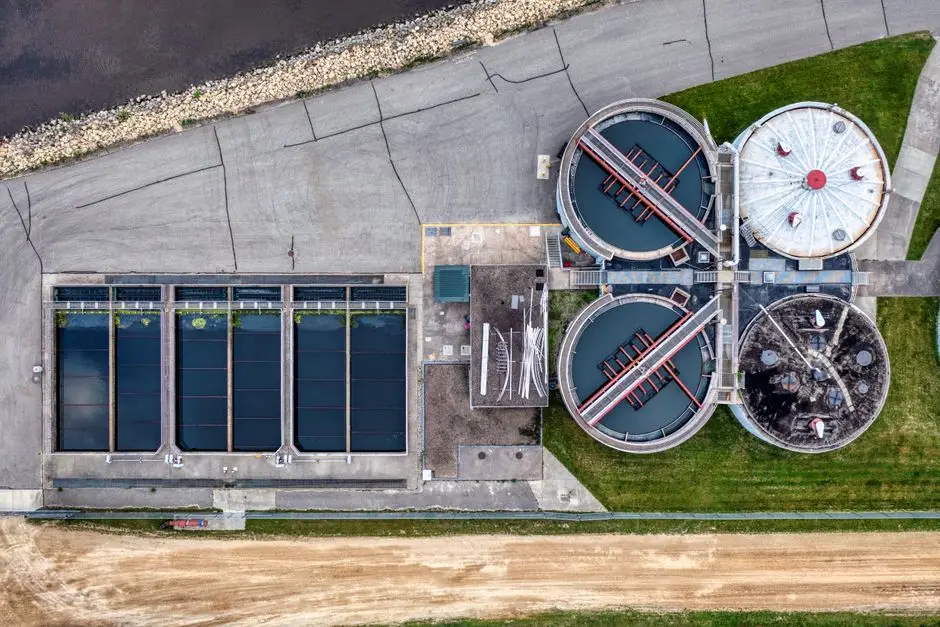
Microbubble sizing is the primary parameter that moves wood-DAF performance. Commercial DAF units generate 30–50 µm bubbles (clearwaterind.com, S3); waterandwastewater.com (S4) quotes 30–70 µm and notes that collision efficiency peaks at a bubble-to-particle size ratio of approximately 0.5–1.0. For fibre-fines-dominated wood streams, target the lower half of that range, closer to 30 µm, so bubbles are large enough relative to the fines to collide reliably.
Saturator selection is the second parameter. Packed-column saturators achieve 85–95% air-dissolution efficiency versus unpacked vessels (S4). For wood streams with high solids, insist on packed-column design to avoid bubble starvation at peak load; an unpacked saturator on a high-TSS wood stream will under-deliver air precisely when it is needed most.
Hydraulic loading is the third parameter. DAFT sludge-thickening units run at 0.5–2.0 gpm/ft² of tank surface (S4). Wood-DAF for fibre removal typically runs at the lower-to-middle of that band to give the float blanket residence time to release water without carryover — confirm the actual figure with pilot data on the stream in question rather than extrapolating from a DAFT datasheet.
Air-to-solids ratio and chemical conditioning are the fourth and fifth parameters. A/S guidance for DAFT is 0.005–0.060 ml air/mg solids (S4); wood streams with very high TSS may need an A/S at the upper end, which is another argument for packed-column saturators. Cationic polymer at 5–20 lb/ton dry solids is standard for DAFT (S4); wood-fibre streams typically respond to a coagulant (alum or PAC) followed by a cationic or anionic polymer depending on furnish — but the dose and polymer charge must be set by jar test, not by analogy to a food plant. Flash-mix in flocculation tubes for 15–45 seconds (clearwaterind.com, S3); wood-fibre flocs can be fragile, so use the gentler end of the mixing-energy range. The design subnatant target is 5–15 NTU for industrial pretreatment discharge (S4); for wood-plant effluent feeding a downstream biological stage, aim at the lower half of that range to protect aeration basins. The full DAF system engineering specifications for 2026 reference expands each of these parameters.
| Parameter | Range / value | Wood-stream application note | Source |
|---|---|---|---|
| Microbubble size | 30–70 µm; target 30 µm for fibre fines | Lower half of range preferred; bubble-to-particle ratio ~0.5–1.0 maximises collision efficiency | S3, S4 |
| Saturator type | Packed-column, 85–95% saturation efficiency | Specify explicitly; unpacked vessels starve at peak TSS | S4 |
| Hydraulic loading | 0.5–2.0 gpm/ft² (DAFT band) | Run lower-to-middle for wood-DAF; confirm with pilot | S4 |
| Air-to-solids (A/S) ratio | 0.005–0.060 ml air/mg solids | High-TSS wood streams may need upper end | S4 |
| Cationic polymer dose | 5–20 lb/ton dry solids (DAFT standard) | Set by jar test on actual wood waste; charge depends on furnish | S4 |
| Flash-mix contact time | 15–45 seconds in flocculation tubes | Use gentler end for fragile wood-fibre flocs | S3 |
| Subnatant target | 5–15 NTU industrial pretreatment | Aim lower half when feeding biological stage | S4 |
DAF Configuration Choice for a Wood Plant: Recycle, Full-Flow, or Partial-Flow
Recycle-flow pressurisation (S4) only pressurises treated effluent; influent enters the contact zone unpressurised. This carries the lowest floc-shear risk, which is the right default for wood-fibre streams where fragile flocs dominate.
Full-flow pressurisation (S4) pressurises the entire influent stream. It delivers higher bubble density at the contact zone but shears fragile flocs and consumes more pump energy. It is generally a poor match for paper-mill white water, though it has historical use on some high-TSS streams.
Partial-flow pressurisation (S4) pressurises 20–50% of influent and routes the remainder unpressurised. It is an intermediate option trading floc-shear risk against bubble density at the contact zone, with more complex flow-splitting and control than the other two topologies.
Engineers should start with recycle-flow pressurisation; only move to partial- or full-flow if the supplier's pilot data on the actual wood stream demonstrates a clear benefit that outweighs the floc-shear penalty.
| Configuration | Pressurised stream | Wood-stream fit | Key trade-off |
|---|---|---|---|
| Recycle flow | Treated effluent only | Best default for wood-fibre flocs | Lower bubble density at contact zone; slightly larger tank |
| Full flow | Entire influent | Poor for fragile flocs; legacy on some high-TSS streams | Shears flocs; higher pump energy |
| Partial flow | 20–50% of influent | Intermediate; consider only with pilot evidence | More complex flow splitting and control |
Writing a Wood-DAF Specification That Protects the Buyer
Require a guaranteed subnatant quality at the design hydraulic loading and design influent TSS band (S4), with a performance bond or liquidated-damages clause if the unit fails the acceptance test. A generic "will treat up to X mg/L TSS" line is not enough; tie the guarantee to a measured NTU value at a stated flow.
Specify saturator type explicitly as a packed-column with 85–95% saturation efficiency (S4). Do not accept a generic "pressurisation system" line item; the saturator is the single component most likely to under-deliver air on a wood stream.
Require reference installations on wood or fibre-dominated wastewater at comparable flow and TSS, not on food-processing FOG streams. A supplier's track record on poultry or red-meat wastewater is not a substitute for pulp-mill or MDF experience.
Demand a jar-test or on-site pilot report on the actual wood waste before fabrication. The polymer programme and the bubble-size decision both need verification on the real stream; do not accept a chemical programme carried over from another plant.
Specify anodes, skimmer speed control, and a PLC that logs subnatant turbidity online (S4 lists 5–15 NTU as the industrial-pretreatment band); turbidity-driven coagulant and polymer trim should be automatic. The full best DAF unit for industrial wastewater in 2026 procurement framework expands each of these clauses.
Common Wood-DAF Design and Operating Pitfalls
Skipping jar testing on the actual wood waste is the single most common cause of underperforming wood DAFs. Fibre fines and wood resin behave nothing like food FOG, and a chemistry programme carried over from another plant almost always misses the dose or the polymer charge.
Under-sizing the screening step ahead of DAF on debarker and sawmill wash water lets coarse fibre reach the saturator nozzles and damage the system. Screening is not optional on these streams; it is a saturator-life decision.
Setting hydraulic loading by analogy to DAFT thickening data (0.5–2.0 gpm/ft²) without recognising that DAFT figures describe waste activated sludge, not raw wood-fibre streams, leads to undersized tanks. Wood-fibre DAF typically sits at the lower-to-middle of that band, not the upper end.
Ignoring temperature shifts bubble size and chemical reaction rates, and cold process water is common in unheated wood plants. The design must account for the lowest expected operating temperature, not just the annual average.
Failing to specify float blanket management is the last pitfall. A float blanket that exceeds 6–8 inches on DAFT units causes instability (S4), and the same mechanism applies to wood-DAF float layers. Skimmer frequency and baffles to limit blanket depth are part of the specification, not an afterthought. The common DAF problems and solutions in 2026 reference covers each of these failure modes in detail.
Frequently Asked Questions
How is a wood processing wastewater DAF sized differently from a food industry DAF?
Wood streams are dominated by fibre fines and wood resin rather than free oil and grease, so the chemistry programme (coagulant plus cationic polymer) and bubble size (toward 30 µm) shift. The same general DAF process applies, but jar testing on the actual wood waste is non-negotiable, and a food-plant chemistry programme will underperform. When evaluating a supplier, ask for a written jar-test report on your specific wood sub-stream before accepting a price.
What hydraulic loading rate should we specify for a wood-DAF unit?
The supplied research gives 0.5–2.0 gpm/ft² for DAFT sludge thickening; for wood-fibre DAFs, run at the lower
Frequently Asked Questions
How is a DAF system for wood processing wastewater designed differently from a food industry DAF?
Wood processing wastewater contains high concentrations of recalcitrant lignins, tannins, and wood resins that require specific chemical pretreatment, such as advanced coagulation and flocculation, compared to the fats, oils, and grease (FOG) typically found in food processing. Furthermore, wood processing DAF units must be engineered with robust sludge scrapers and higher torque motors to manage the heavy, fibrous nature of wood solids, which are significantly denser and more prone to settling than food-based emulsions.
What hydraulic loading rate should I specify for a DAF treating wood fibre and paper mill white water?
For wood fibre and white water applications, the recommended hydraulic loading rate typically ranges from 4 to 8 cubic meters per hour per square meter (m³/m²/h). This range ensures adequate rise velocity for low-density cellulose fibres while preventing the carry-over of fine suspended solids that can occur at higher velocities.
Can a DAF system be retrofitted into an existing wood processing plant without shutting down production?
Yes, a DAF system can be retrofitted through modular skid-mounted designs that allow for integration into existing effluent streams via bypass piping. By installing the new system in parallel with existing primary clarifiers or settling tanks, plants can perform final tie-ins during scheduled maintenance windows, effectively eliminating the need for total production shutdowns.
What influent TSS range can a wood processing DAF system handle before performance drops?
A standard industrial DAF system for wood processing typically handles influent Total Suspended Solids (TSS) concentrations between 500 mg/L and 3,000 mg/L. If influent TSS consistently exceeds 3,000 mg/L, performance degrades due to excessive sludge blanket weight and potential hydraulic overloading, necessitating the addition of a primary sedimentation tank or a rotary drum screen upstream.
How long does a wood processing DAF system take to deliver and install in 2026?
As of 2026, standard lead times for custom-engineered DAF units range from 16 to 24 weeks, depending on materials of construction and automation complexity. On-site installation, including mechanical setting, piping, and instrumentation commissioning, typically requires an additional 4 to 6 weeks, provided that site civil works and power connections have been prepared in advance.