Why the DAF vs Clarifier Question Hits Hard in Pascagoula
Pascagoula sits inside the Mississippi Gulf Coast seafood and food processing corridor, where influent streams are routinely dominated by FOG, blood and protein, plus shell grit, starches and CIP residues. That matrix is addressed by the U.S. EPA Development Document for the canned and preserved seafood processing point source category (EPA-440/1-74-Q20-a, June 1974), which lists dissolved air flotation alongside aerated lagoons and activated sludge as the "best biological or physical-chemical treatment technology currently available" for new source performance standards.
Mississippi DEQ administers the NPDES program for industrial discharges in Jackson County, so the choice of primary unit directly determines whether a plant meets permit limits for oil and grease, TSS and BOD5. The 1984 EPA Abstracts of Industrial NPDES Permits remains a public reference framework for how permit writers set technology-based and water-quality-based limits. A wrong primary unit in 2026 results in oversized downstream biology, increased polymer consumption, and recurring permit excursions on FOG and TSS.
How a DAF Unit Actually Works on Food & Beverage Streams
A dissolved air flotation unit pressurizes a recycle stream with air inside a saturation tank, then releases that stream at atmospheric pressure inside a flotation vessel. The pressure drop generates a cloud of micro-bubbles (typically 10–100 µm) that attach to oil droplets, grease and fine suspended solids and float them to the surface, where a rotating skimmer removes the sludge blanket. H2Flow's commercial product literature states its DAF systems can remove "up to 95% of TSS and FOGs" across model flow ranges of 5–1,000 m³/hr, and the same source describes a compact footprint relative to traditional sedimentation. EPA Figure 41 from the 1974 seafood development document, "Typical dissolved air flotation system for seafood processing operations," is the canonical configuration still referenced for Gulf Coast seafood plants. Because bubble-particle attachment is largely independent of detention time at conventional sizing, DAF tolerates slug loads and oil surges that would upset a gravity settler. For a Pascagoula engineer sizing a new line, the practical effect is a smaller equalization buffer and a more stable effluent to downstream biology.
How a Clarifier Works and When It Is the Right Tool
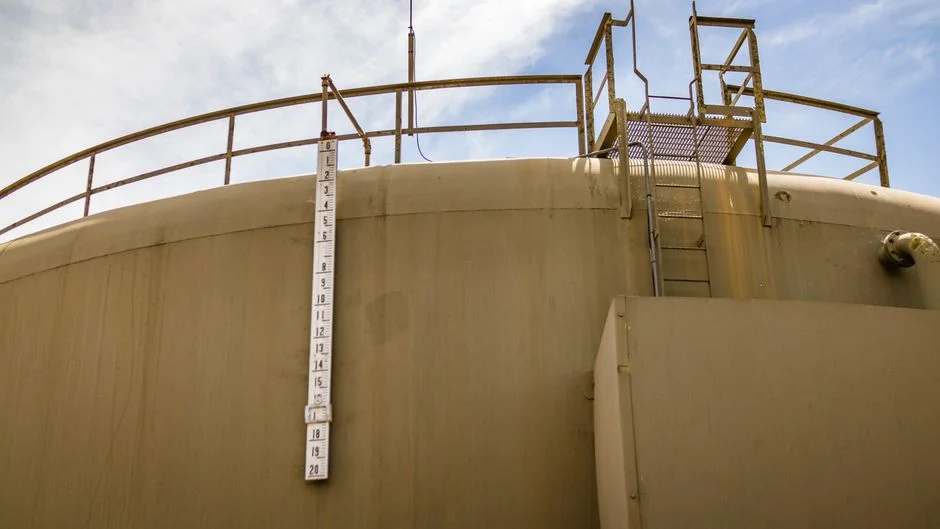
A conventional or lamella clarifier is a gravity vessel where quiescent conditions let settleable solids drop to the bottom, clarified water overflows a peripheral weir, and a scraper or hopper pulls the underflow to a sludge pump. Coagulant and flocculant dosing is typically used to grow floc heavy enough to settle quickly, and a lamella (inclined-plate) clarifier multiplies the effective settling area inside a much smaller footprint than a conventional circular tank. That mechanical simplicity is the main reason clarifiers stay in the toolbox: no saturation tank, no recycle pump, no air compressor, fewer rotating parts, and a lower operator skill requirement. The trade-off is selectivity. Clarifiers struggle when the influent is dominated by emulsified FOG, light colloidal protein, or fine food solids, because oil droplets and protein colloids settle slowly and often pass straight through. For a Pascagoula plant whose stream is mostly heavy settleable grit, starch or debris with moderate FOG, a lamella clarifier can be the most economical primary, with a polishing DAF held in reserve for FOG spikes.
Head-to-Head: DAF vs Clarifier for Pascagoula Food & Beverage Plants
| Parameter | DAF (dissolved air flotation) | Clarifier (conventional or lamella) |
|---|---|---|
| Target contaminant | Emulsified FOG, oils, light colloids, fine TSS | Heavy settleable TSS, grit, debris |
| Documented removal | Up to 95% TSS and FOG (H2Flow product data) | Strong on TSS when solids are settleable; weak on emulsified FOG |
| Footprint | Compact vs. traditional sedimentation (H2Flow) | Lamella plates compress conventional area; still larger than a comparably rated DAF on FOG streams |
| Chemical demand | Coagulant + polymer for bubble attachment | Coagulant / flocculant for floc weight |
| Sludge character | Floated skimming, often thicker | Bottom underflow, usually easier to dewater mechanically |
| Energy and rotating equipment | Saturation tank, recycle pump, air system, skimmer drive | Sludge scraper or hopper drives only |
| EPA reference | Named best demonstrated technology in the 1974 EPA seafood development document | Not named as a best demonstrated technology in the 1974 EPA seafood development document |
| Best-fit stream | Shrimp cook water, poultry scalder, sauce cook-out, beverage CIP with high FOG | Heavy grit, starch, debris with moderate FOG |
The table indicates DAF as the primary for most Pascagoula food and beverage profiles. A lamella clarifier remains a viable option when moved to the polishing role where its settling area is utilized efficiently.
Pascagoula Decision Tree: Pick DAF, Clarifier, or Both
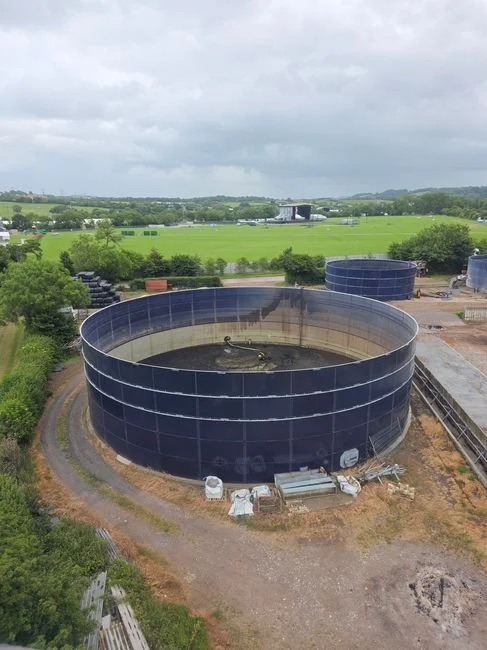
Use this four-branch tree to translate the comparison into a 2026 procurement recommendation.
- If your influent is dominated by emulsified FOG, blood and protein, or light food solids (typical Pascagoula shrimp cook water, poultry scalder, sauce cook-out, beverage CIP with butter/oil carryover) — install a HydropureWater DAF system for FOG and TSS removal as the primary, sized with a hydraulic loading and air-to-solids ratio confirmed on your own jar tests.
- If your influent is dominated by heavy settleable solids (shell grit, starch, debris) and FOG is moderate — install a clarifier primary, and keep DAF as a polish step if FOG spikes. A HydropureWater lamella clarifier for settleable-solids polishing fits tight Pascagoula plant footprints and matches the gravity-settling strength of the stream.
- If flow is variable, batchy, and high-FOG (the typical Gulf seafood line) — install DAF primary followed by a small lamella clarifier polish, which matches the EPA seafood document's framing of DAF as a primary separation step before further treatment.
- If space is severely constrained and FOG is low — a lamella clarifier alone may satisfy permit limits, but verify with jar tests and a pilot trial before committing.
Couple the primary unit with an automatic polymer and coagulant dosing skid sized for the actual coagulant demand, and send the floated DAF skimming or clarifier underflow to a sludge dewatering filter press so the wet sludge does not re-load the headworks.
Sizing, Footprint and Cost Questions to Ask Your 2026 Vendor
The single largest 2026 risk in a Pascagoula DAF-or-clarifier decision is accepting a vendor's generic brochure number for a stream the vendor has not tested. Push every claim back to a documented influent. Specifically, request:
- Removal efficiency on a Pascagoula-relevant stream — shrimp cook water, poultry scalder, sauce cook-out, or beverage CIP. Case data must come from the supplier or a pilot run on your effluent.
- Hydraulic loading (m³/m²·h) and air-to-solids ratio for the proposed DAF; for a clarifier, surface overflow rate (m³/m²·d) and side-water depth. These are the parameters a Mississippi DEQ fact-sheet reviewer will look for.
- Installed footprint, connected power (kW), polymer consumption (kg per day at design load) and projected dry-sludge yield (kg DS/day). Require these in writing with the proposal.
- An EPA or equivalent reference for the proposed unit on food or seafood duty, plus a documented jar test or pilot trial on your effluent. Vendor reference lists are not a substitute for a pilot, and a DAF capacity and sizing engineering guide can be used as a cross-check when you read the proposal.
For chemical program design, the automatic chemical dosing engineering guide outlines the jar-test-to-skid workflow a buyer should expect a vendor to follow. A DAF design guide for 2026 gives an external benchmark for hydraulic and air-to-solids assumptions, and a sister DAF vs clarifier guide for Tracy food plants shows how a comparable West Coast cluster framed the same decision.
Frequently Asked Questions
What is the 2026 capital cost difference between a DAF and a clarifier for a Pascagoula food or seafood line?
The research does not publish a verified per-m² or per-m³/hr capital cost for either unit on a Pascagoula food stream, so any price received before issuing an RFQ is indicative. Ask each vendor for a budget proposal tied to your design flow, your FOG/TSS profile, and the hydraulic loading and air-to-solids ratio you intend to operate at, and require a separate line item for the saturation tank, recycle pump, air system and polymer dosing skid on the DAF side, and for sludge scraper drives and hopper volume on the clarifier side. Treat a proposal that does not break out those items as a non-quote.
Which suppliers should a Pascagoula plant shortlist, and how do I check them against EPA seafood best-technology references?
Shortlist vendors that can show a documented reference list on food, seafood or poultry duty, a working pilot skid, and a willingness to run a jar test on your actual effluent before purchase. Cross-check any vendor's "best demonstrated technology" claim against the 1974 EPA seafood development document, which names dissolved air flotation specifically as a best demonstrated technology for the canned and preserved seafood processing point source category. The practical check is reference quality and pilot willingness, not sticker price.
How do I size a DAF for a variable, high-FOG Pascagoula seafood stream without oversizing it?
Run a jar test with your coagulant and polymer candidates on a representative cook-water sample, then size the DAF from the air-to-solids ratio and hydraulic loading that the jar test confirms. The 1974 EPA seafood document and H2Flow's product data both confirm DAF is the canonical primary for this stream, but they do not give a single design number that fits every plant, so the only defensible 2026 size is the one your jar test and a short pilot produce. Hold a design margin for batch surges and clean-out days, and confirm the equalization tank volume before the DAF.
What is the compliance risk of choosing a clarifier as the primary on a Pascagoula shrimp or poultry line?
The compliance risk is a permit excursion on oil and grease and on TSS during FOG spikes, because a clarifier does not have an EPA "best demonstrated technology" anchor for high-FOG seafood streams. If a Pascagoula plant must run a clarifier primary for footprint or capital reasons, put a polishing DAF downstream and document the train with jar-test and pilot data in the permit fact sheet; do not rely on a clarifier alone to carry a high-FOG NPDES limit without that evidence.