The Regulatory Cascade That Defines a Deepstep Plant's Binding Number
Determine the category from the mineral, actual operation and wastewater source before selecting a separator. Part437 is Centralized Waste Treatment: it covers specified treatment/recovery of wastes received from off-site, with subcategories for metals, oils, organics and multiple wastestreams, and exclusions. It is not an ore-mining category and does not automatically cover a mine treating its own wastewater. Part440 concerns covered ore mining/dressing; Part436 concerns covered mineral mining/processing, with several reserved subparts. Other operations can require different category assessments, including covered metal finishing under433.10. A reserved subpart does not establish that no other permit or numerical requirement applies.
| Discharge route | Design document to obtain | Key distinction |
|---|---|---|
| Surface-water discharge | Applicable NPDES authorization, process category/subcategory and site limits | Do not substitute a generic437 table or sewer limits. |
| Connection to a POTW | Actual receiving authority, applicable pretreatment category determination, local limits and control mechanism | 403.5 prohibitions apply to each user; not every POTW must operate an approved local programme under 403.8. |
| Process reuse | End-use quality specification, concentrate and residual destinations, any applicable authorization | A reuse specification is not a discharge permit. |
Compare only requirements that actually cover the same discharge, pollutant, units and statistical period. This article establishes no common local copper, zinc, lead or TSS limit for all plants in the area. Drinking-water lead action levels, an unverified rulemaking date and a city name cannot supply that missing sewer limit. Obtain the current written conditions before fixing a performance guarantee.
Use measured inlet conditions and actual written targets to select equalization, chemical treatment, flotation, settling and any necessary polishing. Test the proposed stages on representative water and specify residual contaminants, throughput, chemical use, sludge and upset response. A fixed train or a 20–30% margin cannot guarantee compliance with an unknown future permit.
Three 2026 Rule Drivers That Push the Floor Down
Document a design margin from measured variability, analytical uncertainty and the agreed load envelope. If a permit change is proposed, obtain its text, applicability and effective date; do not treat an assumed future tightening as enacted law.
Use measured inlet conditions and actual written targets to select equalization, chemical treatment, flotation, settling and any necessary polishing. Test the proposed stages on representative water and specify residual contaminants, throughput, chemical use, sludge and upset response. A fixed train or a 20–30% margin cannot guarantee compliance with an unknown future permit.
Deepstep Stream Profile and Why It Breaks the Standard DAF Case Study
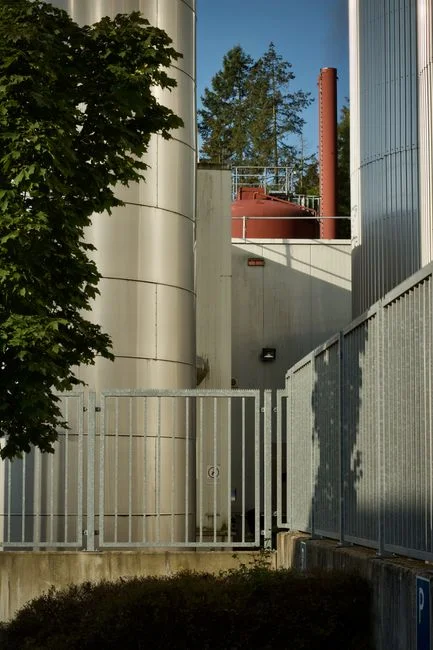
Raw acid mine drainage and spent process solutions arrive at a Deepstep-area treatment train at pH 2–4 with TSS in the hundreds to several thousand mg/L, and the dissolved-metal fraction carries lead, copper, zinc, and cadmium, with nickel and arsenic as secondary targets at most sites (per S2, Fluence 2024-11). The Deepstep basin carries active kaolin, attapulgite, and Fuller's earth operations, plus base-metals and battery-materials finishing, and their colloidal silica and fine clay break the food-plant DAF assumption that the floc is FOG-dominated (per S1).
Chemically, colloidal silica needs a stronger anionic polymer dose than a hydroxide floc, and a two-stage coagulation (coagulant at pH 9–10 for metals precipitation, then flocculant at pH 7–8 for the silica) is often the only path to a stable floc that micro-bubbles can lift; without that step, DAF underperforms and lamella blanket stability suffers (per S1). Process-specific spikes complicate the design: heap-leach operations periodically discharge ammonia, gold circuits carry cyanide and chloramines, and residual flotation reagents (xanthates, dithiophosphates) can pass through a clarifier and poison a downstream biological stage if one is later added. The equalization basin is the single highest-ROI compliance move at the head of the train because it damps the batch events that would otherwise push every downstream stage outside its design window (per S2).
The Dense Stream Compliance Matrix: Binding Limit to Equipment
The following table organizes applicability and design evidence rather than proving local numeric limits. Record the actual pollutant, limit or BMP, units, period and sample point. Then ask suppliers to demonstrate the needed separation and dissolved-contaminant treatment under representative and peak loads. Check residuals and alarms as part of acceptance.
DAF vs. Lamella on the Deepstep Stream: When Each Wins
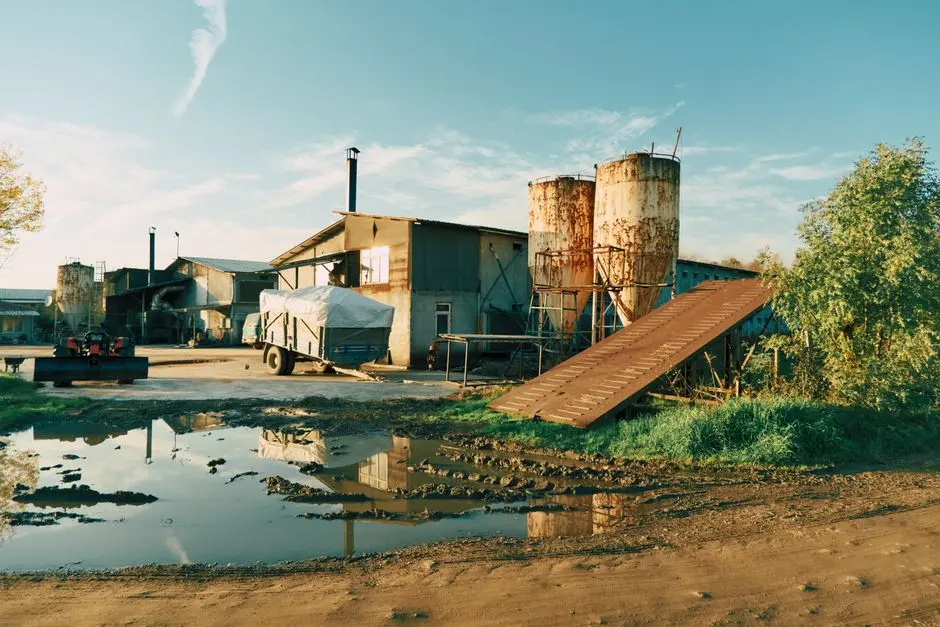
The decision most engineers face in a real project is DAF or lamella, and the right answer is set by the stream character, not by preference. The verdict on a Deepstep dense metal-hydroxide stream is consistent across the 2026 case base: DAF wins on FOG, colloidal fines, footprint, and float dryness; lamella wins on equipment CAPEX for FOG-free streams at very high flow; the conventional gravity clarifier loses on footprint and is rarely the 2026 answer when water-reuse or building area is in scope (per S1).
Use the heuristic: DAF when the stream carries oil, grease, or fine colloidal metals; lamella when the stream is primarily a metal-hydroxide sludge at high flow and footprint is constrained (per S2). A DAF system at 0.2–0.4 m² per m³/h is roughly one-twentieth the footprint of a conventional clarifier at 5–8 m² per m³/h, and about half the footprint of a lamella clarifier at the same flow; for a 100 m³/h stream that is the difference between roughly 30 m² of DAF footprint and roughly 600 m² of conventional clarifier footprint, which makes the DAF premium look largest in cold, space-rich sites and smallest in dense industrial corridors where every square meter of building is expensive (per S1).
| Parameter | DAF system | Lamella clarifier | Conventional gravity clarifier |
|---|---|---|---|
| Surface loading | 5–25 m/h | 20–40 m/h on plate-pack projected area | 1–2 m/h |
| Footprint (m² per m³/h) | 0.2–0.4 | 0.3–0.6 | 5–8 |
| CAPEX multiplier (lamella = 1.0x) | 1.5–2.5x equipment | 0.7–0.9x equipment; large civil/building adder | 0.6–0.8x equipment; largest civil/building adder |
| Float / underflow dryness | Float 4–8% DS — easier dewatering | Thinner float; higher water content | Denser sludge blanket; drier cake downstream |
| OPEX signature | 8–15 kWh/m³ (compressor + recycle) + chemistry | Coagulant + polymer; up to 30% savings via sludge recycle | Moderate; size 10–15% margin if <5°C sustained |
| Best fit | Oil, grease, colloidal fines, footprint-constrained sites | Dense settleable hydroxide floc, high flow, no oil | Legacy installations, very large settling basins |
OPEX narrows the gap further. Both technologies use coagulant and polymer; the lamella saves up to 30% on coagulant via sludge recycle, but DAF produces a thicker float (4–8% DS) that dewaters more easily in a downstream plate and frame filter press (per S1). The Deepstep-specific civil overlay is what closes the rest of the gap: the Coastal Plain water table sits within 1–3 m of grade in many spots, so below-grade lamella vaults typically need active dewatering during construction, adding 10–20% to civil cost; above-grade DAF skids avoid that cost entirely (per S1).
Three Deepstep-Area Worked Scenarios
Scenario 1 — Kaolin/attapulgite processing, 120 m³/h, no oil, colloidal silica dominant. A lamella clarifier at 25 m/h surface loading on roughly 5 m² of plate area handles the dense silica floc; add a DAF system polish only if colloidal silica bleeds through. Two-stage coagulation at pH 9–10 then 7–8 with 1–5 mg/L anionic polymer holds the floc; TSS <30 mg/L on the discharge with metals controlled at upstream precipitation (per S1).
Scenario 3 — Low-flow mine dewatering or quarry sump. The DAF system skid starts and stops in minutes while a lamella risks solids packing in low-flow periods; TSS <30 mg/L during run hours with metals controlled upstream (per S1). Across all three, an automatic chemical dosing skid holds the polymer dose tight against variable influent — the single piece of kit that keeps either system inside its design window (per S1, S2). For a packaged skid sized to the pretreatment path, the auto dosing engineering guide walks through the same dosing-plus-press bundle at a comparable metals site.
CAPEX, OPEX, and Cold-Weather Sizing for the Coastal Plain
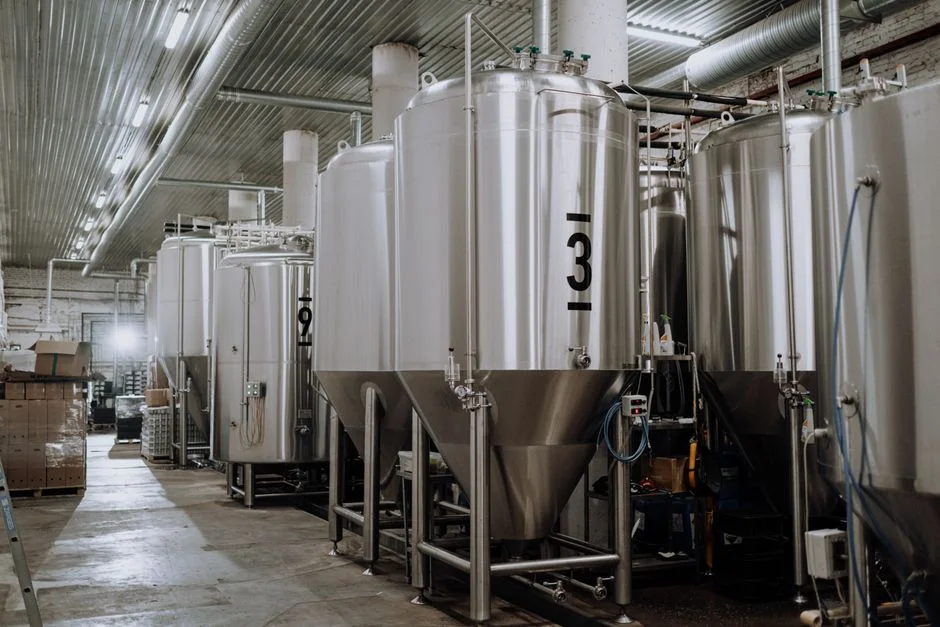
The headline ratio for 2026: DAF equipment CAPEX runs 1.5–2.5x a comparable lamella at equal flow, and lamella is 0.7–0.9x equipment with a large civil/building adder; the conventional clarifier runs 0.6–0.8x equipment with the largest civil/building adder (per S1, HydropureWater field data 2026). That gap narrows quickly once civil work, excavation, and footprint-driven building costs are added — for a 100 m³/h stream, the difference between roughly 30 m² of DAF footprint and 600 m² of conventional clarifier footprint makes the DAF premium look largest in space-rich sites and smallest in dense industrial corridors (per S1).
Two pieces of kit make the 2026 cost band defensible in front of procurement: an automatic chemical dosing skid to hold the dose tight against variable influent, and a downstream plate and frame filter press sized to either the DAF float (4–8% DS) or the lamella underflow (2–5% DS) (per S1). Deepstep sits in Washington County, GA, in the Coastal Plain; winter influent rarely drops below 5°C, so the 20–30% micro-bubble nucleation slowdown cited in comparable 2026 Texas field data is a rare sizing concern, and a standard DAF system sized to 20°C conditions will run year-round without the 10–15% cold-weather margin that northern-tier plants still apply (per S1, HydropureWater field data 2026). Chemical OPEX is dominated by pH-adjustment reagent: lime is cheaper per ton but generates 3–5x more sludge, so high-TDS mining streams often justify the higher per-ton cost of NaOH (per S2). For a side-by-side at a comparable Texas site, the Tenino mining pretreatment 2026 guide runs the same numbers on a colder basin.
Frequently asked questions
Does Part437 establish a universal mining discharge table?
No. It is a CWT category with specified off-site-waste coverage and exclusions. Determine the actual mine, processing, metal-finishing or waste-treatment category and the discharge route before selecting any table.
Does compliance require DAF followed by a clarifier?
The category name does not establish a mandatory separator sequence. Compare settling and flotation on representative conditioned wastewater. Measure residual suspended and dissolved pollutants, chemical use, sludge and energy; a dissolved-metal problem may require precipitation or another treatment before solids separation.
What must a supplier prove before equipment acceptance?
Provide actual written requirements and measured feed variability. Require an agreed mass balance, throughput and residual-pollutant tests, consumables, residual handling and safe upset response. Equalization moderates load variations; it does not remove pollutant mass or authorize dilution instead of treatment.