

Why Winery Wastewater Is a DAF Problem, Not a Clarifier Problem
Winery wastewater is dominated by suspended solids (skins, seeds, stalks, pulp, yeast lees) and oils & greases from tank, barrel and line cleaning, per the Kemco Systems industrial DAF process description. A gravity clarifier settles what drops out; a DAF lifts what floats. That distinction is decisive for crush streams, where skins and lees are buoyant or near-neutral density and tend to form a scum layer rather than a settled sludge. DAF forces separation by nucleating micro-bubbles on particle surfaces inside a pressurized recycle stream, so the operator does not have to wait for gravity to do work on a non-settling fraction.
Two seasonal realities push the technology choice. Harvest (roughly August through October in the Northern Hemisphere) generates a documented 3–10× hydraulic and load swing over the rest of the year, so any unit must be sized for the peak while remaining operable at base flow. The same recycle-based mechanism that handles peak loads also handles low flow: the recycle ratio is adjustable, while a fixed-volume clarifier cannot scale its surface area. Laboratory work published in MDPI Processes (2014) demonstrated efficient flotation of biological materials including grape stalks, giving a documented precedent for DAF on winery substrates rather than just generic food-processing streams. For a mid-size crush facility weighing clarifier versus DAF, the question is rarely "can clarifiers work?" but "can clarifiers reliably capture buoyant FOG and skins during the harvest spike without operator intervention?" — and the answer on crush streams is typically no.
Characterizing Winery Influent Before You Size the DAF
A defensible 2026 DAF design starts with an influent dataset, not a model number. The minimum parameters a designer must collect are peak and average daily flow, TSS, FOG, BOD, COD, pH and temperature. Temperature matters because cold winter or early-spring rinses (often below 15 °C at a winery) increase gas solubility and slow bubble rise kinetics; the saturation pressure and recycle ratio have to compensate for that mass-transfer penalty. The same temperature sensitivity is the reason biological polishing downstream of the DAF is sized separately.
Seasonality drives the entire design basis. Harvest loads the equalization basin at several times the average; bottling and storage season discharges only dilute cooling and bottle-rinse water. Keep high-strength streams segregated at source: fermenter and lees drains are BOD-dominant and should be sent to a holding tank, not blended with cooling water that would otherwise flow straight to the DAF with minimal treatment. The pH profile also swings — caustic cleaning chemicals exit the cellar at high pH, while fruit acids and tartrate precipitation push the stream acidic — so the pH-correction step must neutralize into the coagulant's working window before any coagulant is dosed, as described in the Kemco Systems pretreatment chain.
DAF Design Parameters for a Winery: The Numbers That Matter
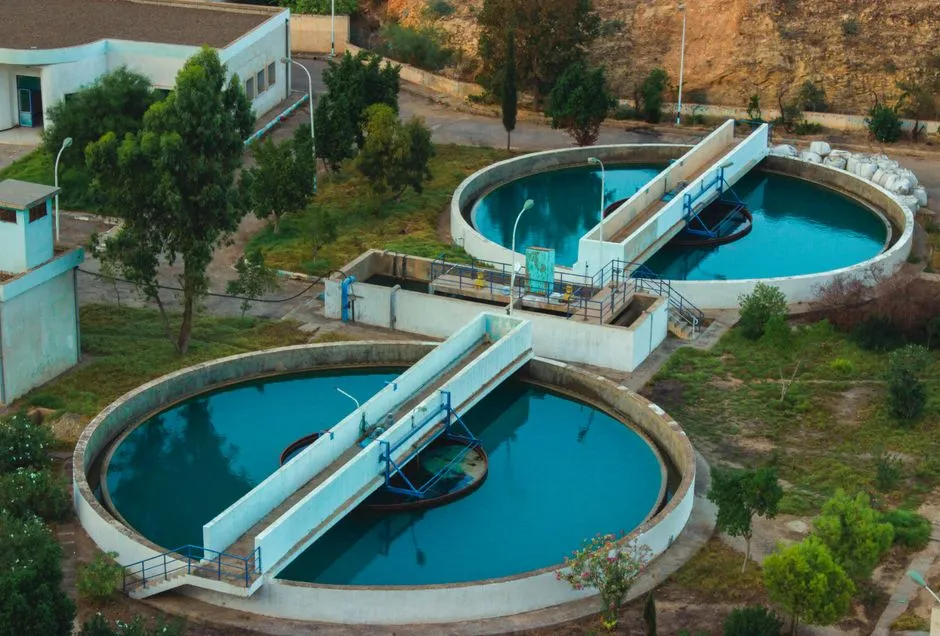
Hydraulic residence time (HRT) is the first design choice and the one most often misapplied. Per the Wikipedia DAF entry, circular DAF units require roughly 3 minutes of HRT and rectangular units require 20–30 minutes. For a compact winery site, circular geometry is the default because it packs the same clarification capacity into a smaller footprint; rectangular geometry is selected when the site has room and the operator wants longer floc-bubble contact time. Both are acceptable; the choice is a footprint versus floc-maturity trade-off, not a performance verdict.
Bubble generation is a two-step mechanism: a pressurized recycle stream is saturated with air in a pressure vessel, then depressurized through a pressure reduction valve at the front of the float tank, releasing the air as micro-bubbles that nucleate on suspended particles and lift them to the surface. The recycle ratio is the primary knob an operator uses to maintain consistent air-to-solids loading at low off-season flow versus peak harvest flow; exact winery-specific ratios must be derived from bench or jar testing, or from a supplier pilot run on the actual crush effluent. A lamella plate pack can be added inside the float tank to increase effective separation area when footprint is constrained, again per the Wikipedia DAF mechanism description.
Coagulant chemistry is site-specific. Ferric chloride or aluminum sulfate is the typical coagulant to destabilize colloids ahead of the float tank, paired with a polymer flocculant selected to build a buoyant floc that the micro-bubbles can attach to rather than punch through. pH correction upstream of coagulant dosing is required because both coagulants lose effectiveness outside their working pH window. Colder influent — common during autumn and winter — increases gas solubility and slows bubble rise; saturation pressure and recycle ratio are tuned to maintain the same mass of air per cubic meter of flow.
| Parameter | Value / Range | Source |
|---|---|---|
| HRT, circular DAF | ~3 min | Wikipedia DAF (S4) |
| HRT, rectangular DAF | 20–30 min | Wikipedia DAF (S4) |
| Coagulant (default) | Ferric chloride or aluminum sulfate | Wikipedia DAF (S4) |
| Flocculant | Polymer, selected to floc density for bubble attachment | Wikipedia DAF (S4) |
| Recycle saturation | Air-drum saturator + pressure reduction valve | Wikipedia DAF (S4) |
| Recycle ratio (winery) | Site-specific; not quantified in supplied research | Qualitative design consideration |
| Footprint mitigation | Lamella plate pack inside float tank | Wikipedia DAF (S4) |
| Target pollutants | Oils, greases, suspended solids, BOD, COD, metals | Kemco Systems (S3) |
Pretreatment and Post-Treatment Around the DAF
The DAF is the heart of the train, not the whole train. Upstream, a hydrocyclone or shaker screen removes grit, seeds and large stalk fragments before the saturator, the pressure reduction valve and the skimmer are exposed to ragging, as documented in the Kemco Systems DAF process chain. pH correction sits immediately ahead of coagulant dosing: an in-tank pH sensor, metering pumps for acid and caustic, and an automated drain valve hold the stream inside the coagulant's working window. This is typically delivered as an automatic chemical dosing system tied to a control panel.
Downstream of the DAF, the skimmed float is thickened and dewatered on a plate-and-frame filter press to reduce hauling cost and produce a dry cake suitable for off-site disposal or, where regulations permit, land application. The DAF's job is to remove the bulk FOG and TSS so that the downstream biological stage — aerobic or anaerobic, depending on the winery's discharge route — is not overloaded on the residual BOD and COD. Sizing the DAF and the bioreactor as a single train, not as independent projects, keeps the capex committee from being surprised by a second retrofit later.
Matching HydropureWater DAF Models to Winery Flow Bands
Translating the abstract design into equipment selection starts with a supplier envelope that covers the winery's likely flow range. The HydropureWater DAF system covers 4–300 m³/h across 13 standard models with micro-bubble technology and automatic skimming, per the verified product catalog. That envelope spans boutique cellars at the low end through regional crush facilities at the high end, so a single supplier can typically carry the design basis without forcing a custom build.
The selection method is to set the design flow at the documented harvest peak and select the model that meets it at the catalog's rated hydraulic load, then verify that the unit is operable at base off-season flow. For harvest peaks that would otherwise force an oversized tank, the operator can throttle the recycle ratio and pre-stage equalization upstream of the DAF. For a small-to-mid winery in the 5–30 m³/h average range, the DAF sits between an upstream shaker screen and a downstream plate-and-frame filter press, mirroring the food-processing DAF train documented by Kemco Systems. For larger wineries or cooperative cellars above 100 m³/h, parallel DAF trains or the larger catalog models become economic, with lamella packing inside the float tank available as a footprint-relief option. Cross-reference the DAF machine specifications and standards guide and the best DAF unit decision framework for 2026 when building the procurement specification.
| Winery Scale | Typical Avg. Flow Band | DAF Configuration | Notes |
|---|---|---|---|
| Boutique / tasting room | <5 m³/h | Smallest catalog model, circular geometry preferred | Operate at low recycle ratio off-season; equalize harvest days |
| Small-to-mid winery | 5–30 m³/h | Mid-catalog model, circular DAF, shaker screen upstream | Plate-and-frame filter press on the skim line |
| Regional crush facility | 30–100 m³/h | Upper-catalog model, optional lamella packing | Recycle ratio tuning critical across seasonal swing |
| Cooperative / large cellar | >100 m³/h | Largest catalog models or parallel trains | Pre-stage equalization ahead of DAF; biological polish downstream |
Winery-Specific DAF Design Checklist
Hand this list to a design consultant or attach it to a supplier RFQ so the review meeting focuses on numbers, not narrative.
- Confirm segregated influent streams — crush, lees, fermenter drains versus bottling, cooling and bottle-rinse water — are re-combined only after each is metered.
- Set the DAF design flow to the documented harvest peak, with the recycle ratio tuned to hold the same air-to-solids ratio at low off-season flow.
- Select HRT based on footprint: roughly 3 minutes for circular DAF, 20–30 minutes for rectangular DAF, per the Wikipedia DAF mechanism description.
- Specify pH control and coagulant dosing upstream of the float tank, with ferric chloride or aluminum sulfate as the default coagulant and a polymer flocculant selected for the floc density needed for bubble attachment.
- Plan sludge dewatering with a plate-and-frame filter press and downstream biological polishing as part of the same train, not as separate later projects.
- Verify the chosen model sits inside the supplier's 4–300 m³/h envelope and that the unit remains operable across the documented 3–10× seasonal swing without manual reconfiguration beyond recycle ratio adjustment.
For a deeper mechanism walk-through and selection logic, the DAF system engineering specifications guide is the most relevant companion document.
Frequently Asked Questions
What DAF size do I need for a 50 m³/day winery?
Convert 50 m³/day into an hourly design flow, then add the documented harvest peaking factor (3–10× over average) and the desired equalization margin. The selected model must sit inside the supplier's 4–300 m³/h envelope and be operable at off-season base flow. For a 50 m³/day winery in the 2–3 m³/h average band, a small-to-mid catalog model with circular geometry is the typical starting point; the design flow is what sizes the unit, not the daily average.
How much does a winery DAF system cost in 2026?
CAPEX is driven by the selected model's flow rating, materials of construction, the level of automation on the pH and chemical dosing loop, and whether the train includes an upstream shaker screen and a downstream filter press. OPEX is driven by coagulant and flocculant consumption, compressed-air supply to the saturator, and the dewatering cost on the skim line. Request a written quotation tied to your design flow, target TSS/FOG removal, and the documentation package required for the discharge permit.
Can a DAF handle the FOG from barrel and tank washing?
Yes. Oils, greases and suspended solids are the documented DAF target pollutants per the Kemco Systems industrial DAF description, and the micro-bubble mechanism is well suited to buoyant or near-neutral-density FOG that would form a scum layer in a gravity clarifier. The chemistry step is to hold pH inside the coagulant's working window and select a flocculant that builds a buoyant floc the