Package Wastewater Treatment Plants in Odisha, India: 2025 Engineering Guide with Costs, Compliance & Supplier Comparison
A package wastewater treatment plant in Odisha is a compact, pre-engineered system combining biological treatment (e.g., MBBR, MBR) with sedimentation and disinfection in a single skid-mounted or buried unit. For a 50 KLD system, expect CAPEX of ₹3.5–5.0 lakhs (2025 data) and OPEX of ₹0.8–1.2 per m³ treated, with Odisha PCB requiring effluent TSS <30 mg/L, BOD <30 mg/L, and fecal coliform <1000 MPN/100mL. These plants are ideal for decentralized applications where space is limited or civil construction is impractical. For a Bhubaneswar hospital or a Puri hotel, these systems provide a "plug-and-play" alternative to massive, site-built concrete structures, ensuring regulatory compliance while minimizing the footprint required for environmental infrastructure.
Why Odisha Needs Package Wastewater Treatment Plants: Key Drivers and Challenges
Odisha generates approximately 1,200 million liters per day (MLD) of urban wastewater as of 2023 data from the Odisha Water Supply & Sewerage Board, yet only about 30% of this volume is currently met by functional treatment capacity. This massive deficit has led to increased regulatory scrutiny from the Odisha State Pollution Control Board (OSPCB). Rapid urbanization in the "Golden Triangle" of Bhubaneswar, Cuttack, and Puri, along with the industrial expansion in Rourkela and Jharsuguda, has created a critical need for decentralized solutions. Conventional sewage treatment plants (STPs) often fail in these environments due to the high cost of land acquisition; in Bhubaneswar, for example, the average plot size for commercial developments is often less than 200 m², making traditional civil-heavy STPs non-viable.
The OSPCB’s 2025 discharge standards (per OSPCB/2023/12) mandate strict limits for all decentralized units: Total Suspended Solids (TSS) <30 mg/L, Biochemical Oxygen Demand (BOD) <30 mg/L, and fecal coliform <1000 MPN/100mL. the state’s "Drink from Tap" mission and focus on water conservation have pushed facility managers to look beyond simple disposal toward treated water reuse. A real-world example of this shift is the 10 KLD STP installation at Simadri Eye Hospital, which serves as a model for healthcare facilities in the region. By utilizing a package plant, the hospital manages medical-grade effluent within a confined footprint, avoiding the logistical nightmare of connecting to a non-existent municipal sewer line while meeting all health and safety regulations.
Package Wastewater Treatment Plants Explained: How They Work and When to Use Them
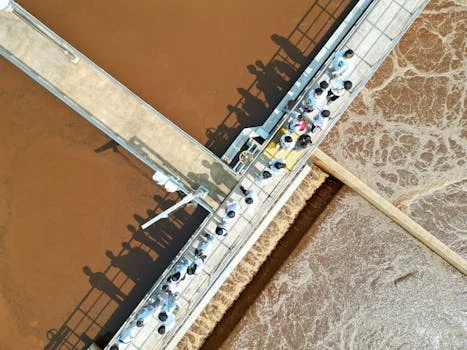
Package wastewater treatment plants are pre-fabricated, modular systems that integrate primary, secondary, and tertiary treatment phases into a single, often transportable unit. The standard process flow begins with manual or mechanical screening to remove large debris, followed by an equalization tank to stabilize hydraulic surges. The core biological treatment typically utilizes Moving Bed Biofilm Reactor (MBBR) or Membrane Bioreactor (MBR) technology, followed by a secondary clarifier for sedimentation and a final disinfection stage. For many urban projects, an underground package sewage treatment plant is the preferred configuration, as it allows the surface area to be repurposed for parking or landscaping.
Key technical components within these units are engineered for high-density microbial growth. For instance, MBBR media used in these plants typically features a specific surface area of 500–600 m²/m³ with a 50% fill ratio, ensuring high BOD removal rates in a small volume. Aeration is provided by high-efficiency blowers, while PLC-based control panels automate the sludge return and oxygen dosing cycles. These systems are most effective for residential communities (50–500 KLD), hospitals (10–100 KLD), and hotels (20–200 KLD).
Compared to conventional activated sludge plants, package units offer a 60% smaller footprint and 30% faster installation timelines. Data indicates that a 50 KLD package plant can be commissioned for approximately ₹2.55L to ₹3.5L in equipment costs, whereas a site-built equivalent often exceeds ₹4.5L when factoring in civil engineering and labor. However, engineers must note that package plants are generally not suitable for high-strength industrial wastewater where Chemical Oxygen Demand (COD) exceeds 2000 mg/L without significant pretreatment, nor are they cost-effective for massive municipal flows exceeding 1000 KLD.
Odisha PCB Compliance: Discharge Standards and Permitting Process for Package STPs
Odisha PCB compliance requires strict adherence to the 2025 standards to avoid significant legal and financial penalties. The permitting process in Odisha follows a structured path: it begins with the application for Consent to Establish (CTE), followed by a site inspection, the issuance of a No Objection Certificate (NOC), and finally, the Consent to Operate (CTO) after commissioning. The typical timeline for NOC approval in Bhubaneswar ranges from 30 to 45 days, provided the engineering drawings meet OSPCB specifications. Facility operators must maintain a chlorine dioxide disinfection system for Odisha PCB compliance to ensure fecal coliform levels remain within the mandated limits.
| Parameter | OSPCB Limit (2025) | Standard Test Method | Monitoring Frequency |
|---|---|---|---|
| pH | 6.5 – 8.5 | Electrometric | Daily (on-site) |
| BOD (3 days at 27°C) | < 30 mg/L | IS 3025 (Part 44) | Monthly (certified lab) |
| TSS | < 30 mg/L | Gravimetric | Monthly (certified lab) |
| Fecal Coliform | < 1000 MPN/100mL | Multiple Tube Fermentation | Monthly (certified lab) |
| Oil & Grease | < 10 mg/L | Partition-Gravimetric | Quarterly |
Common compliance failures in Odisha often stem from pH drift (outside the 6.5–8.5 range) and chlorine residuals falling below 1 mg/L, which leads to fecal coliform spikes. These issues are frequently exacerbated during the monsoon season (June–September). To mitigate this, OSPCB recommends sizing equalization tanks to handle at least 2x the average daily flow with a 4-hour detention time. A case study of a major hotel in Bhubaneswar showed that upgrading from a basic septic system to an MBR-based package plant reduced their effluent BOD from 180 mg/L to <5 mg/L, completely eliminating previous non-compliance fines and allowing the hotel to reuse treated water for its cooling towers and gardens.
Technical Specifications: Comparing MBBR, MBR, and SBR for Odisha’s Wastewater
Selecting the right technology depends on the desired effluent quality and available space. In Odisha, the Moving Bed Biofilm Reactor (MBBR) is the most common choice for residential projects due to its balance of cost and performance. However, for high-end hotels and hospitals where water reuse is a priority, an MBR wastewater treatment system for reuse applications is superior because it eliminates the need for a secondary clarifier and produces near-potable quality effluent. Sequencing Batch Reactors (SBR) are generally reserved for larger installations where flow variability is extreme, such as seasonal resorts along the Puri-Konark marine drive.
| Feature | MBBR | MBR | SBR |
|---|---|---|---|
| Effluent Quality (BOD) | < 20 mg/L | < 5 mg/L | < 15 mg/L |
| Energy Use (kWh/m³) | 0.3 – 0.5 | 0.6 – 0.9 | 0.4 – 0.6 |
| Footprint (m²/KLD) | 1.5 – 2.0 | 1.0 – 1.5 | 2.0 – 2.5 |
| Maintenance Complexity | Low | High (Membrane cleaning) | Medium |
| CAPEX Index | 1.0 (Baseline) | 1.4 – 1.6 | 1.1 – 1.3 |
| Odisha Suitability | Standard residential | Hotels/Hospitals (Reuse) | Variable flow resorts |
MBBR systems utilize suspended plastic media that provide a large surface area for bacteria to grow, making them robust against hydraulic shocks. MBR systems, conversely, use submerged membranes with pore sizes as small as 0.04 μm, providing a physical barrier to pathogens and solids. While MBR has a higher energy demand, the ability to bypass tertiary filtration stages often makes it more space-efficient for congested areas in Cuttack or Bhubaneswar. SBR technology operates on a "fill-and-draw" cycle, which allows for nutrient removal (Nitrogen and Phosphorus) within a single tank, though it requires more sophisticated automation and larger tank volumes.
Cost Breakdown: CAPEX, OPEX, and ROI for Package STPs in Odisha (2025 Data)
Budgeting for a package STP in Odisha requires a clear distinction between the initial purchase price and long-term operational costs. For a 50 KLD package STP, the total Capital Expenditure (CAPEX) typically ranges from ₹4.3L to ₹5.8L. This includes the equipment cost (₹2.5–3.5L), civil works for the foundation or pit (₹1.0–1.5L), and professional installation and commissioning (₹0.8–1.2L). For industrial applications, engineers might also consider DAF systems for industrial pretreatment if the influent contains high levels of fats or oils, which adds to the initial CAPEX but protects the biological unit.
| Cost Component (50 KLD) | Estimated Cost (INR) | Percentage of Total |
|---|---|---|
| Equipment (Skid/Membranes/Media) | ₹ 3,00,000 | 60% |
| Civil Works & Piping | ₹ 1,20,000 | 24% |
| Electrical & PLC Controls | ₹ 40,000 | 8% |
| Installation & Commissioning | ₹ 40,000 | 8% |
| Total CAPEX | ₹ 5,00,000 | 100% |
Operational Expenditure (OPEX) is dominated by electricity and labor. In Odisha, the average OPEX for an MBBR plant is ₹0.9/m³, while MBR plants can reach ₹1.4/m³ due to higher blower pressures and chemical cleaning requirements. However, the Return on Investment (ROI) is significant. Consider a 100 KLD hotel STP: with a CAPEX of ₹8L and OPEX of ₹1.2/m³, if the hotel saves 80 KLD of fresh water (priced at ₹50/m³ from tankers), the annual savings reach approximately ₹14 lakhs. This results in a payback period of less than 3.5 years, after which the plant generates net savings. Financing options are available through the Swachh Bharat Mission and AMRUT 2.0 subsidies for eligible projects, with many local banks like SBI and HDFC offering environmental equipment loans with 12–24 month EMI terms.
Supplier Comparison: Top 5 Package STP Manufacturers Serving Odisha (2025)
When evaluating suppliers, engineers should prioritize those with a local service network in Odisha to ensure rapid response during the monsoon or equipment failure. A detailed supplier comparison for Indian markets shows that while national players offer advanced technology, local support is the deciding factor for long-term reliability. Below is a matrix of the top suppliers currently serving the Odisha region.
| Supplier | Primary Technology | CAPEX (50 KLD) | Local Service Center | Compliance Support |
|---|---|---|---|---|
| Sintex | MBBR (Plastic Tanks) | ₹ 2.5 – 3.0L | Bhubaneswar | Basic |
| Water Care Systems | MBBR / MBR | ₹ 3.5 – 4.5L | Bhubaneswar | High (OSPCB Liaison) |
| Ion Exchange | SBR / MBR | ₹ 4.5 – 5.5L | Bhubaneswar | Comprehensive |
| Varatoya Solutions | Low-Maintenance MBBR | ₹ 2.8 – 3.5L | Chatrapur / Ganjam | Moderate |
| HydropureWater Env. | MBR / DAF Integrated | ₹ 3.5 – 4.5L | Via Odisha Partners | Technical Only |
Sintex remains a popular choice for budget-conscious residential projects due to their mass-produced plastic tank designs. Water Care Systems is noted for its deep expertise in local OSPCB permitting, making them a preferred partner for new hospital constructions. Ion Exchange offers the most robust service network but at a premium price point. For facilities requiring advanced membrane integration and turnkey industrial solutions, HydropureWater provides high-spec MBR units that outperform standard biological systems in effluent clarity and durability.
Decision Framework: How to Select the Right Package STP for Your Odisha Project
Selecting an STP is a multi-stage engineering decision that involves balancing immediate costs with long-term compliance and operational ease. Following this framework ensures that the selected system meets the specific needs of an Odisha-based project:
- Step 1: Define Influent Characteristics: Measure your daily flow and organic load. Typical residential BOD is 200–300 mg/L, while hospitals can range from 300–500 mg/L due to organic waste and disinfectants.
- Step 2: Determine Effluent Requirements: If the goal is simple discharge to a drain, MBBR is sufficient. If the goal is reuse for toilet flushing or landscaping (essential for "Green Building" ratings in Bhubaneswar), MBR is mandatory. Refer to the comparison of package vs. conventional STPs for further guidance on technology selection.
- Step 3: Assess Site Constraints: If space is at a premium, choose an underground or MBR-based system. Check soil stability, especially in coastal areas like Ganjam or Puri, where high water tables may require reinforced concrete pits for buried units.
- Step 4: Evaluate Lifecycle Costs: Don't just look at CAPEX. An MBR system might cost 40% more upfront but save 50% in fresh water costs over 10 years.
- Step 5: Shortlist and Audit Suppliers: Ask for at least three references of installations in Odisha that have been operational for more than two years.
Checklist for Supplier Evaluation: 1. Does the supplier provide a performance guarantee for OSPCB limits? 2. What is the lead time for membrane or media replacement in Odisha? 3. Is the control system compatible with remote monitoring (IoT)? 4. Can the system handle 2x peak flow during monsoon events? 5. Does the price include the first year of AMC (Annual Maintenance Contract)?
Frequently Asked Questions
What is the typical lifespan of a package wastewater treatment plant in Odisha?
With routine maintenance, the structural components of a package plant (steel or FRP tanks) last 15–20 years. The biological media (MBBR) typically lasts 10–15 years, while MBR membranes usually require replacement every 5–7 years depending on the cleaning regimen and influent quality.
How much does it cost to set up a 100 KLD package STP in Bhubaneswar?
A 100 KLD system typically requires a CAPEX of ₹7–9 lakhs for an MBBR configuration and ₹10–12 lakhs for MBR. OPEX will range from ₹1.0 to ₹1.5 per cubic meter treated, covering electricity, sludge disposal, and periodic chemical dosing.
What are the Odisha PCB’s penalties for non-compliance?
Under the OSPCB/2023/12 guidelines, non-compliance can result in fines ranging from ₹10,000 to ₹50,000 per violation. Repeated offenses or failure to maintain a CTO (Consent to Operate) can lead to the disconnection of electricity and water services or a total plant shutdown.
Can package STPs handle monsoon flows in Odisha?
Yes, provided they are equipped with a properly sized equalization tank. In Odisha, it is standard engineering practice to size these tanks for 2x the average daily flow to manage the hydraulic surges caused by heavy rainfall and infiltration into the sewer network.
What are the main disadvantages of package STPs?
The primary disadvantages include limited scalability (adding capacity often requires an entirely new unit) and higher OPEX per liter compared to massive centralized municipal plants. Additionally, the blowers and pumps can generate noise, which requires sound-dampening enclosures if the plant is located near residential units.