LED Wastewater Resource Recovery: 2026 Hybrid UV-LED Systems, 99% Disinfection & $0.8M ROI Breakdown
UV-LED wastewater trains apply a breakdown disinfection hybrid led recovery resource model that pairs membrane pretreatment with a chemical-free final barrier. Industrial units reach 99% microbial kill at 50–150 mJ/cm² while drawing 0.05–0.1 kWh/m³. A 100 m³/h system typically costs $120,000–$250,000 CapEx and about $0.05/m³ Opex, with payback often falling in 3–5 years.
What a breakdown disinfection hybrid led recovery resource system delivers
LED wastewater resource recovery uses UV-LED reactors after solids and turbidity control to inactivate pathogens without residual chemicals. Hybrid UV-LED plus MBR trains produce reuse-grade water for cooling or irrigation at 99% disinfection when dose and influent clarity are controlled. CapEx for 100 m³/h units runs $120,000–$250,000, while energy use stays about 70% below mercury UV lamps.
Why plants move from chemical dosing to UV-LED
Chemical disinfection with chlorine or ozone often costs $0.10–$0.25/m³ in industrial wastewater service. About 30% of that spend goes to residual control and byproduct management (EPA 2023 data). Those operating costs, plus storage and exposure risk, push many plants toward physical UV-LED barriers.
UV-LED systems remove chemical storage, handling, and disinfection byproduct formation. Many operations cut OSHA compliance costs by up to 40% after the switch. A Texas food plant processing 500 m³/day cut disinfection Opex by 65% after replacing chlorine with UV-LED sized for 30 m³/h peak flow.
That site had struggled with chlorine residual limits and trihalomethane formation. The UV-LED train gave immediate, chemical-free kill and removed dechlorination plus DBP monitoring burden. Haloacetic acids and THMs no longer form because UV-LED is a physical process that leaves water chemistry unchanged.
How UV-LED dose, wavelength, and turbidity limits work
UV-LED light damages microbial DNA and RNA so cells cannot replicate. Industrial emitters commonly target 254 nm, 265 nm, and 280 nm for germicidal and protein effects. A 99% kill typically needs 50 mJ/cm² for E. coli, 100 mJ/cm² for Legionella, and up to 150 mJ/cm² for some viruses (per NIH 2024 study).
Reactor geometry, lens arrays, and CFD-guided turbulence help keep dose uniform and reduce shadowing. Influent turbidity still governs penetration. Most UV-LED designs want less than 10 NTU, with under 5 NTU preferred. Higher-solids streams need upstream clarification such as DAF systems for UV-LED influent pretreatment or tight filtration before the reactor.
| Parameter | UV-LED Specification | Significance for Disinfection |
|---|---|---|
| Peak Wavelengths | 254 nm, 265 nm, 280 nm | Optimized for DNA/RNA absorption and protein denaturation, ensuring broad-spectrum pathogen inactivation. |
| Required UV Dose (99% Kill) | 50 mJ/cm² (E. coli), 100 mJ/cm² (Legionella), 150 mJ/cm² (Viruses) | Ensures effective inactivation of target microorganisms for compliance and reuse. |
| Influent Turbidity Limit | <10 NTU (optimal <5 NTU) | Critical for maximizing UV light penetration and achieving target dose; requires effective pretreatment. |
| Operating Temperature | 5°C – 40°C | Ensures stable LED performance and longevity across typical industrial operating conditions. |
| Pressure Rating | Up to 10 bar (145 psi) | Accommodates standard industrial pipeline pressures without compromising system integrity. |
Which low-energy UV disinfection systems suit decentralized water reuse?
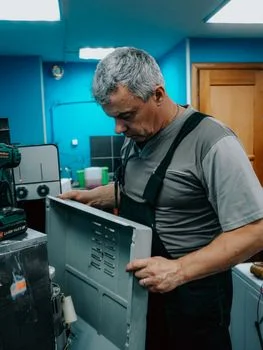
UV-LED reactors usually draw 0.05–0.1 kWh/m³. Low-pressure or medium-pressure mercury lamps often need 0.15–0.3 kWh/m³ (DOE 2024 data). That gap is about a 70% cut in specific energy use on high-volume industrial flows and on smaller decentralized reuse skids.
Industrial UV-LED emitters last about 50,000 hours, versus 8,000–12,000 hours for mercury lamps. Fewer changeouts cut parts cost and downtime. LEDs hold no mercury, need no warm-up, and typically require about 90% fewer spare parts than a mercury UV train.
Routine work is mainly sleeve cleaning where quartz is used, plus sensor checks. UV-LED units also emit no ozone, so plants avoid extra ventilation that some mercury lamps need to meet OSHA airborne limits. Instant on/off and dimming help match variable reuse demand without idle chemical feed.
Plants still comparing oxidant trains can review a Chlorine Dioxide (ClO₂) Generator for Water Disinfection beside UV-LED for residual-based duties. UV-LED remains the lower-energy path when the goal is pathogen kill without DBPs.
| Feature | UV-LED Systems | Traditional Mercury UV Systems | Chemical Disinfection (e.g., Chlorine) |
|---|---|---|---|
| Energy Consumption (kWh/m³) | 0.05–0.1 | 0.15–0.3 | Indirect (pumping, mixing, chemical production) |
| Lamp/Emitter Lifespan (hours) | 50,000+ | 8,000–12,000 | N/A (chemical shelf life) |
| Chemical Use | None | None | High (chlorine, ozone, etc.) |
| Disinfection Byproducts (DBPs) | None | None | Potential (THMs, HAAs, bromate) |
| Maintenance Complexity | Low (no warm-up, fewer parts) | Medium (lamp replacement, quartz sleeve cleaning) | Medium (chemical handling, dosing equipment, residual management) |
| Hazardous Materials | None | Mercury (hazardous disposal) | Corrosive/toxic chemicals, gas cylinders |
| Footprint | Compact | Medium to Large | Large (storage tanks, dosing equipment) |
| Operational Flexibility | Instant On/Off, Dimmable | Warm-up required, less flexible | Requires careful dosing control |
What are the best UV disinfection units for reclaimed water systems?
For reclaimed water, the strongest UV-LED packages sit after an MBR that holds turbidity under 1 NTU and COD under 50 mg/L. PVDF membranes at 0.1 μm pore size strip solids and many microbes so the LED reactor can deliver a stable 100 mJ/cm² dose. That pairing supports up to 99% water reuse when flow and redundancy are sized correctly.
Modular UV-LED banks scale from about 50 m³/h to over 500 m³/h. A 100 m³/h duty often uses parallel reactors for dose and uptime. The permeate suits cooling-tower makeup, irrigation pathogen limits, and many non-potable process uses. HydropureWater supplies MBR systems for UV-LED pretreatment as that upstream barrier.
Treated water can align with EPA 40 CFR Part 503 Class A biosolids rules where sludge handling applies, and with EU Urban Waste Water Directive 91/271/EEC for discharge. Semiconductor reuse cases are covered in the note on UV-LED applications in semiconductor wastewater reuse. Off-grid plants may also weigh PV-powered UV-LED systems for off-grid applications when grid power is limited.
CapEx, Opex, and ROI for a 100 m³/h UV-LED train
CapEx for a 100 m³/h industrial UV-LED disinfection system usually spans $120,000–$250,000. Scope covers reactors, a control panel with UV intensity and flow sensors, and basic pretreatment if none exists. Installation, piping, and electrical tie-ins sit on top of that range.
Opex averages $0.05–$0.10/m³. A common split is about $0.02/m³ energy, $0.03/m³ maintenance, and $0.01/m³ labor. Against chlorine near $0.15/m³, the cash gap is clear on continuous duty.
At 100 m³/h and 8,760 h/year, annual volume is 876,000 m³. UV-LED Opex at $0.05/m³ is $43,800; chlorine at $0.15/m³ is $131,400. Annual savings equal $87,600. On a $120,000 CapEx, simple payback is about 1.37 years.
With a $250,000 CapEx and credits for less chemical handling plus DBP monitoring, payback more often lands in 3–5 years. That frame is the practical breakdown disinfection hybrid led recovery resource view buyers use when comparing LED trains to residual chemistry. Leasing or reuse-focused grants can shorten cash recovery further.
| Cost Category | UV-LED System (100 m³/h) | Notes |
|---|---|---|
| CapEx Range | $120,000 – $250,000 | Includes reactors, control panel, sensors, basic pre-filtration (if needed). |
| Opex (per m³) | $0.05 – $0.10 | Significantly lower than chemical disinfection. |
| Energy Cost | $0.02/m³ | Based on 0.05-0.1 kWh/m³ and average industrial electricity rates. |
| Maintenance Cost | $0.03/m³ | Includes parts (minimal), labor for cleaning, calibration. |
| Labor Cost | $0.01/m³ | Minimal operator oversight required. |
| Annual Savings (vs. Chlorine) | ~$87,600 | For a 100 m³/h system operating continuously. |
| Payback Period | 3 – 5 years | Based on CapEx range and operational savings. |
Frequently asked questions
UV-LED systems inactivate 99% of E. coli at 50 mJ/cm². The usual germicidal peak near 265 nm tracks DNA absorption. These trains support industrial reuse targets tied to EPA 40 CFR Part 503 Class A biosolids and EU Directive 91/271/EEC when pretreatment and dose are controlled.
CapEx for 100 m³/h UV-LED equipment is typically $120,000–$250,000, with ROI in 3–5 years from lower Opex and fewer compliance tasks. Keep influent under 10 NTU before the reactor. Energy use is about 70% lower than mercury UV at 0.05–0.1 kWh/m³ versus 0.15–0.3 kWh/m³.
Who this is for / Who should look elsewhere / Next step
This article is for plant engineers and buyers sizing UV-LED or hybrid MBR plus UV-LED trains for industrial reuse or discharge compliance. Look elsewhere if you need potable-grade advanced oxidation design or municipal collection-system hydraulics. Share flow, turbidity, and reuse targets with your vendor team if you want a duty-specific reactor and pretreatment layout.
Related Equipment
The following HydropureWater products are engineered for the wastewater challenges discussed above:
- chemical disinfection alternatives for comparison — view specifications, capacity range, and technical data
Need a customized solution? Request a free quote with your specific flow rate and pollutant parameters.