Solar Cell TMAH Wastewater Treatment: 2025 Engineering Blueprint with 99.9% Recovery & Cost-Optimized ZLD Systems
Solar cell TMAH wastewater treatment requires a multi-stage system to recover 95–99.9% of tetramethylammonium hydroxide (TMAH) while meeting EPA’s 40 CFR Part 469 discharge limits (<1 mg/L TMAH). Leading 2025 engineering solutions combine semipermeable membrane filtration (for photoresist removal), semi-reverse osmosis (to concentrate TMAH to 10–20% w/w), and ion exchange resins (for final purification). For zero liquid discharge (ZLD), membrane capacitive deionization (MCDI) achieves 90% water recovery with 30% lower energy costs than traditional evaporation methods.
Why Solar Cell Plants Struggle with TMAH Wastewater: The Hidden Costs of Non-Compliance
Tetramethylammonium hydroxide (TMAH) is a critical developer in solar cell lithography, yet its disposal represents one of the most significant operational drains in modern photovoltaics. According to EPA 2024 data, TMAH disposal costs range from $800 to $1,200 per ton for hazardous waste incineration, primarily due to its toxicity to aquatic life and high nitrogen content. For a mid-sized facility, these costs can exceed $500,000 annually in logistics and tipping fees alone.
The financial risk extends beyond disposal. Under the Clean Water Act (CWA), EPA fines for TMAH violations can reach up to $54,833 per day for exceedances above the 1 mg/L threshold. Many plants rely on simple dilution to meet local limits, a practice that is increasingly being banned under EU and China GB standards. This "dilution approach" also wastes a valuable commodity; TMAH market value is projected to reach $2,500–$3,500 per ton by 2025. By treating TMAH as a waste rather than a resource, plants lose significant revenue.
Consider a 100 MW solar cell plant generating approximately 50 gpm of TMAH wastewater at a 1% concentration. At 95% recovery efficiency, this plant could recover approximately 480 tons of TMAH annually. At a 2025 market price of $2,500/ton, the recovery value sits at $1.2M per year. When added to the $400,000 saved in avoided disposal fees, the total economic impact of a recovery system exceeds $1.6M annually, transforming a compliance burden into a profit center.
Engineering Blueprint: Step-by-Step TMAH Wastewater Treatment System for Solar Cell Plants
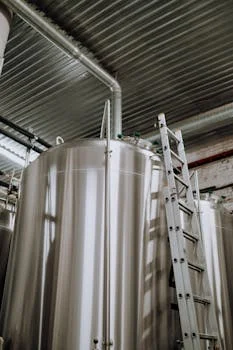
A robust TMAH recovery system must be designed to handle the complex chemistry of solar cell manufacturing effluent, which includes not just TMAH, but also photoresists, surfactants, and metal ions. The following engineering blueprint outlines the 2025 standard for a 50 gpm (gallons per minute) system.
- Step 1: Influent Characterization: Engineers must first baseline the influent. Typical solar cell developer waste contains 1–10% w/w TMAH with a pH of 12–14. Photoresist loads range from 100–500 mg/L COD, and metal contaminants (Cu, Ni, Pb) are often present at 10–1,000 ppm.
- Step 2: Pre-treatment & pH Adjustment: To protect downstream membranes, the pH must be adjusted to 7–8. This requires pH adjustment systems for industrial wastewater pretreatment utilizing 98% sulfuric acid (H₂SO₄). For a 50 gpm flow, the dosing system typically requires a 1–2 L/min pump capacity.
- Step 3: Photoresist Removal: Semipermeable membrane filtration (ultrafiltration) with 0.1–0.5 μm pore sizes is employed to reduce COD by 80–90%. This prevents the fouling of high-pressure RO membranes in subsequent stages.
- Step 4: TMAH Concentration: Semi-reverse osmosis systems for TMAH concentration utilize polyamide thin-film composite membranes at 400–600 psi operating pressures. This stage achieves 70–80% water recovery and concentrates the TMAH to a 10–20% w/w solution.
- Step 5: Purification via Ion Exchange: To reach 99.9% purity suitable for reuse, the concentrate passes through strongly basic anion exchange resins (e.g., Amberlite IRA-400). Regeneration cycles typically use 4–6% NaOH at a flow rate of 2 bed volumes per hour (BV/h).
- Step 6: Final Polishing & ZLD: For plants pursuing Zero Liquid Discharge, MCDI is used to treat the RO permeate. Applying a 1.2 V voltage, MCDI achieves 90% water recovery with a low energy footprint of 0.5 kWh/m³.
| Process Stage | Primary Technology | Target Parameter | Efficiency/Recovery |
|---|---|---|---|
| Pre-treatment | PLC-controlled chemical dosing for TMAH wastewater pH adjustment | pH 12-14 to pH 7-8 | 99% pH Stability |
| Clarification | Semipermeable Membrane (UF) | COD/Photoresist | 80–90% Removal |
| Concentration | Semi-Reverse Osmosis | TMAH Concentration | 10-20% w/w TMAH |
| Purification | Ion Exchange (IX) | Cationic Purity | 99.9% Purity |
| Polishing | MCDI or MBR systems for post-TMAH treatment polishing | Residual Salts | 90% Water Recovery |
Technology Comparison: Recovery Methods for TMAH Wastewater (Adsorption vs. Ion Exchange vs. ED vs. MCDI)
Choosing the right technology depends on the influent concentration and the desired reuse quality. While adsorption is cost-effective for low-volume streams, it lacks the purity required for high-end solar cell manufacturing. Conversely, Electrodialysis (ED) and MCDI offer superior recovery but require higher initial capital investment.
Adsorption using activated carbon or zeolites is often the first choice for plants with a CapEx of $50K–$150K. However, OPEX is high ($0.50–$1.00/m³) because the media requires replacement every 6–12 months. This method typically only recovers 70–85% of TMAH and is insufficient for ZLD goals. Ion Exchange (IX) offers much higher recovery (95–99.9%) but is prone to resin fouling if TMAH concentrations exceed 5%, requiring regeneration every 2–4 weeks.
Electrodialysis (ED) represents a more modern approach, utilizing a stack of 100–200 cell pairs at 1–2 V/cell. While CapEx is higher ($300K–$800K), it consumes 30% less energy than thermal evaporation. The most advanced method for 2025 is Membrane Capacitive Deionization (MCDI). MCDI operates at 40% lower energy than ED and uses electrodes with a 3–5 year lifespan, making it the preferred choice for low-concentration streams (<1% TMAH) or as a final stage in a hybrid system.
| Technology | Recovery Rate | Energy Use | CapEx (50 gpm) | Media Lifespan |
|---|---|---|---|---|
| Adsorption | 70–85% | Low | $50K – $150K | 6–12 Months |
| Ion Exchange | 95–99.9% | Moderate | $200K – $500K | 2–4 Years |
| Electrodialysis | 85–95% | Moderate | $300K – $800K | N/A (Membrane) |
| MCDI | 90–98% | Very Low | $250K – $600K | 3–5 Years |
Compliance Mapping: EPA, EU, and China GB Standards for TMAH Discharge in Solar Cell Manufacturing
Compliance is the primary driver for TMAH system procurement. In the United States, EPA 40 CFR Part 469 (Semiconductor and Electronic Components) dictates strict limits. While it focuses heavily on metals like Copper (<0.1 mg/L) and Nickel (<0.2 mg/L), the categorical standards effectively limit TMAH to <1 mg/L in effluent due to its nitrogenous oxygen demand. Monitoring requires weekly 24-hour composite sampling to ensure no spikes occur during batch dumps.
The European Union’s Industrial Emissions Directive (2010/75/EU) is even more stringent, often requiring ZLD for plants exceeding 100 gpm flow. The TMAH limit is frequently set at <0.5 mg/L, with Pb limits at <0.05 mg/L. China’s GB 8978-2024 Integrated Wastewater Discharge Standard has recently updated its requirements, especially in high-tech hubs like Jiangsu and Zhejiang provinces, where COD limits are capped at <0.5 mg/L and TMAH is strictly monitored at <1 mg/L.
| Regulation | TMAH Limit | Metal Limits (Cu/Ni/Pb) | Monitoring Frequency |
|---|---|---|---|
| EPA 40 CFR 469 | <1 mg/L | 0.1 / 0.2 / 0.5 mg/L | Weekly Composite |
| EU 2010/75/EU | <0.5 mg/L | 0.05 / 0.1 / 0.05 mg/L | Continuous/Daily |
| China GB 8978-2024 | <1 mg/L | 0.5 / 0.5 / 0.1 mg/L | Daily Sampling |
Cost Breakdown: CapEx, OPEX, and ROI for TMAH Wastewater Treatment Systems
For procurement managers, the decision often rests on the Return on Investment (ROI). A hybrid system combining RO and Ion Exchange (IX) generally provides the best balance of CapEx and high-purity recovery. For a 50 gpm plant, the CapEx for such a system is approximately $600,000. While this is higher than adsorption, the OPEX is significantly lower at $0.50/m³ because it reduces the frequency of media replacement and chemical consumption.
The ROI calculation for a hybrid system is compelling. Based on a TMAH recovery value of $2,500/ton and avoided disposal savings of $800/ton, a 50 gpm plant treating 1% TMAH wastewater can expect a payback period of 18–24 months. Procurement must also factor in hidden costs: resin replacement for IX systems typically costs $20,000/year, and RO membrane cleaning/replacement averages $15,000/year. However, these are offset by the 90% reduction in freshwater demand when using the treated permeate for rinsing.
| System Type | CapEx (50 gpm) | OPEX ($/m³) | ROI (Months) |
|---|---|---|---|
| Adsorption | $100,000 | $0.75 | 36+ |
| Ion Exchange | $300,000 | $0.40 | 14–18 |
| Hybrid (RO + IX) | $600,000 | $0.50 | 18–24 |
| MCDI (ZLD) | $400,000 | $0.35 | 24–30 |
Decision Framework: Choosing Between ZLD and Partial Recovery for Your Solar Cell Plant

The choice between Zero Liquid Discharge (ZLD) and partial recovery is determined by plant scale, local environmental regulations, and available budget. ZLD systems eliminate discharge risks entirely but often double the initial CapEx due to the addition of MCDI or evaporation units. For plants in the EU or those located in water-scarce regions like Texas or Arizona, ZLD is increasingly becoming the only viable long-term strategy.
Use Partial Recovery (Ion Exchange/RO) if:
- Your plant flow is <30 gpm.
- Local discharge limits are >1 mg/L and strictly enforced.
- Capital budget is constrained, but disposal costs are rising.
- Example: A 20 gpm plant in Texas implemented partial recovery with a $150K CapEx, achieving a 12-month ROI by avoiding high-frequency waste hauling.
Use ZLD (RO + MCDI/Evaporation) if:
- Your plant flow is >100 gpm.
- You operate in the EU or China (Jiangsu/Zhejiang) where discharge permits are capped.
- Sustainability goals require a 90%+ reduction in freshwater intake.
- Example: A 100 gpm plant in Germany utilized a ZLD system with $1.2M CapEx. While the ROI was longer (36 months), it eliminated all discharge violation risks and secured the plant's operating permit under new EU BAT (Best Available Technology) requirements.
For more comprehensive facility designs, engineers should also consult developer wastewater treatment solutions for solar cell plants and phosphorus wastewater treatment for solar cell manufacturing to ensure all waste streams are integrated.
Frequently Asked Questions
What is the best TMAH recovery method for a 50 gpm solar cell plant?
A hybrid RO + ion exchange system is the industry standard for 2025. It achieves 99.9% recovery with an OPEX of approximately $0.50/m³, providing the best balance of purity and operational cost for mid-sized plants.
How much does a TMAH wastewater treatment system cost?
CapEx ranges from $100,000 for simple adsorption systems to $1.2M for full ZLD systems. OPEX typically ranges between $0.35 and $0.75 per cubic meter of treated wastewater, depending on energy and chemical consumption.
Can TMAH wastewater be reused in solar cell manufacturing?
Yes. When treated with a combination of semi-reverse osmosis and ion exchange, recovered TMAH reaches 99.9% purity. MCDI-treated permeate meet ASTM Type II standards, allowing it to be reused in rinsing processes, which reduces freshwater demand by up to 90%.
What are the EPA limits for TMAH discharge?
EPA 40 CFR Part 469 sets the standard for semiconductor and solar cell plants. While specific TMAH limits may vary by local permit, the federal guideline effectively requires effluent concentrations to be <1 mg/L to prevent aquatic toxicity.
How often do ion exchange resins need regeneration?
For influent TMAH concentrations above 1%, resins typically require regeneration every 2–4 weeks. The process uses 4–6% NaOH at a flow rate of 2 bed volumes per hour (BV/h) to maintain 99.9% purification efficiency.