MBR systems in South Korea produce near-reuse-quality effluent (<1 mg/L BOD, <5 mg/L TSS) in a footprint about 60% smaller than conventional activated sludge. Documented municipal references include the Paju plant (Asahi Kasei Microza hollow-fiber MBR, 50,000 m³/day) and Busan Suyeong (Veolia ZeeWeed MBR, 200,000 m³/day). Capital costs typically run from ₩500M for small industrial trains (50 m³/day) to ₩5B for municipal plants around 10,000 m³/day. O&M often falls in ₩150–₩300/m³, driven by membrane replacement every 5–8 years and energy use of 0.4–0.8 kWh/m³.
Why MBR systems in South Korea Are Expanding
South Korea’s MBR wastewater treatment systems meet tight municipal and industrial discharge targets while fitting scarce urban sites. Design effluent is typically <1 mg/L BOD and <5 mg/L TSS when pretreatment and scour air are sized correctly. Relative to clarifier trains, MBR usually cuts secondary settling land by about 60% on metro Korean sites.
Earlier project briefs often cited COD <20 mg/L, TN <10 mg/L, and TP <1 mg/L as the working municipal targets. Seoul Water Regeneration Facility Corporation publishes Sewerage Act tables for public plants ≥500 m³/day. Those current national limits use TOC instead of COD: TOC ≤15 mg/L in Zones I–II and ≤25 mg/L in Zones III–IV. They keep SS ≤10 mg/L and set TN ≤20 mg/L. TP runs from ≤0.2 mg/L in Zone I to ≤0.5 mg/L in Zone III. Local ordinances in Seoul or Busan can still push TN toward <8–10 mg/L for sensitive receiving waters.
Acute urban land scarcity makes the compact MBR layout a hard requirement, not a preference. The Busan Suyeong upgrade eliminated about 20,000 m² of settling tanks by moving solids separation onto membranes. Semiconductor, food, and textile plants in Ulsan and Daegu also need reuse-grade water; sub-micron filtration (<1 μm) supports that path, as at Samsung Electronics’ Giheung MBR train reclaiming process water.
Monsoon rainfall and wide seasonal temperature swings stress open clarifiers through odor, sludge bulking, and washout. Enclosed MBR tanks reduce those failure modes and keep permeate quality steadier through wet-weather peaks. Most plants we size for coastal Korea still derate sustainable flux 10–20% for the wet season rather than relying on average-day TMP alone.
Industrial reuse demand keeps rising in semiconductor and textile corridors. Giheung-style reclaim loops need stable pathogen and solids control every shift, not only monthly average compliance. That operating reality is why MBR shows up on Korean EPC shortlists when land and reuse both matter.
How Is Treated Sewage Managed in South Korea?
Treated sewage in South Korea is regulated under the Sewerage Act and the Water Quality and Ecosystem Conservation framework, then discharged or reused under use-specific limits. Public plants ≥500 m³/day must meet zone-based BOD, TOC, SS, TN, and TP caps published by operators such as Seoul Water Regeneration Facility Corporation. Industrial dischargers follow sector permits that are often tighter than municipal tables, especially for electronics and food processing.
Where reuse is the goal, K-water style guidance still points to very low solids and disinfection—commonly <1 mg/L TSS and <10 CFU/100 mL E. coli for cooling or process makeup. MBR permeate plus UV or chlorination usually reaches those reuse targets without a separate tertiary sand filter. Sludge that is stabilized (aerobic digestion or lime) is typically handled as non-hazardous under Ministry of Environment practice, with disposal fees often ₩50,000–₩100,000/ton.
Permitting for a new or expanded plant commonly takes 6–12 months and needs engineering reports, impact assessment, and often pilot data. Under-sized fine screening remains the most frequent approval and fouling risk we see on Korean industrial feeds. Owners who skip equalization also struggle when batch dumps from plating or dyeing lines spike COD within minutes. A 6–12 hour equalization volume, paired with 1–2 mm fine screens, is the minimum we recommend before committing membrane area.
Public operators publish zone maps that change which TP and coliform numbers apply. Confirm whether your outfall sits in Zone I–IV before locking chemical phosphorus dose or UV intensity. Reuse projects add a second gate: toilet and cleaning water, industrial makeup, and recreational uses each carry different coliform and turbidity caps on the Seoul Water Regeneration reuse table.
How MBR Systems Work: Process Flow and Membrane Technologies
MBR technology couples activated sludge biology with membrane solid–liquid separation, so secondary clarifiers and most tertiary filters are not required. Membranes with pores of about 0.1–0.4 μm retain biomass and suspended solids (per Asahi Kasei Microza documentation). Flow starts with coarse and fine screening, then anoxic denitrification for TN control, then aerobic BOD/COD oxidation and nitrification.
Submerged modules in the aerobic tank or a dedicated membrane tank draw permeate for disinfection and discharge or reuse. Roughly 50% of MBR energy goes to membrane scouring air, about 30% to biomass mixing, and about 20% to permeate pumping (per 2024 WEF MBR manual). At Korea’s average industrial power price near ₩120/kWh, blower and mixer selection dominates lifecycle cost. On municipal trains we audit, cutting idle scour air during low-flow nights often saves more won than swapping membrane polymer grade. Keep a separate meter on membrane blowers so the 50/30/20 energy split stays visible after handover.
Pretreatment quality decides whether hollow-fiber packing density is an advantage or a liability. High hair, fiber, or grease loads plug fiber bundles faster than flat sheets in the same basin. That is why food and textile feeds in Daegu and Ulsan so often land on flat-sheet cassettes even when hollow-fiber bids look cheaper on day-one capital.
Two membrane formats dominate Korean bids: hollow-fiber and flat-sheet. Hollow-fiber units (Asahi Kasei, PHILOS) often run ~0.1 μm pores and packing densities of 150–200 m²/m³. Flat-sheet units (Veolia, Kubota, and HydropureWater’s DF series PVDF flat-sheet membrane modules) typically use 0.1–0.4 μm pores and 100–150 m²/m³ packing, with easier cassette access for cleaning.
| Feature | Hollow-Fiber MBR Membranes | Flat-Sheet MBR Membranes |
|---|---|---|
| Typical Manufacturers in South Korea | Asahi Kasei, PHILOS | Veolia, Kubota, HydropureWater |
| Pore Size | 0.05 – 0.1 μm | 0.1 – 0.4 μm |
| Packing Density | 150 – 200 m²/m³ | 100 – 150 m²/m³ |
| Fouling Resistance | Requires more aeration for scouring | More robust, easier to clean |
| Energy Consumption (Aeration) | Generally higher due to intensive scouring | Generally lower for scouring, but mixing may vary |
| Effluent Quality | Excellent, lower TSS, higher pathogen removal | Excellent, slightly higher TSS possible but still reuse-grade |
| Typical Applications | High-purity reuse, compact systems | Industrial wastewater with high solids, municipal |
For plants that need packaged biology plus membranes in one skid, an MBR Membrane Bioreactor Wastewater Treatment System keeps screening, aeration, and permeate pumping under one control philosophy.
What MBR Systems Are Used in Korea?
MBR systems used in Korea span large municipal hollow-fiber and flat-sheet plants plus containerized industrial packages for electronics and food wastewaters. Municipal references cited in Korean project literature include Paju (Asahi Kasei Microza, 50,000 m³/day), Busan Suyeong (Veolia ZeeWeed, 200,000 m³/day), and the Muan expansion (Kubota flat-sheet, +30,000 m³/day). Industrial examples include PHILOS containerized MBR at Samsung Giheung treating about 500 m³/day of semiconductor process wastewater for reuse.
Selection usually tracks influent solids and FOG more than brand preference. When TSS stays above ~500 mg/L or FOG is chronic, flat-sheet cassettes are often easier to keep online. High-purity reuse loops still favor tighter hollow-fiber pores when pretreatment is strong.
MBR vs Conventional Systems: Performance, Cost, and Footprint Comparison
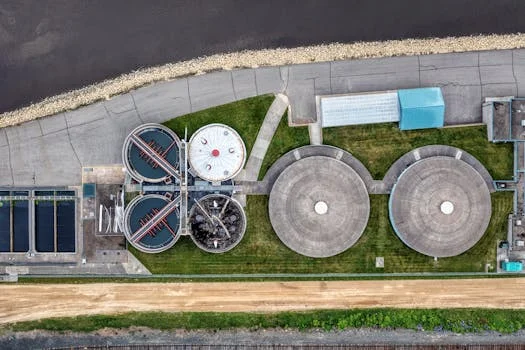
MBR trains outperform conventional activated sludge (CAS) on effluent solids and land use, which is why Korean owners accept higher capital cost on constrained sites. MBR typically removes 95–99% of BOD and TSS versus about 85–90% for CAS (per 2023 K-water benchmarks). With dedicated anoxic volume, MBR TN removal of 80–90% is common; CAS without anoxic zones often stays near 50–70%.
Land demand for MBR is usually 0.2–0.5 m²/m³/day versus 0.8–1.2 m²/m³/day for CAS. Busan Suyeong’s reported 20,000 m² settler deletion is the clearest local proof point for that density gain inside an existing coastal footprint.
Energy is the main O&M penalty: MBR often uses 0.4–0.8 kWh/m³ versus 0.2–0.4 kWh/m³ for CAS at ₩120/kWh average power. Capital is typically 20–40% higher—about ₩2.5M–₩5M/m³/day for MBR versus ₩1.8M–₩3.5M/m³/day for CAS. Sludge yield drops to roughly 0.1–0.2 kg TSS/kg BOD removed versus 0.4–0.6 kg for CAS, which matters because untreated sludge landfilling is restricted (per 2024 K-water cost study). Lower cake mass cuts truck trips and polymer use, which often offsets part of the higher blower bill over a 10-year window. Owners comparing only installed ₩/m³/day without sludge haulage usually understate MBR’s lifecycle case on Korean industrial parks.
Effluent pathogen control also differs. Membrane pores at 0.1–0.4 μm give a physical barrier CAS clarifiers cannot match, so UV or chlorine doses for reuse can be smaller when permeate turbidity stays low. That does not remove disinfection from the permit path; it does reduce chemical overshoot when instruments are calibrated.
| Parameter | MBR System | Conventional Activated Sludge (CAS) |
|---|---|---|
| BOD/TSS Removal Efficiency | 95 – 99% | 85 – 90% |
| TN Removal Efficiency | 80 – 90% | 50 – 70% (requires additional zones) |
| Footprint Requirement | 0.2 – 0.5 m²/m³/day | 0.8 – 1.2 m²/m³/day |
| Energy Consumption | 0.4 – 0.8 kWh/m³ | 0.2 – 0.4 kWh/m³ |
| Capital Cost (Approx.) | ₩2.5M – ₩5M/m³/day | ₩1.8M – ₩3.5M/m³/day |
| Sludge Yield | 0.1 – 0.2 kg TSS/kg BOD removed | 0.4 – 0.6 kg TSS/kg BOD removed |
| Effluent Quality | Near-reuse quality, very low TSS | Secondary treated, requires tertiary for reuse |
Case Studies: MBR Wastewater Treatment Plants in South Korea
Korean municipal and industrial MBR references show how climate, land, and reuse goals change design choices. The Paju municipal plant using Asahi Kasei Microza hollow-fiber MBR treats 50,000 m³/day at about ₩4.8B capital cost, reports ~98% BOD removal, and runs near 0.6 kWh/m³. Monsoon fouling was controlled with dynamic aeration and tighter chemical cleaning intervals rather than membrane replacement.
Busan Suyeong, cited at 200,000 m³/day with Veolia ZeeWeed MBR, carries an estimated ₩12B capital figure, ~99% TSS removal, and about 0.5 kWh/m³ energy use. Removing 20,000 m² of settlers freed expansion space inside a dense coastal district. The Muan expansion added 30,000 m³/day of Kubota flat-sheet MBR capacity for about ₩3.2B and reached ~95% TN removal without buying more land.
On the industrial side, Samsung Electronics Giheung uses a PHILOS containerized MBR on 500 m³/day semiconductor wastewater at roughly ₩800M capital cost. The train reports 99.9% pathogen removal for process reuse, with O&M near ₩250/m³ and membrane change-out around year six. Fine screening plus equalization is non-negotiable on all four plants when solids or industrial spikes arrive. Pilot lessons from Korean municipal MBR work also show SS removal above 99.9% is routine when MLSS and suction pressure stay inside the design band. The failures we investigate almost always trace to screen bypass, FOG breakthrough, or CIP chemicals diluted below the membrane supplier’s recipe.
Capital numbers in the case table are order-of-magnitude planning figures, not sealed bid prices. Civil rock excavation, deep basement tanks, and odor covers in urban Korea can move the ₩/m³/day number as much as the membrane line item. Always separate membrane supply from civil contingency when you score vendors.
| Plant Name | Type | MBR Technology | Capacity (m³/day) | Capital Cost (Approx.) | Key Performance | Energy Use (kWh/m³) | Notable Aspect/Challenge |
|---|---|---|---|---|---|---|---|
| Paju Municipal Plant | Municipal | Asahi Kasei Microza (Hollow-Fiber) | 50,000 | ₩4.8B | 98% BOD removal | 0.6 | Monsoon-related fouling resolved by aeration optimization |
| Busan Suyeong Plant | Municipal | Veolia ZeeWeed (Flat-Sheet) | 200,000 | ₩12B | 99% TSS removal | 0.5 | Eliminated 20,000 m² of settling tanks |
| Muan Plant Expansion | Municipal | Kubota (Flat-Sheet) | 30,000 | ₩3.2B | 95% TN removal | N/A (integrated) | Met stricter TN limits without land acquisition |
| Samsung Electronics Giheung | Industrial (Semiconductor) | PHILOS (Containerized) | 500 | ₩800M | 99.9% pathogen removal | N/A | Water reuse for process loops; O&M ₩250/m³ |
Regulatory Compliance: South Korea’s Wastewater Discharge Standards for MBR Systems
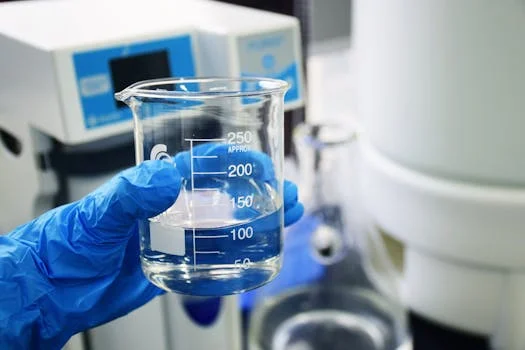
South Korea’s discharge rules are the first gate any MBR design must clear before ROI talk begins. Earlier guidance used COD <20 mg/L, TN <10 mg/L, and TP <1 mg/L as simplified municipal targets. Current public-plant tables from Seoul Water Regeneration Facility Corporation (Sewerage Act basis) set TOC ≤15–25 mg/L by zone. They also set SS ≤10 mg/L, TN ≤20 mg/L for plants ≥500 m³/day, and TP as low as ≤0.2 mg/L in Zone I. Semiconductor permits still often require COD <10 mg/L and TSS <5 mg/L on the industrial side.
City rules in Seoul and Busan can tighten TN toward <8 mg/L to protect local waters. Enhanced BNR MBR configurations are the usual answer when those local caps apply. For reuse, K-water style criteria such as <1 mg/L TSS and <10 CFU/100 mL E. coli remain the practical industrial checklist; MBR plus UV typically hits them without extra media filters.
Stabilized MBR sludge is generally managed as non-hazardous under Ministry of Environment guidance, with disposal commonly ₩50,000–₩100,000/ton. Expect 6–12 months for permits. Weak pretreatment is the approval delay we see most often on industrial Korean projects.
| Parameter | Municipal Discharge Limit (National, 2023) | Industrial Discharge Limit (Example: Semiconductor) | Industrial Reuse Standard (K-water Guidelines) |
|---|---|---|---|
| COD | <20 mg/L | <10 mg/L | N/A (typically based on process needs) |
| BOD | <10 mg/L | <5 mg/L | N/A |
| TSS | <10 mg/L | <5 mg/L | <1 mg/L |
| TN | <10 mg/L (Seoul/Busan: <8 mg/L) | <5 mg/L | N/A |
| TP | <1 mg/L | <0.5 mg/L | N/A |
| E. coli | N/A (disinfection required) | N/A | <10 CFU/100mL (for cooling/process) |
Cost Breakdown: Capital and O&M Expenses for MBR Systems in South Korea
MBR capital and O&M budgets in South Korea scale mainly with capacity, influent difficulty, and reuse polish—not with brochure features. For municipal plants of 5,000–50,000 m³/day, 2025 capital figures commonly sit at ₩2.5M–₩5M/m³/day. Smaller industrial plants (50–500 m³/day) often land at ₩3M–₩6M/m³/day. A typical split is about 40% membranes, 30% civil works, 20% mechanical/electrical, and 10% engineering and project management.
Municipal O&M usually runs ₩150–₩300/m³; industrial O&M is nearer ₩200–₩400/m³. Energy is about 35% of that stack, membrane replacement about 25%, labor 20%, chemicals 15%, and sludge disposal 5%. At 0.4–0.8 kWh/m³ and ₩120/kWh, energy alone is often ₩50–₩100/m³. Variable-frequency blowers and deeper anoxic zones are the first levers most plants pull.
Membranes are replaced every 5–8 years under Korean municipal duty. Hollow-fiber replacement is about ₩100,000–₩200,000/m²; flat-sheet is about ₩150,000–₩250,000/m². Skilled technician rates of ₩30,000–₩50,000/hour make automated cleaning valuable; HydropureWater’s PLC-controlled chemical dosing systems are one way plants keep CIP intervals consistent. For a 10,000 m³/day municipal plant, payback versus CAS is often quoted at 5–10 years (CAS 8–12 years) from land savings, lower sludge haulage, and avoided tertiary upgrades. Industrial reuse projects can compress that to 3–7 years when freshwater and discharge fees are high.
When owners also ask about MBR and RO unit equation costs, treat RO as a separate polishing train after MBR. MBR handles organics and solids; RO then cuts salinity and residual organics for high-purity makeup. Budget RO capital and membrane replacement on top of the MBR ranges above rather than folding both into one ₩/m³/day figure.
A practical cost check we use on Korean reuse bids is to price three layers: MBR biology and membranes, disinfection, then RO if conductivity or TOC still misses the process spec. Skipping that split hides whether money should go to better pretreatment or to a smaller RO skid. For municipal discharge-only plants, stop after MBR plus UV or chlorine unless the basin permit demands extra polishing.
Currency and power tariff swings also move ROI. The ₩120/kWh planning rate used above should be replaced with the site’s actual industrial tariff schedule, including night and peak blocks, before a board-level payback claim is locked.
| Cost Category | Approximate Range (South Korea) | Breakdown (Typical %) | Key Factors |
|---|---|---|---|
| Capital Costs | |||
| Municipal MBR (5,000–50,000 m³/day) | ₩2.5M – ₩5M / m³/day | N/A | Capacity, site conditions, effluent quality |
| Industrial MBR (50–500 m³/day) | ₩3M – ₩6M / m³/day | N/A | Influent complexity, reuse goals, automation level |
| Membranes (Capital) | Included above | 40% | Membrane type, supplier |
| Civil Works (Tanks, Buildings) | Included above | 30% | Land cost, soil conditions |
| Mechanical/Electrical | Included above | 20% | Pumps, blowers, control systems |
| Engineering/Project Mgmt | Included above | 10% | Design complexity, regulatory approval |
| O&M Costs (per m³ treated) | |||
| Municipal MBR | ₩150 – ₩300 / m³ | N/A | Scale, automation, influent quality |
| Industrial MBR | ₩200 – ₩400 / m³ | N/A | Influent strength, chemical use, reuse requirements |
| Energy | ₩50 – ₩100 / m³ | 35% | Aeration intensity, pumping, electricity cost (₩120/kWh) |
| Membrane Replacement | (amortized) | 25% | Membrane type, lifespan (5-8 years), replacement cost (₩100k-250k/m²) |
| Labor | (variable) | 20% | Automation level, technician wages (₩30k-50k/hr) |
| Chemicals | (variable) | 15% | Cleaning, coagulants, nutrient addition |
| Sludge Disposal | (variable) | 5% | Sludge yield, disposal fees (₩50k-100k/ton) |
Selecting an MBR System: Decision Framework for South Korean Projects
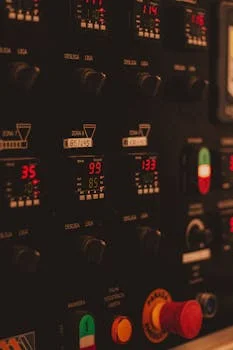
Selecting an MBR system for a South Korean site starts with the discharge or reuse number you must hit every day, not the membrane brand. Semiconductor reuse often needs <1 mg/L TSS; many municipal permits still center on TN and TP caps that vary by zone and city. Next, map footprint, power, and coastal corrosion risk—Busan humidity routinely pushes owners toward stainless steel over FRP for wet-end hardware.
Compare hollow-fiber versus flat-sheet against fouling risk and replacement cost. If influent TSS stays above 500 mg/L or FOG is persistent, flat-sheet cleaning access usually wins. Food plants almost always need dissolved air flotation or equivalent FOG removal before the membranes; HydropureWater’s DAF machine is built for that duty. After MBR, solids handling and dewatering still need a separate plan—teams comparing vendors for sewage+treatment+equipment+email+south+korea decisions should size thickening and presses against the lower MBR sludge yield, not a CAS default.
Run a 3–6 month pilot for flux, fouling interval, CIP efficacy, and real kWh/m³ before freezing the bid. Score proposals on capital, lifecycle O&M, guaranteed effluent, local spares response, and warranty—not capital alone. Ask each bidder for Korean reference plants with similar temperature and monsoon duty, plus the actual membrane replacement year on those sites. A five-year warranty with no local cassette stock is a weaker offer than a three-year warranty with parts in-country.
Finally, freeze the control narrative early: who owns flux setpoints, who authorizes CIP, and how alarms escalate at night. Korean plants with clear PLC logic and trained local technicians keep TMP stable longer than plants that treat the membrane as a black box after commissioning.
| Evaluation Category | Weight (%) | Criteria |
|---|---|---|
| Capital Cost | 30% | Total installed cost, including civil, mechanical, electrical, and membranes. |
| O&M Cost (Lifecycle) | 25% | Energy consumption, chemical usage, membrane replacement frequency/cost, labor. |
| Compliance & Performance | 20% | Guaranteed effluent quality, ability to meet strict discharge/reuse limits, reliability. |
| Local Support & Service | 15% | Availability of local technicians, spare parts, response time, operational training. |
| Warranty & Guarantee | 10% | Membrane lifespan guarantee, system performance warranty, long-term support. |
Selection checklist for Korean MBR projects
- Confirm zone-based TOC/TN/TP limits and any city overlay before fixing membrane flux.
- Measure peak FOG and TSS; specify DAF or equivalent if FOG is chronic.
- Size scour air and VFD blowers for monsoon solids spikes, not average day only.
- Require 3–6 month pilot data for sustainable flux and CIP chemical use.
- Compare membrane replacement ₩/m² and local spare lead time in the lifecycle model.
- Include sludge dewatering capacity matched to 0.1–0.2 kg TSS/kg BOD removed yield.
- Separate RO polishing costs if conductivity or TOC for reuse still exceeds process needs.
Who This Is For / Next Step
This guide is for plant engineers, EPC contractors, and procurement managers. It fits Korean municipal or industrial sites where land, TN/TP, or reuse quality drives the process choice. Look elsewhere if you only need primary clarification or septic-scale treatment without nutrient limits. To size a train against your flow and permit limits, request a technical quote with influent data and target effluent.
Frequently Asked Questions
What is the largest MBR wastewater treatment plant in South Korea?
The Busan Suyeong plant, cited at 200,000 m³/day, is the largest MBR wastewater treatment facility referenced for South Korea. It uses Veolia ZeeWeed MBR technology, eliminated about 20,000 m² of settling tanks, and reports about 99% TSS removal with energy near 0.5 kWh/m³. Those figures come from published project summaries used in Korean engineering comparisons.
What is the difference between MBR and MBBR?
MBR combines activated sludge with membrane filtration and typically produces <1 mg/L TSS permeate suitable for reuse after disinfection. MBBR grows biofilm on suspended plastic carriers and still needs clarifiers or filters for solids capture. MBR usually uses more energy (0.4–0.8 kWh/m³) than MBBR trains that often sit nearer 0.2–0.4 kWh/m³, but MBR effluent solids are consistently lower.
What is the difference between MBR and a clarifier?
MBR membranes replace secondary clarifiers and often tertiary filtration by retaining biomass at 0.1–0.4 μm pore size. MBR commonly achieves 95–99% BOD/TSS removal versus about 85–90% for clarifier-based CAS. Footprint drops to roughly 0.2–0.5 m²/m³/day, while energy rises to about 0.4–0.8 kWh/m³ versus 0.2–0.4 kWh/m³ for clarifier systems.
How often do MBR membranes need replacement in South Korea?
MBR membranes in South Korea typically last 5–10 years in service. Hollow-fiber modules often run 5–7 years; flat-sheet modules can reach 7–10 years when pretreatment and CIP are disciplined. Replacement costs are about ₩100,000–₩250,000/m², with monsoon fouling and industrial spikes as the main life shorteners.
Can MBR systems handle industrial wastewater in South Korea?
Yes—MBR systems treat industrial wastewater in South Korea when pretreatment matches the load. Samsung’s Giheung example uses DAF ahead of MBR on semiconductor wastewater to support COD <10 mg/L and TSS <1 mg/L reuse targets. Industrial capital is often ₩3M–₩6M/m³/day because of specialty materials, automation, and stronger pretreatment.