A photovoltaic wastewater fluoride removal system combines chemical precipitation, DAF, RO, and MBR polishing to cut 50–500 mg/L fluoride below 4 mg/L while reusing 95% of water and recovering CaF₂, Na₃AlF₆, and NH₄Cl byproducts.
Why Photovoltaic Wastewater Requires Specialized Resource Recovery Systems
Photovoltaic wastewater carries 50–500 mg/L fluoride — 12 to 125 times the EPA limit of 4 mg/L — alongside 100–800 mg/L ammonia and 200–1,500 mg/L suspended solids. Conventional activated sludge fails here because fluoride inhibits the microbes. Specialized precipitation-plus-membrane trains are the workable route.
Conventional biological treatment consistently fails in PV applications. Fluoride toxicity inhibits the microbial activity needed for organic and nitrogen removal, so chemical precipitation becomes the only viable primary fluoride step. Dosing calcium hydroxide at 1.5–2.0 mg per mg of fluoride forms insoluble calcium fluoride (CaF₂). Precipitation alone still cannot meet stringent limits or enable high-purity recovery, and high TSS demands robust pretreatment to protect downstream membranes from fouling.
Plant experience shapes the design brief early. Facilities that characterize each process stream separately — texturing, etching, and rinsing each carry different fluoride and solids loads — size their trains closer to the mark than those treating a blended average. Discharging untreated or under-treated effluent invites environmental penalties and operational shutdowns. The engineering answer is a multi-stage train, not a bigger version of a standard plant.
A 2025 solar cell plant in Malaysia shows what is achievable. The facility cut fluoride from 320 mg/L to below 2 mg/L with a hybrid DAF-RO system, avoiding an estimated $2.1M in environmental fines. The case underlines why multi-stage treatment — physical-chemical processes integrated with membrane technologies — is essential for both compliance and valuable byproduct recovery in solar manufacturing.
Stream segregation is the quiet lever behind every successful installation. Texturing, etching, and rinsing effluents behave differently — some carry the bulk of the fluoride, others mostly solids and organics — and treating them as one blended stream inflates every stage downstream. Plants that split high-fluoride concentrates from dilute rinses often cut chemical consumption noticeably, because precipitation chemistry only has to work hard on the stream that needs it. Design the collection system with the treatment train in mind, not before it.
| Parameter | Typical PV Wastewater Concentration (mg/L) | EPA Discharge Limit (mg/L) | EU IED Limit (mg/L) | Treatment Challenge |
|---|---|---|---|---|
| Fluoride (F⁻) | 50–500 | <4 | <4 | High concentration, toxicity to microbes, scaling risk |
| Ammonia (NH₃-N) | 100–800 | <10 | <10 | Requires biological or stripping processes, potential for membrane damage |
| Suspended Solids (TSS) | 200–1,500 | <30 | <30 | High fouling potential for membranes, increased sludge volume |
| Chemical Oxygen Demand (COD) | 500–2,000 | <100 | <100 | Requires robust biological or advanced oxidation |
Photovoltaic Wastewater Fluoride Removal System Design: How DAF, RO, and MBR Work Together
Hybrid DAF-RO-MBR integration achieves >99.9% contaminant removal and 95% water recovery in photovoltaic service. The multi-barrier approach handles the pollutant profile in sequence: solids and initial fluoride precipitation first, trace contaminants and reuse-grade polishing second, biological residuals last. Stage-by-stage set-points follow.
- Stage 1: Dissolved Air Flotation (DAF)
The initial stage removes suspended solids and chemically precipitated fluoride. After dosing coagulants such as polyaluminum chloride (PAC), ferric chloride (FeCl₃), or calcium hydroxide (Ca(OH)₂) — typically 100–300 mg/L — tiny air bubbles attach to the flocculated particles and float them for skimming. DAF systems for fluoride and suspended solids removal achieve 90–95% removal of suspended solids and a 60–70% reduction in fluoride concentration. Holding pH between 8.5–9.5 in the DAF unit is crucial for optimal fluoride precipitation; pH drift is the most common compliance pitfall we see at this stage. - Stage 2: Reverse Osmosis (RO)
Following DAF, the effluent passes microfiltration or ultrafiltration before entering the RO stage. High-recovery RO systems for fluoride removal are essential for stringent discharge limits and high-purity reuse. RO membranes achieve 95–98% fluoride removal with 75–85% water recovery on PV wastewater, at flux rates of 15–25 LMH per 2025 ASTM D4194 standards. The critical failure mode is scaling from calcium fluoride and silica, mitigated by continuous antiscalant dosing at 2–5 mg/L. Facilities that also run CMP lines typically handle that ceramic membrane wastewater stream separately before combining flows. - Stage 3: Membrane Bioreactor (MBR)
The final polishing step employs a Membrane Bioreactor. PVDF MBR systems for polishing PV wastewater effluent combine biological treatment with membrane filtration to remove residual organics, ammonia, and trace fluoride. MBRs polish effluent to below 1 mg/L fluoride and below 50 mg/L COD, with 0.1 μm PVDF membranes and MLSS held between 8,000–12,000 mg/L. Fouling is managed through 10–15 minute backwash cycles and chemical cleaning-in-place every 3–6 months. Weekly transmembrane pressure checks catch fouling before it degrades effluent quality.
Instrumentation holds the three stages together. Online fluoride analyzers on the DAF and RO permeate lines, plus pH and conductivity at every transfer, give operators the trend data that manual sampling misses. Data loggers feeding the compliance report also double as an early-warning system for scaling and fouling. Budget them as process equipment, not accessories.
Commissioning discipline determines how quickly the train reaches design numbers. Most PV plants ramp over several weeks, holding conservative flux and dosing targets while operators learn the feed's daily rhythm. The usual pattern: fluoride breaks through first whenever a texturing batch lands, so watch the DAF effluent probe during shift changes. Lock in the pH and antiscalant set-points before pushing recovery rates, and the membranes repay that patience with longer cleaning intervals.
| System Component | Key Parameter | Typical Range/Value | Target Removal/Recovery |
|---|---|---|---|
| DAF (Stage 1) | Coagulant Dosing | 100–300 mg/L (PAC, FeCl₃, Ca(OH)₂) | 90–95% TSS, 60–70% F⁻ |
| DAF (Stage 1) | pH Operating Range | 8.5–9.5 | Optimized F⁻ precipitation |
| RO (Stage 2) | Membrane Flux Rate | 15–25 LMH (liters/m²/hour) | 95–98% F⁻ |
| RO (Stage 2) | Water Recovery Rate | 75–85% | High-purity water for reuse |
| RO (Stage 2) | Antiscalant Dosing | 2–5 mg/L | Prevents membrane scaling |
| MBR (Stage 3) | Membrane Pore Size | 0.1 μm (PVDF) | Effluent polishing |
| MBR (Stage 3) | MLSS Concentration | 8,000–12,000 mg/L | Efficient biological treatment |
| MBR (Stage 3) | Backwash Frequency | 10–15 min cycles | Mitigates membrane fouling |
Resource Recovery Pathways: Na₃AlF₆ vs. CaF₂ vs. NH₄Cl — Which Is Right for Your Plant?
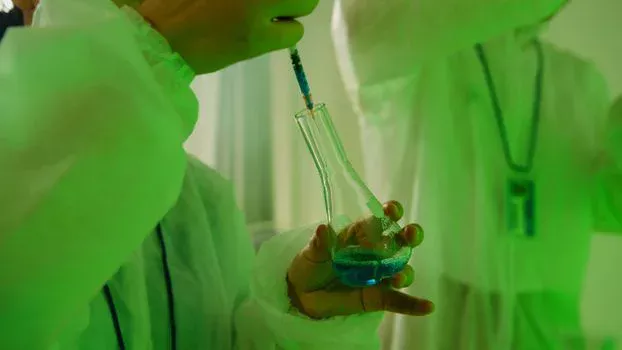
Selecting the optimal resource recovery pathway for photovoltaic wastewater balances environmental impact, economic feasibility, and byproduct market demand. Three primary byproducts can be recovered: cryolite (Na₃AlF₆), calcium fluoride (CaF₂), and ammonium chloride (NH₄Cl). Each carries distinct trade-offs for different solar cell plants.
Na3AlF6 Cryolite Recovery from Photovoltaic Wastewater
Cryolite recovery offers a 40% lower environmental impact compared to other methods, primarily through reuse of aluminum and fluoride, as highlighted in a 2025 SciDirect study. The offset is roughly 15% higher CAPEX for the additional crystallization and purification steps needed to reach 98%+ purity (confirmed by XRF testing). This pathway fits plants with integrated or nearby aluminum smelting, where the byproduct feeds directly back into smelter operations.
PV Wastewater Calcium Fluoride Byproduct Recovery
Calcium fluoride recovery is often 25% more economically feasible on the strength of lower chemical costs — $0.80/kg versus $1.20/kg for the cryolite route. The process needs precise pH adjustment to 9.5–10.5 using PLC-controlled dosing for fluoride precipitation to maximize CaF₂ formation while preventing gypsum (CaSO₄·2H₂O) scaling. Byproduct purity typically reaches 95%+, suitable for metallurgical applications though less valuable than cryolite.
Ammonium Chloride (NH₄Cl) Recovery
Ammonium chloride recovery is the simplest of the three pathways: ammonia stripping followed by crystallization, usually in a stripping tower with subsequent reaction to form NH₄Cl. Market demand is the constraint, since buyers require 99%+ purity confirmed by titration. The route suits plants with established partnerships with fertilizer manufacturers or other byproduct offtakers.
Choice of pathway comes down to operational context: existing infrastructure, local byproduct markets, and budget. Plants with wafer-sawing streams may also add a ceramic membrane water stage upstream to keep silica out of the recovery train. Start from the offtake agreement and design backward — not the other way around.
Purity economics deserve equal attention at contract time. Cryolite buyers pay for 98%+ XRF-verified material, fluoride buyers for 95%+, and ammonium chloride buyers for titration-confirmed 99%+ — and each incremental purification step costs energy and reagent. Negotiate purity tiers with price steps rather than promising a single grade. Plants that over-promise purity to win an offtake contract end up subsidizing it through OPEX for the life of the deal.
| Byproduct | Primary Recovery Method | CAPEX Impact | OPEX Impact (Chemical Costs) | Environmental Impact | Typical Purity Requirement | Target Market/Application |
|---|---|---|---|---|---|---|
| Na₃AlF₆ (Cryolite) | Chemical precipitation, crystallization | 15% Higher | $1.20/kg F⁻ equivalent | 40% Lower (per 2025 SciDirect study) | 98%+ (XRF) | Aluminum smelting, abrasives |
| CaF₂ (Calcium Fluoride) | Chemical precipitation, filtration | Standard | $0.80/kg F⁻ equivalent | Moderate | 95%+ (XRF) | Metallurgy, ceramics, glass |
| NH₄Cl (Ammonium Chloride) | Ammonia stripping, crystallization | Lowest | Variable (energy for stripping) | Moderate | 99%+ (Titration) | Fertilizers, chemical industry |
CAPEX Breakdown for PV Wastewater Treatment Plant Projects: $1.8M to $8M
CAPEX for photovoltaic wastewater resource recovery in 2026 ranges from $1.8M for a 50 m³/h system to $8M for a 300 m³/h plant. The spread reflects system complexity, automation level, and the recovery pathway chosen. The breakdown below supports accurate budgeting and project planning.
A typical hybrid DAF-RO-MBR distribution allocates 40% to core equipment (DAF units, RO skids, MBR modules, chemical dosing systems), 30% to installation and civil works, 20% to engineering, design, and project management, and 10% to contingency. Integrating pretreatment for high-TSS wastewater — often required in PV applications — adds another 10–15% to the overall figure. Plants that skip the contingency line usually meet it later as change orders.
OPEX is driven primarily by chemicals at 60–70% of the total: coagulants, flocculants, pH adjusters, antiscalants, and membrane cleaning chemicals. Energy for pumps and blowers constitutes 15–20%, while membrane replacement (RO and MBR) makes up 5–10%. Cost-saving levers include bulk chemical purchasing, dosing optimized through advanced control systems, and energy-efficient rotating equipment.
Resource recovery meaningfully improves ROI. Recovered Na₃AlF₆ can yield approximately $1,200/ton, CaF₂ around $800/ton, and NH₄Cl about $300/ton, depending on markets and purity. For a 200 m³/h plant, a 3–5 year payback is achievable through byproduct sales and avoided discharge fees, as demonstrated in a 2025 case study. Hidden costs such as ongoing compliance testing and reporting add roughly 5% to annual OPEX.
| System Capacity (m³/h) | Estimated CAPEX Range | CAPEX per m³/h | Annual OPEX (Estimated) | Primary OPEX Drivers |
|---|---|---|---|---|
| 50 | $1.8M – $2.5M | $36,000 – $50,000 | $150,000 – $250,000 | Chemicals (65%), Energy (18%) |
| 100 | $3.0M – $4.5M | $30,000 – $45,000 | $280,000 – $420,000 | Chemicals (68%), Energy (16%) |
| 200 | $5.0M – $7.0M | $25,000 – $35,000 | $500,000 – $750,000 | Chemicals (70%), Energy (15%) |
| 300 | $7.0M – $8.0M | $23,333 – $26,667 | $700,000 – $1,000,000 | Chemicals (70%), Energy (15%) |
Total cost of ownership, not headline CAPEX, decides the better bid. Two quotes at the same capital number can differ widely once chemical consumption, membrane life, and byproduct revenue enter the model. Run the five-year cash flow for each pathway before shortlisting vendors.
Phasing can soften the capital blow. Many plants commission the DAF-and-dosing core first to stabilize compliance, then add RO and MBR polishing in a second phase once permits and flows are proven. The approach trades a modest premium on duplicated civil works for a much smaller initial cheque. It also lets real operating data — not design assumptions — size the recovery stages.
Compliance Checklist: Meeting EU and EPA Standards for Fluoride and Ammonia
The EU Industrial Emissions Directive 2010/75/EU aims “to minimise the impact of pollution on people's health and the environment by reducing harmful industrial and intensive livestock emissions across the EU” (European Commission). Under IED-based permits, fluoride limits typically sit below 4 mg/L and ammonia below 10 mg/L. Continuous fluoride monitoring on final effluent and weekly ammonia grab sampling anchor the compliance record.
IED permits are written around Best Available Techniques, defined as “the most environmentally effective and economically and technically viable for the prevention and control of emissions” (European Commission). The directive has since been revised as “IED 2.0” by Directive 2024/1785. Among fluoride removal technologies in the EU, staged precipitation plus RO dominates permit discussions; for deeper context, see our EU compliance strategies for industrial wastewater guide.
In the United States, EPA fluoride limits for discharge to surface water are set below 4 mg/L (40 CFR 415.62), with Best Available Technology requirements for specific industrial categories. Fluoride testing typically follows EPA Method 340.2 with daily composite samples; ammonia uses EPA Method 350.1 with grab samples. One caution: per Cornell LII, 40 CFR 415.62 itself codifies chlor-alkali BPT limits with pH “within the range of 6.0 to 9.0,” so confirm the exact citation with your permit writer before relying on it.
Successful permit applications include detailed pretreatment standards, comprehensive byproduct disposal plans, and emergency response protocols for chemical spills. Common pitfalls repeat across audits: pH drift in the DAF stage away from the 8.5–9.5 window, undetected MBR fouling that degrades effluent, and uncalibrated sensors feeding unreliable data to regulators. Weekly transmembrane pressure logs and a sensor calibration schedule close two of those three gaps outright.
Documentation discipline is the fourth pillar. Auditors rarely challenge a plant whose chain-of-custody records, calibration certificates, and discharge monitoring reports reconcile cleanly against one another. Keep the byproduct characterization files — XRF scans, titration results — alongside the effluent data, since recovered products are part of the permit story in most jurisdictions. An afternoon of filing discipline per month prevents the multi-week scramble that inspections otherwise trigger.
A photovoltaic wastewater fluoride removal system earns its permit when monitoring, testing, and documentation are designed in from day one. Send your influent fluoride load and target discharge limit through our quote request form for a sized DAF-RO-MBR proposal with byproduct revenue estimates.
Frequently Asked Questions
What is the typical fluoride removal rate for RO membranes in PV wastewater?
RO membranes achieve 95–98% fluoride removal in PV wastewater at flux rates of 15–25 LMH, per ASTM D4194 standards. Water recovery runs 75–85% on the same duty. Scheduled cleaning every 3–6 months holds that performance as feed loads drift, and weekly transmembrane pressure checks catch fouling early enough to act on it.
How does fluoride toxicity affect biological treatment in PV wastewater?
Fluoride above roughly 10–20 mg/L is toxic to most microbial populations, significantly inhibiting activated sludge and other biological processes. That is why chemical precipitation must lead the train, cutting fluoride before any biology sees the flow. MBR polishing works only after precipitation and RO have removed the bulk of the load.
What are the primary drivers of OPEX in a hybrid DAF-RO-MBR system?
Chemicals account for 60–70% of total OPEX, spanning coagulants, flocculants, antiscalants, pH adjusters, and cleaning chemicals. Energy for pumps and blowers contributes 15–20%, while membrane replacement adds 5–10%. Bulk purchasing and dosing optimization are the two biggest levers on the largest line.
Which resource recovery byproduct offers the lowest environmental impact?
Sodium hexafluoroaluminate (Na₃AlF₆) recovery offers a 40% lower environmental impact compared to other methods, according to a 2025 SciDirect study. The advantage comes from recycling both aluminum and fluoride into one saleable product. The trade-off is roughly 15% higher CAPEX for crystallization and purification to 98%+ purity.
What are the key EPA compliance requirements for fluoride discharge from PV plants?
EPA mandates fluoride discharge limits below 4 mg/L for surface water (40 CFR 415.62). Compliance requires continuous monitoring and adherence to Best Available Technology standards. Testing typically follows EPA Method 340.2 using daily composite samples, with ammonia checked via EPA Method 350.1 on grab samples.
Further Reading
Explore these in-depth articles on related wastewater treatment topics: