Why the DAF-vs-clarifier question is different for chemical plants in Countryside
Countryside, IL chemical formulators—personal care, agrochemical, lubricant blending, specialty batch—discharge to the local POTW under a pretreatment envelope that sets hard ceilings on TSS, FOG, and pH. These limits, not vendor preference, decide the primary separator. Influent from these plants is unusually variable: surfactant batches, solvent rinses, pH excursions, and temperature spikes can swing floc behavior hour to hour, which is the single biggest reason a generic "DAF vs clarifier" page from a municipal-water vendor does not transfer.
Both DAF and lamella clarifier units are sold as primary separators, but they exploit opposite physics—DAF floats, the lamella clarifier settles—so influent density distribution determines the winner. The framework below applies to greenfield and retrofit decisions in 2026; a mid-life plant that already has one technology should still evaluate it, because adding a polishing stage (e.g., an MBBR/MMBBR) often changes which primary unit is appropriate.
How DAF actually removes contaminants from chemicals wastewater
A DAF unit saturates a pressurized side stream with air, then releases it through nozzles to generate 30–50 micron microbubbles that attach to conditioned floc and lift it to the surface, where a paddle skimmer removes the float layer (Clearwater/SigmaDAF, 2026-04). Heavier solids that do not attach to bubbles settle to a bottom collection zone and are removed by an auger, allowing a DAF vessel to handle both floatables and a fraction of settleables in one tank (Clearwater/SigmaDAF, 2026-04). DAF requires upstream chemical conditioning: coagulant and flocculant dosing enlarge the floc so microbubbles have a surface to attach to, typically in serpentine floc tubes or chemical mix tanks provided by the vendor (Clearwater/SigmaDAF, 2026-04). Material selection is critical for chemical service; standard tanks are 304SS, with 316SS and polypropylene available for corrosive or chloride-bearing streams common in surfactant and solvent-bearing plants (Clearwater/SigmaDAF, 2026-04).
DAF variants map to different flow–load envelopes: FPAC for small-to-medium flow with very high TSS/FOG; FPBC for low-to-medium solids including low-buoyancy particles using a lamella pack; FPHF for high flow with low-to-large solids using cross-flow plus countercurrent; and the COMPACT skid, which ships with PLC controls and integrated chemical dosing—a single skid covers flows up to 66 GPM, with a modular two-skid arrangement above that (Clearwater/SigmaDAF, 2026-04). Pairing DAF with biological polishing has been studied for synthetic oily wastewater, confirming that DAF serves as a robust primary stage ahead of downstream biology (SSRN/Elsevier, 2023). For a Countryside retrofit, an DAF system for chemicals wastewater paired with an automatic chemical dosing system for DAF pretreatment is the typical configuration.
How a lamella clarifier removes contaminants from chemicals wastewater
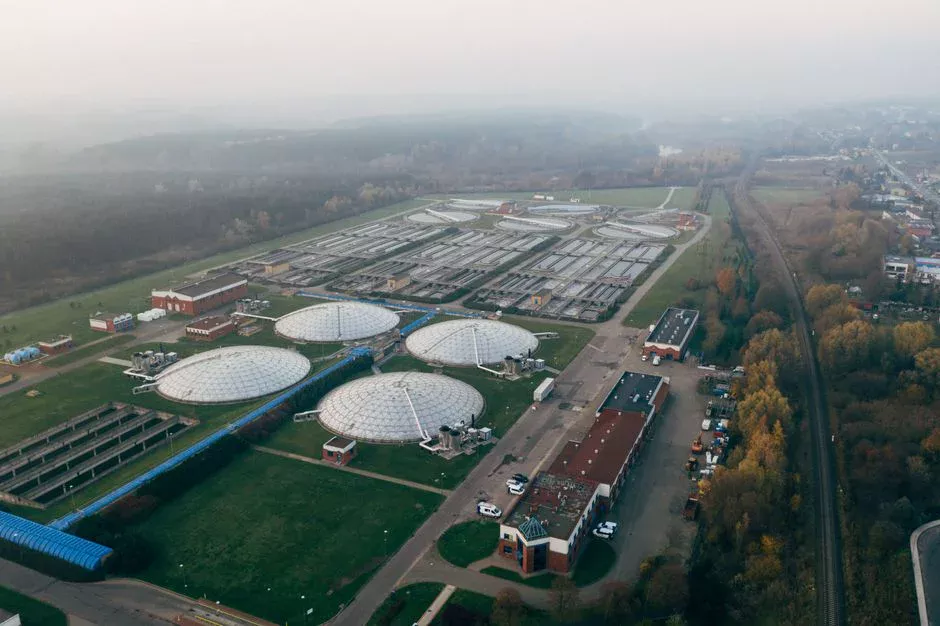
A lamella clarifier uses inclined plates or tubes to multiply the effective settling area inside a small footprint; solids settle against the plates and slide down to a hopper while clarified water rises. Data regarding size-specific performance—plate spacing, effective settling area, rise rate, and hydraulic loading—should be requested from the supplier for the specific plant duty. Clarifiers are passive, featuring no saturator, recycle pump, or microbubbles; this simplifies controls but removes the ability to capture oils, FOG, and low-density floc that a DAF would float. They tolerate high settleable-solids loads well and typically produce a thicker, easier-to-dewater sludge than DAF float, but they do not remove emulsified oils or surfactants without aggressive chemistry. Material options (304SS, 316SS, FRP, coated carbon steel) are widely available for corrosive chemical-plant service. Clarifiers are the default when the plant influent is dominated by settleable inorganics—catalyst fines, sulfate precipitates, lime softening sludge—rather than organics or oils. For that duty, a lamella clarifier for chemical plants is the conventional fit.
DAF vs lamella clarifier: parameter comparison for chemical-plant duty
The table below compares the two technologies based on parameters a CAPEX committee weighs. DAF-specific data is drawn from Clearwater/SigmaDAF (2026-04); clarifier-specific numbers should be confirmed with the supplier.
| Parameter | DAF (dissolved air flotation) | Lamella clarifier (inclined plate) |
|---|---|---|
| Removal mechanism | Microbubbles (30–50 µm) attach to floc and float it; heavier solids settle and are augered out | Gravity settling on inclined plates; clarified water rises |
| Best influent fit | Oils, FOG, surfactants, low-density floc; also handles a fraction of settleables | Settleable inorganics; thickening duty on biological clarifier |
| Footprint | Larger; needs saturation room and float-sludge handling | Compact; high effective settling area per unit footprint |
| Chemical conditioning dependency | High — coagulant and flocculant upstream are required for bubble attachment | Lower; polymer aids floc but not as critical to the physics |
| Sludge handling | Float scraped from surface; bottom auger for settleables; float is wetter | Sludge from hopper; typically thicker, easier to dewater |
| Standard materials | 304SS standard; 316SS and polypropylene optional (Clearwater/SigmaDAF, 2026-04) | 304SS, 316SS, FRP, coated carbon steel (confirm with supplier) |
| Automation / controls | PLC, skimmer speed, sludge discharge, chemical dosing pumps (Clearwater/SigmaDAF, 2026-04) | Simpler controls; less instrumentation |
| Upset tolerance to influent swings | More forgiving on FOG and surfactant shock loads | Less forgiving when oils or low-density floc appear |
| Model / sizing options | FPAC, FPBC, FPHF, COMPACT skid (≤66 GPM single skid, modular above) (Clearwater/SigmaDAF, 2026-04) | Confirm plate count, area, and rise rate with supplier |
| Typical role | Primary for organic/oily streams; can stand alone for mixed streams | Primary for settleable inorganics; polishing stage after DAF |
For FOG/surfactant-heavy streams, DAF is the established primary; for settleables-heavy streams, the lamella clarifier is the primary. They are complements, not substitutes, in a well-designed plant. A chemical plant with a mixed stream can sometimes use DAF alone because the vessel captures both floated solids and a fraction of settled solids (Clearwater/SigmaDAF, 2026-04). DAF skid options like the COMPACT ship with PLC controls and integrated chemical dosing hardware, which compresses installation time on a Countryside retrofit where downtime is expensive (Clearwater/SigmaDAF, 2026-04). Lamella clarifiers typically integrate with chemical dosing and sludge withdrawal but require less control hardware, which reduces both CAPEX and automation failure modes; for the same capacity, a comparable lamella clarifier for chemical plants is often field-built rather than skid-delivered.
A decision framework: which technology fits your Countryside chemical plant
The framework below maps the dominant contaminant in your influent to the technology most defensible to a CAPEX committee in 2026. If the dominant contaminant is oils, FOG, surfactants, or low-density floc—typical of personal-care, agrochemical, and lubricant-chemical plants—choose DAF as primary, sized to the peak load: FPAC for high-load small-to-medium flow, FPHF for high flow, or the COMPACT skid for a retrofit where downtime is the binding constraint (Clearwater/SigmaDAF, 2026-04). If the dominant contaminant is settleable inorganics or a thickening duty on a biological clarifier—typical of bulk inorganic, catalyst, and water-treatment-chemical plants—choose a lamella clarifier, sized by the supplier for the actual plate area and rise rate your stream requires. If the influent swings between the two, which is common in batch chemical plants, the safer 2026 default is DAF upstream of a lamella polishing stage, or DAF alone sized for peak load with chemical conditioning that handles both regimes (Clearwater/SigmaDAF, 2026-04). Always pair the technology choice with an automatic chemical dosing system for DAF pretreatment so floc conditioning is not the weak link, and review whether your existing biology can handle the swing; for context on how a downstream biology stage interacts with DAF, see the DAF vs clarifier for mining and metals wastewater decision guide. If the plant is space-constrained and influent is mostly settleables, lamella wins on footprint; if space is available and the stream carries any oils or FOG, DAF wins on robustness.
Cost, compliance, and supplier selection in 2026
CAPEX comparison requires itemized quotes from at least three suppliers that separate tank, saturator, skimmer, controls, and chemical conditioning skid. Without that breakdown, quotes are not comparable, and a low headline number can hide expensive controls or dosing hardware. OPEX drivers differ: DAF OPEX is dominated by polymer/coagulant dose, saturation pump energy, and float-sludge hauling; clarifier OPEX is dominated by sludge dewatering and polymer dose, but typically lower energy. A low-energy clarifier can still lose to a DAF once float hauling and POTW surcharges are added. Compliance risk: a DAF paired with proper chemical conditioning is the more forgiving technology for hitting strict POTW limits on FOG and emulsified oil; an undersized clarifier on the same stream will not, and on a Countryside site discharging to a metropolitan POTW, that surcharge structure is the primary penalty. Lead time and installation: a skid DAF such as the COMPACT ships pre-assembled for plug-and-play installation; a lamella clarifier of comparable capacity is often field-built and may require longer site work. Service and parts: confirm the supplier's North American service footprint, availability of replacement skimmer blades, augers, and saturator pumps, and whether chemical dosing is integrated or separate; a useful cross-check is the DAF common problems and solutions 2026 guide, which lists the parts that fail first. For dosing hardware, the 2026 chemical metering pump selection for U.S. wastewater article covers the pump side of the same decision. Finally, request documented startup curves and a guaranteed FOG removal at your design flow—not at the supplier's lab flow—before signing.
Frequently Asked Questions
What is the 2026 budget range a Countryside chemical plant should plan for when buying a DAF system?
The supplied research does not include 2026 price points for DAF systems or lamella clarifiers. Instead, request itemized quotes from at least three suppliers that separate tank, saturator, skimmer, controls, and chemical conditioning skid, and ask each to quote FOG removal at your design flow—that is the figure that determines whether the unit meets your POTW envelope.
How do I size a DAF or lamella clarifier for a variable chemical-plant influent in 2026?
For DAF, size to peak hourly load, not average, because surfactant and solvent batches drive the binding case; the FPAC handles small-to-medium flow with very high TSS/FOG, FPHF handles high flow with low-to-large solids, and the COMPACT skid covers up to 66 GPM as a single skid with modular expansion above that (Clearwater/SigmaDAF, 2026-04). For a lamella clarifier, request sizing from the supplier based on your peak settleables load and footprint limit.