Why Surat's Textile and Process Industries Need a Different ETP
Surat's polyester saree manufacturing depends on water-intensive scouring, dyeing, and finishing, each of which discharges chemically contaminated effluent with high color and organic load. The L.D. College of Engineering review of water sustainability in textile chemical processing for polyester sarees (Eur. Chem. Bull., Volume 11, Issue 8) treats Surat's wet-processing sector as a distinct case because the effluent chemistry is tied to disperse-dye carriers, alkalis, and surfactants that do not match generic industrial templates.
That specificity is the engineering point. A 2026 ETP for a Surat unit must be sized against the facility's own BOD, COD, TSS, oil and grease, and flow data, rather than borrowed design curves from a different industry. As Renora Hydrotech's ETP service note states, "ETP remove contaminants such as suspended solids, oils and greases, heavy metals, organic matter (BOD/COD), and other pollutants specific to an industry's processes." A packaged unit quoted on flow alone will under-size the biological stage and over-size the clarifier, which is the failure mode Surat buyers see when older ETPs are retrofitted to current norms.
Separating ETP from STP at the outset is essential. The same Renora note states that an ETP treats industrial wastewater containing process-specific contaminants, while an STP treats domestic sewage. The regulatory pathway through GPCB, the discharge parameter table, and the unit operations inside the plant are distinct. For a Surat textile or process unit, every engineering decision downstream flows from that distinction.
The 2026 context tightens the case. South Gujarat faces rising water stress, and GPCB scrutiny on textile units has moved the goalposts from "treat and discharge" to "treat and reuse." Buyers evaluating a new ETP in Surat today are choosing a foundation for a future water-reuse or ZLD train, not a standalone disposal system.
How an ETP in Surat Is Structured: The Five Engineering Stages
Surat textile and process ETPs are organized as a five-stage train. Each stage conditions the influent for the next, and skipping or resequencing stages is the most common cause of under-performing plants.
| Stage | Unit operation | Primary removal target | Design / capacity notes from research |
|---|---|---|---|
| 1. Primary | Screening, grit removal, equalization | Large debris, flow and load buffering | Equalization balances flow and load variations before further treatment (Renora Hydrotech). |
| 2. Physicochemical | Coagulation, flocculation, clarification or DAF | Suspended solids, oils, colloidal particles | DAF is well-suited to Surat textile effluent per the L.D. College review; commercial DAF units are documented across a 4–300 m³/h capacity range (L.D. College of Engineering, Eur. Chem. Bull., 2022). |
| 3. Biological | Aerobic (e.g., activated sludge, MBR) or anaerobic | Soluble BOD and COD | Selection depends on effluent biodegradability and load (Renora Hydrotech). |
| 4. Tertiary | Filtration, disinfection, optional membrane polishing (RO) | Residual fine particles, pathogens, color, dissolved salts | Advanced Surat plants add membrane polishing for reuse; nanofiltration/RO research confirms the role of membrane polishing in producing effluent suitable for agricultural or potable reuse (University of Twente, Schrader PhD thesis). |
| 5. Sludge management | Thickening, dewatering (plate-and-frame filter press) | Volume reduction of biosolids and chemical sludge | Sludge generated across all upstream stages is dewatered and handled for safe disposal (Renora Hydrotech). |
Primary treatment with screening and equalization removes large debris and dampens the hydraulic and organic swings that arrive from batch dyeing machines, which is critical when downstream biological kinetics depend on a stable feed. Physicochemical treatment then uses coagulation, flocculation, and either clarification or a DAF system for textile effluent to strip suspended solids, oils, and colloids; the L.D. College review specifically flags air flotation as a good fit for polyester saree effluent, and commercial DAF skids are documented across a 4–300 m³/h range.
Biological treatment, aerobic or anaerobic depending on biodegradability, performs the bulk of the BOD and COD reduction. Tertiary filtration and disinfection polish the remaining particles and pathogens, and in 2026 the more capable Surat plants add membrane polishing. Sludge management is the final stage, yet every kilogram of BOD removed upstream becomes a kilogram of biological solids downstream; a sludge dewatering filter press sized to the upstream load keeps the whole train operable.
The ETP functions as the first stage of a larger water strategy rather than a self-contained endpoint. RO and MEE are typically added downstream for reuse and ZLD, a sequencing that the next sections build on.
GPCB Compliance: Consent to Establish, Consent to Operate, and 2026 Discharge Reality
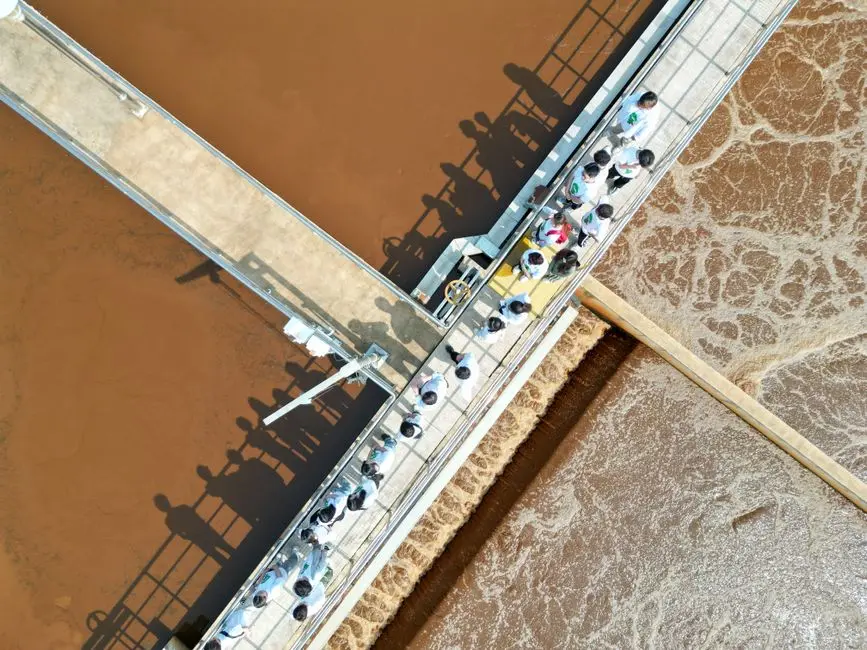
Regulatory compliance in Gujarat is a sequenced process. Consent to Establish (CTE) gates construction of the ETP, and Consent to Operate (CTO) gates actual discharge, with both tied to the ETP's process design and the discharge parameters it can demonstrably meet. As Renora Hydrotech frames it, "Most industries generating wastewater are required by GPCB to install an ETP and obtain Consent to Operate (CTO) before discharge," and supplier-side ETP vendors in Surat commonly bundle CTE/CTO documentation into their delivery scope.
The numeric discharge table presents the primary challenge. Industry category and pollution load determine the specific pH, BOD, COD, TSS, oil and grease, and color limits the ETP must hit, and GPCB revises these category-wise. The engineer must request the latest category-specific norms directly from GPCB or a compliance consultant before locking tank sizing and equipment selection; do not design to an older limit.
Engineering choice and compliance risk are directly linked. A biological-only design without tertiary polishing is unlikely to satisfy 2026 expectations for textile units in Gujarat, especially with stricter scrutiny on color, TDS, and reuse potential. Sequencing GPCB documentation against the engineering deliverables—equalization tank sizing, biological SRT, DAF or clarifier selection, and membrane polish—is what separates a plant that achieves CTO on the first inspection from one that requires multiple revisions.
ETP to RO to ZLD: The 2026 Integration Path for Surat Units
Most 2026 buyers in Surat are focusing on reuse and ZLD. The integration path is the ETP→RO→MEE train, where the University of Twente thesis by Schrader confirms that membrane technology, especially nanofiltration, is a suitable polishing step to produce an effluent quality suitable for agricultural or (in)direct potable usage.
For Surat textile units facing freshwater scarcity and tighter discharge constraints, the documented route is ETP followed by industrial RO polishing, with MEE added downstream for facilities working toward Zero Liquid Discharge. An MBR system is a common way to tighten the biological stage so that the RO membranes see a lower and more consistent organic load, which directly controls RO cleaning frequency and membrane life—two of the biggest operating cost drivers on a reuse train.
Constructed wetlands are an emerging, lower-energy polishing option for micropollutant removal from WWTP/ETP effluent, though Surat-specific adoption is still limited (Wageningen University, Lei PhD thesis, WU thesis 8189). These should be evaluated as a future option rather than a 2026 baseline.
Capex sequencing is vital. Prioritize the ETP stage, including equalization, DAF, biological, and sludge handling, because every downstream membrane and thermal step inherits the upstream effluent quality. Adding RO on top of a poorly conditioned ETP is the most expensive way to discover that the biological stage was undersized.
Choosing an ETP Supplier in Surat: 2026 Engineering Checklist
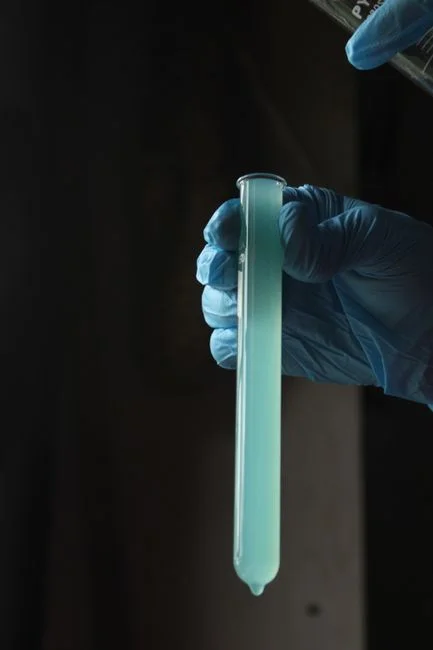
Vendor selection in Surat often depends on whether the provider performs engineering work or simply delivers a quoted package. The checklist below represents the minimum criteria a 2026 buyer should use to evaluate candidates.
| Check | What to demand | Why it matters |
|---|---|---|
| Effluent characterization | On-site sampling and lab analysis of BOD, COD, TSS, oil and grease, color, and flow | Design must be based on your wastewater, not generic curves (Renora Hydrotech). |
| Stage-by-stage sizing basis | Tank volumes, SRT/HRT, air demand, and equipment selection each justified against the characterization | Prevents "packaged unit" quotes that under-size biology or over-size clarification. |
| Materials and fabrication | Corrosion-resistant materials, in-house fabrication, factory QC records | Textile effluent is chemically aggressive; material choice drives service life. |
| Commissioning and performance test | On-site installation, startup, and documented performance testing before handover | Provides the basis for CTO application and future audits. |
| GPCB consultancy | CTE/CTO documentation support, compliance guidance, and references of running Surat textile ETPs | Reduces approval cycle time and de-risks the regulatory path. |
| Upgrade pathway | Clear plan for adding DAF, biological capacity, or RO if norms tighten or capacity grows | Surat ETPs are routinely upgraded for stricter norms or higher throughput (Renora Hydrotech). |
Apply two practical filters before signing. First, ask for the basis of every tank size in numerical terms and reject any proposal that relies on "standard" sizing. Second, visit a running Surat textile ETP of similar capacity and effluent type. Operating data is more valuable than brochures, as the visit will reveal a supplier's engineering depth. If you are comparing across geographies, the engineering logic for an ETP in Ahmedabad follows the same staged approach with GPCB norms as the binding constraint.
Frequently Asked Questions
How much does an ETP cost in Surat for a textile unit?
The supplied research does not publish a Surat-specific ETP price, so any quoted figure should be treated as a vendor estimate. For a textile unit, capex depends on flow rate (m³/day), influent BOD/COD/TSS, the discharge target, and whether RO or ZLD is in scope. A practical first step is to ask each shortlisted supplier to quote against a shared characterization report and to split the quote into ETP, RO, and ZLD stages to ensure phasing is visible.
How do I size an ETP for a Surat dyeing or processing unit?
Sizing starts with an effluent characterization covering BOD, COD, TSS, oil and grease, color, and flow rate. Each stage is then sized against those numbers: equalization volume from peak-to-average flow ratio, biological volume from organic loading rate, DAF or clarifier from hydraulic and solids loading, and sludge handling from the biosolids yield of the biological stage. Insist that the supplier shows the calculation basis for each tank.
Can an existing ETP in Surat be upgraded to meet stricter GPCB norms?
Yes, and it is a common 2026 path. Typical upgrades include adding or enlarging a DAF stage in front of the biological system, adding biological capacity, or inserting a membrane polishing step (RO) for reuse. Audit the current plant's actual removal performance against current norms to identify the bottleneck, as this determines whether the upgrade is mechanical, biological, or membrane-based.
What should I check before selecting an ETP manufacturer in Surat?
Confirm the supplier will perform an on-site effluent characterization before design, share stage-by-stage sizing calculations, fabricate in corrosion-resistant materials with in-house QC, commission and performance-test on site, and support GPCB CTE/CTO documentation. Ask for references of running Surat textile ETPs of similar capacity and visit at least one. For a comparable structured view of MBR-based biological stages, the MBR O&M guide and the DAF system pros and cons note are useful engineering references.