Why Hong Kong Defines the 2026 Fab Water Problem
The TNFD 2026 case study on technology-sector water dependence names Hong Kong as the benchmark city for global semiconductor water consumption, equating the industry's annual draw to that of a city of 7.5 million people (TNFD 2026, citing S&P Global 2024). The sector consumes around 210 trillion litres of water per year globally, and almost half of that volume is withdrawn in basins facing higher-than-average water scarcity (TNFD 2026, citing Yin & Yang 2025).
Between 2012 and 2022, sector water use roughly doubled, driven by advanced-node production and the longer ultrapure-water rinse cycles those nodes require (TNFD 2026, citing Marcello 2024). A 2026 Hong Kong design must be engineered against a future of constrained municipal supply and rising reuse obligations, rather than a 2010s baseline of unlimited potable water. This guide details the engineering response to these constraints, from stream segregation to minimal- and zero-liquid-discharge. The framing is consistent with how operators such as TSMC have reorganized their process trains, as detailed in the TSMC fab wastewater 2026 process guide.
Two Wastewater Streams, Two Design Problems
A 2026 Hong Kong site typically manages two distinct wastewater streams rather than a single homogeneous flow. The first stream is fab wet-bench and ultrapure-water reject, containing pH extremes, fluorides from etching, tetramethylammonium hydroxide (TMAH) from photoresist developing, N-methyl-2-pyrrolidone (NMP) and isopropyl alcohol (IPA) from solvent steps, strong acids, complexed metals, surfactants, and a residual fraction of partially characterized chemicals (iScience 2025). The second stream is data-hall cooling-tower blowdown and humidification bleed-off, characterized by silica, calcium and magnesium hardness, chloride, conductivity, suspended solids, biocide residues, and occasional Legionella control chemistry. Mixing these streams prevents heat recovery, cost-effective water reuse, and compliance with EPD discharge limits, making source segregation the 2026 baseline requirement. Where a fab and a hyperscale data hall co-locate, the cooling loop must remain isolated from the fab waste header. The volume asymmetry is material: a single fab can use around 14 billion litres of UPW per year, while a typical data centre uses 25–770 million litres, with hyperscale facilities exceeding 2 billion litres (TNFD 2026, citing Ceres 2025 and Hines Research 2025). Comparable segregation logic is used in the parallel Munich semiconductor and data-hall engineering guide.
| Parameter | Fab wet-bench & UPW reject | Data-hall cooling blowdown & humidification bleed-off |
|---|---|---|
| Typical volume scale (single site) | ~14 billion litres UPW/year (TNFD 2026) | 25 million–2 billion litres/year (TNFD 2026) |
| pH range | Strongly acidic or alkaline depending on tool | Near-neutral, buffered by cooling-water chemistry |
| Dominant inorganic species | Fluoride, sulphate, complexed metals | Silica, calcium, magnesium, chloride |
| Dominant organic species | TMAH, NMP, IPA, surfactants, trace solvents | Biocide residues, biodispersants, occasional glycols |
| Microbiological concern | Low (process-dominant) | Legionella control, biofilm management |
| Reuse potential in 2026 | UPW feed, scrubber make-up, cooling make-up | Cooling-tower make-up, humidification feed |
Core Treatment Train for Fab Process Wastewater in 2026
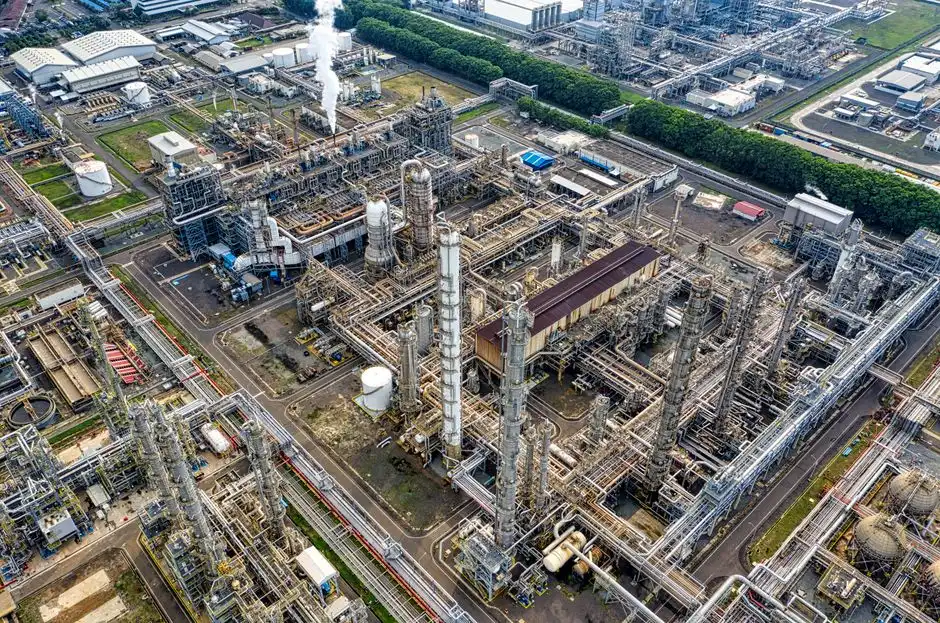
The defensible 2026 unit-process sequence for fab waste begins at the wet bench. Source segregation at the tool—splitting acid/alkali, fluoride-bearing, solvent, and chemical-mechanical planarisation (CMP) slurries into separate headers—is the prerequisite for any realistic design (iScience 2025). Downstream, equalization with pH correction and flow buffering smooths hydraulic and chemical loadings before targeted precipitation drops fluoride and metals. A primary separation step—a clarifier or a dissolved air flotation system—removes suspended solids, precipitated metals, and CMP slurry fines before the water reaches biological or advanced oxidation stages. Organics such as TMAH, NMP, and IPA are processed by a biological step (typically a membrane bioreactor) coupled with selective polishing, using reverse osmosis and ion exchange to meet either Hong Kong EPD discharge limits or internal reuse specifications, supported by an automatic chemical dosing system for reagent accuracy. The 2026 reuse hierarchy is consistent across the literature: UPW reject goes to RO then polishing for non-critical reuse; scrubber and cooling-tower make-up is fed from reclaimed water; only residual brine is considered for minimal- or zero-liquid-discharge (iScience 2025). Current treatment systems have documented technical limits where stream composition is complex, so real-time monitoring and aggressive source control are as important as the unit processes themselves (iScience 2025). The detailed hybrid process architecture is laid out in the chip fab etching wastewater treatment blueprint.
Data-Hall Cooling Blowdown: A Different Chemistry, A Different Train
Cooling-tower blowdown chemistry is dominated by silica, calcium, magnesium, and chloride, meaning the pretreatment objective is to control scale-forming species. Side-stream filtration followed by a high-recovery industrial RO system is the 2026 default for hyperscale sites, shrinking blowdown volume and reclaiming water for cooling-tower make-up. Non-oxidising biocide rotations and any residual oxidising biocide (free chlorine, combined chlorine, bromine, chlorine dioxide) must be neutralised or carbon-polished before the water re-enters a reuse loop or is discharged. Hong Kong sites adjacent to high water-stress basins—where 40% of existing fabs and over 40% of new fabs announced since 2021 will reside by 2030 (TNFD 2026, citing Lepawsky 2024)—should default to higher cycles of concentration and RO recovery rather than once-through cooling. Humidification bleed-off is small in volume but high in conductivity and must be routed separately from sanitary and fab streams to prevent contamination. The same separation logic drives the data centre cooling blowdown 2026 engineering guide for high-stress sites.
Hong Kong Compliance, Reuse, and Zero-Liquid-Discharge Logic
Effluent discharges in Hong Kong are administered under the EPD Technical Memorandum on effluent discharge standards, with site-specific limits set through the Drainage Services Department as Water Pollution Control Ordinance licence conditions. A 2026 design must identify receiving-water sensitivity early—whether the outfall faces Victoria Harbour, Deep Bay, or Rambler Channel—because that decision drives the polishing train, the reuse fraction, and the residual management strategy. The practical compliance path for a co-located fab and hyperscale data hall involves segregated streams feeding parallel equalization, followed by physico-chemical and biological treatment, then RO with selective polishing for reuse, with brine or concentrate either sent to a licensed receiver or processed through an on-site minimal/zero-liquid-discharge system. Zero-liquid-discharge is the engineering response to the macro water-stress picture and the local constraint of EPD-controlled receiving waters (TNFD 2026, citing Lepawsky 2024). Reclaimed water targets in 2026 typically include cooling-tower make-up, scrubber feed, and non-critical rinse, with UPW make-up reserved for the highest-quality RO/EDI polish. The compliance and ZLD framework is developed in detail in the 2026 IC wastewater discharge and ZLD compliance blueprint. Specific Hong Kong EPD numeric limits and project-specific licence conditions must be confirmed against the issuing authority's current schedules.
| Decision point | 2026 default for a Hong Kong fab or data-hall site | Information the buyer must obtain |
|---|---|---|
| Receiving-water sensitivity (outfall) | Treat Victoria Harbour, Deep Bay, and Rambler Channel as constrained; design polish accordingly | EPD-assigned receiving-water category and any site-specific licence clauses |
| Reuse end use | Cooling-tower make-up, scrubber feed, non-critical rinse; UPW make-up only from highest-quality RO/EDI polish | Site water balance and demand profile by quality tier |
| Concentrate disposal | Closed-loop evaporation or crystalliser where discharge is restricted | Whether the discharge licence permits a concentrate outfall at all |
| Water-stress exposure | Design for higher cycles of concentration and RO recovery, not once-through cooling | WRI Aqueduct or equivalent basin water-stress score for the site |
Fab vs. Data-Hall Treatment Train: 2026 Comparison
For a co-located or hybrid Hong Kong site, the design question is where to converge streams and where to maintain separation. Head-of-works segregation differs in each case: the fab requires wet-bench segregation by chemistry (acid/alkali, fluoride, solvent, CMP), while the data hall requires isolation of the cooling loop from humidification bleed-off. Primary removal is similar in principle—both streams pass through equalization and clarification or DAF—but the fab train adds fluoride and metals precipitation, while the data-hall train adds softening and silica control. Advanced polishing diverges: the fab routes through MBR, selective ion exchange, or RO, while the data hall routes through high-recovery RO and, where biocide residuals are present, activated carbon. Reuse end uses also differ; the fab reclaims into UPW feed, scrubbers, and cooling make-up, while the data hall reclaims predominantly into cooling-tower make-up and humidification. The fab residual may carry metals and fluoride below EPD limits, whereas the data-hall residual is mostly high-recovery RO concentrate with high TDS. Both must be checked against the project's Hong Kong discharge licence before sizing equalization tanks, and where the site cannot discharge concentrate, the 2026 default is closed-loop evaporation or a crystalliser (iScience 2025). Comparable decision logic is applied in the Frankfurt semiconductor and data-hall 2026 compliance guide.
| Process stage | Fab process wastewater | Data-hall cooling blowdown |
|---|---|---|
| Head-of-works segregation | Acid/alkali, fluoride, solvent, CMP split at the tool | Cooling loop isolated from humidification bleed-off |
| Primary removal | Equalisation + clarification or DAF; fluoride and metals precipitation | Equalisation + clarification; softening and silica control |
| Advanced polishing | MBR, selective ion exchange, RO | High-recovery RO, activated carbon for biocide residuals |
| Reuse end use | UPW feed, scrubber make-up, cooling make-up | Cooling-tower make-up, humidification feed |
| Discharge residual | Treated effluent with metals/fluoride below EPD limits | RO concentrate with high TDS; EPD licence must be checked |
| Concentrate management | Closed-loop evaporation or crystalliser where discharge is restricted | Closed-loop evaporation or crystalliser where discharge is restricted |
Frequently Asked Questions
What is the realistic 2026 cost range for a fab or hyperscale data-hall wastewater treatment system in Hong Kong?
The supplied research does not provide a 2026 Hong Kong price for a full treatment train. A buyer should request an itemised capital cost split
Frequently Asked Questions
What is the recommended treatment train for semiconductor process wastewater in Hong Kong in 2026?
For a 2026-compliant facility, the recommended treatment train integrates modular equalization, pH adjustment, and multi-stage chemical precipitation for heavy metal removal (targeting <0.1 mg/L for copper and nickel). This is followed by membrane bioreactors (MBR) for organic load reduction and tertiary reverse osmosis (RO) units to achieve high-purity reclaim standards or meet stringent EPD discharge requirements.
Given the high land cost in Hong Kong, vertical integration of treatment units is standard. Systems must include automated fluoride precipitation utilizing calcium chloride dosing to achieve effluent concentrations below 10 mg/L, ensuring alignment with the Technical Memorandum on Standards for Effluents Discharged into Drainage and Sewerage Systems.
How does data-hall cooling blowdown differ from fab wastewater in design terms?
Data-hall cooling blowdown is characterized by high concentrations of dissolved solids (TDS) and cooling tower biocides, whereas semiconductor fab wastewater contains complex mixtures of fluorides, heavy metals, and photoresist solvents. Design for hyperscale cooling systems focuses primarily on side-stream filtration and electro-deionization (EDI) to manage conductivity, rather than the aggressive chemical precipitation required for fab process streams.
While fab wastewater requires dedicated segregated piping for acid, alkaline, and fluoride streams to prevent hazardous reactions, data-hall blowdown management is primarily concerned with scale inhibition and the regulation of thermal discharge temperatures, which must comply with local EPD cooling water discharge limits to prevent local ecosystem degradation.
What compliance pathway should a 2026 Hong Kong fab or hyperscale data hall follow for effluent discharge?
Operators must strictly adhere to the Water Pollution Control Ordinance (WPCO) and secure a Discharge License from the Environmental Protection Department (EPD). The compliance pathway involves submitting a detailed Effluent Characterization Report and installing continuous online monitoring systems for flow, pH, and turbidity at the final discharge point.
Engineers should design for the most stringent local Water Control Zone (WCZ) requirements, often requiring a "zero-exceedance" design philosophy for heavy metals and toxic substances. Compliance is verified through quarterly mandatory sampling and testing by a HOKLAS-accredited laboratory to maintain the validity of the site-specific Discharge License.
What is a realistic 2026 budget envelope for a CMP or fab process wastewater treatment system in Hong Kong?
A realistic capital expenditure (CAPEX) budget for a medium-scale semiconductor wastewater treatment plant in Hong Kong ranges from HKD 45,000 to HKD 75,000 per cubic meter of daily treatment capacity, depending on the complexity of the influent stream and the required water recovery ratio. This figure includes civil works, high-specification corrosion-resistant piping, and proprietary membrane systems.
Operational expenditure (OPEX) should be budgeted at approximately 15-20% of the initial CAPEX annually, accounting for the high cost of imported specialty chemicals, electricity for high-pressure RO pumps, and the premium labor costs associated with specialized environmental engineering maintenance in the Hong Kong market.
How do I select a wastewater equipment supplier for a Hong Kong semiconductor or data-hall project, and what lead time should I plan for in 2026?
Selection should prioritize suppliers with a verified track record in the Greater Bay Area who maintain local technical support teams capable of 24/7 onsite response. Essential criteria include the ability to provide HOKLAS-compliant documentation and experience in integrating automated PLC systems with existing Building Management Systems (BMS) or Facility Monitoring Systems (FMS).
In 2026, supply chain volatility necessitates a lead time of 32 to 46 weeks for critical components, such as custom-fabricated reaction tanks, industrial-grade RO membranes, and specialized instrumentation. Procurement should be initiated at the FEED (Front-End Engineering Design) stage to avoid project delays caused by long-lead equipment delivery schedules.