
Why Accra Changes the Wastewater Question in 2026
Globally, 45% of data centres sit in river basins at high risk of water-availability disruption, according to the Taskforce on Nature-related Financial Disclosures (TNFD) February 2026 case study on water dependency in the technology sector, citing Hajonides et al. 2025. The same source documents that worldwide semiconductor water use doubled between 2012 and 2022 (TNFD February 2026, citing Marcello 2024), and that fabrication — the stage where ultrapure water rinses silicon wafers repeatedly — is the most water-intensive part of the microchip value chain. Greater Accra is not represented in TNFD's basin-level dataset, but the region's coastal hydrology, intermittent municipal supply, and growing industrial demand place it in a comparable risk profile that any 2026 project must evaluate on its own hydrology study rather than by global proxy.
That re-framing matters because in Accra the wastewater plant is not the regulatory trigger. The trigger sits upstream: a Ghana Water Company Limited (GWCL) industrial allocation letter sized to the project's municipal draw, and an Environmental Protection Agency (EPA) Ghana permit pathway that begins with an Environmental Impact Assessment (EIA) before EPC tender. Without those two documents in hand, any treatment train selected on a vendor datasheet is academic. A defensible 2026 process-wastewater concept for Greater Accra therefore starts with intake and siting, then works back to discharge, and only then sizes the UF/RO/dosing package.
The data gap is explicit: the supplied research does not contain EPA Ghana's numeric effluent limits under GS 1219, nor does it document GWCL's industrial-allocation practice for technology-sector users. Both inputs must be requested directly from the regulator and the utility before any EPC study is commissioned. Engineers who default to a "standard" discharge specification will over-design on safety, or worse, under-design on something the regulator will reject at commissioning.
How Much Water an Accra Fab or Data Hall Actually Pulls
Mass-balancing an Accra process wastewater train against a defensible global benchmark is the first exercise an EPC will demand. The TNFD February 2026 case study provides four numeric anchors a Ghana-bound engineer can cite, all from the same source document, and all attributable inline.
- A single global fab can use around 14 billion litres of ultrapure water (UPW) per year (TNFD February 2026, citing WEF 2025). This is an upper-bound reference, not an Accra design point — most West-Africa-scale fabs or assembly/test lines will sit well below this figure, but it anchors a defensible maximum.
- For every 1 unit of UPW used at the rinse step, 1.4–1.6 units of municipal water are consumed upstream at the fab (TNFD February 2026, citing IDE Technologies 2024). Total municipal draw is therefore approximately 1.5–1.7× the UPW figure once cooling and process losses are added.
- A typical (non-hyperscale) data centre uses 25 million to 770 million litres of water per year, while hyperscale facilities may exceed 2 billion litres annually (TNFD February 2026, citing Ceres 2025 and Hines Research 2025).
- U.S. data centres consumed an estimated 66 billion litres of water for operation in 2023 (TNFD February 2026). This is a regional-scale sanity check, not an Accra number — it is roughly the order of magnitude of the global typical-data-centre range multiplied across a national fleet.
Worked example: a 10,000 m³/day UPW plant, which is already at the upper end of an assembly/test or small-foundry envelope, would, at the 1.4–1.6 municipal-to-UPW ratio, need roughly 14,000–16,000 m³/day of municipal input. That is the figure the GWCL allocation letter must be able to support before any equalisation tank is sized. Engineers should also remember that on the data-hall side, a Tier-III hall in a hot, humid coastal climate will sit at the upper end of the typical range, not the lower end, because once-through and evaporative cooling both perform more poorly above 28 °C wet-bulb.
| Parameter | Global benchmark value | Source (TNFD Feb 2026) | Accra design implication |
|---|---|---|---|
| Single fab UPW use (annual) | ~14 billion litres | WEF 2025 | Upper-bound reference; not an Accra target |
| Municipal-to-UPW multiplier | 1.4–1.6× | IDE Technologies 2024 | Sets GWCL allocation envelope |
| Typical data centre annual draw | 25–770 million litres | Ceres 2025 | Accra Tier-III halls likely toward upper end |
| Hyperscale data centre annual draw | >2 billion litres | Hines Research 2025 | Not relevant unless Ghana hosts hyperscale |
| U.S. national data-centre draw (2023) | ~66 billion litres | TNFD Feb 2026 (citing USGS 2015) | Sanity check only |
The intake question is therefore the gate. A 10,000 m³/day UPW envelope with the 1.4–1.6× multiplier implies the kind of allocation that GWCL will scrutinise line-by-line; a Tier-III data hall alone is more tractable, but is still a public-supply commitment the utility must confirm before commissioning. Engineers should request the allocation letter as a hard pre-condition to plant sizing, and an industrial RO system sized to those flow numbers is a downstream decision, not an upstream one.
Mapping the Process Wastewater Streams Inside the Fence Line
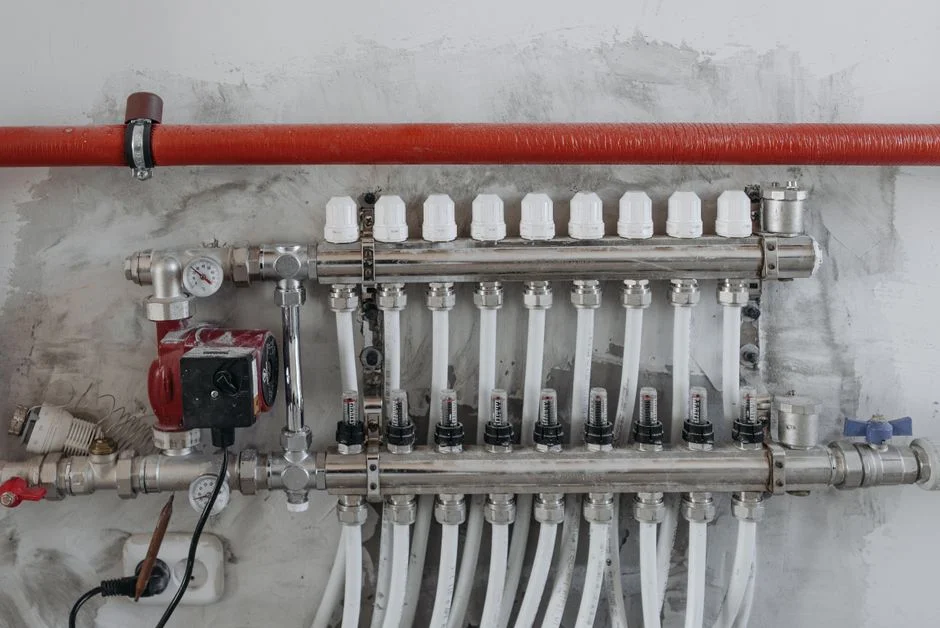
"One wastewater plant" is the wrong mental model for an Accra fab-or-data-hall campus. Each stream carries a different chemistry, a different EPA Ghana effluent-class implication, and a different reuse potential. The first design decision is segregation; treatment selection follows.
On the fab side, four streams must be segregated at source: UPW reject (high-purity concentrate from the polishing loop, suitable for RO recovery), acid/alkaline cleaning rinses from wet-etch and post-ash cleans (high TDS, pH excursions), chemical-mechanical planarisation (CMP) slurry wastewater (high in suspended solids, colloidal silica, and metals such as copper or tungsten depending on the layer), and solvent-bearing rinses from photolithography. Co-mingling any of these with the others complicates both EPA Ghana discharge compliance and any future water-reuse scheme. The same logic is implicit in the TNFD February 2026 case study, which treats fab-side pollution as a stream-by-stream issue when assessing dependency risk (TNFD February 2026).
Data-hall streams are chemically simpler: evaporative cooling tower blowdown (high in TDS, scale inhibitors, and biocides), humidification bleed-off (essentially pre-evaporated potable water with low TDS), and once-through cooling discharge (where still permitted by GWCL and any local municipality sewer ordinance). Cooling systems account for most on-site operational water withdrawals in data centres (TNFD February 2026, citing Ceres 2025), which means the data-hall side of the wastewater train is dominated by blowdown volume, not chemical complexity.
Samsung's reported 344,000 tonnes of water per day, equivalent to 344 million litres per day, is included only as a global benchmark so the reader calibrates their own Accra envelope downward (TNFD February 2026, citing Samsung Water Stewardship). The growth pressure is real: worldwide semiconductor water consumption reached approximately 210 trillion litres annually (TNFD February 2026, citing Yin & Yang 2025), and that volume is concentrated in fab throughput, not in data-hall count. Greater Accra's planning task is to design for a smaller absolute flow but with the same segregation discipline a global fab applies. A packaged DAF system on the CMP line is a typical first removal step for the suspended-solids and colloidal load before downstream polishing.
A 2026 Treatment Train for Greater Accra Process Wastewater
A defensible default train for a 2026 Greater Accra process-wastewater system runs segregation → UF → RO → discharge or reuse → polishing, with chemical conditioning wherever pH or biocide residuals must be neutralised. Each step is justified by the supplied evidence base; numeric effluent limits must be requested from EPA Ghana before final sizing.
- Equalisation and segregation. Dedicate separate equalisation tanks to UPW reject, CMP wastewater, and cooling-tower blowdown. Mixing these streams is the single most common design error on multi-stream sites, because it forces the downstream train to handle the worst-case chemistry of every stream at once.
- Ultrafiltration (UF) on the fab-side train. Saltworks Technologies' commercial documentation states that XtremeUF ceramic and polymeric ultrafiltration removes oils, grease, precipitated by-products, particulate, microbes, and suspended solids in semiconductor duty (saltworkstech.com). UF therefore sits naturally between equalisation and RO, protecting the RO membranes from colloidal fouling.
- Reverse osmosis (RO) on UPW reject. RO recovers permeate from UPW reject for non-critical reuse — toilet flushing, landscape irrigation, cooling-tower makeup. Reuse is not a sustainability gesture here; given the 1.4–1.6 municipal-to-UPW ratio documented in the TNFD February 2026 case study (citing IDE Technologies 2024), reuse is a supply decision that directly reduces the GWCL allocation burden.
- Discharge to sewer or receiving water. Clarified RO concentrate and segregated chemical streams must meet EPA Ghana effluent limits. The specific numeric limits from GS 1219 are not in the supplied research and must be requested from EPA Ghana before final sizing. Engineers should not assume a "default" pH, TDS, or metals envelope.
- Data-hall side. Cooling-tower blowdown can often be handled with side-stream filtration and chemical conditioning rather than full RO, but the GWCL discharge consent and any local municipality sewer ordinance still govern. A PLC-controlled chemical dosing system is typically required for biocide and scale-inhibitor control on this loop.
| Step | Equipment class | Target stream | Evidence base |
|---|---|---|---|
| Equalisation / segregation | EQ tanks, mixers, pH probes | UPW reject, CMP, cooling blowdown | TNFD Feb 2026 segregated-stream logic |
| UF | Ceramic or polymeric UF | Fab-side pre-RO | Saltworks Technologies commercial page |
| RO | Industrial brackish-water RO | UPW reject permeate recovery | TNFD Feb 2026, citing IDE Technologies 2024 |
| Discharge / polishing | Neutralisation, polishing filters | RO concentrate, segregated chemicals | EPA Ghana GS 1219 (limits to be requested) |
| Data-hall side | Side-stream filtration, chemical dosing | Cooling-tower blowdown | TNFD Feb 2026, citing Ceres 2025 |
The two referenced product classes — the HydropureWater ultrafiltration system and an industrial RO system — map directly onto steps 2 and 3. The most recent sources available for this recommendation are the TNFD case study (published February 2026) and the Saltworks Technologies commercial page.
Siting and Permitting Checklist for 2026

Before the wastewater plant is tendered, the project team should run five procurement checks. None of these are treatment-train decisions; they all sit upstream of treatment selection.
- Basin water-stress classification. The global benchmark is that 45% of data centres sit in high-risk basins (TNFD February 2026, citing Hajonides et al. 2025). Greater Accra is not in TNFD's global dataset, so a local hydrology and water-stress study is required for the candidate site.
- GWCL allocation letter. Size the request to the 1.4–1.6× municipal multiplier described earlier. Do not size the treatment plant until allocation is in hand, because the allocation envelope is the binding constraint on UPW capacity.
- EPA Ghana EIA and effluent permit pathway. Engage EPA Ghana before EPC tender. The supplied research does not contain the specific GS 1219 numeric limits, so the engineer must request them directly from the regulator at the EIA scoping stage.
- Cooling architecture decision. Air-cooled versus water-cooled for the data hall swings the wastewater train from a minor blowdown-treatment problem to a full RO/cooling-tower side-stream system. Decide early, because the cooling choice locks in the water footprint.
- Materials of construction. Specify a corrosion-resistant package for the high-TDS coastal air in Accra and the aggressive chemistries of fab wastewater. The corrosion-prevention guide for wastewater equipment covers FRP, super-duplex stainless, and coating options; pairing it with a chlorine dioxide generator for biocide control is common on West-Africa fab-duty trains.
Frequently Asked Questions
Which Ghanaian regulator governs process wastewater from a fab or data hall in Accra in 2026?
EPA Ghana is the regulator for industrial effluent discharge and Environmental Impact Assessment. The numeric effluent limits set under GS 1219 are not in the supplied research, so the engineer must request the current limit values directly from EPA Ghana at the EIA scoping stage rather than relying on a generic specification.
What drives the CAPEX order of magnitude for a 2026 Accra process wastewater train?
The single largest cost driver is fab-scale: a global fab benchmark sits at around 14 billion litres of UPW per year (TNFD February 2026, citing WEF 2025). For an assembly/test line or a Tier-III data hall in Accra, the train will be sized to a fraction of that flow, but the supplied research does not contain a Ghana-specific cost figure. The engineer should request a budget estimate from the EPC sized to the GWCL allocation and the GS 1219 limits, not a generic vendor list price.
How is municipal intake sized relative to UPW demand?
The TNFD February 2026 case study, citing IDE Technologies 2024, documents a 1.4–1.6 m³ municipal-to-UPW ratio. As an illustrative envelope, a 10,000 m³/day UPW plant would therefore need roughly 14,000–16,000 m³/day of municipal input. This is the figure the GWCL allocation letter must support before plant sizing begins.
What treatment stages should a Ghana-based EPC specify for a 2026 fab or data hall?
The 2026 default is segregated equalisation, UF on the fab-side train, RO on UPW reject for reuse, and PLC-controlled chemical dosing for pH and biocide control. The relevant equipment classes for steps 2 and 3 are the HydropureWater ultrafiltration system and an industrial RO system. The longest equipment lead items in a 2026 Ghana project are typically the RO skids and the dosing skids; the supplied research does not contain a Ghana-specific lead-time figure, so the engineer should request current fab-duty UF and RO delivery terms from the OEM at RFQ stage.