The Dual Compliance Problem Facing Mining Dischargers
A mine or mill that discharges to a municipal sewer near Lowman, Idaho faces two stacked limits, and only one of them is the federal categorical standard. The Clean Water Act §307(b) authorizes EPA to set categorical pretreatment standards for industrial categories; 40 CFR Part 440 is the specific category for ore mining and dressing. The general pretreatment regulations at 40 CFR Part 403 sit between the categorical standard and the discharger, and they require every controlling POTW to run a local pretreatment program with numerical local limits. The POTW's limits are derived from a Maximum Allowable Headworks Loading (MAHL) study that allocates a share of the plant's receiving capacity to each industrial user as a Maximum Allowable Industrial Loading (MAIL). The local limit, not the categorical number on the back of the regulation, is almost always the binding constraint for a small indirect discharger.
EPA's Local Limits Development Guidance (Final, June 2021 update) defines three protection goals a MAHL must satisfy simultaneously: prevention of pass-through at the POTW's discharge to the receiving stream, prevention of interference with the POTW's biological and physical treatment processes, and protection of the collection system, worker safety, and POTW sludge quality. A sewer-discharge train that only targets the 40 CFR 440 categorical metals and TSS will typically fail one of those three tests and trigger a noncompliance notice from the utility. The control point an engineer has to design to is the headworks allocation, not the end-of-pipe NPDES limit on the POTW.
A small mining plant near Lowman cannot copy a large open-pit's direct-discharge NPDES solution because the receiving utility, not the mine, holds the NPDES permit for the outfall. The mine holds a control mechanism issued by the POTW, and the operating envelope is the POTW's local limit. The two compliance paths — direct discharge under an NPDES mining permit and indirect discharge under a POTW-issued control mechanism — produce very different unit-operation stacks.
What 40 CFR Part 440 and Your Receiving POTW Actually Require
40 CFR Part 440 covers the ore mining and dressing point source category and includes subcategories for active and inactive ore mines, mills, and related drainage. The pollutant groups the categorical standard and most local limits will both reference are total suspended solids, pH, and the total recoverable metals As, Pb, Cd, Zn, Cu, Cr (trivalent and hexavalent), Hg, Ni, and Ag, with radium and cyanide added in subcategories that handle uranium or gold/silver milling. Federal categorical limits set the floor; the POTW's MAHL-derived local limit is almost always tighter for one or more metals because the MAHL calculation must also account for an expansion/growth allowance, a hauled-waste allocation, and a safety factor applied to uncontrolled sources (per EPA Local Limits Guidance, §6.2.1–6.2.4).
EPA's MAHL process is a five-step sequence defined in Chapter 2 of the Local Limits Development Guidance: (1) Determine Pollutants of Concern, (2) Collect and Analyze Data, (3) Calculate MAHLs for each Pollutant of Concern, (4) Designate and Implement Local Limits, and (5) Address Collection System Concerns. The MAIL is what the POTW actually hands the industrial user; it is the share of the MAHL left after the safety factor, growth allowance, hauled-waste allocation, and uncontrolled-source load are subtracted. Local limits can be expressed as daily-maximum concentrations, monthly-average concentrations, or mass-based allocations; the form depends on what the utility's MAHL study selected.
The table below shows the kind of envelope a Lowman-area plant must design against. The categorical column references 40 CFR Part 440 subcategory limits that are representative for ore mining and dressing; the local limit column is illustrative, drawn from the typical structure of a MAHL table and the order of magnitude that MAIL allocations produce. Confirm both columns with the serving utility's MAHL study and the current 40 CFR 440 subcategory before final design.
| Parameter | 40 CFR 440 categorical (illustrative) | Typical POTW local limit (illustrative, daily-max) | Limiting basis |
|---|---|---|---|
| pH | 6.0–9.0 | 6.0–9.0 (instantaneous) | Collection-system corrosion / worker safety |
| Total Suspended Solids | 30 mg/L (monthly avg, active ore subcategory) | 50 mg/L daily-max (typical MAIL) | Sludge contamination and POTW biomass |
| Total Recoverable Lead | 0.6 mg/L (varies by subpart) | 1.0 mg/L daily-max (illustrative) | Sludge quality / biosolids ceiling |
| Total Recoverable Cadmium | 0.1–0.2 mg/L (subcategory-dependent) | 0.5 mg/L daily-max (illustrative) | Pass-through, hardness-dependent |
| Total Recoverable Zinc | 1.0–2.0 mg/L | 2.0–5.0 mg/L (illustrative) | Interference with biotreatment |
| Total Recoverable Copper | 0.3–1.0 mg/L | 1.0–3.0 mg/L (illustrative) | Interference and biosolids |
| Total Recoverable Arsenic | 0.5 mg/L (subcategory-dependent) | 0.1–1.0 mg/L (illustrative) | Sludge quality, NPDES pass-through |
| Hexavalent Chromium | 0.1 mg/L (subcategory-dependent) | 0.1–0.5 mg/L (illustrative) | Pass-through toxicity |
| Total Mercury | 0.002 mg/L (subcategory-dependent) | 0.005 mg/L or lower (illustrative) | Bioaccumulation, sludge quality |
A Reference Treatment Train for Mining/Metals Sewer Discharge
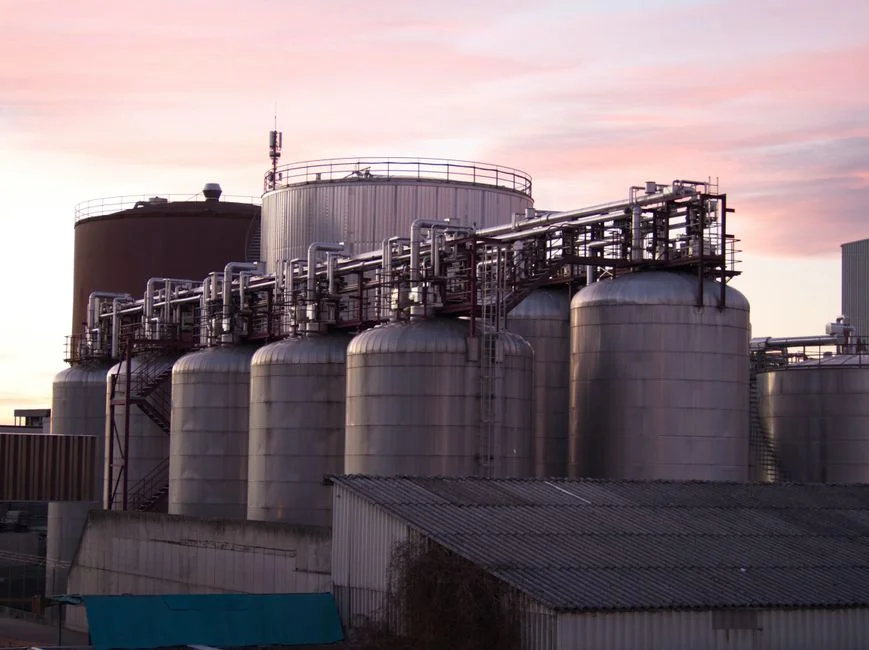
The reference process flow below is the same unit-operation stack most engineering guides describe — pH adjustment, coagulant and flocculant addition, clarification, and filtration polish — but it is sized to hit both the 40 CFR 440 categorical standard and the tighter MAHL-derived local limit simultaneously. The flow is linear and can be operated in batch or continuous mode, depending on the mine's daily flow and equalization volume.
- Stage 1 — Equalization. An equalization basin sized for 8–24 hours of holding dampens both flow and pH swings from batch AMD events. Continuous inline pH and flow instrumentation on the basin discharge is the single most important control loop in the whole train.
- Stage 2 — pH adjustment. Raise the mixed liquor to pH 8.5–9.5 with lime (Ca(OH)₂) or caustic (NaOH) using an automatic chemical dosing skid. Most heavy metals reach their minimum solubility as hydroxide floc in this pH band; arsenic is a notable exception and is co-precipitated with ferric sulfate rather than as a pure hydroxide.
- Stage 3 — Coagulation and flocculation. Dose ferric sulfate (Fe₂(SO₄)₃) or alum as the primary coagulant at 50–150 mg/L, then anionic polyacrylamide flocculant at 1–5 mg/L. The coagulant forms dense metal-hydroxide floc; the flocculant bridges particles into settleable or floatable masses that the downstream clarifier can remove.
- Stage 4 — Clarification. A lamella clarifier with surface loading 20–40 m/h is the typical choice for flow rates up to ~50 m³/h; a dissolved air flotation system at 5–25 m/h hydraulic loading is preferred when the metal-hydroxide floc is fine and the operator needs 90–95% TSS removal in a small footprint. DAF bubble chemistry (30–50 µm micro-bubbles at 4–6 bar saturation) attaches to the floc and floats it as a concentrated blanket.
- Stage 5 — Multimedia filtration. A multi-media filter with anthracite (top, ~0.8–1.2 mm), sand (middle, ~0.45–0.55 mm), and garnet (bottom, ~0.2–0.3 mm) polishes residual TSS down to 5–10 mg/L and protects the membrane stage from fouling.
- Stage 6 — Membrane polish (optional). A PVDF ultrafiltration system at 0.03 µm acts as a final suspended-solids barrier ahead of sewer discharge, or ahead of reverse osmosis if the plant is also pursuing water reuse. The ultrafiltration system runs at 50–80 LMH flux with periodic backwash and CIP every 1–4 weeks.
Metal-rich sludge from the clarifier bottoms or DAF float is thickened and dewatered in a plate and frame filter press to 25–35% dry solids before landfill disposal. Filter-press liquor returns to the equalization basin.
Influent vs. Sewer-Discharge Target Parameters
The parameter table below is the kind of artifact an engineer builds for a basis-of-design memo or a P&ID review. The raw mining-influent column is a typical range for an active hard-rock mine with some AMD influence; the sewer-discharge target column is the envelope the train above is designed to hit. Each row is annotated with the unit operation that drives the removal. Confirm the final numeric targets against the serving utility's MAHL study and the plant's control mechanism before issue.
| Parameter | Raw mining influent (typical range) | Sewer-discharge target | Primary removal stage |
|---|---|---|---|
| pH | 2.0–4.0 (AMD-influenced) to 6.5–7.5 (clean mill water) | 6.0–9.0 | Stage 2 pH adjustment with lime or caustic |
| Total Suspended Solids | 500–5,000 mg/L | <50 mg/L (typical MAIL), <30 mg/L for categorical | Stage 3 coagulation, Stage 4 DAF or lamella, Stage 5 multimedia |
| Total Arsenic | 1–20 mg/L (AMD-influenced) | <0.1–1.0 mg/L (MAIL-dependent) | Stage 3 co-precipitation with ferric sulfate at pH ~8; Stage 4 floc removal |
| Total Lead | 5–50 mg/L | <1.0 mg/L (typical MAIL) | Stage 2 hydroxide precipitation at pH 9–9.5, Stage 4 floc removal |
| Total Cadmium | 0.5–10 mg/L | <0.5 mg/L (typical MAIL) | Stage 2 hydroxide precipitation, Stage 3 co-precipitation with ferric |
| Total Zinc | 5–50 mg/L | <2.0–5.0 mg/L (typical MAIL) | Stage 2 hydroxide precipitation at pH 9–9.5, Stage 4 floc removal |
| Total Copper | 2–30 mg/L | <1.0–3.0 mg/L (typical MAIL) | Stage 2 hydroxide precipitation, Stage 4 floc removal |
| Hexavalent Chromium | 0.1–5 mg/L | <0.1–0.5 mg/L (typical MAIL) | Stage 2 reduction to Cr(III) with ferrous sulfate at pH <3, then hydroxide precipitation at pH 8.5–9.5 |
| Total Mercury | 0.01–0.5 mg/L | <0.005 mg/L or lower (MAIL-dependent) | Stage 2 sulfide precipitation (NaHS or Na₂S) at pH 8–9; sulfide chemistry is the most reliable route for Hg |
| Total Iron | 10–200 mg/L | <5 mg/L (typical) | Stage 2 hydroxide precipitation at pH 8–8.5, Stage 4 floc removal |
| Total Manganese | 1–20 mg/L | <1–2 mg/L (typical) | Stage 2 hydroxide precipitation at pH 9.5–10, Stage 4 floc removal |
Two design notes from operating data: arsenic is the metal most likely to fail a local limit if the engineer relies on hydroxide precipitation alone, because arsenate and arsenite do not form a tight hydroxide floc; co-precipitation with ferric sulfate (Fe:As molar ratio ≥ 4:1) at pH ~8 is the reliable route. Hexavalent chromium must be reduced to trivalent before precipitation; ferrous sulfate at pH <3 followed by a re-raise to 8.5–9.5 is standard.
Choosing Between the Common Treatment Configurations
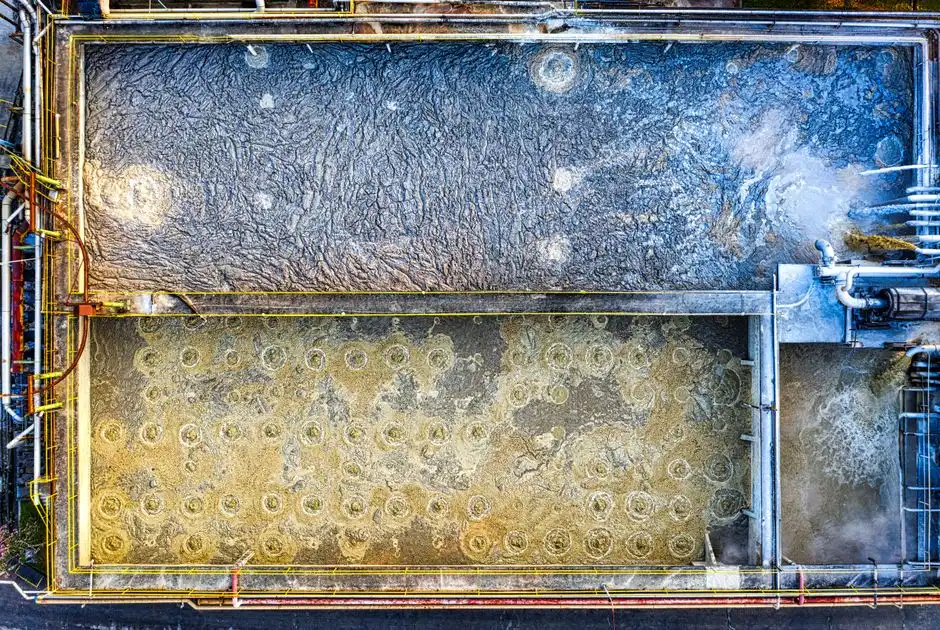
The four configurations below cover the bulk of small-to-mid mining and metals operations discharging to sewer. The right answer depends on the metals of concern, the influent TSS, and whether the plant is also pursuing water reuse or zero-liquid-discharge.
| Configuration | Best-fit application | Capex vs. baseline | Notes |
|---|---|---|---|
| Hydroxide precipitation + DAF | Most base-metal mines with <5,000 mg/L influent TSS and bulk As/Pb/Zn/Cu targets above 0.1 mg/L | Baseline (lowest capex) | |
| Hydroxide precipitation + lamella clarifier | Higher solids loadings (5,000–15,000 mg/L) and tight footprint; surface loading 20–40 m/h | Comparable baseline; smaller footprint reduces civil cost | |
| UF-only polish (after chemical treatment) | Influent already at <200 mg/L TSS, plant only needs a suspended-solids barrier to sewer | Lower than full UF+RO, higher than chemical-only | |
| Full UF + RO for reuse / ZLD | Plant pursuing water reuse, brine minimization, or zero-liquid-discharge | Highest capex; scales with TDS and recycle fraction |
Use sulfide precipitation (NaHS, Na₂S, or FeS) instead of hydroxide when the residual dissolved target is below 0.1 mg/L, when the metal is a poor hydroxide precipitant (Hg, Cd at low targets), or when chrome reduction to <0.05 mg/L is required. Sulfide sludge handling is more onerous — sulfide residues can release H₂S if pH drops — so the benefit has to be real, not theoretical.
For the membrane stage, ceramic SiC UF is the more durable option for hot, acidic, or high-TDS mining duty and tolerates pH 0–14 and temperatures above 80 °C (LiqTech heavy-metal reference). PVDF UF is the cost-effective standard for neutral-pH polishing duty after chemical precipitation. Sludge from any of the four configurations must be dewatered via a plate and frame filter press to 25–35% dry solids before landfill disposal; the filter-press liquor returns to the equalization basin and the dry cake is shipped as a Class II or hazardous waste depending on the TCLP results.
Sampling, Monitoring, and Self-Auditing Your Discharge
EPA's Local Limits Development Guidance Chapter 4 directs sampling at three locations: at the industrial user (your discharge), in the collection system (the utility's manholes between you and the plant), and at the POTW (the headworks and the effluent). The POTW and the approval authority will run their own sampling; the engineer has to make sure the on-site self-monitoring is tight enough to catch an excursion before the utility does. Continuous pH and flow on the discharge line is the bare minimum; 24-hour composite sampling at least monthly covers most metals, with grab samples for cyanide and hexavalent chromium because those species are not stable in a composite. Chain-of-custody on every sample is the kind of paperwork that decides a compliance dispute, and the procurement specification for an automatic wastewater samplers buyer's guide covers the hardware side of that program.
The most common compliance failures at small mining operations, in operating experience, are pH excursions during batch AMD events, slug loads of TDS when a mill releases process water without equalization, and oil/grease from on-site vehicle maintenance that did not get separated before the equalization basin. A formal pH excursion protocol, a TDS trigger in the equalization basin discharge, and a separate oil/water separator ahead of the chemical treatment train prevent the three failure modes that account for the majority of noncompliance events.
For day-to-day TSS troubleshooting beyond what this article covers, the effluent TSS exceedance troubleshooting field guide walks through the diagnostic sequence a process engineer runs when the DAF or multimedia filter underperforms. For a deeper look at the clarifier vs. flotation selection logic in the configuration table, the DAF vs. clarifier decision guide for mining wastewater covers the trade-off in more detail.
Frequently Asked Questions
What is the difference between an NPDES permit and a POTW local limit for a mine?
An NPDES permit governs the POTW's discharge to the receiving stream; the local limit governs what the mine can send to the sewer. A small mining plant that discharges to a municipal sewer does not hold an NPDES permit — the POTW does. The mine holds a control mechanism (typically a permit or equivalent mechanism issued by the POTW) that enforces the MAHL-derived local limits under 40 CFR Part 403.
Do all mining facilities need an NPDES permit?
Per EPA and standard industry references, any U.S. mine generating wastewater requires an NPDES permit for the direct-discharge path. The indirect-discharge (sewer) path uses a POTW-issued control mechanism instead. A facility discharges to a sewer and is covered by a POTW-issued control mechanism; the same facility, if it instead discharged to a surface water, would need an NPDES mining permit directly from EPA or the authorized state.
How do you remove arsenic from mining wastewater before sewer discharge?
Co-precipitate arsenic with ferric sulfate at pH ~8 (Fe:As molar ratio ≥ 4:1) to bind arsenate into the ferric hydroxide floc, then remove the floc via DAF or lamella clarification. For drinking-water reuse or sub-ppb targets, an ion-exchange polish follows the precipitation step. Hydroxide precipitation alone is not reliable for arsenic because arsenate does not form a tight pure-hydroxide floc.
Is ultrafiltration or reverse osmosis required for a sewer-discharge mining permit?
UF is usually sufficient to meet the suspended-solids component of a local limit. RO is added only when the plant is also pursuing water reuse or stricter total-dissolved-solids targets. A chemical treatment train followed by multimedia filtration and a UF polish will hit the typical MAIL envelope; RO only earns its capex when dissolved species (TDS, sulfates, residual dissolved metals) are part of the design target.
What does a MAHL study actually calculate?
Per EPA's Local Limits Development Guidance, a MAHL study calculates the maximum mass of each Pollutant of Concern that the POTW can accept without causing pass-through, interference, sludge contamination, or collection-system problems, then allocates the share to each industrial user as a MAIL after subtracting the safety factor, growth allowance, hauled-waste allocation, and uncontrolled-source load.