
Paris 2026 regulatory stack: ICPE, DRIE oversight, and EU directives
Permits for 2026 semiconductor and data-hall process wastewater in Paris are issued by DRIE/UD-DRIE Île-de-France under France's ICPE regime (Installations Classées pour la Protection de l'Environnement), which is the national transposition of EU Industrial Emissions Directive 2010/75/EU (IED). Three ICPE rubrics will cover most Paris projects: 2790 (treatment of hazardous waste), 2921 (cooling towers above 50 kW thermal input), and 3110 (combustion installations, often co-applicable when a site runs CHP or gas-fired peaking boilers). Each rubric carries its own arrêté and its own seuil thresholds, so the first engineering decision on a Paris campus is which rubrics to file under and whether the combined thresholds trigger IED scope, which forces a BREF-driven permit review.
Layered on top of ICPE is the EU Water Framework Directive 2000/60/EC, which sets the "good ecological status" obligation for the Seine basin; the Agence de l'Eau Seine-Normandie translates that obligation into site-specific pollution redevance fees and self-monitoring cadence. For process drains, the BAT-AEL reference is the CWW BREF (Common Waste Water and Waste Gas Treatment in the Chemical Sector) — DRIE will set effluent limits on the CWW BREF ranges rather than on a generic local standard. The 2026 wildcard is PFAS: French national restrictions under REACH Annex XVII and the 2025 PFAS decree are increasingly being written directly into new Paris permits, and DRIE is treating PFAS polishing as a base-spec expectation rather than a future retrofit.
| ICPE rubric | Trigger condition | What DRIE typically sets |
|---|---|---|
| 2790 | Treatment of hazardous waste > specified daily tonnage | Effluent limits aligned to CWW BREF BAT-AELs; mass-balance reporting per stream |
| 2921 | Cooling towers with total thermal input > 50 kW | LSI/silica envelope, blowdown reuse ratio, biocide management |
| 3110 | Combustion > 2 MW (often co-applicable for CHP) | Stack and condensate management; integrates with site heat balance |
Paris market signal: why 2026 is a permitting and capex year
France's data centre water and wastewater treatment equipment market is sized at $80.7M in 2026, projected to reach $175.6M by 2031, representing a 16.8% CAGR — substantially above the 12.3% global rate (MarketsandMarkets, 2026). Paris and Lyon are flagged in the same report as the two primary French data centre growth hubs. The procurement signal is direct: hyperscale announcements in the Paris region are converting to ICPE filings in the same 2026 window, which compresses engineering lead time and pushes vendors into longer lead-time quotes for RO skids, MBR cassettes, and lamella clarifiers.
Water-stress exposure is the board-level framing. Globally, 45% of data centres sit in basins at high risk of water-availability disruption (TNFD, Feb 2026), and the semiconductor industry consumes around 210 trillion litres of water annually — almost half of which is consumed in areas facing higher-than-average water scarcity. A typical data centre uses 25 million to 770 million litres per year; hyperscale facilities exceed 2 billion litres annually (TNFD, Feb 2026). For the Seine basin, that is a freshwater-withdrawal argument DRIE will not ignore when reviewing a 5,000 m³/day application. A board paper that ignores the basin-stress number will lose to one that frames reuse as permit insurance.
Drain classification: the segregated-stream model for Paris fabs and data halls
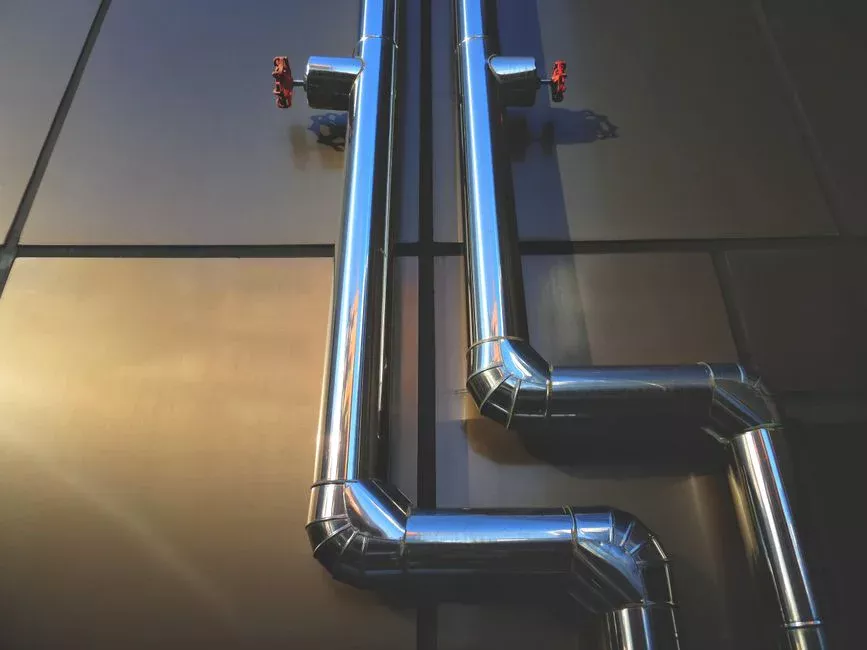
A semiconductor fab typically runs 15–18 segregated drain grades — UPW reject, CMP slurry, acid etch, fluoride, NH₃ stripper condensate, photoresist, solvent, rinse, sanitary, cooling — while a Paris data hall only needs 3–5 segregated streams (chiller bleed, humidification bleed, cooling-tower blowdown, RO concentrate, sanitary). The engineering point of segregation is to keep chemistries from co-mingling in equalization, where pH crashes and precipitation fouling can take a train down for days. CMP slurry and fluoride waste must never share a header: the slurry is abrasive and high-TSS while fluoride is highly acidic; co-mingling produces insoluble metal fluorides that scale equalization tanks and RO membranes within hours.
Materials of construction follow the segregation logic. Fluoride headers, equalization, and precipitation reactors should be PVDF-lined or solid FRP because HF, HCl, and H₂SO₄ attack standard 304/316 stainless. CMP slurry lines need abrasion-resistant urethane or rubber-lined piping. UPW loops require sanitary-grade 316L with orbital welding and electropolishing. Cooling-tower blowdown and humidification bleed can run on standard 316L with proper LSI control, which is where an industrial RO system with up to 95% recovery closes the reuse loop on the cleanest segregated streams.
| Stream | Typical loading | Volume share | Treatment anchor |
|---|---|---|---|
| CMP wastewater | TSS 500–5,000 mg/L; Cu, Ni, W | 30–40% of fab total volume | Lamella clarifier or DAF; dedicated slurry header |
| Fluoride waste | F⁻ several hundred to a few thousand mg/L; low pH | 5–15% of fab volume | CaCl₂ precipitation; PVDF-lined acid header |
| NH₃ stripper condensate | NH₃-N up to several hundred mg/L | 2–5% of fab volume | MBR nitrification/denitrification; segregated from acid lines |
| Cooling-tower blowdown (data hall) | Hardness, silica, scale inhibitor, biocide | 60–80% of data-hall volume | Side-stream filtration + RO; LSI −0.3 to +0.5; SiO₂ < ~150 mg/L |
| Sanitary | BOD, TSS, pathogens | 5–10% of total site | Dedicated biological line; never co-mingled with process |
Five-stage treatment train: the 2026 Paris reference architecture
The 2026 reference train for a Paris-area fab or combined campus is a five-stage block: equalization, primary clarification, biological, polishing, and reuse/brine handling. Each stage is sized to a specific output that DRIE can verify against CWW BREF BAT-AELs. The block is mature; the variance is in PFAS polishing and brine handling, which the 2025 French PFAS decree and Seine basin stress are pushing into the base spec rather than the retrofit column.
Stage 1 is equalization with dedicated headers and 4–8 hour hold times; pH swings are held within ±1.5 so downstream chemistry is stable. Stage 2 is primary clarification — a lamella clarifier or DAF handles CMP slurry while CaCl₂ precipitation drives fluoride below 15 mg/L; TSS removal target is above 90%. Stage 3 is biological, typically a submerged MBR system with MLSS 8,000–12,000 mg/L, designed to land NH₃-N below 5 mg/L in the effluent. Stage 4 is polishing: UF → RO → EDI, with AOP (UV/H₂O₂ or O₃) and GAC/ion exchange for trace organics and PFAS; RO recovery runs 85–95%, and TOC must be below 50 ppb before EDI. Stage 5 is reuse and brine handling — high-recovery RO feeding a brine concentrator and crystallizer, with overall reuse of 85–90% as a baseline and 99% demonstrated at a $300M semiconductor water plant (Gradiant, 2025). A PLC-controlled chemical dosing skid is the operational glue between stages; it keeps antiscalant, pH adjustment, and biocide feed inside the LSI/silica envelope. ZLD is considered only where DRIE explicitly mandates it; the 5–7 year reuse payback is sensitive to the redevance calculation.
| Stage | Process unit | Key design output | Operating envelope |
|---|---|---|---|
| 1 — Equalization | Dedicated headers, EQ tanks | Stable feed to Stage 2 | 4–8 hr HRT; pH ±1.5 |
| 2 — Primary | Lamella clarifier or DAF; CaCl₂ precipitation | TSS removal > 90%; F⁻ < 15 mg/L | CMP and fluoride lines segregated |
| 3 — Biological | Submerged MBR | NH₃-N < 5 mg/L effluent | MLSS 8,000–12,000 mg/L |
| 4 — Polishing | UF → RO → EDI; AOP; GAC/IX | RO recovery 85–95%; TOC < 50 ppb pre-EDI | PFAS destruction in base spec |
| 5 — Reuse / brine | High-recovery RO → brine concentrator → crystallizer | Reuse 85–90% baseline; 99% demonstrated | ZLD only if DRIE mandates |
Cooling-tower blowdown reuse: the largest Paris data-hall stream
Cooling-tower blowdown represents 60–80% of total site wastewater volume at a Paris data hall, which makes it the single highest-volume, highest-payback reuse target on any 2026 project. The standard block is mature: side-stream filtration pulls particulates and a fraction of the hardness, RO polishes the blowdown at up to 95% recovery, permeate returns to the tower as makeup, and concentrate routes to brine handling or sewer under the ICPE 2921 permit. A multi-media filter upstream of the RO handles the bulk TSS load; RO/UF membrane elements on a 3–5 year replacement cycle close the recovery loop.
Two operating numbers govern the design. The Langelier Saturation Index (LSI) must be held between −0.3 and +0.5 to prevent both scale and corrosion; silica must stay below ~150 mg/L as SiO₂ to keep RO from fouling prematurely. Seine-source water at moderate hardness generally supports 4–6 cycles of concentration before these limits are hit, which is where the bulk of the reuse savings come from. A data hall that runs the tower at 4–6 cycles versus 2–3 cycles cuts its freshwater withdrawal roughly in half and reduces the volume sent to sewer, which is the redevance lever most operators miss when modelling OPEX.
CapEx, OPEX, and the Agence de l'Eau Seine-Normandie redevance
Capital outlay for a 5,000 m³/day combined fab and data hall treatment train — MBR plus RO plus reuse polishing, with segregated fluoride and CMP lines — typically falls in the €8–18M range depending on ZLD scope and PFAS destruction inclusion (HydropureWater field data, 2026). Budget a ±20% contingency for PFAS destruction if it is not in the base design; retrofitting after commissioning typically runs 20–30% above the in-base-spec cost. The single largest line item the CFO will not see in the vendor quote is the Agence de l'Eau Seine-Normandie pollution redevance, which scales with pollutant loading and for a 5,000 m³/day Paris site typically reaches six figures annually — often the largest variable wastewater OPEX line item on the P&L.
Operating cost is dominated by three categories. Energy for RO high-pressure pumps and MBR blowers runs 35–45% of OPEX. Chemicals for antiscalants and pH adjustment run 15–25%. Membrane replacement on a 3–5 year UF/RO cycle runs 10–20%. Spare valves, instruments, and filter media belong in the same budget line as membranes because they share the same replacement cadence. A defensible 2026 reuse benchmark for a Paris project is 85–90% for fabs and 50–70% for data halls, with ZLD only when the permit demands it; the 5–7 year reuse payback is sensitive to the redevance calculation, which is why it belongs in the CapEx paper rather than the EHS appendix.
| Cost line | Typical share of OPEX | Driver |
|---|---|---|
| Energy (RO HP pumps, MBR blowers) | 35–45% | kWh price; recovery ratio |
| Chemicals (antiscalant, pH adjust, biocide) | 15–25% | Cycles of concentration; feedwater hardness |
| Membrane replacement (UF/RO 3–5 yr) | 10–20% | Feedwater quality; cleaning frequency |
| Agence de l'Eau Seine-Normandie redevance | Largest variable line for a 5,000 m³/day site | Pollutant loading × Seine-Normandie fee schedule |
| Labour and self-monitoring | 10–15% | Permit cadence; CWW BREF reporting |
Frequently Asked Questions
Which French authority issues the ICPE permit for a 2026 Paris semiconductor or data-hall wastewater project?
DRIE/UD-DRIE Île-deFrance issues ICPE permits for 2026 Paris semiconductor and data-hall wastewater projects, applying the CWW BREF BAT-AELs to process drains and the EU Water Framework Directive 2000/60/EC to Seine basin discharge. Most projects will file under rubrics 2790, 2921, and sometimes 3110.
What reuse ratio should a 2026 Paris data hall target on its cooling-tower blowdown?
A 2026 Paris data hall should target 50–70% reuse on its cooling-tower blowdown stream, which represents 60–80% of total site wastewater volume, using side-stream filtration plus RO at up to 95% recovery; Seine-source water at moderate hardness supports 4–6 cycles of concentration before the LSI −0.3 to +0.5 and SiO₂ ~150 mg/L envelope is hit.
What is the CapEx range for a 5,000 m³/day combined fab and data hall treatment train in Paris?
A 5,000 m³/day combined fab and data hall treatment train with MBR, RO, reuse polishing, and segregated fluoride and CMP lines typically runs €8–18M depending on ZLD scope, with ±20% contingency for PFAS destruction if it is not in the base design (HydropureWater field data, 2026).
Why is PFAS in the base spec for a 2026 Paris fab permit rather than a future retrofit?
PFAS polishing is in the base 2026 Paris spec because French national restrictions under REACH Annex XVII and the 2025 PFAS decree are being written into new DRIE permits, and retrofitting a high-recovery RO with PFAS destruction (high-pressure membranes plus AOP plus GAC) after commissioning typically runs 20–30% above the in-base-spec cost.
How sensitive is Paris wastewater OPEX to the Agence de l'Eau Seine-Normandie redevance?
The Agence de l'Eau Seine-Normandie pollution redevance scales with pollutant loading and is the single largest variable OPEX line item for a 5,000 m³/day Paris site, typically reaching six figures annually — which is why reuse modelling and the 85–90% / 50–70% benchmark (fabs vs. data halls) belong in the CapEx paper rather than the EHS appendix, and why France's 16.8% CAGR in water treatment equipment (MarketsandMarkets, 2026) signals strong local vendor capacity for 2026 procurement.