What 'Pretreatment' Means for a Baltimore Inorganic Chemicals Plant in 2026
Pretreatment for an inorganic chemicals plant near Baltimore is the on-site reduction of pollutants before discharge to the Patapsco or Back River WWTP service areas, governed jointly by Baltimore County Code, MDE NPDES permits, and 40 CFR categorical standards (per Baltimore County DPW, S2/S4). Three regulators can set numbers the plant must hit simultaneously: the local sewer-use authority (Baltimore County DPW), the state NPDES permit holder (MDE), and the EPA's categorical effluent guidelines such as 40 CFR 413 for metal finishing and 40 CFR 415 for inorganic chemicals manufacturing. The result is that "just treating pH" is never enough — pH 6.0–9.0 may be a local limit, while dissolved metals are capped at tighter federal categorical numbers for specific subcategories.
The local numeric envelope the engineer must design against includes TSS ≤350 mg/L, FOG ≤100 mg/L, and pH 6.0–9.0 (per Baltimore County Code, S4). Federal categorical standards under 40 CFR 413 and 40 CFR 415 may override these for specific subcategories — metal finishing and electroplating lines must meet the lower of state or federal metals limits, which for Cd, Pb, Ni, and Zn typically run in the low single-digit mg/L range. Non-compliance exposure is real: the MDE Penalty Matrix (2024) allows fines of $1,000–$10,000 per day per violation, escalating for repeat or self-monitoring failures (S4). The administrative clock is set by Baltimore County DPW, which enforces a 90-day pre-discharge application window against an Aug 1–Jul 31 permit year (S4). For context on how the local layer stacks against federal categorical rules, the Summer Shade chemical-plant pretreatment guide walks through the same regulatory layer at a different jurisdiction.
The Pollutant Profile That Drives Equipment Selection
Equipment selection for an inorganic chemicals plant starts with a defensible influent baseline, not a generic "industrial wastewater" assumption. Typical inorganic-chem wastewater near Baltimore shows pH swings of 2–12 between batch acid and alkali campaigns, TSS in the 200–1,500 mg/L range, and dissolved metals — As, Cd, Cr, Pb, Ni, Zn — running 1–50 mg/L each depending on which line discharged (S4). High-TDS streams from salt and acid plants add sulfate and chloride loads that complicate reuse, and metal-finishing tenants add fluoride up to 100 mg/L plus occasional sulfide/cyanide slugs from pickle-bath overflows (S4).
Discharge targets to design against, simultaneously, are pH 6.0–9.0, TSS ≤350 mg/L, FOG ≤100 mg/L, MDE/40 CFR metals limits, and — where the receiving plant is at capacity — ENR-mandated 85% N and 90% P removal (S4). The table below gives a representative influent vs. effluent profile the engineer can copy into their own mass balance.
| Parameter | Typical Inorganic-Chem Influent | 2026 Baltimore Discharge Target |
|---|---|---|
| pH | 2–12 (batch swings) | 6.0–9.0 |
| TSS | 200–1,500 mg/L | ≤350 mg/L |
| FOG | 50–400 mg/L | ≤100 mg/L |
| As / Cd / Cr / Pb / Ni / Zn | 1–50 mg/L each | MDE / 40 CFR limits (subcategory-specific) |
| Fluoride | up to 100 mg/L | Site-specific MDE limit |
| Total N | 20–80 mg/L | 85% removal (ENR trigger) |
| Total P | 5–30 mg/L | 90% removal (ENR trigger) |
Stage 1 — Equalization and pH Neutralization
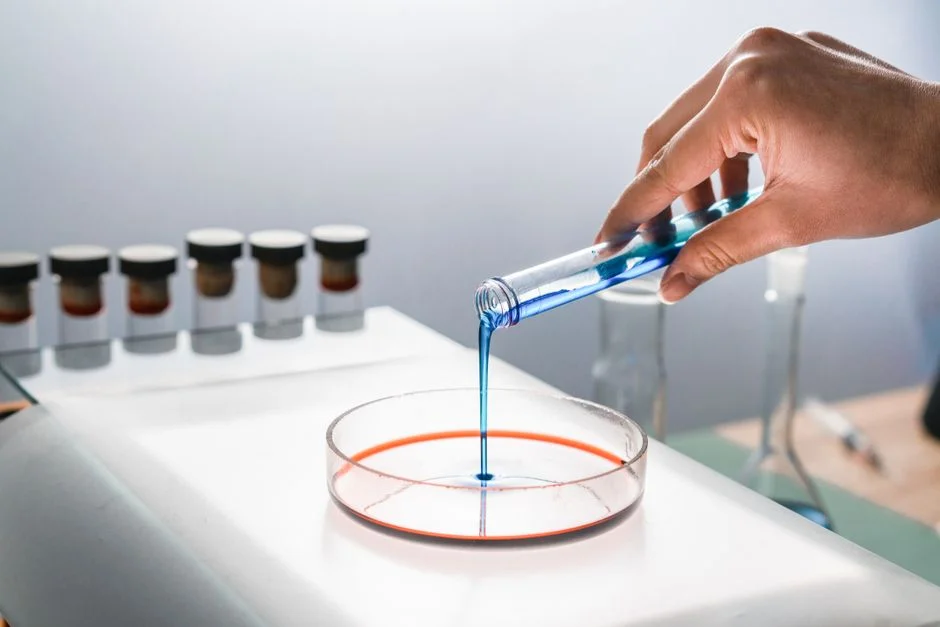
Equalization and pH control are the foundation; every downstream unit fails if the influent pH swings faster than the chemistry can compensate. For batch acid/alkali operations typical of inorganic-chem plants, an EQ basin sized to 8–24 hours of peak flow dampens diurnal pH and load swings and gives downstream precipitation reactions a stable feed (S3/S4). Two-point pH probes — one in the EQ basin, one in the post-mix chamber — feed a PLC that drives acid (HCl or H₂SO₄) and caustic (NaOH) metering pumps in a closed loop, holding ±0.1 pH accuracy under documented Baltimore conditions (S4). Hysteresis on the dosing output is essential: band-and-delay logic prevents the pump from chattering when the loop is near the setpoint.
Set the target pH between 6.0 and 9.0 for sewer discharge (S4), but for plants that will run hydroxide precipitation downstream, the EQ setpoint is typically 7.0–7.5 with a second caustic trim stage in the metal precipitation reactor. Skid-mounted PLC-controlled acid/caustic and coagulant dosing skid packages — pre-wired, with flow-paced outputs for coagulant and flocculant — are the standard way to deliver this control in a small footprint, and the dosing accuracy the MDE inspector will look for in the self-monitoring log. For the underlying supplier selection logic, the 2026 supplier comparison framework is a useful checklist.
Stage 2 — Coagulation, Flocculation, and Dissolved Air Flotation
DAF is the workhorse for TSS and FOG, and the engineer will be asked to defend the dose rates in an MDE review. Coagulation typically uses Polyaluminum Chloride (PAC) or ferric chloride at 50–200 mg/L, dosed flow-paced ahead of the flocculation stage; a polymer flocculant at 0.5–2 mg/L acts as a polishing aid to build a strong, low-shear floc (S3/S4). In a DAF system sized 4–300 m³/h, air is dissolved in a side-stream recycle under pressure (typically 4–6 bar) and released through a micro-bubble nozzle at atmospheric pressure inside the flotation tank; the bubbles attach to flocs and float them to the surface for skimming, while clarified water exits the bottom.
The performance benchmark that closes the gap against the Baltimore TSS and FOG limits is straightforward: a properly conditioned DAF removes up to 98% of FOG and reduces TSS from influent 1,200 mg/L to <50 mg/L effluent — well below the 350 mg/L Baltimore threshold (S4). For inorganic-chem service, specify a polypropylene or FRP contact zone to resist acid fume carry-back, and confirm the skimmer drive is rated for the higher solids loading that pigment and salt plants generate. Operational guidance for keeping that performance steady is captured in the DAF maintenance protocol; sizing philosophy for chemical-plant duty specifically is laid out in the DAF vs clarifier decision framework for chemical-plant wastewater.
Stage 3 — Heavy Metal Precipitation and Lamella Clarification
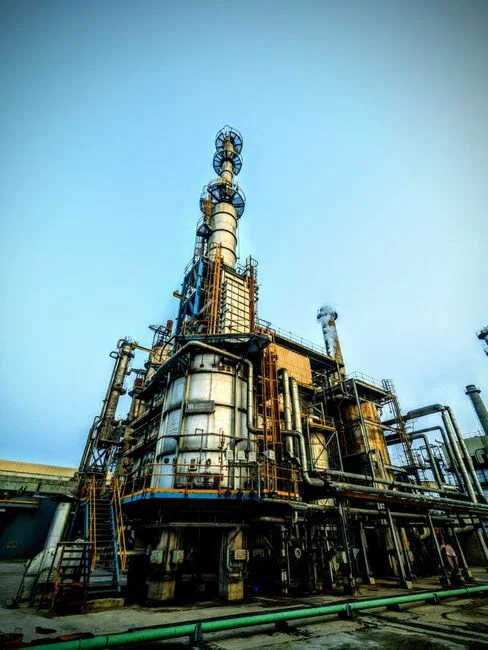
Metals compliance is the most failure-prone parameter set for inorganic chemical plants because residual speciation — not just total concentration — drives the permit hit. The standard approach is hydroxide precipitation at pH 8.5–9.5 in a dedicated reaction tank, with NaOH or lime as the primary precipitant and Na₂S added for tightly-controlled metals such as Cd, Cu, Ni, Zn, and Pb whose hydroxide solubilities leave residuals above the limit (S4). Where mercury is present, a trim dose of TMT-15 or an equivalent thiocarbamate precipitant pulls residuals below the 40 CFR 413 daily-max ceiling; the dose is bench-scale verified because overtreatment fouls downstream membranes.
A lamella clarifier is the right separator for low-footprint Baltimore sites: surface loading 20–40 m/h delivers the same settling area as a conventional basin at roughly a quarter of the footprint, and the inclined plates reduce coagulant consumption by up to 30% versus conventional settling (HydropureWater product spec). Clarifier underflow is routed to a sludge holding tank and then dewatered with a plate-and-frame filter press — a 5–50 m³/h press in the $50,000–$250,000 range produces 25–35% cake solids, which passes the paint-filter test most Maryland landfills apply to non-hazardous waste (S4). For smaller flows, belt presses at $30,000–$150,000 are cheaper up front but burn 0.5–1.5 kg polymer per ton of dry solids, so the OPEX delta closes the gap in under three years for most inorganic-chem duty cycles.
Stage 4 — ENR and Final Polishing for Sewer Discharge
Where the receiving municipal plant is at capacity, MDE increasingly requires on-site Enhanced Nutrient Removal: 85% nitrogen and 90% phosphorus reduction (S4). An MBR system built around the DF-series flat-sheet module with 0.1 µm PVDF membranes produces <10 mg/L TSS effluent, runs at 0.5–1.2 kWh/m³, and has a 5–7 year membrane-replacement interval under chemical-plant loading (S4). The PVDF chemistry resists the oxidative cleaning cycles that an inorganic-chem plant's chloride carry-back demands, and the flat-sheet geometry tolerates the occasional TSS excursion that a poorly conditioned clarifier upstream can deliver.
For plants that prefer lower membrane OPEX and can accept a larger tankage footprint, a moving-bed biofilm reactor (MBBR) or sequencing batch reactor (SBR) is the conventional alternative — biofilm carriers tolerate the higher TDS that an inorganic-chem plant generates, and there are no membranes to replace, only biomass wasting. The trade-off is a larger aeration basin, more sensitive sludge-wasting control, and a less consistent effluent TSS than an MBR delivers. Whichever route is selected, residual P is typically polished with a third-stage dose of ferric chloride or alum ahead of the final effluent monitor.
Parameter-to-Equipment Compliance Matrix
This is the artifact to hand an MDE inspector on day one: each permit parameter, mapped to the unit operation that removes it, the residual that operation actually delivers, and the monitoring frequency the self-monitoring plan requires. Per MDE's 2023 inspection data, 42% of Baltimore-region industrial violations cited excessive FOG and solids, 28% cited nitrogen filter clogging, and 18% cited sludge manifest issues (S4) — each of those failure modes maps to a specific stage of the train below.
| Parameter | Baltimore / MDE Limit | Where Removed | Typical Residual | Monitoring Frequency |
|---|---|---|---|---|
| pH | 6.0–9.0 (continuous) | EQ + post-mix dosing | ±0.1 pH | Continuous meter + grab daily |
| TSS | ≤350 mg/L (42% of 2023 violations) | Coag/Flocc + DAF | <50 mg/L | Daily composite |
| FOG | ≤100 mg/L (42% of 2023 violations) | DAF skimmer | <20 mg/L (98% removal) | Daily composite |
| As, Cd, Cr, Pb, Ni, Zn | 40 CFR 413 / MDE subcategory limits | Hydroxide + sulfide precipitation, lamella | <0.5–2 mg/L each | Weekly composite + monthly TML |
| Total N | ENR 85% (28% of 2023 violations) | MBR / MBBR / SBR | <10 mg/L | Weekly composite |
| Total P | ENR 90% | Chemical precip + MBR | <1 mg/L | Weekly composite |
| Flow | Continuous (per permit) | Parshall flume / mag meter | n/a | Continuous totalizer |
| Sludge manifests | 5-yr retention (18% of 2023 violations) | Filter press, disposal log | Paint-filter pass | Per load |
2026 CAPEX, OPEX, and Permit Costs for an Inorganic Chemicals Plant
Budgets for an inorganic chemicals plant pretreatment train scale with flow and with whether ENR is triggered. A basic DAF skid runs from $80,000; a full chemical dosing skid ranges $20,000–$80,000 depending on the number of metering channels and tankage; an ENR-compliant MBR starts around $1.2M and rises with flow and automation (S4). For a typical 50 m³/h inorganic-chem plant, the working CAPEX envelope is $300,000–$900,000 for a DAF-plus-precipitation train and $1.5M–$3M if an MBR is added to meet an ENR trigger.
OPEX numbers to put in front of finance: DAF $0.15–$0.40 per m³, MBR $0.30–$0.80 per m³ inclusive of membrane replacement amortized over the 5–7 year change-out, and permit/sampling $5,000–$20,000 per year (S4). Sludge disposal is the line item that swings fastest: non-hazardous cake runs $60–$90 per ton at Baltimore-area facilities like Clean Harbors; hazardous waste exceeds $200 per ton if a metal characterization trips a TCLP exceedance (S4). Funding is available — the Maryland Water Quality Revolving Loan Fund offered up to $250,000 in 2025 for ENR upgrades (S4) — but confirm 2026 program status with MDE before quoting it. The ROI case is sharper for inorganic-chem than for food plants because metal surcharges are higher: a 50 m³/h plant typically saves $120,000+ per year in surcharges and disposal fees, with a 2–5 year payback and a faster clip when metal surcharges dominate (S4).
| Line Item | 2026 Cost Range | Notes |
|---|---|---|
| DAF skid (basic) | from $80,000 | DAF line, 4–300 m³/h |
| Chemical dosing skid | $20,000–$80,000 | PLC-controlled, multi-channel |
| Lamella clarifier | $40,000–$150,000 | FRP or PP, surface loading 20–40 m/h |
| Plate-and-frame filter press | $50,000–$250,000 | 5–50 m³/h, 25–35% cake solids |
| ENR-compliant MBR | from $1,200,000 | DF-series, 0.1 µm PVDF |
| DAF OPEX | $0.15–$0.40/m³ | Energy + chemistry |
| MBR OPEX | $0.30–$0.80/m³ | Includes membrane replacement |
| Permit / sampling | $5,000–$20,000/yr | MDE-certified lab + reporting |
| Sludge disposal (non-haz) | $60–$90/ton | Clean Harbors, local landfills |
| Sludge disposal (hazardous) | >$200/ton | TCLP-exceedant material |
| MD WQ Revolving Loan (2025) | up to $250,000 | Confirm 2026 status with MDE |
90-Day Permit Filing Checklist and Common Pitfalls
File the Baltimore County DPW Wastewater Discharge Permit application at least 90 days before the proposed discharge date or the expiration of an existing permit (S4). The application package must include the process description, expected pollutant loads, the proposed treatment train, the self-monitoring plan, and the spill response plan — that last item is the second-most-common administrative violation, accounting for 22% of 2023 citations (S4). Once the permit is issued, the permit year runs Aug 1 through Jul 31, and renewal follows the same 90-day clock.
Day-one administrative items: confirm the MDE self-monitoring schedule, the certified-lab requirement for metals and nutrients, and the renewal cycle before commissioning — a missed self-monitoring report is the fastest way to convert a routine inspection into a Notice of Violation. Maintain sludge manifests and As/Cd/Cr/Pb characterization records for at least five years (S4); the 2023 inspection data shows 18% of facilities were cited for manifest or characterization failures, and those records are the only defensible answer when an inspector asks where a particular batch was sent. The 30% of administrative violations traceable to a missed 90-day window are entirely preventable by back-calendar from the Aug 1 permit-year start.
Frequently Asked Questions
What pH, TSS, and FOG limits does an inorganic chemicals plant have to meet to discharge to the Baltimore sewer in 2026?
Baltimore County Code requires pH 6.0–9.0 (continuous), TSS ≤350 mg/L, and FOG ≤100 mg/L on a daily-composite basis, with federal 40 CFR 413 or 40 CFR 415 categorical limits applying where they are tighter for the plant's subcategory (S4). A properly conditioned DAF ahead of pH trim typically achieves <50 mg/L TSS and <20 mg/L FOG, comfortably inside the local envelope; metals residuals are the parameter that usually drives the design, not TSS or FOG.
How much does a 2026 pretreatment train cost an inorganic chemicals plant near Baltimore?
A DAF-plus-precipitation train for a 50 m³/h plant runs $300,000–$900,000 in CAPEX with OPEX of $0.15–$0.40 per m³ for the DAF section; an ENR-triggered MBR adds $1.2M+ to the CAPEX and lifts OPEX to $0.30–$0.80 per m³ including membrane replacement (S4). Permit, sampling, and reporting add $5,000–$20,000 per year, and sludge disposal at $60–$90 per ton (non-hazardous) or >$200 per ton (hazardous) is the line item that swings fastest with chemistry.
What is the MDE fine for a pretreatment violation in 2026, and what is the most common violation?
The MDE Penalty Matrix (2024) allows fines of $1,000–$10,000 per day per violation, escalating for repeat offenses or self-monitoring failures (S4). The most common violation in the 2023 inspection data was excessive FOG and solids accumulation in settling tanks, at 42% of cited facilities — which is exactly what a DAF system sized for chemical-plant duty prevents, by removing up to 98% of FOG and dropping TSS from 1,200 mg/L to <50 mg/L.
When is an on-site MBR or ENR upgrade required for an inorganic chemicals plant near Baltimore?
MDE triggers on-site ENR — 85% nitrogen and 90% phosphorus removal — when the receiving Patapsco or Back River WWTP is at capacity and cannot accept the plant's nutrient load (S4). For a plant hit with that trigger, an MBR system built around 0.1 µm PVDF membranes delivers <10 mg/L TSS effluent and the nutrient reductions the permit requires, at 0.5–1.2 kWh/m³ and a 5–7 year membrane change-out interval; an MBBR or SBR is the lower-OPEX alternative where footprint allows.