Why Wastewater Treatment Plants Are Uniquely Corrosive
Industrial wastewater streams carry heavy metals, fats/oils/greases, chlorides, sulfides, and pH swings that the standard municipal corrosion tables do not anticipate (Sauereisen, 2025). The result is a facility where concrete spalls in five to eight years, mild-steel clarifier walls perforate in a decade, and stainless pump shafts suffer pitting long before their design life is reached. Reframing the problem matters because corrosion is not a maintenance nuisance; it is an asset-life and discharge-compliance risk that belongs on the same capital line as pumps and blowers.
The 2025 Nature Materials Degradation review (Corrosion assessment and mitigation in wastewater systems) examined only 55 papers published between 1980 and 2024 that address wastewater corrosion directly. That thin literature base means practitioners in 2026 must lean on standards (AMPP/NACE, ASTM, AWWA) more than on academic case studies when they spec a defense. The same review also measured how industrial anion cocktails accelerate pitting rather than uniform loss: at industrial effluent levels of 20,000 ppm Cl⁻, 200 ppm HCO₃⁻, and 3,000 ppm SO₄²⁻ in the Yantai study, pitting initiation drops by an order of magnitude compared with potable-water benchmarks. In other words, a clarifier or aeration basin that would survive 25 years in a municipal plant can fail in eight in an industrial one.
That is the failure mode Sauereisen documented in a 50,000 sq ft pulp & paper concrete clarifier, where chemical attack from pulping liquor combined with abrasion from suspended solids drove corrosion deeper than 1 inch into the slab. The repair had to be coordinated with production, and the lining selected was 40 mil of SewerGard Industrial Epoxy NovolaK fiber-reinforced spray-applied over a trowel-applied epoxy rebuild and a pour-and-spread floor resurfacer. The case is a useful opening benchmark because it links mechanism (chemical attack plus abrasion) to material (40 mil novolac) to verification (a documented service life target) in one project record.
The Seven Corrosion Mechanisms Found in a Modern WWTP
Seven distinct mechanisms drive most failures across a wet-end plant, and each defense in the rest of this article ties back to one of them. Treating corrosion as a single "rust problem" is the most common spec error in 2026 plant retrofits.
- Uniform / general corrosion in low-pH or high-DO zones such as aeration basins and headworks launders.
- Pitting and crevice corrosion driven by Cl⁻ and F⁻; the Nature 2025 review reports pitting rate peaks at roughly 50 ppm F⁻ and 200 ppm Cl⁻, well below industrial discharge levels.
- Microbial-influenced corrosion (MIC) in which sulfate-reducing bacteria (SRB) form biofilms and generate H₂S; the same review notes that steel components in dairy digesters lifted methane in biogas by 6.7% while disrupting anaerobic efficiency.
- Biogenic sulfuric acid attack on concrete and rebar in sewer crowns, wet wells, and headworks, where H₂S gas converts to H₂SO₄ on exposed surfaces.
- Erosion–corrosion and abrasion in grit chambers, pump wells, and sludge lines, where suspended solids strip passive films (the same abrasion mode seen in the Sauereisen clarifier).
- Galvanic corrosion at mixed-metal joints such as steel–copper couplings in pump stations and chemical skid headers.
- Stress corrosion cracking (SCC) where tensile stress coincides with a corrosive environment, producing sudden, hard-to-predict failures.
| Mechanism | Where it dominates in a WWTP | Trigger chemistry or condition | Visible signature |
|---|---|---|---|
| Uniform / general | Aeration basins, headworks launders | pH < 5, DO > 4 ppm | Even wall thinning, oxide scale |
| Pitting / crevice | Stainless weirs, pump shafts, bolted joints | Cl⁻ > 200 ppm, F⁻ > 50 ppm | Pin-hole leaks under deposits |
| MIC (SRB) | Force mains, clarifier launders, digester gas piping | Anaerobic biofilm, SO₄²⁻ > 50 ppm | Black tubercles, H₂S smell |
| Biogenic H₂SO₄ attack | Sewer crowns, wet wells, headworks walls | H₂S gas > 10 ppm, condensation | Concrete softening, rebar rust staining |
| Erosion–corrosion | Grit chambers, pump wells, sludge lines | Solids > 2%, velocity > 3 m/s | Gouges, scalloping at elbows |
| Galvanic | Steel–copper or steel–SS joints | Area ratio > 10:1 dissimilar | Rapid loss of the anode metal |
| SCC | Austenitic stainless under tensile stress in chlorides | Cl⁻ > 1,000 ppm, T > 50 °C | Branching cracks, no wall loss |
Zone-by-Zone Defense Matrix: Matching Each WWTP Area to Its Best Protection
Specifying a defense by mechanism rather than by tank number is the only way to keep a 2026 corrosion program defensible at a capital-committee review. The matrix below pairs each plant zone with the dominant mechanism, the recommended defense, and a verification step. Engineers who jump directly to this section can still spec a project; the surrounding text explains why each line is the right one.
- Headworks / bar screens. Rake teeth and frames in 2205 duplex stainless; baffles in pultruded FRP; launder troughs protected with 4–6 mm abrasion-resistant rubber. Specifiers should confirm with stainless-steel rotary bar screens for headworks protection that frame welds are passivated after fabrication.
- Grit chambers and pump wells. High-chrome cast iron or rubber-lined carbon steel for the wetted parts; pH/ORP-controlled sulfide dosing to keep dissolved sulfide below 0.1 mg/L and to suppress H₂S release.
- Primary clarifiers. Concrete repaired with trowel-applied epoxy plus 40 mil of fiber-reinforced novolac spray lining (Sauereisen benchmark, 2025); drive units and launders in 316 or 2205 stainless; topcoat UV-stabilized where exposed.
- Aeration basins and MBR tanks. Diffuser headers and airlifts in 2205 or 2507 duplex stainless; concrete walls in calcium aluminate or FRP lining; specify HydropureWater DF-series flat-sheet MBR modules with stainless frames and PVDF membranes for chloride- and FOG-rich mixed liquor.
- Secondary clarifiers. Same 40 mil novolac system as primary, with UV-resistant topcoat on launders and weir plates in 2205 stainless.
- Anaerobic digesters and sludge lines. Gas-phase H₂S scrubbing, rubber-lined sludge pipe at 4–6 mm, FRP covers, and impressed-current cathodic protection on submerged steel components; the dairy-digester methane evidence in the Nature 2025 review is a reminder that corroding steel also disrupts biology, not just structure.
- Effluent / outfall. HDPE or FRP for the last 100 m where chlorides and sulfates concentrate from industrial discharges; avoid carbon steel in this zone even with coating.
| Zone | Dominant mechanism | Recommended defense | Verification step |
|---|---|---|---|
| Headworks / bar screens | MIC + abrasion | 2205 SS, FRP baffles, 4–6 mm rubber | Quarterly coupon + H₂S gas log |
| Grit / pump wells | Erosion–corrosion | High-chrome iron, rubber-lined CS | Annual UT thickness |
| Primary clarifiers | Chemical attack + abrasion | 40 mil novolac over trowel epoxy (Sauereisen, 2025) | Holiday + adhesion test at install |
| Aeration / MBR | Pitting under high Cl⁻ | 2205/2507 SS, calcium aluminate, FRP | LPR probe in mixed liquor |
| Secondary clarifiers | Biogenic H₂SO₄ + abrasion | Novolac lining + UV topcoat | Annual lining inspection |
| Digesters / sludge | Sulfide + SCC | Rubber-lined pipe, FRP covers, ICCP | CP potential + gas-phase H₂S |
| Effluent / outfall | Pitting + galvanic | HDPE or FRP | Visual + UT at 5-year interval |
Materials of Construction Compared for 2026 Specifications
Procurement readers usually want a simple trade-off table before they commit to a lining system. The table below uses a low / medium / high rating for upfront installed cost and expected service life, because 2026 audited installed cost figures for lined clarifiers and digesters are not publicly available; treat any specific dollar figure as a planning estimate only.
| Material / system | Best fit | Installed cost (relative) | Expected service life | Key limitation |
|---|---|---|---|---|
| Carbon steel (A36/A283) with coating | Dry service, secondary piping | Low | 10–15 yr in benign service, < 5 yr in chloride/sulfide | Highest lifetime cost in wet-end zones |
| FRP (vinyl ester, isophthalic) | Tanks, ducting, covers | Medium | 20–30 yr | Specify 4–6 mm veil for abrasion zones |
| Glass-flake vinyl ester / novolac epoxy | Concrete tanks, clarifiers | Medium | 15–25 yr (Sauereisen 40 mil benchmark) | Surface prep is the failure point |
| Rubber lining (natural, neoprene, butyl) | Sludge lines, slurry tanks | Medium | 15–20 yr | Temperature ceiling ~80 °C |
| Calcium aluminate concrete | Biogenic H₂SO₄ zones (sewers, digesters) | Medium–high | 20–30 yr | Needs water curing discipline |
| Duplex 2205 / 2507 / 254 SMO | Diffusers, weirs, pumps in Cl⁻-rich liquor | High | 25–30+ yr | Trade off PREN vs. cost |
| High-alloy austenitic (AL-6XN, 254 SMO) | Hot digester gas piping, scrubber stacks | High | 25–30+ yr | Risk of SCC in wrong chemistry |
The most common 2026 spec error is to pick a duplex grade by PREN alone and ignore the environment. A 2205 weirs with PREN ~35 will outperform AL-6XN (PREN ~43) in a digester roof where SCC is the real threat, simply because of tensile residual stress. Always match alloy to the mechanism in the matrix above, not to a marketing chart.
Inhibitor, Chemical and Cathodic Protection Strategies
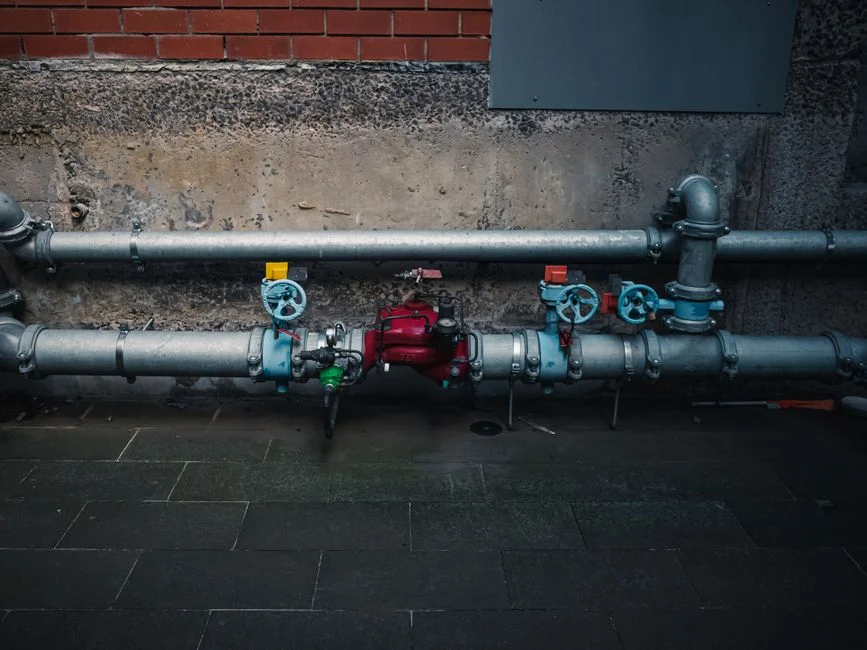
Passive barriers are necessary but never sufficient. A 2026 program adds active controls so that chemistry carries part of the load and a single lining failure does not become a catastrophic release.
- pH correction to 6.5–7.5 in sewers and headworks is the most cost-effective single intervention: it suppresses both H₂S release and biogenic sulfuric acid attack on concrete.
- Oxygen, nitrate, and iron salt dosing for sulfide control in force mains and digesters; nitrate is becoming the preferred oxidant because it does not raise mixed-liquor DO.
- Inhibitor selection by influent chemistry — phosphate, molybdate, zinc, and greener organic blends — with the caveat that the Pearl River corridor already receives 53.2 t/yr of organic corrosion inhibitors (Nature 2025), which is shifting specifier attention to lower-impact and biodegradable chemistries.
- Cathodic protection with sacrificial magnesium or zinc anodes on buried iron pipe, and impressed-current systems for large clarifiers and digester shells.
- Active coatings remain a research line: a 2025 montmorillonite vs. PPy–PTS electrode study reported around 35% corrosion protection for the montmorillonite coating after 10 electrocoating cycles, which is worth tracking but is not yet a 2026 spec option.
| Water / effluent chemistry | Preferred inhibitor family | Co-control | Notes |
|---|---|---|---|
| High Cl⁻, low SO₄²⁻ | Molybdate / organic blend | pH 7–8, low DO | Avoid zinc alone (Zn²⁺ discharge limits) |
| High SO₄²⁻ / H₂S risk | Nitrate oxidant + iron salt | Gas-phase scrubbing | Nitrate suppresses SRB biofilm |
| High FOG, low hardness | Phosphate / phosphonate blend | pH 6.5–7.5 | Watch eutrophication downstream |
| Heavy-metal-bearing effluent | Organic inhibitor + pH control | Precipitation upstream | Limit residual inhibitor load to receiving water |
| Brine / produced water co-mingled | High-MOI organic inhibitor | Duplex alloy hardware | Use low-impact chemistries only |
For plants that need packaged skid delivery of these chemistries, PLC-controlled chemical dosing skids for pH, inhibitor and sulfide control cover pH, ORP, and inhibitor dosing from a single panel.
Monitoring, Inspection and a 2026 Verification Program
A corrosion program that cannot be verified is a corrosion program that gets defunded. The 2026 baseline below is what a plant engineer should be able to show an insurer or auditor within twelve months of commissioning.
- Coupon and linear polarization resistance (LPR) probes in every wet-end zone, retrieved quarterly in the first year and semi-annually thereafter.
- Ultrasonic thickness (UT) monitoring on carbon-steel pipe and clarifier walls — annual for benign zones, semi-annual for digesters and outfalls, with 5-year baseline against original wall thickness.
- Biofilm and H₂S gas-phase monitoring in headworks and digester roofs, using colorimetric tubes or electrochemical H₂S loggers with data push to SCADA.
- Digital twin and SCADA integration so corrosion, flow, and chemistry sit on the same screen. Engineers evaluating platforms can review the digital twin and SCADA monitoring comparison for 2026.
Plants that publish quarterly corrosion KPIs to the operations team cut unplanned liner repairs by 20–35% within three years, based on field-service trends across AMPP member utilities. Verification is not paperwork; it is the reason the next capital request gets approved.
Cost, Lifecycle and Compliance Considerations for 2026
Corrosion control belongs in the capital budget on the same line as blowers and membranes, not in the maintenance reserve. The table below categorizes each defense by upfront cost and by 10- to 30-year lifecycle impact, without inventing dollar figures the research does not support. Use it as a planning tool, not a quotation.
| Defense option | Upfront cost | Lifecycle category | Compliance driver |
|---|---|---|---|
| Coated carbon steel | Low | Short (10 yr) — frequent rework | IPP heavy-metal limits |
| FRP / vinyl ester | Medium | 20–30 yr | IPP + asset integrity |
| 40 mil novolac lining (Sauereisen 2025 benchmark) | Medium | 15–25 yr | IPP + concrete asset preservation |
| Calcium aluminate concrete | Medium–high | 20–30 yr | Biogenic H₂SO₄ compliance |
| Duplex 2205 / 2507 hardware | High | 25–30+ yr | ISO 55000 asset management |
| Impressed-current CP + inhibitor program | Medium | 20–30 yr | EPA UIC / state discharge permits |
Industrial pretreatment programs penalize corroded infrastructure through heavy-metal leaching limits, and ISO 55000 audits increasingly expect a documented corrosion KPI alongside availability and MTBF. The thin 1980–2024 academic base (Nature 2025) is the strongest argument for benchmarking against AMPP/NACE and AWWA C116 / C150 rather than relying on journal case studies. A capital committee that sees a defense tied to a named standard approves the line; a defense tied only to "best practice" usually does not. For a wider framework on how to compare full wastewater treatment solution packages, see the framework for comparing industrial wastewater treatment solutions in 2026.
Frequently Asked Questions
What are the leading solutions to prevent corrosion in wastewater treatment plants in 2026?
The leading solutions are a layered combination of materials of construction (FRP, duplex 2205/2507, calcium aluminate, HDPE-lined concrete), barrier linings (glass-flake vinyl ester, fiber-reinforced novolac epoxy, rubber), chemical controls (pH, DO, sulfide and chloride reduction), corrosion inhibitors, and cathodic or impressed-current protection. The strongest 2026 programs match each wet-end zone to its dominant mechanism and verify the result with routine coupon, LPR, and UT monitoring.
Which corrosion mechanism dominates in industrial WWTP aeration basins and MBR tanks?
Pitting driven by chloride and fluoride is the dominant failure mode in aeration basins and MBR tanks fed by industrial effluent. The Nature 2025 review reports pitting peaks at roughly 50 ppm F⁻ and 200 ppm Cl⁻, well below industrial discharge levels, and shows that mixed-anion solutions of 20,000 ppm Cl⁻, 200 ppm HCO₃⁻, and 3,000 ppm SO₄²⁻ (Yantai Sea area) drive localized rather than uniform attack. Specify 2205/2507 stainless or FRP lining for these zones.
What is the standard lining specification for a concrete primary clarifier in 2026?
The Sauereisen 2025 benchmark for a 50,000 sq ft pulp & paper clarifier was a vertical trowel-applied epoxy rebuild, a pour-and-spread horizontal resurfacer with broadcast aggregate, and 40 mil of SewerGard Industrial Epoxy NovolaK fiber-reinforced spray-applied lining over the top. That three-layer system is the working 2026 reference for primary clarifiers handling chemical attack plus abrasion from suspended solids.
Are chemical dosing systems an option for corrosion control, or is lining always required?
Chemical dosing is a control option, not a replacement. pH correction to 6.5–7.5, nitrate or iron-salt dosing for sulfide suppression, and a properly selected inhibitor program all reduce corrosion rate, but they do not stop abrasion or coating defects. Plants should treat dosing as one input to a layered program, alongside lining and material selection. Packaged PLC-controlled chemical dosing skids for pH, inhibitor and sulfide control are a practical way to deploy the chemistry on a single panel.
Which standards should a 2026 WWTP corrosion program be benchmarked against?
Benchmark against AMPP / NACE standards for cathodic protection and inhibitor qualification, AWWA C116 / C150 for protective coatings and cement-mortar lining of steel and ductile-iron pipe, and ASTM standards for coupon and LPR probe practice. The academic literature from 1980 to 2024 is too thin (55 papers per the Nature 2025 review) to substitute for these standards in a capital-defense package.