
What Counts as a 'Small Community' Wastewater System in Mexico?
A small community wastewater system in Mexico serves a population under roughly 10,000 people (matching the EPA threshold of <1 MGD, or approximately 3,785 m³/day) and is designed to NOM-001-SEMARNAT-2021 and CONAGUA's Manual de Agua Potable, Alcantarillado y Saneamiento. The most common 2026 configurations are prefabricated A/O (anoxic/oxic) package plants, MBR membrane bioreactors for tight footprints, and constructed wetlands for low-cost rural sites. Selection is driven by influent BOD/COD, available land, operator skill, and reuse targets.
The EPA defines a small community as 10,000 or fewer people with an average daily wastewater flow of less than 1 million gallons (<1 MGD ≈ 3,785 m³/day), noting that small and rural communities along the U.S.-Mexico border struggle with aging or inadequate wastewater treatment systems (per EPA, 2024-11). Under NOM-001-SEMARNAT-2021, Mexican permitting follows a flow-classified path: discharges under 1.0 L/s (≈86 m³/day) can typically follow a simplified permitting route, which covers most towns of 200–500 people at typical Mexican per-capita flows of 190–220 L/person/day.
Decentralized systems treat sewage near the source rather than collecting and transporting it to a central plant; cluster systems group several homes onto one treatment unit; and individual systems serve a single dwelling. The EPA reports that nearly one in four households in the United States depends on an individual septic system or small community cluster system, a benchmark that maps directly to Mexican hamlets under ~200 people. The World Bank estimated in 2013 that roughly 70% of Latin American wastewater is discharged to rivers without treatment, prompting donor-funded Mexican projects (IDB, World Bank, EPA Border program) to target this scale.
How Mexican Regulation Shapes the Design
A 2026 small-community submittal in Mexico must cite four governing documents: NOM-001-SEMARNAT-2021 sets the discharge limits; CONAGUA's Manual de Agua Potable, Alcantarillado y Saneamiento provides design practice across three referenced sub-manuals (pretratamiento, primario, and Introducción al Tratamiento de Aguas); state CECAs or the local water utility (e.g., SAPA, CEAS, JAP) add site-specific requirements; and, for border projects, EPA clean-water-act equivalency applies (per Springer, 2020).
CONAGUA design manuals use a typical Mexican per-capita domestic flow of 190–220 L/person/day and a per-capita BOD load of approximately 50 g/person/day — a 1,000-person town generates about 200 m³/day and 50 kg BOD/day. The CONAGUA 2016 process-by-treated-flow dataset (Procesos de tratamiento de aguas residuales municipales por caudal tratado) provides the reference for matching population-equivalent flow to a baseline treatment train. Designers should verify the equivalent train for the target population before selecting equipment, as border-region projects financed by U.S. agencies may need to satisfy both NOM-001 and EPA clean-water-act equivalency requirements simultaneously.
The 1.0 L/s threshold (≈86 m³/day) is the practical pivot for permitting complexity: below it, simplified permitting and many prefabricated package plants apply; above it, full CONAGUA design review and a more detailed effluent characterization are required.
Comparing the Four Viable Process Trains for Small Communities
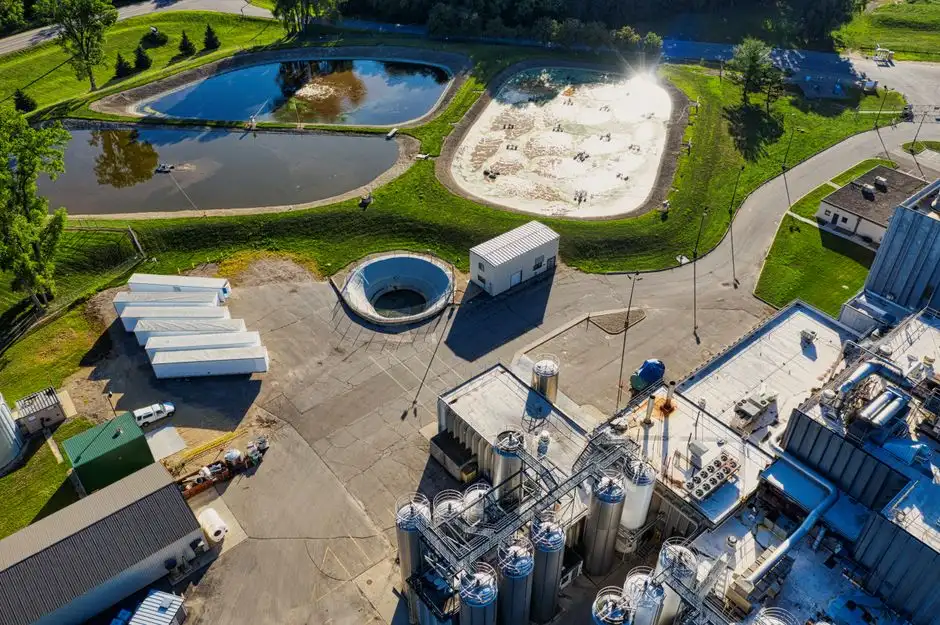
Four process trains cover almost every small-community case for a 2026 Mexican procurement decision: A/O (anoxic/oxic) package plant, MBR membrane bioreactor, constructed wetland, and septic/cluster system. The table below consolidates the trade-offs for procurement engineers, anchored to manufacturer specifications and the ASABE literature for wetlands.
| Parameter | A/O package plant (e.g., WSZ) | MBR package | Constructed wetland | Septic / cluster system |
|---|---|---|---|---|
| Typical flow range | 1–80 m³/h (≈24–1,920 m³/day) | 10–2,000 m³/day | 10–500 m³/day | 1–20 m³/day (per cluster) |
| Footprint | Buried, very small surface footprint | ~60% smaller than conventional activated sludge | Large: 5–10 m² per person-equivalent | Minimal — buried tank + drainfield |
| Effluent BOD (mg/L) | ≤20 (typical post-sedimentation) | <5 (per MBR spec) | ≤30 (seasonal variation is the design risk, per ASABE Ogden, 2001-03) | 30–60 (soil dispersal polishes further) |
| Effluent TSS (mg/L) | ≤20 | <1 (0.1–0.4 µm PVDF membrane cutoff) | ≤30 | Variable |
| Operator skill | Low; no full-time operator required for buried units | Moderate; membrane cleaning protocol needed | Low; monthly checks | Minimal; periodic pumping |
| Energy (kWh/m³) | ~0.3–0.6 | ~0.8–1.2 | <0.05 (gravity-driven) | <0.05 |
| Capex (USD per m³/day installed) | ~$250–$450 (HydropureWater field data, 2026) | ~$500–$900 (HydropureWater field data, 2026) | ~$80–$200 (ASABE, 2001-03, indexed) | ~$150–$300 |
| Best-fit site | 500–5,000 people, tight sites, no reuse target | 1,000–10,000 people with reuse or strict effluent BOD/TSS limits | <500 people, land available, low operator capacity | Hamlets <200 people or scattered dwellings |
Engineers should follow this decision rule: <500 people → cluster or constructed wetland; 500–5,000 → WSZ underground A/O package sewage treatment plant; 1,000–10,000 with reuse → HydropureWater MBR membrane bioreactor. For broader procurement context, the supplier selection guide for a comparable Latin American market is a useful parallel reference.
Sizing a 1,000-Person Community: A Worked Example
The following five-step workflow provides calculations for a 1,000-person community.
- Average flow. 1,000 people × 200 L/person/day = 200 m³/day ≈ 2.3 L/s. This exceeds the 1.0 L/s simplified-permit threshold, requiring a full CONAGUA design submittal; the figure should be cross-checked against the state-level CONAGUA table for the municipality.
- Organic load. 1,000 × 50 g BOD/person/day = 50 kg BOD/day. At 200 mg/L influent BOD, the hydraulic and organic checks both pass for either an A/O or MBR package plant.
- Process selection. A tight urban site with no reuse target points to the A/O package (capex ~$250–$450 per m³/day); a reuse mandate or strict NOM-001 effluent points to the MBR (capex ~$500–$900 per m³/day).
- Disinfection. Add downstream disinfection to meet NOM-001-SEMARNAT-2021 fecal coliform limits: a chlorine dioxide generator (50–20,000 g/h skid range) for residual protection in a long distribution line, or a pipeline UV sterilizer for reuse where no residual is desired.
- TSS polishing. If the influent carries high fats, oils, and grease, add a high-efficiency sedimentation tank (lamella clarifier) or a DAF unit ahead of the biological stage. Pre-treatment FOG control is the single most common reason A/O and MBR packages underperform in Mexican small towns.
For a 1,000-person town, expected total capex in 2026 is roughly USD 50,000–90,000 for an A/O package with disinfection and sludge handling, or USD 100,000–180,000 for an MBR package with the same ancillaries (HydropureWater field data, 2026). Footprint details and install sequence for the buried option are covered in the underground sewage treatment systems guide.
Sludge Handling, Reuse, and Operator Reality
Most Mexican small-community systems fail in years 2–5 when sludge handling is neglected. Expected sludge yield is 0.2–0.3 kg dry solids per kg BOD removed (Metcalf & Eddy range); for the 1,000-person example with ~90% BOD removal, that is roughly 9–14 kg DS/day, or about 1.5–2.0 m³/day of thickened sludge at 2% dry solids. Two dewatering routes fit small communities: a plate-and-frame filter press for towns with a part-time operator and a paved pad, or a conventional drying bed for sites with permeable soil and lower operator capacity. A PLC-controlled automatic polymer/coagulant dosing skid stabilizes the cake solids to 18–25% DS, which is the threshold for offsite transport or agricultural reuse under Mexican normativity.
One trained part-time operator is sufficient for an A/O package or MBR up to 500 m³/day (daily visual check, weekly sampling); constructed wetlands need monthly visits. Buried installations such as the WSZ series free the surface for landscaping or a small sports court, a real siting advantage in dense Mexican towns. For broader context on dissolved-air-flotation pre-treatment in Mexican operations, the DAF system in Mexico 2026 guide covers cost and compliance benchmarks.
Frequently Asked Questions
What is the smallest population a package plant can serve?
A prefabricated A/O package can serve a flow as low as 1 m³/h, which at 200 L/person/day supports about 120–150 people; below that, a septic tank or cluster system is the correct fit (HydropureWater field data, 2026).
Which Mexican standard governs small-community discharge?
NOM-001-SEMARNAT-2021 governs discharge to surface water and reuse parameters; CONAGUA's Manual de Agua Potable, Alcantarillado y Saneamiento governs the design method.
What is the realistic capex for a 500-person system in 2026?
Approximately USD 25,