Why Hyderabad Builds Decentralized STPs Instead of Waiting for the Network
The ADB Working Paper 1506 (2024) documents that sewerage coverage in the ~10-million Hyderabad Metropolitan Region breaks down to 100% in the Core Area, roughly 30% in the Periphery Area, and 0% in the ORR Village Area (the belt between the Periphery boundary and the Outer Ring Road). The board has invested heavily under its master plan, but the network expansion has not kept pace with the IT/services-driven population influx. New commercial buildings in the Periphery and ORR Village tiers therefore install private, decentralized STPs and reuse the effluent for non-potable purposes — toilet flushing, gardening, and cooling (ADB 2024).
The state government reinforces this through a mandate that commercial buildings above a defined size install decentralized wastewater treatment plants and reuse treated water on-site. For a Hyderabad project engineer, builder, or society committee, the practical consequence is that any new apartment, villa, school, hospital, hotel, or IT park sited outside the Core Area cannot rely on municipal sewerage alone — the decentralized STP is the default design basis, not a fallback. This is the first decision to defend in any TSPCB pre-consent meeting, because it justifies why a packaged plant is being procured at all.
What 'Domestic Sewage' Actually Contains in Hyderabad
Domestic sewage is the combined flow of black water (toilets) and grey water (kitchen, bathing, laundry). Per-capita generation in Indian residential buildings sits at 120–150 LPCD, with Hyderabad's upper-mid and high-rise segments trending toward 135 LPCD (CPHEEO Manual on Sewerage and Sewage Treatment, 2013, still the operative design reference for STPs in 2026). The design parameter band engineers should size against is BOD 200–300 mg/L, COD 400–600 mg/L, TSS 200–400 mg/L, oil & grease 20–50 mg/L, and fecal coliform 10⁶–10⁷ MPN/100 mL.
Two local factors change the operating picture. First, Hyderabad's hard water (typically 300–600 mg/L total hardness as CaCO₃) elevates scaling risk in aeration piping and MBR cassettes, and pushes the operator toward acid-wash CIP cycles more often than the soft-water cities in the design manual. Second, summer water stress makes reuse the dominant OPEX lever: the more effluent that displaces freshwater for toilet flushing and landscaping, the lower the municipal draw, and the faster the STP amortizes. One caveat for the BOQ: hospital effluents (formaldehyde, glutaraldehyde, trace pharmaceuticals) and salon/barbershop effluents (high oil & grease, dye loads) are non-domestic streams and cannot be routed to a domestic STP without pre-treatment — typically a holding equalization tank plus an oil–grease interceptor upstream of the headworks.
Domestic Sewage Treatment Technologies: What Fits Where
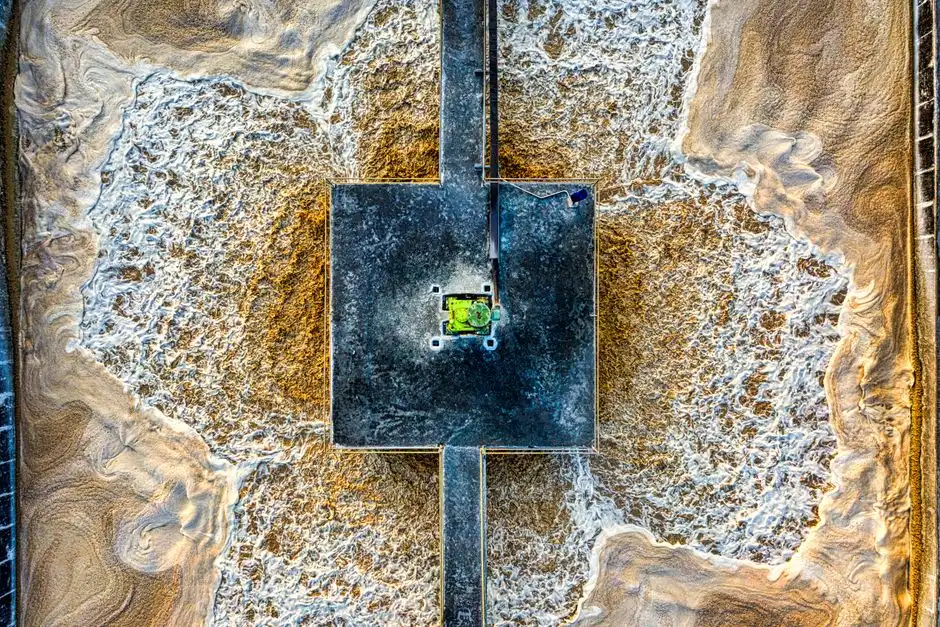
Five technology families dominate the Hyderabad domestic STP market in 2026. Membrane Bioreactor (MBR) couples activated sludge with an ultrafiltration membrane (pore size <1 μm) and produces near-reuse effluent in a compact footprint. Moving Bed Biofilm Reactor (MBBR) trows free-floating plastic carriers in an aerated tank, building biofilm on them; it is the workhorse for retrofits because it tolerates load swings without sludge recycle. Sequencing Batch Reactor (SBR) operates in time rather than space — fill, react, settle, decant — and fits gated communities that can buffer flow. Packaged A/O units such as the WSZ underground packaged A/O sewage treatment plant bury the entire process train below grade (1–80 m³/h, unattended) and are the go-to for small communities where above-grade footprint is a deal-breaker. Conventional Activated Sludge Process (ASP) is the municipal-scale default with long track record but a large civil footprint, and only makes sense for flows roughly above 500 m³/day. Hydromo's vendor catalog and HydropureWater's modular MBR membrane bioreactor system (10–2,000 m³/day) cover the upper end of the residential and IT-park segment.
Technology Comparison: Picking the Right STP for Your Building
| Technology | Effluent BOD / TSS | Footprint | Automation | Operator skill | Reuse suitability | Indicative CAPEX band | Best-fit building |
|---|---|---|---|---|---|---|---|
| MBR | BOD ≤5 mg/L; TSS ≤1 mg/L | Very compact (~30% of ASP) | Full (PLC + HMI) | Low–medium (membrane CIP) | High — toilet flush, cooling, gardening | Higher | IT parks, high-rise apartments, hospitals |
| MBBR | BOD ≤20 mg/L; TSS ≤30 mg/L | Compact | Medium | Medium | Good — toilet flush, gardening | Medium | Hotel retrofits, mid-size apartments |
| SBR | BOD ≤20 mg/L; TSS ≤30 mg/L | Medium | Medium–high (cycle timer) | Medium | Partial — gardening, ground recharge | Medium | Gated communities, schools |
| Packaged A/O (WSZ) | BOD ≤20 mg/L; TSS ≤30 mg/L | Very small above-grade | Unattended | Low | Good — toilet flush, gardening | Low–medium | Villas, small schools, peri-urban clusters |
| Conventional ASP | BOD ≤20 mg/L; TSS ≤30 mg/L | Large civil footprint | Low–medium | High | Partial | Low (per m³) but high civil cost | Large municipal plants, campus-scale |
For most Hyderabad projects between 50 and 500 m³/day, the decision reduces to MBR (reuse-grade effluent, tight footprint, higher membrane CAPEX) versus packaged A/O (buried, no operator, lower CAPEX). If the building is an IT park or high-rise where landscaped area is at a premium and reuse volume is high, MBR wins. If the building is a villa cluster or a small school with limited above-grade space and no dedicated operator, packaged A/O wins. The same framework applies for hotel and resort wastewater treatment, where hydraulics are more variable and biofilm-based systems (MBBR/IFAS) often outperform pure activated sludge.
Sizing a Domestic STP: A Worked Example for a 200-Unit Apartment
Take a 200-flat apartment with 5 persons per flat, at the Hyderabad residential design rate of 135 LPCD: 200 × 5 × 135 = 135,000 L/day = 135 m³/day. Apply a 1.1 peaking factor for morning and evening peak flows → round to 150 m³/day. BOD loading at 250 mg/L influent = 135 × 0.250 = 33.75 kg BOD/day, which at an MLSS food-to-microorganism ratio of ~0.3 kg BOD/m³·day sets the aeration tank at roughly 110–115 m³. Add a 30% capacity margin for guest occupancy, future expansion, and STP-internal recycles (filter backwash, sludge thickening supernatant) — the design flows to a 200 m³/day packaged plant.
Sludge production at 0.15 kg dry solids per kg BOD removed implies ~4.5 kg DS/day, or roughly 30–45 kg wet sludge/day at 2% solids — enough to justify a small sludge-thickening sump and, for plants above 50 m³/day, a plate-and-frame filter press for dewatering. For flows below 80 m³/h (≈80 m³/day continuous), a single-skid WSZ underground packaged A/O sewage treatment plant replaces most of the civil tankage, which compresses the project schedule by 6–10 weeks and removes the buried-structural-engineering risk from the builder's scope. The same sizing logic scales linearly: a 100-flat apartment at the same density comes out to roughly 68 m³/day, rounded to 75 m³/day.
Telangana PCB and CPCB Discharge Standards You Must Hit
The floor for any inland surface-water discharge in India is the CPCB General Standards for Discharge of Environmental Pollutants Part-A: BOD ≤30 mg/L, TSS ≤100 mg/L, fecal coliform ≤1,000 MPN/100 mL. Most states — and TSPCB in practice — tighten these significantly for STPs whose effluent is intended for reuse. Typical TSPCB consent conditions for a new Hyderabad decentralized STP in 2026 read BOD ≤10 mg/L, TSS ≤10 mg/L, fecal coliform ≤100 MPN/100 mL when the treated water is routed to toilet flushing, cooling, or landscaping; and BOD ≤20 mg/L, TSS ≤30 mg/L when the treated water is disposed to a drain or to land.
Two operational consequences. First, any reuse scheme must include a disinfection stage — either chlorination (1–2 mg/L residual contact time 30 min) or a UV sterilizer sized at ≥40 mJ/cm² dose — and the consent will reference it explicitly. Second, when the EU Urban Waste Water Directive 91/271/EEC is used as a comparable design benchmark (as in HydropureWater's medical documentation), the effluent targets move toward BOD ≤25 mg/L and COD ≤125 mg/L for populations above 10,000 p.e. — useful as a defensible design target when a client asks why an MBR is specified for a project the CPCB would allow at conventional limits.
Pre-Treatment and Sludge Handling: The Pieces Vendors Leave Out
A domestic STP fails on headworks and end-of-pipe items more often than on the biological stage. A 6 mm bar screen is the minimum at the inlet; for flows above 100 m³/day, a GX rotary mechanical bar screen with 3–6 mm aperture reduces manual cleaning and protects downstream MBR cassettes from ragging. FOG and grit removal upstream of the aeration tank — either a grease trap for small flows or a dissolved air flotation system (4–300 m³/h) for larger plants — keeps oil & grease below 10 mg/L entering the biological stage, which is the difference between a stable MBR and a fouled one.
For sludge handling, a plate-and-frame filter press becomes economic above ~50 m³/day; below that, a sludge-thickening sump with periodic dewatering via a mobile tanker is usually sufficient. Coagulant and polymer dosing for sludge conditioning should be PLC-controlled via an automatic chemical dosing system — manual dosing drifts within weeks and quietly doubles the hauled-sludge volume. Each of these items belongs in the same BOQ as the biological reactor; if a vendor quotes them as "extras" or "optional", treat the omission as a red flag and re-cost the package.
2026 Procurement Checklist for a Hyderabad Domestic STP
- Verify local references. Ask for at least three operating installations in Telangana, with names and contact details of the facility manager — not pan-India marketing imagery. Visit one if the order is above ₹50 lakh.
- Lock the effluent guarantee to the consent. Make the offered BOD, TSS, and fecal coliform parameters contractual, tied to a third-party NABL-accredited test report at the 90-day mark, not just to design values. This is the single most useful contractual clause if a TSPCB audit goes wrong.
- Demand a peaking margin. Hydraulic ≥20%, organic ≥30%. Peaking margin is what carries a plant through a wedding weekend, a hospital surge, or a water-line replacement that sends the first-flush surge to the STP.
- Lock the civil and electrical scope in one BOQ. Yards, pipework, MCC panel, cabling, earthing, and the SCADA link should sit in the same bill of quantities as the reactor. "Extra" civil items are the single largest source of cost overruns on Hyderabad STP projects (HydropureWater field data, 2026).
- Separate AMC and operator training. The first-year AMC, the second-year AMC, and a one-time operator-training package should be quoted as separate line items, so the OPEX picture for years 2–10 is honest. A vendor who refuses to split these is hiding a cost.
For projects outside the city limits, the same five-point logic scales; the rural sewage treatment in India 2026 guide covers the peri-urban and village-cluster variants in more detail.
Frequently Asked Questions
What size STP is required for a 100-flat apartment in Hyderabad?
At 5 persons per flat and 135 LPCD, a 100-flat apartment generates 100 × 5 × 135 = 67,500 L/day (≈68 m³/day). Round to 75 m³/day with a peaking factor, which is comfortably served by a packaged A/O (WSZ) or MBBR unit in the 75–100 m³/day class.
Is a decentralized STP mandatory in Hyderabad?
Yes, in practice. Periphery and ORR Village areas have only ~30% and 0% sewerage coverage respectively (ADB Working Paper 1506, 2024), and the state mandates that commercial buildings above a defined size install decentralized wastewater treatment plants and reuse effluent for non-potable purposes.
Which technology is best for domestic sewage treatment in Hyderabad?
For high-reuse, tight-footprint projects (IT parks, high-rise apartments, hospitals) use MBR — effluent BOD ≤5 mg/L, near-reuse quality, full automation. For buried, unattended small communities (villas, small schools, peri-urban clusters) use packaged A/O (WSZ) — BOD ≤20 mg/L, low CAPEX, no operator. MBBR is the right answer for retrofits where sludge recycle is impractical.
What are the TSPCB discharge limits for STPs in Telangana?
Typical TSPCB consent conditions in 2026 are BOD ≤10 mg/L, TSS ≤10 mg/L, fecal coliform ≤100 MPN/100 mL for reuse projects; and BOD ≤20 mg/L, TSS ≤30 mg/L for disposal. The CPCB general floor (BOD ≤30 mg/L) applies only where disposal is to a large receiving water body with adequate assimilative capacity.
Can treated sewage be used for gardening and toilet flushing in Hyderabad?
Yes. The state government mandates non-potable reuse — toilet flushing, gardening, and cooling — for qualifying commercial buildings that install decentralized STPs, per ADB 2024. Reuse typically requires a disinfection stage (chlorination or UV) and a documented dual-plumbing system segregated from the potable supply.