Why Mehoopany Mills Discharge to a POTW — and What That Triggers
Mehoopany sits in Wyoming County, Pennsylvania, on the Susquehanna watershed at the headwaters of Tunkhannock Creek; the realistic receiving POTW for an indirect discharger in that geography is the Tunkhannock Creek Joint Municipal Authority or a comparable small Susquehanna-headwaters plant (per EPA POTW geography guidance, 2026). Sending wastewater to a municipal sewer rather than a receiving stream places the mill under the federal National Pretreatment Program in 40 CFR Part 403, not under a direct NPDES permit to surface water. Roughly half of U.S. pulp and paper facilities discharge to POTWs rather than directly to streams, and the smaller Susquehanna-headwaters POTWs are typical of that population (per IWA Publishing, 1988, cited in EPA Effluent Guidelines, 2026).
The compliance stack is two layers deep. The federal categorical pretreatment standards in 40 CFR Part 430 (subpart selected by mill type) sit underneath the POTW's site-specific local limits developed under 40 CFR 403.5(c); both are independently enforceable, and meeting one does not excuse the other (per EPA, 2026). Failure is defined by two terms engineers must understand: pass-through is a discharge that exits the POTW in quantities or concentrations that, alone or in conjunction with other sources, cause a violation of the POTW's NPDES permit, while interference is a discharge that inhibits or disrupts the POTW's treatment processes, sludge processes, or disposal. Both are defined in 40 CFR 403.3(p), and either is an independent enforcement trigger against the industrial user (per EPA, 2026).
The Federal Categorical Layer: 40 CFR Part 430 Subparts That Apply
EPA promulgated 40 CFR Part 430 in 1974 and 1977, amended the regulations in 1982 and 1986, and added the major toxic-pollutant amendment in 1998 (the "cluster rules") covering AOX, chlorinated organics, and color (per EPA Effluent Guidelines, 2026). The category is split into subparts, and the subpart that binds a mill sets its full pollutant envelope — picking the wrong one is the most common compliance gap on a 2026 retrofit. Subparts B (bleached papergrade kraft and soda) and C (bleached kraft market pulp, paperboard, tissue, and fine paper) carry the strictest AOX and color limits because dissolving and bleached pulp use more chlorine dioxide in the bleach plant (per EPA, 2026).
For Mehoopany-area mills, the most common subparts are Subpart D (unbleached kraft — linerboard, bag paper, and cross-recovery NSSC) and Subpart J (secondary fiber / wastepaper — tissue, paperboard, and molded products from non-deinking furnish), and neither carries numeric AOX limits (per EPA, 2026). Niche subparts that occasionally apply in Pennsylvania include Subpart F (papergrade sulfite, blow pit and drum wash), Subpart G (semi-chemical, ammonia or sodium base), and Subpart H (groundwood, TMP, CTMP, chemi-mechanical, and newsprint). The full subpart map is summarized below.
| Subpart | Mill Type | Key Parameters Beyond BOD/COD/TSS |
|---|---|---|
| B | Bleached papergrade kraft and soda (dissolving pulp grades: nitration, viscose, cellophane, acetate) | Strictest AOX, color, chlorinated organics |
| C | Bleached kraft market pulp, paperboard, tissue, fine paper | AOX, color, chlorinated organics |
| D | Unbleached kraft linerboard, bag paper; cross-recovery NSSC; combined unbleached kraft + semi-chemical | No numeric AOX; TSS, BOD, pH |
| F | Papergrade sulfite — blow pit wash, vacuum/pressure drum wash | BOD, TSS, sulfite-specific parameters |
| G | Semi-chemical, ammonia or sodium base | High BOD, ammonia |
| H | Groundwood, TMP, CTMP, chemi-mechanical, newsprint, fine paper | High TSS, BOD |
| J | Secondary fiber / wastepaper — tissue, paperboard, molded products without deinking | No numeric AOX; TSS, BOD, color |
| L | Tissue, filter, non-woven, paperboard from purchased pulp (nonintegrated) | TSS, BOD, low-flow envelope |
The POTW Local-Limit Layer: What Tunkhannock-Area Sewer-Use Ordinances Add
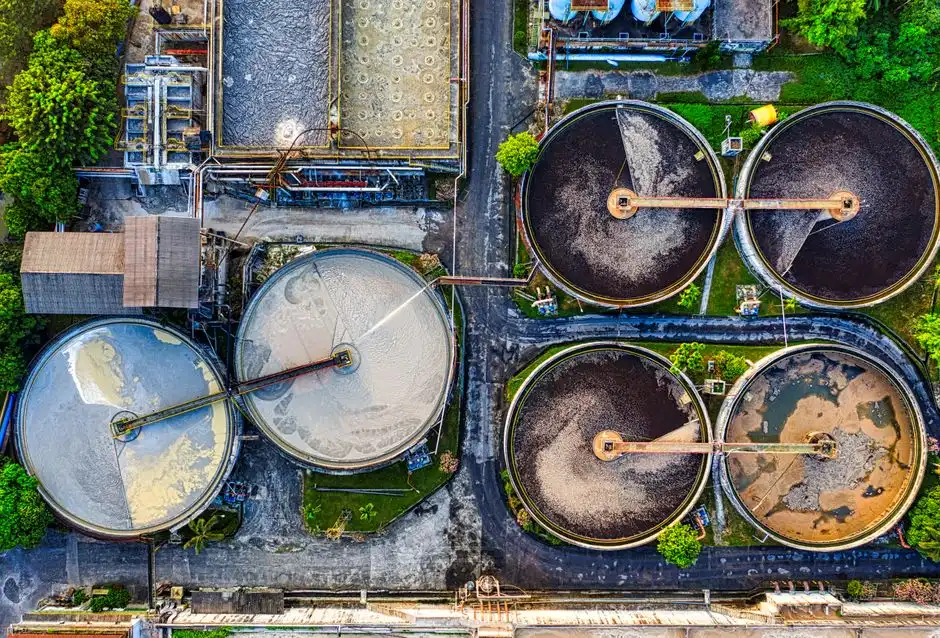
Local limits are POTW-specific numeric or narrative effluent limits applied at the point of connection to the collection system; they are not a federal uniform number (per EPA, 2026). Each POTW derives limits from its own treatment capability, receiving-water quality, and sludge-handling constraints, so a mill in Mehoopany and a mill in Oregon can face very different end-of-pipe numbers. The Tunkhannock-area POTW must protect the Susquehanna's headwaters trout fishery and its own NPDES permit, which together push local limits tighter than the federal categorical floor on several parameters.
Pollutants most often constrained beyond the federal numbers at small Susquehanna POTWs are heavy metals (zinc, copper, lead) that disrupt biotreatment, sulfides that release H₂S in collection systems, high-temperature discharges that shift basin biology, and oil/grease slug loads at the headworks (per EPA, 2026). EPA can enforce approved local limits as pretreatment standards, which is what gives the sewer-connection layer real teeth — a mill that meets 40 CFR Part 430 but blows past a Tunkhannock-area local limit can still be hit with a notice of violation. Confirm the exact local-limit values against the receiving POTW's sewer-use ordinance and the mill's most recent control-authority correspondence before any equipment is specified.
The 2026 Treatment Train That Gets a Mehoopany Mill Under the Cap
The standard train is fiber recovery and save-all → primary clarification → DAF for colloidal solids, FOG, and fillers → equalization and pH control → biological treatment (activated sludge, MBR, or anaerobic for high-strength streams) → AOX/color polishing for bleached lines; sludge is dewatered on a plate-and-frame press (per EPA Effluent Guidelines, 2026). Skipping any stage shows up later as a POTW surcharge or a biological system that cannot hold variable load. Train complexity scales with subcategory: an unbleached kraft linerboard mill typically runs fiber recovery → primary clarification → DAF → activated sludge, while a bleached kraft market pulp mill adds equalization, an anaerobic/aerobic combination, and an AOX/color polishing step (per EPA, 2026).
A DAF unit is the default primary clarifier because colloidal and fine-fiber fractions do not settle well; the DAF system offers 13 standard models covering 4–300 m³/h at hydraulic-loading rates of 15–25 m³/m²·h typical for paper-mill service. Activated sludge remains the biological workhorse, but a submerged PVDF containerized MBR system is now the default where footprint is constrained or the polishing TSS target sits below 10 mg/L; MBR footprint runs roughly 60% smaller than a comparable conventional basin at the same load. Anaerobic reactors (UASB or IC) suit high-strength BOD from dissolving pulp or NSSC and offset aeration power, and PLC-controlled chemical dosing for coagulants, flocculants, and pH adjustment should be specified to hold performance under variable load. Sludge dewatering on a plate-and-frame filter press achieves cake dryness above 30% with lime or polymer conditioning, which directly lowers haul cost; select the press after the upstream train is fixed because sludge volume is a function of chemistry, not of the press.
| Stage | Typical Removal / Output | Driver for Inclusion |
|---|---|---|
| Fiber recovery (save-all, kidney) | 85–95% of fiber and filler from white water | Yield recovery; load reduction upstream |
| DAF primary clarifier | Colloidal solids, FOG, fillers, ink | Fine fractions do not settle |
| Equalization + pH control | Flow/load dampening; 6.5–8.5 pH window | Protects downstream biology |
| Biological — activated sludge / MBR / anaerobic | 95–99% BOD; <10 mg/L TSS effluent with MBR | Subpart-specific BOD cap |
| AOX / color polish (bleached lines) | AOX to local limit; color reduction | Required for Subparts B, C |
| Plate-and-frame sludge dewatering | >30% DS cake | Lowest haul cost per dry ton |
Pollutant Envelope: What Raw Mill Wastewater Actually Carries
The P&P industry generates up to 70 m³ of wastewater per metric tonne of paper, depending on raw material, product, and water reuse (per Hubbe et al. 2016, citing Rintala and Puhakka 1994 and Latorre et al. 2007). The BOD/COD ratio is the single most useful design number: a ratio above ~0.4 supports a conventional activated-sludge train, while a ratio below 0.3 signals the need for an AOP or membrane polish (per Hubbe et al. 2016, citing McCubbin and Folke 1993). Chemical pulping streams carry more than 40% of their total organic load as poorly biodegradable material, which is exactly why a biological-only train undershoots POTW color and COD limits without polishing (per Hubbe et al. 2016, citing Dahlman et al. 1995).
AOX tracks chlorine consumption in the bleach plant almost linearly, and industry-wide AOX has been cut by more than 80% since 1990 through oxygen delignification and ECF/TCF substitution (per Hubbe et al. 2016, citing Savant et al. 2006 and Fiere et al. 2003). Mills that benchmark their own influent against these typical ranges before specifying equipment catch design gaps before the POTW does. The table below summarizes the envelope; confirm every number against the mill's own monthly self-monitoring data.
| Parameter | Typical Raw Range (mg/L unless noted) | Subparts Most Affected |
|---|---|---|
| BOD | 200–1,500 (unbleached kraft/secondary fiber low end; dissolving pulp high end) | All |
| COD | 500–6,000 | All |
| TSS | 200–3,000 | All, especially H, J |
| AOX | 0.5–40 (bleached lines only) | B, C |
| Color (Pt-Co) | 500–5,000 | B, C, J |
| Temperature | 30–60 °C at source | All — local limit on POTW |
| pH | 4–10 at source | All — must equalize |
Equipment Selection Matrix for a 10–200 m³/h Mehoopany Site
Upstream DAF and kidney operations reduce both pollutant load and effluent volume, which directly shrinks the size and cost of the downstream biological stage (per Hubbe et al. 2016). The selection matrix is driven less by absolute technology preference and more by what the upstream fiber-recovery step already gives back to the mill. A containerized MBR system delivers a sub-1 μm effluent and runs roughly 60% smaller than a conventional activated-sludge basin at the same load — pair it with the MBR membrane module sized for design flux, and a high-efficiency sedimentation tank upstream to keep the membrane from fouling on TSS spikes.
Filler/fiber resale value above $50/ADt typically tips the upstream choice toward DAF for furnish recovery; color and AOX limits tip the polish stage toward AOP or UF; cake-dryness target above 30% DS tips dewatering toward a plate press over a belt press. Submerged PVDF MBR membrane life in pulp and paper service is 5–8 years with proper chemical cleaning; high AOX, color, and calcium scaling shorten life, while consistent MLSS control and periodic recovery cleans extend it. The matrix below condenses the decision logic into a form a procurement review can act on.
| Process Decision | Threshold / Trigger | Selection |
|---|---|---|
| Primary TSS / furnish recovery | Filler/fiber resale > $50/ADt | DAF wins on yield payback |
| Biological — high reuse target, tight TSS | Need reuse-grade effluent (< 1 μm) | Containerized MBR |
| Biological — high variability, low operator headcount | Legacy basin volume, variable load | MBBR or activated sludge |
| Polishing — color and AOX | Bleached line, local color limit | AOP or UF |
| Sludge dewatering | Cake target > 30% DS | Plate-and-frame press |
| Pre-MBR TSS spike protection | Variable incoming TSS | High-efficiency sedimentation tank |
CAPEX Ordering and the Furnish-Recovery ROI That Pays for It
CAPEX ordering is consistent across the industry: DAF and chemical dosing are the lowest-cost slots per cubic metre treated, the biological stage is the single largest line item, and MBR is the most expensive biological option but pays back fastest where reuse water displaces freshwater intake. The three numbers that drive the business case are the furnish-recovery rate from the upstream DAF (typically 85–95% of fiber and filler in the white-water sidestream), the avoided POTW surcharge on TSS and BOD, and the avoided freshwater cost from any reuse loop the MBR or UF stage enables. The industry has cut water use by ~95% per tonne of paper over the last 30 years (per Hubbe et al. 2016, citing Blanco et al. 2004) — that is the benchmark to anchor a 2026 reuse-oriented upgrade against, not just a compliance-driven one.
Most packaged 2026 retrofits install in a 4–10 week window per skid because the DAF, dosing, biological, MBR, and plate-press skids arrive factory-tested and skid-mounted, leaving only the equalization basin, interconnecting piping, and sludge hopper tie-in as major site work. A Mehoopany-area mill with a 50–150 m³/h design flow should stage the budget conversation accordingly: DAF and chemical dosing first for fastest ROI, the biological upgrade or MBR retrofit second as the capex ceiling, and a polishing or UF reuse loop third for payback through freshwater displacement. Adding a multi-media filter for polishing into the reuse loop is what closes the loop on the furnish-recovery story.
Frequently Asked Questions
Which 40 CFR Part 430 subpart applies to a Mehoopany-area pulp and paper mill?
Unbleached kraft linerboard and cross-recovery NSSC mills fall under Subpart D; secondary fiber / wastepaper mills (tissue, paperboard, molded products) fall under Subpart J. Neither subpart carries numeric AOX limits; bleached papergrade kraft or soda mills would fall under Subparts B or C, which do carry AOX and color limits (per EPA 40 CFR Part 430, 2026).
What two-layer compliance stack applies when a Mehoopany mill discharges to a POTW?
The federal categorical pretreatment standards in 40 CFR Part 430 (subpart based on mill type) sit underneath the receiving POTW's site-specific local limits developed under 40 CFR 403.5(c). Pass-through and interference under 40 CFR 403.3(p) are independent enforcement triggers against the industrial user (per EPA, 2026).
What is the standard 2026 treatment train for a 10–200 m³/h indirect discharger?
Fiber recovery and save-all → primary clarification → DAF for colloidal solids, FOG, and fillers → equalization and pH control → biological treatment (activated sludge, MBR, or anaerobic for high-strength streams) → AOX/color polishing for bleached lines; sludge is dewatered on a plate-and-frame press (per EPA Effluent Guidelines, 2026).
How much fiber and filler can a DAF recover from a mill's white-water sidestream?
A well-sized DAF on paper-mill white water typically recovers 85–95% of the fiber and filler in the sidestream, which is the number that turns a pretreatment upgrade into a furnish-yield win rather than pure overhead (per HydropureWater field data on DAF furnish recovery, 2026).
How long does a submerged PVDF MBR membrane last in pulp and paper service?
Submerged PVDF MBR membranes in pulp and paper service typically last 5–8 years with proper chemical cleaning and relaxation protocols. High AOX, color, and calcium scaling shorten life; consistent MLSS control and periodic recovery cleans extend it (per HydropureWater MBR operating data, 2026).