
Three Wastewater Streams That Must Stay Segregated
Semiconductor fabs and hyperscale data halls in Guayaquil must keep three wastewater streams segregated from the headworks — UPW reject and general rinse, chemical/CMP waste, and cooling-tower blowdown — and treat each against MAATE Ministerial Agreement 097 (TSS <50 mg/L, COD <250 mg/L, TDS <1,500 mg/L on concentrated streams). A 100 MW data-hall site generates 500,000-600,000 L/day of recoverable blowdown at 4 cycles, and a side-stream filter → UF → RO train delivers 70-75% recovery on silica-limited Guayas basin water, with optional MVC polish pushing system recovery to 85-95%.
Stream 1 is UPW reject and general rinse — high-purity, low-TDS water that has passed once through a polishing loop or wafer rinse; it is the largest stream by volume. It routes to equalization, multi-media filtration, and a first-pass RO that supplies cooling-tower makeup and UPW reclaim. Stream 2 is the chemical-bearing line: CMP slurry (colloidal silica or ceria with surfactants), HF and NH₄F rinses, IPA, acid/caustic cleaning baths, and photoresist developer waste. It routes to DAF, MBR, and chemical-physical precipitation before any RO. Stream 3 is cooling-tower and boiler blowdown plus scrubber liquor — high TDS, silica, residual scale inhibitors, sulfates, and chlorides. It routes to side-stream filter, UF, RO, and optional MVC polish.
Why segregation matters: fluoride or a CMP slip that reaches an MBR poisons biomass within hours; a chemistry slip that reaches an RO pre-filter blinds the membranes. The IDE Technologies 2024 working ratio — 1.4-1.6 m³ of municipal feed per 1 m³ of UPW produced — frames the volumetric load, and the TNFD 2026 case study documents that a single fab draws ~14 billion liters of UPW per year. Data halls run smaller per facility: 25 million-770 million liters/year, with hyperscale campuses exceeding 2 billion liters/year. At a 100 MW site running 2,000,000 L/day of makeup at 4 cycles, 25-30% is lost as blowdown — the recoverable stream the permit-defensible train is sized against.
| Stream | Source | Key Contaminants | Typical Volume | Treatment Routing |
|---|---|---|---|---|
| 1 — UPW reject & rinse | Polishing-loop bleed, wafer rinse | Low TDS, low TSS, near-neutral pH | Largest by volume | Equalization → MMF → RO pass 1 → UPW reclaim |
| 2 — Chemical / CMP / fluoride / IPA | HF/NH₄F rinses, CMP slurry, cleaning baths, photoresist developer | High F, high COD spikes, colloidal silica, surfactants, IPA | Lowest volume, highest hazard | DAF → MBR → chemical-physical precipitation → hazardous manifesting |
| 3 — CTBD / boiler / scrubber | Cooling-tower blowdown, boiler blowdown, scrubber liquor | High TDS (1,200-6,000 mg/L), silica 30-60 mg/L as SiO₂, scale inhibitors, sulfates/chlorides | 500,000-600,000 L/day at 100 MW, 4 cycles | Side-stream filter → UF → RO → optional MVC polish |
Guayas Basin Chemistry Sets the Design Envelope
Guayas basin source water and the blowdown it produces are not generic CTBD, and a Phoenix or Hsinchu spec copied into Guayaquil will underperform on silica. The Daule aquifer trends toward 30-60 mg/L silica as SiO₂ in deeper wells, with municipal supply chloride at 80-150 mg/L and moderate-to-high hardness (per Genesis Water Tech and the Guayaquil cooling-tower blowdown guide). After 4-8 cycles of concentration in an evaporative tower, blowdown typically lands at 1,200-6,000 mg/L TDS, with calcium, magnesium, alkalinity, and silica all concentrated in proportion. Suspended solids sit in the 10-50 mg/L range from corrosion products, biofilm slough, and Guayaquil's persistent airborne dust load — that figure sets the design floor for the side-stream filter.
The tropical coastal climate adds a quantifiable penalty: ~80% relative humidity and pan-evaporation running 25-40% above temperate baselines (per Genesis, 2024) drive higher cycles drift and larger blowdown per MW than inland sites. Two facts drive the design. First, silica is the controlling species — conventional brackish RO on this feed plateaus at 70-75% recovery before silica saturation, not osmotic pressure, becomes the limit. Second, suspended and biological loading must come off ahead of any membrane or flux will collapse within weeks. Planktonic bacteria, algae, and biofilm formers ride every droplet into the basin, and legacy chromate or high-phosphate cooling programs still in place at some older Guayaquil industrial sites produce a blowdown that is hostile to both discharge and membranes.
The Six-Step Treatment Train for a Guayaquil Site
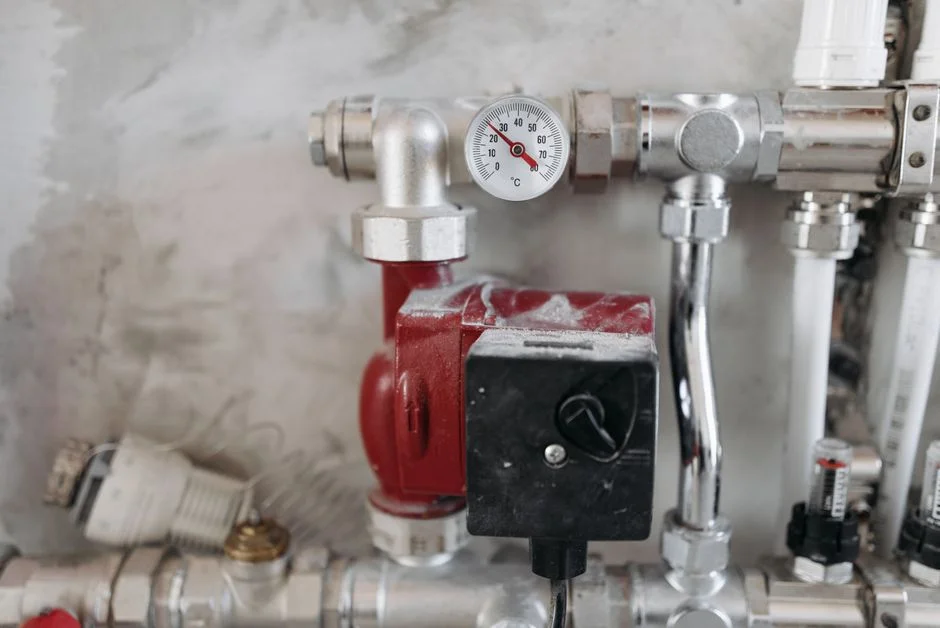
The train is sized for the 3,000-10,000 m³/day envelope that covers a mid-scale fab or a 10-20 MW data hall on the Vía a la Costa or Vía a Daule corridor. Run the permit pathway (EIA + Environmental License) in parallel with the engineering design — the recovery train, reject handling plan, and reuse accounting have to be embedded in the EIA submission upfront, not retrofitted when commissioning hits a permit snag.
Step 1 — Equalization and stream splitting. Two buffer tanks, each sized for ≥8 hours at peak instantaneous flow, with three segregated feed lines. Chemical segregation at the headworks prevents fluoride shocks from poisoning MBR biomass and prevents CMP slurry from blinding the RO pre-filters. Grid events will shut down blowers, RO high-pressure pumps, and UV banks without warning, so the equalization envelope is a permit condition, not a design choice.
Step 2 — Pretreatment. A DAF unit at 4-300 m³/h handles CMP and oily waste with micro-bubble saturation and automatic skimming; a lamella clarifier absorbs high-TSS spikes from batch cleaning dumps; a multi-media filter polishes to SDI <5. The IDE MAXH2O case study explicitly flagged SDI persistently above 5 — and at times non-measurable — as the dominant failure trigger of a conventional RO on a fab feed.
Step 3 — Biological treatment. An integrated MBR system handles the organic load from cleaning chemistries and stabilizes the feed to RO. DF-series submerged cassettes at 0.1 µm PVDF deliver near-reuse effluent (COD <50 mg/L, turbidity <1 NTU) and roughly halve the footprint of a comparable activated-sludge basin.
Step 4 — Two-pass RO with energy recovery. Specify a two-pass industrial RO system with an energy-recovery device. The IDE MAXH2O PFRO benchmark is ~720 GPM (4,000 m³/day) feed, 54% first-pass recovery silica-limited, climbing to 88% total when the upstream brine is sent through a second pass. The pulse-flow regime stabilizes operation under variable CMP and cooling-tower feeds.
Step 5 — Polishing and sludge. EDI or mixed-bed for fab UPW reclaim; UV for data-hall reuse loops (chemical-free, no trihalomethane formation on long distribution lines). A plate-and-frame filter press at 1-500 m² of plate area dewaters the MBR WAS and produces a manifestable cake.
Step 6 — Reuse allocation. 60-80% of the treated stream goes to cooling-tower makeup, scrubber makeup, and toilet flushing; 20-40% is discharged under permit.
| Unit Operation | Influent Envelope | Expected Effluent | Design Note for Guayaquil |
|---|---|---|---|
| Equalization (2 tanks) | Variable, batch spikes | Buffered, ~8 h retention | Mandatory for grid-event ride-through |
| DAF | TSS up to ~3,000 mg/L, FOG, colloidal CMP | TSS 80-95% removal | 2 duty + 1 standby for batch chemistries |
| Multi-media filter | SDI feed, silica-loaded | SDI <5 | Protect RO — IDE case flagged SDI >5 as failure trigger |
| MBR (DF-series cassettes) | COD 500-2,000 mg/L, NH₃ variable | COD <50 mg/L, turbidity <1 NTU | ~60% smaller footprint vs. activated sludge |
| RO pass 1 (PFRO or equivalent) | 1,200-6,000 mg/L TDS, 30-60 mg/L silica | 10-50 mg/L TDS permeate (95-99% rejection) | Silica-limited at 70-75% recovery |
| RO pass 2 (brine) | Brine from pass 1 | Combined 85-88% total recovery | Energy-recovery device mandatory |
| Plate-and-frame filter press | MBR WAS, hazardous sludge | Manifestable cake | Hazardous waste — licensed treater only |
MAATE Agreement 097 and the Permit Pathway
MAATE Ministerial Agreement 097 (2021) sets the discharge ceiling: TSS <50 mg/L, COD <250 mg/L, pH 6-9 for most industrial discharges. In practice, MAATE-aligned jurisdictions including Interagua have effectively imposed TDS <1,500 mg/L on concentrated streams — which means untreated CTBD at 1,200-6,000 mg/L TDS is non-dischargable on its own (per the Guayaquil industrial wastewater compliance guide). Fines under the 2004 Ecuador Environmental Management Act reach $50,000 per violation, and 2024 enforcement actions concentrated on the Vía a la Costa and Vía a Daule corridors.
Interagua and the Guayaquil Municipal Environment Directorate layer additional trade-waste sampling on top of MAATE — quarterly unannounced sampling is standard. New data-center or fab capacity triggers an Environmental Impact Assessment (EIA) and an Environmental License. The discharge strategy, recovery train, and reject handling plan must be embedded in that submission upfront. Hazardous waste streams — spent CMP slurry, fluoride-bearing sludge, exhausted ion-exchange resin — must be manifested and sent to a licensed treater; they cannot be co-mingled with municipal solid waste.
CAPEX, OPEX, and the Guayaquil Financing Stack
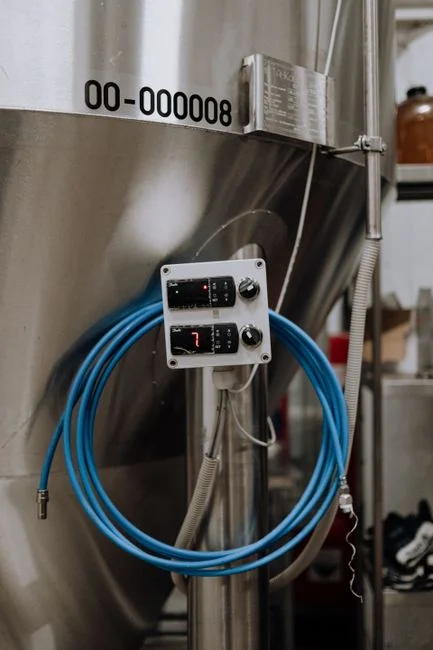
Translating the technology picture into USD numbers is the part procurement and finance actually need. A 50,000 GPD RO system treating CTBD lands at $250,000-500,000 installed before Ecuadorian import duties (0-15% depending on HS code and Ministry of Production capital-goods registration) and a 15-25% Guayas-region installation labor premium. Add $80,000-180,000 for the UF pretreatment skid and $50,000-200,000 for the side-stream filter for a fully pre-engineered package. OPEX on a 50,000 GPD train at $2.00/1,000 gallons (per Genesis) treats 18.25 million gallons per year — roughly $36,500/year in operating cost, against avoided freshwater purchase and discharge fees that frequently run $5-15/1,000 gallons in water-stressed jurisdictions.
Itemize OPEX as: energy at the Ecuador industrial tariff ($0.08-0.10/kWh for medium-voltage users); antiscalant and biocide at $0.10-0.30 per 1,000 gallons treated on a silica-limited feed; membrane replacement on a 3-5 year cycle; and solids disposal. MVC polish runs 15-25 kWh per 1,000 gallons, or $1.20-2.50 per 1,000 gallons of distillate in electricity alone — before thermal-stage maintenance. Full ZLD ($3-8M CAPEX, $5-15/1,000 gallons OPEX) is over-spec for most Guayaquil hyperscale sites.
Two financing levers matter. BEDE (Banco de Desarrollo del Ecuador) offers environmental credit lines at 6-8% interest with terms up to 10 years for pollution-control equipment. The 2023 Guayaquil Municipal Code provides a municipal tax credit for facilities achieving >80% water reuse — a 70-75% recovery RO alone does not qualify, so projects chasing the credit should plan for an MVC polish step from the outset. A PLC-controlled antiscalant and pH dosing skid and stocked membrane and consumable spares protect that payback from supply-chain events. A stocked local inventory of water-treatment parts, valves, and media is the difference between a 48-hour response and a six-week supply-chain event when the RO train trips at 2 a.m.
| Option | CAPEX (USD) | OPEX (per 1,000 gal) | System Recovery | Qualifies for >80% Reuse Credit? |
|---|---|---|---|---|
| RO only (silica-limited) | $250,000-500,000 | ~$2.00 | 70-75% | No |
| RO + MVC polish | $400,000-800,000 | $3.20-4.50 | 85-95% | Yes |
| Full ZLD (RO + MVC + crystallizer) | $3,000,000-8,000,000 | $5-15 | ~99% | Yes (over-spec for most Guayaquil sites) |
Procurement Checklist: Five Failure Modes That Fail MAATE Inspections
Most CTBD and fab projects in Guayaquil that fail their first MAATE inspection fail it for procurement reasons, not chemistry reasons. The equipment was specified against a generic CTBD curve rather than the silica and hardness profile of the actual Guayas basin. The vendor had no documented MAATE submission track record, so the Environmental License filing landed with gaps. Spare membranes and dosing pumps were on ocean freight from Miami, and the first cleaning event turned into a six-week outage. Avoid these failure modes directly.
- Verify MAATE submission history. Ask the vendor for redacted EIA and Environmental License submissions under MAATE Agreement 097, not just a sales deck.
- Demand influent-specific design values. Require jar tests or at least 30 days of pilot data on the actual Guayas source water. Reject any proposal built on a generic CTBD curve.
- Confirm local support. Guayaquil-based commissioning crew, Spanish-language O&M documentation, and stocked spares for membranes, pumps, and chemical dosing skids. Miami ocean freight runs 4-6 weeks.
- Ask for a tropical or coastal reference. A site operating at feedwater TDS >1,200 mg/L with silica >30 mg/L — the Guayas basin's actual envelope.
- Total cost of ownership beats sticker price. A $50,000-200,000 side-stream filter that prevents one RO cleaning per quarter pays for itself in months; a cheap dosing skid that overfeeds antiscalant and fouls the membranes in year two costs more than the savings.
For an analogous treatment of a different basin, the parallel La Paz fab and data-hall guide documents altitude-driven design shifts, and the Guayaquil cooling-tower blowdown guide walks the same four-step CTBD sequence in greater detail. Comparable coastal temperate-basin work is in the Vancouver semiconductor and data-hall compliance guide and the Toronto fab and data-hall treatment guide.
Frequently Asked Questions
What are the MAATE discharge limits for a fab or data hall in Guayaquil?
MAATE Ministerial Agreement 097 (2021) sets TSS <50 mg/L, COD <250 mg/L, pH 6-9 for most industrial discharges. In practice, MAATE-aligned jurisdictions including Interagua enforce TDS <1,500 mg/L on concentrated streams, which means untreated CTBD at 1,200-6,000 mg/L TDS is non-dischargable without treatment that targets both particulate/organic parameters and dissolved solids.
How much blowdown does a 100 MW data center generate in Guayaquil?
A 100 MW facility can consume up to 2,000,000 L/day of water (per IDE Tech, 2026). At 4 cycles of concentration, 25-30% of makeup is lost as blowdown — roughly 500,000-600,000 L/day, or 130,000-160,000 gallons per day, of treatable stream. This is the largest freshwater-recovery lever on the site.
Can RO permeate from cooling-tower blowdown return to the cooling tower?
Yes. A side-stream filter → UF → RO train typically delivers permeate at 10-50 mg/L TDS at 50-85% recovery (conservatively 70-75% on silica-limited Guayas basin water), suitable for direct return as high-quality cooling-tower makeup. MVC polish on the RO reject pushes overall system recovery to 85-95% and unlocks the Guayaquil municipal tax credit for >80% water reuse under the 2023 Municipal Code.
What does a 50,000 GPD RO system cost in Ecuador?
$250,000-500,000 installed before Ecuadorian import duties and a 15-25% Guayas-region installation labor premium. Add $80,000-180,000 for the UF pretreatment skid and $50,000-200,000 for the side-stream filter for a fully pre-engineered package. A 50,000 GPD train at $2.00/1,000 gallons OPEX pays back in 18-36 months once the BEDE credit line (6-8% interest, up to 10-year terms) and the municipal tax credit are applied.
When does zero-liquid discharge make sense in Guayaquil?
Only when freshwater cost, discharge fees, or permit risk justify the $3-8 million CAPEX and $5-15 per 1,000 gallons OPEX of a full ZLD system. For most Guayaquil hyperscale sites, high-recovery RO plus optional MVC polish is the economic middle path, and it positions the project to claim the >80% water reuse credit under the 2023 Municipal Code.