
Why a Packaged MBR Is the Default STP Choice for Tunis Hotels in 2026
Tunisia treated 215 million m³ of municipal wastewater across 99 plants in 2007, with more than 30% of that volume already reused; reuse was projected to exceed 50% by 2011 (per the OSTI PURATREAT FP6 study, 2009). The Mediterranean basin, and particularly North Africa, sits below the global water-resource threshold, so hotel projects in Tunis, Hammamet, and Sousse are now sized against reuse, not just discharge. A packaged MBR delivers a pathogen-free, low-turbidity effluent that can legally feed ferti-irrigation of landscapes, golf greens, and toilet flushing — three end-uses a Tunis hotel operator is asked to support from day one.
A packaged MBR is a prefabricated, skid- or container-mounted unit that combines anoxic/aerobic activated sludge with submerged flat-sheet membrane filtration at 0.1–0.4 μm pore size. Because membranes act as a physical barrier to bacteria and viruses, the MBR stream from Tunisian pilots was tested pathogen-free and used directly on vegetable crops (per OSTI PURATREAT FP6, 2009). For an MEP consultant weighing options in 2026, that combination — compact footprint, on-site delivery in 2–4 weeks, and reuse-grade effluent — is what shifts a packaged MBR system for hotel projects from "premium" to "default".
Sizing a Packaged MBR for a Hotel: Flow, Load, and Peaking Factors
Hotel flow does not follow municipal diurnal curves. Laundry batches, meal-time kitchen surges, and pool backwash can produce instantaneous peaks of 2× the daily average. A defensible sizing formula for a Tunis hotel is:
Q = rooms × guests per room × LPcd × peaking factor
Use 200–250 litres per capita per day (LPcd) as a Tunis hotel baseline (per Metito Saadiyat Island reference plant, 2018), then add staff at 50 LPcd and laundry at 10–20 LPcd per occupied room. For a 150-room property at 1.8 guests/room, this yields roughly 54–67 m³/day average, lifting to 80–135 m³/day at a 1.5–2.0× peaking factor. Hotel wastewater is also stronger than domestic sewage: BOD 250–400 mg/L, FOG 50–100 mg/L, plus surfactants and high-temperature laundry pulses that lift COD. Pretreatment must be specified, not assumed.
Two Tunisian MBR field parameters drive supplier selection. First, mixed-liquor suspended solids (MLSS) must be held in the 4.5–9 g/L range: data from the Tunisian PURATREAT pilot showed fouling frequency jumping from once every 3 months to once every 2 weeks as MLSS climbed from 4.5 to 9 g/L (per OSTI, 2009). Hold the lower end with adequate aeration. Second, match supplier design flux to 16–22 L/m²·h — within that band, the same Tunisian pilot cut energy from 7 to 5 kWh/m³ simply by raising flux (per OSTI, 2009). A DF series flat-sheet MBR membrane module sized to that flux window is the single biggest lever on hotel OPEX.
| Parameter | Tunis Hotel Baseline | Design Target | Source |
|---|---|---|---|
| Per-guest water use (LPcd) | 200–250 | Use upper bound for resorts | Metito Saadiyat reference (2018) |
| Average BOD (mg/L) | 250–400 | Size aeration for 350 | Hotel wastewater, HydropureWater field data, 2026 |
| FOG (mg/L) | 50–100 | DAF upstream of MBR | Hotel wastewater, HydropureWater field data, 2026 |
| MLSS (g/L) | 4.5–9 | Target 6–8 | OSTI PURATREAT FP6 (2009) |
| Membrane flux (L/m²·h) | 16–22 | Design at 18–20 | OSTI PURATREAT FP6 (2009) |
| Energy (kWh/m³) | 5–7 | Guarantee ≤ 6 at design flux | OSTI PURATREAT FP6 (2009) |
Process Train and Pretreatment: What a Hotel MBR Package Must Include
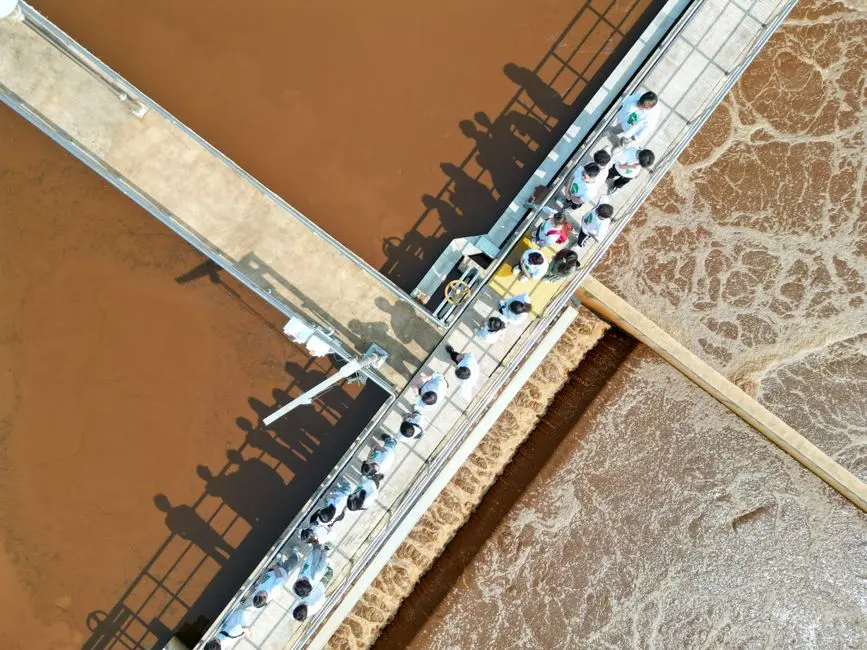
Lowest-bid MBR packages routinely omit the headworks that protect the membrane. The minimum process train a Tunis hotel STP must carry, in order, is:
- Inlet works: bar screen, grit chamber, oil/grease removal. The Metito Saadiyat Island plant uses fine screens, a vortex grit chamber, and a sand classifier upstream of equalization (per Metito case study, 2018).
- Equalization: flow buffering with low-pressure aeration to prevent septic conditions and to absorb laundry and meal-time peaks (per Metito case study, 2018).
- Anoxic + aerobic MBR: anoxic zone for denitrification, fine-bubble aeration with VFD-driven blowers on dissolved-oxygen (DO) control, submerged flat-sheet membranes at 0.1–0.4 μm.
- Disinfection: UV sterilizer (no DBPs, no residual) for irrigation lines, or chlorine dioxide where higher log reduction on reuse lines is required.
- Reuse / discharge storage: buffer tank sized for at least 6–12 hours of average flow.
Hotel wastewater carries FOG, hair, and lint from kitchen and laundry — all of which foul submerged membranes fast. The Metito Saadiyat reference design treats FOG upstream with sand-oil-grease removers before any biological stage (per Metito case study, 2018). For a packaged plant, the consultant should require a rotary bar screen for hotel STP headworks at 2–3 mm aperture, a DAF system for hotel FOG removal rated for 50–100 mg/L inlet FOG, and an automatic chemical dosing system for pH balance ahead of the membranes. Polishing with a UV sterilizer for reuse-quality polishing is standard for ferti-irrigation end-uses.
Compliance Check: NT 106.002 Reuse Limits and ONAS Discharge
Tunisia splits wastewater compliance into two paths: discharge to the ONAS sewer (lower treatment bar, mainly BOD/TSS control) and on-site reuse under standard NT 106.002, which sets limits on TSS, BOD, COD, fecal coliforms, turbidity, and residual chlorine for restricted and unrestricted irrigation. A packaged MBR clears both bars, but only if the supplier guarantees NT 106.002 figures in the contract — not generic "reuse quality" language.
Tunisian pilot data is the strongest evidence a consultant can put on the table. Under standard operating conditions the MBR delivered 91% soluble COD removal, 100% TSS removal, 83% NTK removal, and 99.8% turbidity removal, with pathogen-free effluent used directly in ferti-irrigation of vegetable crops (per OSTI PURATREAT FP6, 2009). For an ONAS sewer discharge, MBR effluent is well inside the standard BOD/TSS envelope; for on-site reuse, MBR + UV or MBR + ClO₂ polishing covers fecal coliform and turbidity limits. Where higher log reduction or residual disinfection is mandated on the reuse line, a chlorine dioxide generator downstream of the MBR tank is the standard polish.
| Parameter | NT 106.002 Reuse Limit (typical) | Hotel MBR Achieved | Source |
|---|---|---|---|
| COD removal | — | 91% | OSTI PURATREAT FP6 (2009) |
| TSS removal | ≤ 30 mg/L (irrigation) | 100% (to near-detection) | OSTI PURATREAT FP6 (2009) |
| NTK removal | — | 83% | OSTI PURATREAT FP6 (2009) |
| Turbidity removal | ≤ 2 NTU (unrestricted) | 99.8% | OSTI PURATREAT FP6 (2009) |
| Pathogens | Fecal coliforms per class | Pathogen-free (pilot-tested) | OSTI PURATREAT FP6 (2009) |
Packaged MBR vs Buried A/O vs SBR: Which Fits a Tunis Hotel?
Packaged MBR is not the only technology on a Tunis hotel shortlist. The real decision is between a packaged MBR system for hotel projects, a buried A/O package (WSZ series, 1–80 m³/h), and a sequencing batch reactor (SBR). For a 50–100 m³/day hotel, the trade-offs fall out cleanly:
- Footprint: MBR delivers roughly 60% smaller footprint than conventional activated sludge with clarifier (HydropureWater MBR spec, 2026). Buried A/O is fully buried, leaving the surface free for landscaping — useful for resort sites.
- Effluent quality: only MBR consistently meets NT 106.002 reuse limits for TSS and turbidity without tertiary polish. Buried A/O and SBR will hit ONAS discharge but will need sand filter + disinfection to reach reuse.
- Automation: MBR and SBR both run on PLC with membrane/backwash sequencing; buried A/O is the simplest to operate but offers the least process control.
- CAPEX/OPEX: SBR is lowest CAPEX for non-reuse discharge. Buried A/O sits in the middle. MBR has the highest membrane-driven CAPEX but the lowest reuse-cost per m³ when the hotel reuses more than ~30% of treated water.
The decision rule of thumb for 2026: if the hotel targets reuse of more than 30% of treated water for irrigation, golf, or toilet flushing, packaged MBR is the economic choice despite the higher membrane CAPEX. If the project discharges only to the ONAS sewer and reuse is a future option, a buried A/O package or SBR is defensible.
| Criterion (50–100 m³/day) | Packaged MBR | Buried A/O (WSZ) | SBR |
|---|---|---|---|
| Footprint | ~60% smaller than CAS | Buried (zero surface) | Moderate |
| Reuse compliance (NT 106.002) | Yes, direct | Needs tertiary polish | Needs tertiary polish |
| ONAS discharge | Yes, comfortably | Yes | Yes |
| CAPEX (relative) | Highest (membranes) | Mid | Lowest |
| OPEX driver | Energy + membrane replacement | Sludge hauling | Sludge hauling + timers |
| Mobilization | 2–4 weeks | 4–6 weeks (civil) | 6–8 weeks (civil) |
Energy, OPEX, and Membrane Maintenance: What to Ask the Supplier
OPEX in a Tunis hotel MBR is dominated by two line items: aeration energy and membrane cleaning/replacement. The Tunisian PURATREAT pilot set the local benchmark at 5–7 kWh/m³, with the higher figure at low flux and the lower figure at 22 L/m²·h (per OSTI, 2009). Bidders should be asked to guarantee a specific kWh/m³ at the design flux and MLSS, not a generic "low energy" claim.
Flux is a knob, not a fixed number. Running the membrane harder cuts energy but compresses membrane life. The supplier must declare:
- Design flux (L/m²·h) and guaranteed specific energy (kWh/m³) at that flux.
- MLSS setpoint and the corresponding expected cleaning interval (per the OSTI 2009 data, every 3 months at 4.5 g/L, every 2 weeks at 9 g/L).
- In-situ chemical cleaning protocol: chlorine, citric acid, caustic, or detergent, with consumption per cycle.
- Air-scour configuration and blower VFD DO control.
- Spare-parts model: individually replaceable flat-sheet elements (as in the DF series) versus full cassette replacement.
For membrane replacements and filter consumables, specify equivalent RO/UF membrane filter elements as the spare-parts reference so the buyer is not locked into a single OEM for the next 8–10 years of operation.
Spec Checklist and Cost Drivers for a Tunis Hotel MBR Project
A defensible procurement specification for a packaged MBR hotel STP in Tunis must include, at minimum:
- Design flow (m³/day) and peaking factor (1.5–2.0×).
- Influent BOD/COD/FOG/TSS and temperature range (laundry hot pulses).
- Target effluent per NT 106.002 (TSS, BOD, COD, fecal coliforms, turbidity) for reuse, or per ONAS for sewer discharge.
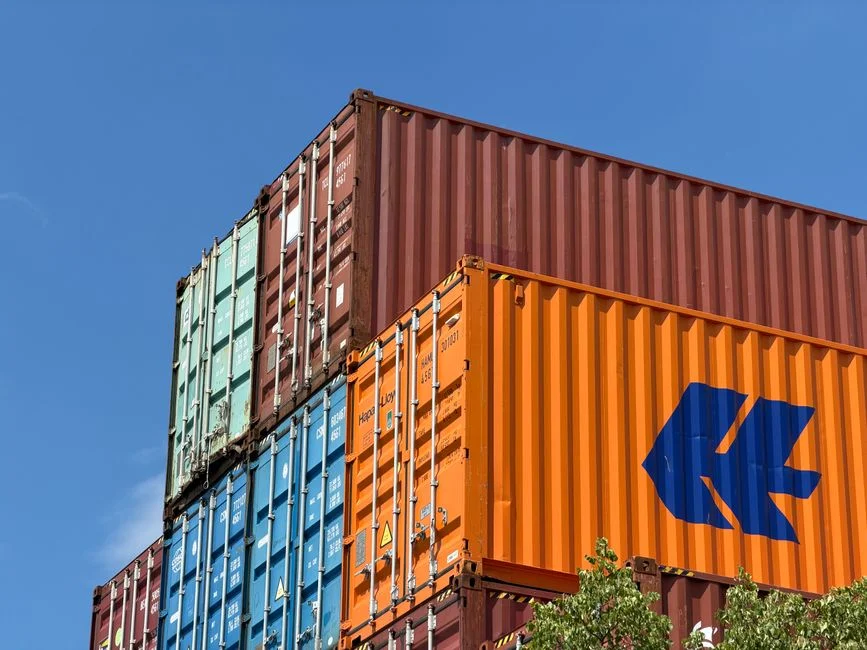
- Containerized (ISO 20/40 ft) or skid-mounted; SS304 vs carbon-steel skid.
- Automation level: PLC, HMI, SCADA, remote telemetry.
- Power supply: 380–400 V / 50 Hz, with standby generator sizing.
- Disinfection: UV or ClO₂, sized for reuse log-reduction target.
- Reuse line: irrigation pump set, storage tank, and ferti-irrigation controls.
- Performance guarantee tied to NT 106.002 limits, with liquidated damages.
Cost drivers in 2026 are, in descending order: membrane area and module count, automation and SCADA, pretreatment (DAF included or not), disinfection stage, container material, and ocean freight plus Tunis port handling. HydropureWater MBR integrated systems cover 10–2,000 m³/day, which covers the full Tunis hotel range (HydropureWater MBR spec, 2026). A packaged plant typically mobilizes in 2–4 weeks versus 8–12 weeks for cast-in-place concrete, which is a non-trivial advantage when the hotel opening date is fixed.
| Cost Driver | Impact Direction | Notes |
|---|---|---|
| Membrane area / module count | ↑ CAPEX, ↓ OPEX/m² | Driven by design flux |
| MLSS setpoint | ↓ MLSS = ↓ fouling = ↓ OPEX | OSTI (2009): 4.5 g/L → 3-month cleaning |
| Automation (PLC/SCADA) | ↑ CAPEX, ↓ OPEX | Reduces operator hours |
| Pretreatment (DAF) | ↑ CAPEX, ↓ membrane OPEX | Protects membranes from FOG |
| Disinfection (UV vs ClO₂) | UV: lower OPEX; ClO₂: higher log | Match to NT 106.002 class |
| Skid material (SS304 vs MS) | SS304 ↑ CAPEX, ↑ life | Coastal Tunis humidity |
| Freight + Tunis port | Linear on container size | 2–4 week door-to-site |
For broader context on where packaged plants fit in the regional market, see decentralized wastewater treatment trends in 2026, and for parallel hotel methodology in other Mediterranean markets, see packaged MBR STP sizing for Madrid hotels and packaged MBR STP selection for Colombo hotels.
Frequently Asked Questions
What per-capita flow should I use to size a packaged MBR for a Tunis hotel?
Use 200–250 litres per guest per day (LPcd) as the Tunis hotel baseline, plus 50 LPcd per staff member and 10–20 LPcd per occupied room for laundry, then apply a peaking factor of 1.5–2.0× to absorb kitchen and laundry surges (per Metito Saadiyat Island reference, 2018).
What effluent quality can a packaged MBR guarantee against NT 106.002?
Tunisian MBR field data shows 91% COD removal, 100% TSS removal, 83% NTK removal, and 99.8% turbidity removal, with pathogen-free effluent that meets Tunisian reuse standards (per OSTI PURATREAT FP6, 2009). For unrestricted irrigation the buyer should still specify a UV or ClO₂ polish — see the UV sterilizer for reuse-quality polishing for the standard configuration.
What energy consumption should a Tunis hotel MBR supplier commit to?
Anchor the guarantee at 5–7 kWh/m³ at design flux (per OSTI PURATREAT FP6, 2009). The 5 kWh/m³ figure is achievable at 22 L/m²·h with 4.5 g/L MLSS, but the supplier must state the flux and MLSS assumptions in the contract.
When is a buried A/O package a better fit than MBR for a Tunis hotel?
If the project discharges only to the ONAS sewer with no current reuse target, a buried A/O (WSZ series) cuts CAPEX and frees the surface for landscaping. MBR is the economic choice once the hotel reuses more than ~30% of treated water.
How often will the MBR membranes need chemical cleaning in a hotel?
At 4.5 g/L MLSS the Tunisian pilot recorded chemical cleaning every 3 months; at 9 g/L MLSS that dropped to every 2 weeks (per OSTI, 2009). Specify the MLSS setpoint and the corresponding cleaning interval in the supply contract.