The 60-day licence-transfer trap that re-binds UPM on closing day
When UPM acquires a Malaysian pulp or paper-converting plant, the binding wastewater instrument is the Environmental Quality Act 1974 (EQA 1974) Section 18 Written Approval re-issued in UPM's legal name, not the sale-and-purchase agreement (per EQA 1974, as amended 2024). The asset-purchase agreement transfers ownership of fixed assets; it does not transfer the seller's environmental approval, and it does not extinguish the successor's liability for prior contamination. Section 18(2) requires the Department of Environment (DOE) to issue a fresh Written Approval to the successor, and the 60-day clock starts at SPA signing, not at plant handover. Missing the 60-day window is treated by the DOE as operating without approval, and the mill's next effluent sample becomes exhibit one in an enforcement file that UPM opened itself.
Open DOE enforcement files, Jabatan Alam Sekitar (JAS) state notices, and unpaid environmental levies transfer as successor liabilities with no statute of limitations on prior contamination, so a 20-year-old spill becomes UPM's cleanup obligation on day 61. The same successor-liability rule applies to Indah Water Konsortium (IWK) sewer surcharges, Suruhanjaya Perkhidmatan Air Negara (SPAN) abstraction arrears, and the open-finding list the seller may not have disclosed in the data room. For a pulp-mill target specifically, the inherited file should also include the adsorbable organically bound halides (AOX) baseline, the last two bleaching-sequence reviews, and the mill's continuous emissions monitoring system (CEMS) data tape, because Malaysian inspectors are auditing AOX more frequently as of the 2025 basin bulletins (per DOE basin bulletins, 2025). The 60-day licence-transfer trap is the single most risk-priced item in the diligence budget, and the engineering team should treat the Section 18(2) re-issuance date as the operating-control date for every retrofit deliverable that follows.
Four-agency stack: DOE, IWK, JAS and SPAN coverage that maps to the Mexican NOM/SEMARNAT pattern
Malaysia is not a single-permit system; the four-agency overlay (DOE federal, state JAS, IWK or the regional sewer operator, and SPAN for abstraction) is the analog of Mexico's federal SEMARNAT/state CEA/POTW/CONAGUA stack documented in the Mexico-acquisition compliance walkthrough. The DOE Written Approval governs effluent discharge limits, pollution-control system design, and the monitoring schedule. State JAS (now operating under the consolidated state-environment structure in Penang, Selangor, Johor and Perak) issues siting consent and handles state-level enforcement that can run hotter than the federal file. IWK or the local water operator sets the sewer-acceptance limits that frequently run tighter than the federal Standard B in the Industrial Effluent (IE) Regulations 2009, Ninth Schedule A. SPAN administers the abstraction licence for sites drawing process water from on-site bores, and an unannounced change of operator on a SPAN title is a separate violation from the DOE file.
The practical difference from the Mexican pattern is that the IWK or state-sewer acceptance letter is enforceable against the successor, while in Mexico the POTW's NOM-002 acceptance terms live in a separate federal instrument. For a Malaysian pulp target, the IWK acceptance letter is often the binding parameter ceiling on AOX, sulphide, total residual chlorine, and temperature, not the federal Standard B. A retrofit sized only against the IE Regulations 2009 ceiling will fail the IWK acceptance test, and the mill's first discharge sample after re-issuance will trigger a surcharge that flows straight into the operating P&L.
| Agency | Instrument | Scope | Mexican analog | Re-issuance trigger |
|---|---|---|---|---|
| DOE (federal) | EQA 1974 Section 18 Written Approval | Effluent discharge limits, treatment-system design, monitoring schedule | SEMARNAT LGEEPA authorization | Change of operator (Section 18(2)); 60-day clock |
| JAS (state) | State siting consent and enforcement notices | Site-specific discharge and zoning constraints | State CEA overlay | Successor liability attaches on closing |
| IWK / local sewer operator | Sewer discharge acceptance letter | Pre-treatment ceilings, AOX, sulphide, TRC, temperature | POTW NOM-002 acceptance | Re-issued in buyer's name within 30–60 days |
| SPAN | Abstraction licence | Groundwater and surface-water extraction volumes | CONAGUA Título de Concesión | Re-issued on change of operator |
Parameter cross-walk: IE Regulations 2009 Schedule E vs NOM-001-SEMARNAT-2021
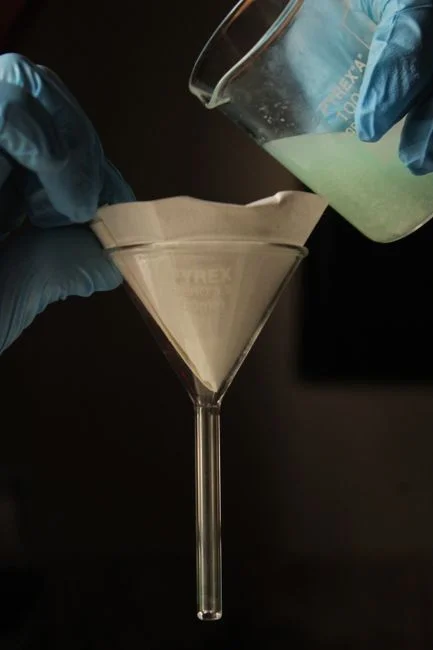
The IE Regulations 2009 Schedule E (Ninth Schedule A) sets 25+ parameters across Standard A (river discharge) and Standard B (sewer), and the binding numbers for pulp-condensate are chemical oxygen demand (COD), total suspended solids (TSS), colour, pH, temperature, sulphide, AOX, and total residual chlorine (per IE Regulations 2009, Ninth Schedule A). A Mexico-trained engineer from the sibling Intel Mexico plant compliance walkthrough will recognise the table structure, but the parameter mix is different. NOM-001-SEMARNAT-2021's surface-water ceiling for COD and TSS aligns within roughly 10% of Malaysian Standard A, but NOM-001 has no AOX line item, which is the practical binding pulp parameter in Malaysia, and NOM-001's metals-centric matrix misses the lignin, chlorinated organics, and sulphide loading that drive a condensate train.
Bleach-plant chlorinated organics (AOX) and black-liquor evaporator condensate COD are the pulp-specific numbers that govern the retrofit, not the nickel and zinc the Mexican OEM matrix is built around. The cross-walk below is the parameter table a Mexico-based UPM integration team can reuse on the Malaysian retrofit once the AOX and TRC columns are populated. Where the discharge routes to a municipal sewer rather than a river, Standard B applies, and the IWK acceptance letter overlays additional ceilings on AOX, sulphidity, and temperature that are not visible in the federal Schedule E table.
| Parameter | IE Reg 2009 Standard A (river) | IE Reg 2009 Standard B (sewer) | NOM-001-SEMARNAT-2021 (surface) | Notes for pulp retrofit |
|---|---|---|---|---|
| COD (mg/L) | ≤ 50 (avg) / 100 (max) | ≤ 200 (avg) / 400 (max) | ≈ within 10% of Standard A | Binder for black-liquor condensate polish |
| TSS (mg/L) | ≤ 50 (avg) / 100 (max) | ≤ 200 (avg) / 400 (max) | ≈ within 10% of Standard A | DAF oversize if fibre loss high |
| AOX (mg/L) | ≤ 1.0 (avg) / 2.0 (max) | ≤ 1.5 (avg) / 3.0 (max) | Not in NOM-001 | Binding pulp parameter; IWK often tighter |
| Sulphide (mg/L) | ≤ 0.5 | ≤ 1.0 | No direct line | Drives condensate stripper design |
| TRC (mg/L) | ≤ 1.0 | ≤ 2.0 | No direct line | Bleach-plant chlorination control |
| Temperature | ≤ 40°C | ≤ 45°C | ambient + 10°C envelope | Cooling-tower design check |
| pH | 6.0–9.0 | 5.5–9.5 | 5.0–10.0 | Neutralisation tank standard |
Basin overlays in Selangor, Penang and Johor that tighten the federal ceiling 10–30%
Selangor (Klang Valley) and Penang (Prai) basin bulletins can impose 10–30% tighter ceilings on the same Schedule E parameters during the November–May dry season, and the basin bulletin is the binding number, not the headline federal Standard A (per 2025 DOE basin bulletins). Johor (Johor Bahru) and Perak (Kinta Valley) carry their own seasonal overlays that the seller may not have flagged in the original DOE Written Approval because the basin bulletin sits in a separate Lembangan file the diligence team has to pull directly from the DOE state director. On a stressed sub-basin — Klang Valley at <80% water-stressed per WRI Aqueduct 2025 — the only compliant path is a zero-liquid-discharge (ZLD)-ready configuration rather than a dissolved air flotation (DAF) plus membrane bioreactor (MBR) plus reverse osmosis (RO) polish alone.
The same logic drove the S3 Mexico ZLD carve-out for San Luis Potosí, Silao, and Ramos Arizpe, and the engineering decision is identical: if the seller's three-year monitoring record shows a single excursion against the basin overlay in the last 36 months, the retrofit model must include evaporator/crystallizer capacity or the buyer is buying a non-compliant asset. The AOX line is the first parameter to violate in the dry season because condensate stripping tower performance drops as cooling-tower water temperature rises, and the basin bulletin cuts the AOX ceiling by 15–20% at the same time. A 1,500 m³/day pulp-condensate train that comfortably meets Standard A in March can miss the basin overlay in August, and that is the retrofit input the financial model has to absorb.
Phase 1 diligence: the 36-month paper-trail pull that fixes the deal price

Phase 1 diligence must pull 36 months of DOE monitoring data, JAS state correspondence, IWK discharge records, and the open-enforcement file list before signing, because every missing quarter in the seller's record becomes UPM's first 100 days on the job (per 2025 DOE audit guidance). A missing month of self-monitoring data is a red flag that the seller's own outfall may have been drifting toward non-compliance, and that drift becomes UPM's first compliance report under the re-issued Written Approval. The diligence team should also pull the seller's COTER-equivalent — in Malaysia it is the DOE basin-bulletin correspondence file — because the basin overlay sits on top of the federal Standard A and only surfaces in the state director's letters, not the headline DOE approval.
Hold in escrow at signing: the seller's lab accreditation certificate (SAMM/ISO 17025), chain-of-custody for the most recent 12 months of samples, and the field-measurement calibration log, because these are the first documents the DOE will demand at any unannounced inspection. Confirm the state JAS overlay; site-specific discharge and zoning constraints only surface in the seller's correspondence file, not the headline DOE Written Approval. For a pulp-mill target, the inherited file should also include the AOX baseline, the last two bleaching-sequence reviews, and the mill's CEMS data tape, because Malaysian inspectors are auditing AOX more frequently as of 2025 and a missing baseline is treated as an assumed violation. The 36-month paper-trail pull is not a legal-only workstream; it is the engineering input to the deal price.
1,500 m³/day pulp-condensate retrofit: CAPEX envelope and unit-operation map
Base-train DAF, MBR, and RO with no evaporator fits a USD 1.5M–6M envelope (USD 1,000–4,000 per m³/day of design capacity) at 1,500 m³/day, which transposes to roughly MYR 7M–28M at the current USD/MYR rate (per S3 Mexico CAPEX envelope, transposed to Malaysia ringgit). A ZLD-ready configuration with an evaporator/crystallizer adds a 1.5x–2.5x multiplier to the base-train number, which aligns with the Selangor and Penang dry-season basin overlays and any future reuse mandate. The retrofit has to be sized against the condensate polishing train, not the recovery boiler, because the recovery boiler re-tube is a process retrofit that sits outside the wastewater treatment CAPEX line item. A DAF system for pulp-condensate primary clarification paired with an integrated MBR for pulp-condensate biological treatment is the typical hydraulic front-end for this influent matrix, with an industrial RO polish for the condensate train closing the loop to Schedule E or IWK acceptance.
Sludge dewatering belongs as a discrete budget line because the IE Regulations 2009 Schedule E SW301 hazardous classification routes hydroxide sludge to a scheduled-waste handler (Kualiti Alam Class I landfill); a plate-and-frame filter press for SW301 hydroxide sludge is the matching unit operation for that line item. At 15–30% RO reject on a 1,500 m³/day plant, that is 225–450 m³/day of liquid leaving the site, with Malaysian disposal tariffs in the MYR 8–18 per cubic-metre range depending on state and hazardous classification. The cost-of-not-acting benchmark is concrete: a 2025 DOE enforcement sweep at three Selangor pulp-converting sites produced combined compounds above MYR 12M for inherited basin-overlay findings within the first six months of new operator coverage.
| Configuration | Unit operations | Hydraulic envelope | Trigger |
|---|---|---|---|
| Base-train (DAF + MBR + RO) | Primary clarification → biological → RO polish → discharge | USD 1.5M–6M / MYR 7M–28M | Site outside stressed basin, sewer-acceptance achievable |
| ZLD-ready (base + evaporator/crystallizer) | Brine minimization + ZLD | 1.5x–2.5x base-train | Selangor / Penang dry-season basin overlay; reuse mandate |
| Process retrofit (recovery boiler) | Spent-liquor concentrator + boiler re-tube | Separate budget line | All integrated pulp mills; sized against recovery-boiler capacity |
| Sludge dewatering | Plate-and-frame filter press + Kualiti Alam Class I disposal | MYR 0.8M–2.5M line item | All retrofits producing SW301 hydroxide sludge |
24-month compliance calendar: licence transfer, retrofit, ISO 14001 in parallel
The 24-month ISO 14001 conformance clock and the Malaysian federal filing windows run in parallel, and the calendar below is the sequence the integration team actually executes, with each bracket ending in a verifiable deliverable. Days 0–60 cover the Section 18(2) change-of-operator notice to DOE, the IWK sewer discharge consent re-issued in UPM's legal name, and the SPAN abstraction licence transfer if the site draws from on-site bores. Months 3–12 install near-continuous flow-paced monitoring on 100% of regulated discharges, and submit semi-annual self-monitoring reports by 31 January and 31 July per IE Regulations 2009 Regulation 8. Months 0–24 reach ISO 14001 conformance, complete the legal register (federal DOE, state JAS, basin bulletin, IWK/SPAN), and document the environmental calendar under the §4.1.2 corporate-EMS pattern. The same parallel-track structure is documented for India in the India-acquisition ZLD and CPCB/SPCB consent guide, and the Malaysian calendar is shorter only because the licence-transfer window is 60 days instead of India's 90.
The retrofit bracket and the ISO 14001 bracket run on the same 24-month clock, and a Major Non-Conformance in the first external EMS audit can push the ISO certificate out by 6–9 months if the corrective action plan is not already in the legal register. The calendar below is the deliverable the integration team should be able to walk the DOE through at any unannounced inspection.
| Bracket | Action | Deliverable |
|---|---|---|
| Days 0–60 | File EQA Section 18(2) change-of-operator notice; re-issue IWK consent; update SPAN licence | Re-issued DOE Written Approval in UPM's name; IWK acceptance letter; SPAN title |
| Months 3–12 | Install flow-paced monitoring on 100% of regulated discharges; submit semi-annual self-monitoring | 100% measurement coverage; reports filed by 31 Jan and 31 Jul per Regulation 8 |
| Months 12–18 | Complete retrofit commissioning and performance test against Schedule E and basin overlay | Commissioning report; 30-day compliance test results |
| Months 0–24 | Reach ISO 14001 conformance; complete legal register (DOE, JAS, basin, IWK, SPAN); document EMS calendar | ISO 14001 certificate; legal register; environmental calendar per §4.1.2 |
Frequently Asked Questions
Does the Malaysian environmental approval transfer automatically on closing?
No. The buyer must file a Section 18(2) change-of-operator notice with the DOE within 60 days of SPA signing so the Written Approval re-issues in UPM's legal name (per EQA 1974, Section 18(2), as amended 2024). The re-issued approval is what binds UPM to the original operating conditions; the SPA itself transfers no environmental rights.
What is the binding AOX limit for a pulp-mill discharge in Malaysia?
Standard A sets 1.0 mg/L average and 2.0 mg/L maximum, Standard B sets 1.5 mg/L average and 3.0 mg/L maximum (per IE Regulations 2009, Ninth Schedule A). IWK sewer-acceptance limits and the Selangor/Penang basin bulletins can tighten the ceiling by a further 10–30% during the November–May dry season, and that tightened number is the practical binding parameter on routes to municipal sewer.
What CAPEX envelope should the deal model carry for a 1,500 m³/day pulp-condensate retrofit?
Base-train DAF + MBR + RO with no evaporator fits USD 1.5M–6M (MYR 7M–28M at current USD/MYR), or USD 1,000–4,000 per m³/day. A ZLD-ready configuration with evaporator/crystallizer adds 1.5x–2.5x. The spent-liquor concentrator and recovery-boiler re-tube are sized separately as a process retrofit, not a treatment line item.
Do prior contamination findings transfer to the buyer?
Yes. Open DOE enforcement files, JAS notices, and unpaid levies transfer as successor liabilities with no statute of limitations on prior contamination. A 20-year-old spill found on inspection becomes UPM's cleanup obligation, which is why the 36-month paper-trail pull in Phase 1 is the single most risk-priced line item in the diligence budget.