
What re-binds to UPM on closing day
The CONAGUA Título de Concesión is the Mexican analog of the US NPDES/TPDES permit, but it does not auto-transfer as a freestanding right on closing. UPM must file a Formato de Cambio de Titularidad with CONAGUA so the title re-issues in UPM's legal name, with operating conditions carrying forward unchanged (per CONAGUA guidance, 2025). The Título covers both wastewater discharge and groundwater extraction at the acquired site, and the title's re-issuance is what re-binds the buyer to the original operating conditions, not the asset-purchase agreement. Operating conditions in pulp-mill Títulos routinely cap effluent flow, set COTER basin discharge windows, and tie the permit to a specific mill layout, so any retrofit must respect the re-issued envelope, not the seller's intent.
Under Article 29-bis of the LGEEPA, UPM must file a change-of-operator notice with SEMARNAT within 90 days of closing an industrial asset operating under an environmental authorization. The notice names the successor operator, re-attaches operating conditions, and is the trigger for re-issuing the discharge and emissions authorizations. Missing the 90-day window is a direct violation of LGEEPA Article 29-bis and shows up on the next PROFEPA inspection as an open finding before the integration team has even turned on a pump (per CONAGUA guidance, 2025). PROFEPA does not have to give 24-hour audit notice and usually arrives without warning, so the 90-day clock is the single most visible date on the deal team's calendar (per Tecma podcast with Glenn McBride, 2024).
For satellite operations — pulp pilot lines, R&D labs, training centers — discharging below 20,000 m³/yr per discharge point, the 2023 SEMARNAT generic permit LP-GMX-XXX applies. An acquired site running satellites under the prior owner's coverage must re-file the NOI under UPM's legal entity within 30 days of going live (per LP-GMX-XXX guidance, 2023). Open PROFEPA expedientes, Clausura parcial or total orders, and unpaid multas do not reset on closing; they transfer as successor liabilities, and there is no statute of limitations on prior contamination of an acquired property. A 20-year-old spill found on inspection becomes UPM's cleanup obligation, not the seller's, so the inherited expediente list is a Phase 1 retrofit input, not a legal-only workstream.
NOM-001-SEMARNAT-2021 ceilings that apply on Day 1
NOM-001-SEMARNAT-2021 entered into force on March 11, 2023, replacing NOM-001-SEMARNAT-1996, and the binding annual-average ceilings are nearly identical to the US 40 CFR 433 metal-finishing ceiling a US-trained engineer already works with (per ECIJA cross-walk, 2023). Regulated entities submitted Compliance Programs between March 12 and April 3, 2023, with semi-annual progress reports due the first 5 working days of March and September under Article 17 of the Guidelines published in the DOF on December 5, 2022. The 2026 compliance posture, in other words, is a settled operating rule rather than a transition.
The parameter table below sizes the binding numbers for a pulp-mill retrofit. Pulp streams differ from the auto/OEM matrix every Mexico guide is built around: black-liquor evaporator condensate, bleach-plant effluent (acidic and alkaline extraction stages), and paper-machine white water carry high COD/TSS, lignin, and chlorinated organics rather than nickel and zinc. Where the discharge is to surface water, NOM-001-SEMARNAT-2021 sets the ceiling; where it is to a municipal sewer, NOM-002 applies, and the receiving POTW's acceptance limits can be tighter than the federal ceiling, forcing on-site pre-treatment (per Tecma, 2024).
| Parameter | NOM-001-SEMARNAT-2021 (surface water, Type C annual avg) | US 40 CFR 433 metal-finishing ceiling | Stressed-basin carve-out (SLP / Silao / Ramos Arizpe, Nov–May) | Pulp-stream practical driver |
|---|---|---|---|---|
| COD | 120 mg/L | n/a (BOD-based) | 84–96 mg/L (20–30% tighter) | Black liquor condensate, A/D bleach effluent |
| TSS | 40 mg/L | 52 mg/L monthly avg | 28–32 mg/L (20–30% tighter) | Fiber loss from paper-machine white water |
| Total nitrogen | 25 mg/L (40 mg/L Type A) | n/a | 17.5–20 mg/L | Condensate stripping tower performance |
| Total phosphorus | 20 mg/L | n/a | 14–16 mg/L | Coating/finish wash water |
| Total Ni | 1.0 mg/L | 1.04 mg/L | 0.7–0.8 mg/L | Catalyst residues, low in pulp matrix |
| Total Cr(VI) | 0.1 mg/L | 0.24 mg/L | 0.07–0.08 mg/L | Not a typical pulp parameter |
| Total Pb | 0.5 mg/L | 0.69 mg/L | 0.35–0.4 mg/L | Historical site contamination, not process |
| AOX / adsorbable organics | n/a in NOM-001 (NOM-002 sewer limits apply) | n/a | Basin bulletin may set ≤10 mg/L | Bleach-plant chlorinated organics, the binding pulp number |
| Temperature | 40°C (ambient + 10°C envelope) | n/a | Tighter in dry-season basin bulletin | Hot evaporator condensate, the cooling-tower design check |
The dry-season basin-level carve-out in San Luis Potosí, Silao, and Ramos Arizpe can impose 20–30% tighter ceilings on the same parameters during November–May (per CONAGUA basin bulletins, 2025). These three sites sit in >80% water-stressed basins per WRI Aqueduct, and the dry-season ceiling is the binding number for the Phase 1 retrofit, not the headline federal limit. Where pulp-mill effluent routes to a municipal sewer rather than surface water, the receiving POTW's NOM-002 acceptance limits can be tighter than NOM-001 surface ceilings, especially for AOX and sulfidity, which forces on-site pre-treatment that the federal ceiling would not have triggered (per Tecma, 2024). The combined pressure of NOM-001 federal ceiling, COTER basin overlay, and POTW sewer-acceptance limits is what makes a ZLD-ready configuration rather than a DAF + MBR + RO polish the only compliant path on the most stressed sub-basins.
Phase 1 due-diligence file UPM must pull before signing
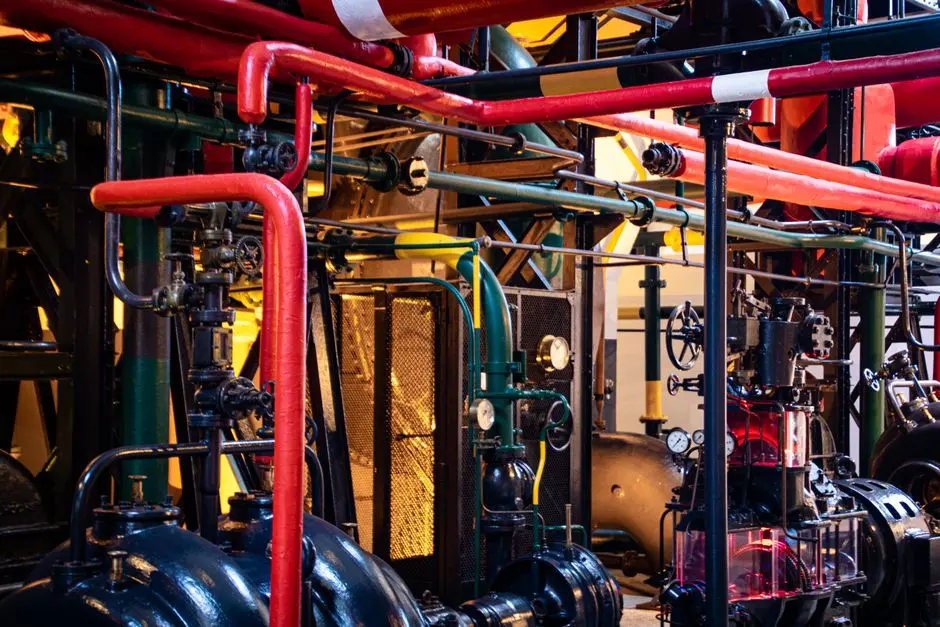
Before signing, the diligence team must pull 36 months of CONAGUA derechos payment history and 8 quarters of monitoring data, plus a full open-expediente list from the seller (per CONAGUA guidance, 2025). A missing quarter of monitoring data is a red flag that the seller's own outfall may have been drifting toward non-compliance, and that drift becomes UPM's first 100 days on the job. The expediente list must include the COTER correspondence file for sub-basin-specific discharge windows that sit on top of the federal NOM and only surface in basin-level correspondence, not the headline permit. Most contested findings in the 2024 Guanajuato auto-supplier sweep came from COTER overlays, not from a NOM-001 ceiling violation.
Hold in escrow at signing: the seller's lab accreditation certificate, chain-of-custody for the most recent 12 months of samples, and the field-measurement calibration log, because these are the first documents PROFEPA will demand at any unannounced audit (per CONAGUA guidance, 2025). Confirm the state-level Comisión Estatal de Agua (CEA) overlay: site-specific discharge and zoning constraints can be tighter than the federal NOM ceiling, and those overlays only surface in the seller's correspondence file. For a pulp-mill target, the inherited file should also include the AOX baseline and the mill's last two bleaching-sequence reviews, because Mexican inspectors are not yet auditing AOX uniformly, but a future enforcement priority is being signaled in CONAGUA basin bulletins as of 2025.
Phase 1 is not a checkbox; it is the engineering input to the deal price. The conditions sitting in the seller's drawer will land on UPM's outfall within the first 12 months, and the only defense is a 36-month paper trail that can be matched against the re-issued Título's operating conditions on the day of re-issuance. The COTER correspondence file is the single most-skipped item in cross-border diligence and the single most-cited source of post-close fines.
Retrofit CAPEX envelope for a 1,500 m³/day UPM mill
Base-train CAPEX for a 1,500 m³/day Mexico retrofit covering DAF, MBR, and RO with no evaporator fits a $1.5M–$6M envelope, or roughly $1,000–$4,000 per m³/day of design capacity ($4–$16 per gallon). A ZLD-ready configuration with an evaporator/crystallizer adds 1.5x–2.5x to the base-train number, which aligns with 2030 reuse targets and the basin-level pressure on San Luis Potosí, Silao, and Ramos Arizpe. A baseline DAF system for pulp-mill primary clarification paired with an MBR system for pulp-mill secondary biological treatment is the typical hydraulic front-end for this influent matrix, with the spent-liquor concentrator plus recovery-boiler re-tube sized separately as a process retrofit, not a treatment line.
Pulp-mill black-liquor evaporator condensate is a separate process column, not a treatment stage. The typical retrofit path is a spent-liquor concentrator plus recovery-boiler re-tube for the strong-liquor loop, while evaporator condensate polishing is what actually discharges to NOM-001 or NOM-002. The condensate polishing train is where a DAF plus MBR plus RO train lives, and it is the train that the CAPEX envelope below is sized against, not the recovery boiler.
At 15–30% RO reject on a 1,500 m³/day plant, that is 225–450 m³/day of liquid leaving the site, with Mexican disposal tariffs of $0.40–$0.90 per 1,000 gallons depending on state and hazardous classification (per S3). A worked example: 300 m³/day reject at a $0.60/1,000-gal avoided-disposal credit captures roughly $48/day, or about $17,500/year, not enough to retire an evaporator CAPEX, but enough to make brine minimization a real lever in the financial model. Sludge dewatering belongs as a discrete budget line because NOM-052-SEMARNAT-2005 hazardous-waste classification routes MX-Class I hydroxide sludge to a hazardous-only landfill; a plate-and-frame filter press for NOM-052 sludge handling is the matching unit operation for that line item. The cost-of-not-acting benchmark is concrete: a 2024 PROFEPA enforcement sweep at three Guanajuato auto-supplier sites produced combined fines above MXN 28M (~$1.6M) for inherited COTER findings six months after deal close (per PROFEPA, 2024).
| Configuration | Scope | CAPEX envelope (1,500 m³/day) | Per m³/day | When it applies |
|---|---|---|---|---|
| Base-train (DAF + MBR + RO, no evaporator) | Primary clarification → biological → RO polish → surface or sewer discharge | $1.5M–$6M | $1,000–$4,000 | Site outside stressed basin, sewer-acceptance limits achievable, no reuse target |
| ZLD-ready (base train + evaporator/crystallizer) | Brine minimization + zero liquid discharge; aligns with 2030 reuse targets | $3.75M–$15M (1.5x–2.5x base) | $2,500–$10,000 | San Luis Potosí, Silao, Ramos Arizpe dry-season; COTER-driven reuse mandate; surface discharge in stressed basin |
| Full evaporator + spent-liquor concentrator | Black-liquor recovery boiler re-tube + condensate polish train; not a treatment line item | Process retrofit, separate budget | n/a | All integrated pulp-mill retrofits; sized against recovery-boiler capacity, not hydraulic flow |
| Sludge dewatering (NOM-052) | Plate-and-frame filter press + Class I landfill logistics | Discrete line item | n/a | All retrofits producing MX-Class I hydroxide sludge |
For a parallel Mexico-acquisition retrofit cost comparison, the Wastewater Treatment Plant Cost in Mexico City: 2026 Engineering Breakdown shows how a comparable retrofit budget gets structured, and the Hyundai Mexico plant acquisition compliance guide walks the same CAPEX envelope in a sibling OEM format that maps with structural changes to a pulp-mill influent matrix.
24-month integration timeline UPM actually executes
The 24-month ISO 14001 conformance clock and the Mexican federal filing windows run in parallel; the calendar below is the sequence the integration team actually executes, and each bracket ends with a verifiable deliverable.
Days 0–90: file Formato de Cambio de Titularidad with CONAGUA and the LGEEPA Article 29-bis change-of-operator notice with SEMARNAT; re-issue LP-GMX-XXX NOI for any satellite discharge below 20,000 m³/yr under UPM's legal entity within 30 days of going live. Months 3–12: install near-continuous flow-paced monitoring (the 100% regulated-discharge measurement expectation translated from the OEM Water Security 2022 disclosure) and file semi-annual NOM-001 progress reports the first 5 working days of March and September per Article 17 of the Guidelines. Year 1: complete Annual Self-Declaration Audit; trigger first full external EMS audit if any Major Non-Conformance is found in year one. Months 0–24: reach ISO 14001 conformance, complete the legal register (federal, state, basin), and document the environmental calendar under the S4 §4.1.2 corporate-EMS pattern.
| Window | Action | Deliverable |
|---|---|---|
| Days 0–90 | Formato de Cambio de Titularidad; LGEEPA Art. 29-bis change-of-operator notice | Re-issued Título in UPM's legal name; re-issued discharge authorization |
| Days 0–30 (post-going-live) | Re-file LP-GMX-XXX NOI for any site <20,000 m³/yr per discharge point | Active generic permit in successor name |
| Months 3–12 | Near-continuous flow-paced monitoring; semi-annual NOM-001 progress reports the first 5 working days of March and September per Article 17 | 100% regulated-discharge measurement; progress reports on file |
| Year 1 | Annual Self-Declaration Audit; first full external EMS audit if any Major Non-Conformance | Audit report; corrective action plan |
| Months 0–24 | ISO 14001 conformance; legal register (federal, state, basin); environmental calendar per S4 §4.1.2 | ISO 14001 certificate; legal register; environmental calendar |
Frequently Asked Questions
Does the seller's CONAGUA Título de Concesión transfer to UPM on closing?
No. The buyer must file Formato de Cambio de Titularidad with CONAGUA so the title re-issues in UPM's legal name. The title's re-issuance is what re-binds UPM to the original operating conditions, not the asset-purchase agreement, and operating conditions carry forward unchanged (per CONAGUA guidance, 2025).
What is the binding wastewater standard for a Mexico plant in 2026?
NOM-001-SEMARNAT-2021 (in force March 11, 2023) for surface discharge; NOM-002 for discharge to a municipal sewer. Basin-level COTER overlays can impose ceilings 20–30% tighter than the federal NOM in San Luis Potosí, Silao, and Ramos Arizpe during the November–May dry season (per CONAGUA basin bulletins, 2025). For a pulp-mill target, AOX is the practical binding parameter on routes to municipal sewer, even though it does not appear in NOM-001's surface ceiling table.
How much retrofit CAPEX should UPM budget for a 1,500 m³/day pulp-mill retrofit?
Base-train DAF + MBR + RO with no evaporator fits a $1.5M–$6M envelope ($1,000–$4,000 per m³/day). A ZLD-ready configuration with evaporator/crystallizer adds 1.5x–2.5x. The spent-liquor concentrator and recovery-boiler re-tube are sized separately as a process retrofit.
Can PROFEPA inspect the plant without notice?
Yes. PROFEPA is the only Mexican government agency that does not have to give 24-hour audit notice and usually arrives without warning. UPM can designate witnesses and personnel to assist the auditor, but cannot prevent the audit from taking place (per Tecma podcast with Glenn McBride, 2024).
Does prior contamination on the acquired site transfer to UPM?
Yes. If UPM leases, purchases, or acquires a property it immediately becomes responsible for any prior contamination, with no statute of limitations. A 20-year-old spill found on inspection becomes UPM's cleanup obligation, which is why the 36-month paper-trail pull in Phase 1 is the single most risk-priced line item in the diligence budget (per Tecma podcast, 2024).