What changes on Day 1 when a fab changes hands in India
Fab acquisitions in India trigger two parallel tracks that must close together: a corporate track (share purchase or asset transfer) and a regulatory track (Consent to Operate amendment under Section 25/26 of the Water Act 1974, with mirror filings under the Air Act 1981 and the Environment Protection Act 1986). India has no single "change-of-control" environmental permit — each State Pollution Control Board (SPCB) processes the amendment with a fresh site inspection, and timelines for SPCB consent amendment typically run 90–120 days (HydropureWater field data, 2026). If production capacity changes, a fresh Environmental Clearance from MoEFCC is required under the EIA Notification 2006, as amended.
The de facto starting dataset an SPCB will request is the 10-key-pollutant composite TSMC already tracks globally: COD, fluoride, suspended solids, ammonia-N, nitrate-N, arsenic, boron, copper, cobalt, and total phosphorus (TSMC 2025 Sustainability Report, Note 3). Tying the consent amendment to this composite — rather than to legacy parameter lists from the previous owner — shortens negotiation cycles and pre-positions the site for the 2024–2026 draft CPCB revisions.
The first technical deliverable is a baseline site characterization: soil, groundwater, and sediment sampling, with results locked before signing. Under Indian law, legacy contamination liability transfers with the asset, and the absence of a baseline report leaves the acquirer exposed to remediation orders issued years after closing. A second deliverable is a change-in-ownership consent amendment application — not a fresh Consent to Establish, unless capacity is being expanded — and that single filing governs air, water, and hazardous-waste obligations for the next 5 years.
India's regulatory stack for semiconductor wastewater in 2026
Four instruments cover almost every effluent parameter a fab will discharge: the Water Act 1974 / Air Act 1981 consent framework, the EPA 1986 umbrella, the CPCB Schedule VI general effluent standards, and the Hazardous and Other Wastes (Management and Transboundary Movement) Rules, 2016. On top of these sit 2024–2026 draft CPCB revisions that introduce per-sector norms for electronics and semiconductor manufacturing — including boron, COD limits tied to discharge destination, and TDS caps that differ between inland and coastal outfalls. State norms in Tamil Nadu, Karnataka, and Gujarat add fluoride caps, ammonia-N limits, and ZLD triggers that frequently pre-empt the central standard. The 2025–2026 draft Indian PFAS guidance and Tamil Nadu's groundwater PFAS surveys are now the near-term compliance frontier, and any PFAS-containing concentrate or spent solvent must be handled under the 2016 Hazardous Waste Rules rather than the general effluent pathway.
| Parameter | CPCB Schedule VI (general) | Typical state semiconductor norm (TN/GJ/KA) | TSMC 2025 composite |
|---|---|---|---|
| COD | 250 mg/L | ≤200 mg/L | Tracked; 61.9% composite reduction vs 2010 |
| Suspended solids | 100 mg/L | ≤50 mg/L | Tracked |
| Fluoride | 2.0 mg/L | ≤1.5 mg/L | Tracked |
| Ammonia-N | 50 mg/L | ≤10 mg/L | Tracked; Fab 20 system delivers 30% chemical-use cut |
| Total phosphorus | 5.0 mg/L | ≤2.0 mg/L | Tracked |
| Copper | 3.0 mg/L | ≤1.0 mg/L | Tracked |
| Arsenic | 0.2 mg/L | ≤0.1 mg/L | Tracked |
| Boron | 2.0 mg/L (draft) | ≤1.0 mg/L (draft) | Tracked |
The 8,950 tCO₂e/yr avoided at Fab 20's ammonia-diversion system (TSMC 2025) demonstrates that TSMC already operates at chemical-use intensities India regulators are beginning to demand. A consent application that maps each stream — fluoride, ammonia-N, copper/CMP, organics — to a specific treatment stage will be reviewed faster than one that submits only blended effluent numbers.
The 10-pollutant composite: how TSMC's global standard maps onto Indian limits
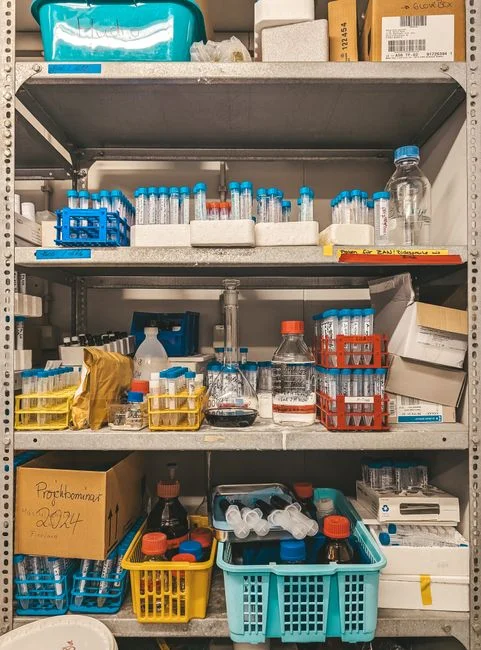
TSMC's 2025 disclosure reports a 61.9% reduction in its water-pollution composite indicator against a 60% target — a benchmark Indian regulators will likely cite as "achievable" when negotiating new-fab consents (TSMC 2025 Sustainability Report, Note 3). The composite is not a marketing line: it is a weighted aggregate of COD, fluoride, suspended solids, ammonia-N, nitrate-N, arsenic, boron, copper, cobalt, and total phosphorus, and each of those ten parameters appears in the CPCB Schedule VI or state semiconductor norms.
Each pollutant has a likely Indian discharge point. Fluoride and ammonia-N come off scrubber blowdown; copper and cobalt leave with CMP slurry waste; COD loads originate from general process wastewater and organic solvents. The Fab 20 ammonia-diversion result — 40% conductivity reduction and 30% chemical-use reduction at 5,887 audited drain ports (TSMC 2025 case study, 2025-06) — proves that source segregation, not just end-of-pipe polishing, is the compliance posture that lets an Indian fab hit the composite envelope without oversizing the biological stage.
In practice, the composite forces a discipline most Indian sites skip: per-stream mass-balance accounting, not blended-influent sampling. An acquirer that walks into the SPCB with 10 segregated monitoring points and 12 months of source data, rather than one composite sampler, will negotiate a tighter consent and a longer consent validity window.
ZLD and near-zero-liquid-discharge: what India expects in 2026
ZLD means no liquid effluent leaves the site; near-zero-liquid-discharge (NLD) is the same outcome with minimal liquid purge, which is the design basis TSMC Arizona has adopted for its reclaimed-water facility that began construction in 2025 (TSMC 2025 Sustainability Report). Brine math is straightforward: a 20,000 m³/day fab operating a two-pass RO at 75% recovery generates roughly 5,000 m³/day of RO reject, all of which must go to thermal concentration or crystallization. That single number drives capex — mechanical vapor recompression (MVR) trains sized at 250–500 m³/day per unit are typical for fab brine streams.
Indian states currently mandating ZLD for new industrial projects include Tamil Nadu, Rajasthan, Gujarat, Haryana, and parts of Karnataka for CETP-discharging sectors. For a TSMC-scale fab, the consent negotiation is therefore not "whether ZLD" but "how much brine disposal capacity can the state support" — and that answer depends on whether the site can secure a deep-well injection permit or a multi-effect evaporator footprint.
TSMC's S.T.S.P. Reclaimed Water Plant, expected to reach 36,000 m³/day supply capacity in 2026, and the Qiaotou facility adding 25,500 m³/day to Fab 22 in 2026, are real-world recovery rates the acquirer can cite in consent negotiations (TSMC 2022 S.T.S.P. announcement; 2025 Sustainability Report). The JASM Kumamoto precedent — 8 million m³ of groundwater recharge in 2025 — shows that "returned water" credits can offset withdrawal, which is useful when arguing with a state water resources authority that withdrawal caps and discharge caps are two separate fights. For a parallel compliance read on a similar deal, see the WuXi AppTec India plant compliance guide.
Reference treatment train for a 2026 Indian fab
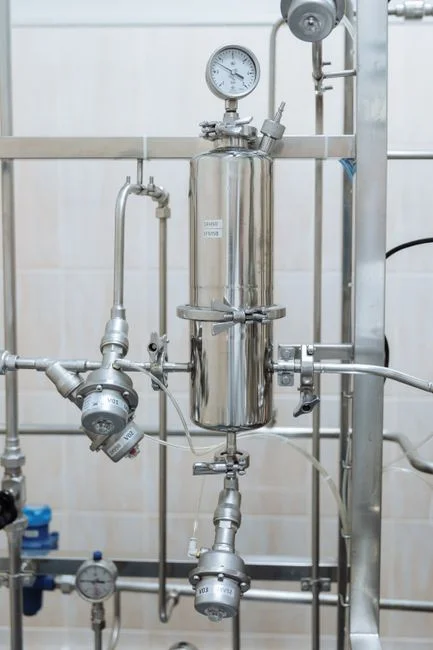
A train that satisfies both CPCB limits and the TSMC 10-pollutant composite has six stages, the first of which is the cheapest and most often skipped: source segregation at the tool. TSMC's Fab 20 Phase 1 audit covered 5,887 drain ports on roughly 1,000 tools to separate fluoride, ammonia-N, and copper streams (TSMC 2025-06). Stage 2 is coagulation/flocculation followed by a HydropureWater DAF system sized to the side-stream flow, typically 4–300 m³/h for fab flows, to remove suspended solids, FOG, and coagulated metals. Stage 3 is an integrated MBR system (A/O or MBR) for COD and ammonia-N, with MBR effluent quality enabling high reuse rates via its <1 μm filtration barrier. Stage 4 is a PVDF ultrafiltration system ahead of a two-pass industrial RO system for water reuse.
Stage 5 is brine concentration — MVR or falling-film evaporator feeding a crystallizer — and sludge dewatering via a plate-and-frame filter press sized for 30–40% dry solids output. Optional Stage 6 is UV or ozone for residual organic polishing before reuse, especially if the water feeds scrubbers or cooling towers where biofilm control matters. A side-by-side stream-by-stage view for a typical Indian fab:
| Stage | Target stream | Key equipment | India design note |
|---|---|---|---|
| 1 — Source segregation | Fluoride, NH4-N, Cu/Co, organics | Drain-port audit, segregated headers | Mirrors Fab 20: 5,887 ports audited |
| 2 — Coagulation/DAF | SS, FOG, metals | DAF 4–300 m³/h | Required before biological stage for FOG >200 mg/L |
| 3 — Biological (MBR) | COD, NH4-N | A/O + MBR | MLSS 8,000–12,000 mg/L; HRT 6–8 h |
| 4 — UF + 2-pass RO | Reuse water, conductivity cut | PVDF UF → RO | RO recovery 70–75%; UF SDI <3 |
| 5 — Brine / sludge | RO reject, biomass | MVR + crystallizer + filter press | Brine 0.20–0.25 m³ per m³ feed |
| 6 — Polishing | Residual TOC for reuse | UV / ozone | Required if reuse feeds scrubbers |
PFAS in 2026: the parameter India has not yet regulated but the acquirer cannot ignore
TSMC's 2025 Joint Development Project (JDP) portfolio includes PFAS treatment research with universities in the U.S., Japan, and China — a clear signal that PFAS is a Tier-1 R&D topic at the company, not a watch-item (TSMC 2025 Sustainability Report). In semiconductor fabs, PFAS originates primarily from photoresist, anti-reflective coatings, and certain etchants, which means a fab cannot avoid it by switching chemistries alone.
India's 2024–2026 policy trajectory is closing in. Draft CPCB PFAS guidance is in circulation, Tamil Nadu and Karnataka have begun state-level groundwater PFAS surveys, and PFOA/PFOS remain under Stockholm Convention review. The implication for an acquirer is sharp: a 2026 Consent to Operate that does not address PFAS in the application, even if no Indian limit exists yet, becomes a future-consent problem the day CPCB publishes a number. Pre-acquisition screening of process records and downstream receiving water, plus a baseline groundwater sampling plan, locks in liability allocation before signing rather than after enforcement. Granular activated carbon (GAC) and ion-exchange resin destruction trains are the current end-of-pipe options; both are capital-intensive and should be sized in the consent application, not retrofitted later.
90-day acquisition compliance checklist
The single artifact most deal teams miss is a sequenced compliance calendar that aligns corporate closing dates with SPCB review clocks. The table below is sized for a 90-day pre-Day-1 sprint; extend each block by 30 days if the target site is in a high-water-stress state or has a legacy groundwater plume.
| Window | Action | Owner | Regulator touchpoint |
|---|---|---|---|
| Days 0–30 | File Consent to Operate amendment; commission baseline ESA (soil, groundwater, sediment) | EHS lead + EPC | SPCB pre-meeting |
| Days 0–30 | Engage PFAS baseline sampling | Lab partner | TNPCB / KSPCB groundwater cell |
| Days 30–60 | Stand up 10-pollutant composite monitoring; freeze source-segregation design | Process engineering | Aligns with TSMC 2025 framework |
| Days 30–60 | Issue ZLD/NLD design basis; lock RO recovery, MVR sizing | EPC water lead | State water resources authority |
| Days 60–90 | SPCB inspection dry-run; submit PFAS baseline report | EHS lead | SPCB |
| Days 60–90 | File Consent to Establish if capacity expansion is in scope | Legal + EHS | MoEFCC (EIA Notification 2006) |
| Post-Day-1 | Quarterly composite-indicator review aligned to TSMC enterprise calendar | Plant EHS | Internal audit + AWS recertification |
TSMC's AWS Platinum discipline at Hsinchu, Taichung, and Tainan sites is the audit-ready posture SPCB inspectors increasingly expect — annual site recertification requires continuous data, not point-in-time samples (TSMC 2025 Sustainability Report). For a comparable sequenced artifact on underground sewage treatment at Indian pharmaceutical plants, see the pharma underground sewage treatment 2026 guide.
Frequently Asked Questions
What wastewater requirements apply when TSMC acquires a plant in India?
Three obligations must clear before Day 1: (1) Consent to Operate amendment under the Water Act 1974 and Air Act 1981, processed by the state SPCB in 90–120 days; (2) compliance with CPCB Schedule VI plus state-specific semiconductor norms covering the 10-pollutant composite (COD, fluoride, SS, ammonia-N, nitrate-N, arsenic, boron, copper, cobalt, total phosphorus); and (3) ZLD-readiness — Tamil Nadu, Gujarat, and Karnataka now expect ≥90% recycle and brine management for new semiconductor projects (HydropureWater field data, 2026).
How much does ZLD cost for a 20,000 m³/day semiconductor fab in India?
At 75% RO recovery, a 20,000 m³/day fab generates roughly 5,000 m³/day of RO reject requiring MVR or multi-effect evaporation plus crystallization. Mechanical vapor recompression trains sized 250–500 m³/day per unit are typical, and the capex envelope for the brine train alone is the single largest line item in the wastewater budget — usually larger than primary biological treatment.
Does India regulate PFAS in semiconductor wastewater in 2026?
No numeric Indian limit exists yet, but draft CPCB PFAS guidance is in circulation and Tamil Nadu and Karnataka have begun groundwater PFAS surveys. Because PFAS in fabs originates from photoresist, anti-reflective coatings, and certain etchants, an acquirer should still submit a PFAS baseline in the consent application to lock in liability allocation before CPCB publishes a number.
How long does a Consent to Operate amendment take after a TSMC acquisition in India?
SPCB consent amendment applications typically run 90–120 days, including a fresh site inspection (HydropureWater field data, 2026). If production capacity changes, a fresh Environmental Clearance from MoEFCC under the EIA Notification 2006 is required in parallel, which adds 60–180 days depending on the state.