Why Wafer Cleaning Wastewater Demands Specialized Treatment
Wafer cleaning generates 30–50% of a fab’s total wastewater volume, with contaminant loads 10–100× higher than municipal sewage (per 2025 SEMATECH data). Key contaminants include dissolved copper (500–2,000 mg/L from CMP), hydrogen peroxide (1–5% from SC1/SC2 cleaning), sulfuric acid (pH <2), and silica nanoparticles (10–100 nm). Generic treatment systems often fail to address these specific challenges, leading to significant regulatory risks and economic repercussions. EPA’s 40 CFR Part 469 (semiconductor manufacturing effluent guidelines) and GB 8978-1996 (China) impose strict limits on copper (<0.5 mg/L), pH (6–9), and COD (<100 mg/L). Non-compliance can result in fines up to $50K/day (EPA) and costly production shutdowns during permit violations. A specialized approach is therefore imperative.
| Contaminant | Typical Concentration Range | Source Process | Regulatory Limit (Example) | Treatment Challenge |
|---|---|---|---|---|
| Dissolved Copper | 500–2,000 mg/L | Chemical Mechanical Planarization (CMP) | <0.5 mg/L (EPA/GB) | High solubility, requires efficient removal of ionic and particulate forms. |
| Hydrogen Peroxide (H₂O₂) | 1–5% | SC1/SC2 Cleaning | N/A (but degrades RO membranes) | Strong oxidant, can irreversibly damage polyamide RO membranes; requires quenching. |
| Sulfuric Acid (H₂SO₄) | pH <2 | Piranha Etching, Cleaning | pH 6–9 | Low pH requires neutralization; highly corrosive. |
| Silica Nanoparticles | 10–100 nm | CMP Slurry, Cleaning | N/A (but contributes to fouling) | Very small size, difficult to remove by conventional filtration; can cause membrane scaling. |
| Organic Residues | Varies | Photoresist Stripping, Cleaning | COD <100 mg/L (EPA/GB) | Can increase biological oxygen demand (BOD) and chemical oxygen demand (COD). |
Hybrid DAF-RO-MBR Systems: Engineering Specs for 2026
Hybrid treatment systems combining Dissolved Air Flotation (DAF), Reverse Osmosis (RO), and Membrane Bioreactor (MBR) technologies offer an advanced solution for wafer cleaning wastewater treatment. These integrated systems are engineered to achieve high-purity water recovery and meet stringent discharge standards. The DAF stage effectively removes 95–98% of suspended solids and fats, oils, and grease (FOG) at surface loading rates of 10–15 m/h. Following DAF, industrial RO systems designed for semiconductor fabs achieve up to 95% water recovery using zero-fouling PVDF membranes with a 0.1 μm pore size, operating optimally at 15–25 bar and 20–30°C. The final polishing stage utilizes submerged flat-sheet PVDF membranes from MBR modules, maintaining mixed liquor suspended solids (MLSS) of 8,000–12,000 mg/L and a sludge retention time (SRT) of 20–30 days. This compact design results in a system footprint that is 30–50% smaller than conventional activated sludge + RO configurations.
| Treatment Stage | Key Technology | Typical Performance Metric | 2026 Engineering Specifications | Footprint Factor (vs. Conventional) |
|---|---|---|---|---|
| Pretreatment | pH Adjustment, Oxidant Quenching, Micron Filtration | pH: 6-8; Quenching Efficiency: >99% | Sodium Bisulfite Dosing; 50 μm Filtration | N/A |
| Primary Treatment | Dissolved Air Flotation (DAF) | Suspended Solids Removal: 95-98%; FOG Removal: 95% | Surface Loading Rate: 10-15 m/h | Integrated |
| Secondary Treatment | Membrane Bioreactor (MBR) | COD Reduction: 90%; Ammonia Reduction: 99% | PVDF Flat-Sheet Membranes (0.1 μm); MLSS: 8,000–12,000 mg/L; SRT: 20–30 days | Integrated with RO, reduces overall footprint. |
| Tertiary Treatment | Reverse Osmosis (RO) | Water Recovery: 95%; Dissolved Metals Rejection: 99% | PVDF Membranes (0.1 μm); Pressure: 15–25 bar; Temperature: 20–30°C | 30-50% smaller footprint than standalone RO. |
For detailed specifications, refer to our DAF system, Industrial RO systems, and DF series PVDF flat-sheet MBR membranes.
DAF vs. RO vs. MBR: Which Stage Handles Which Contaminant?
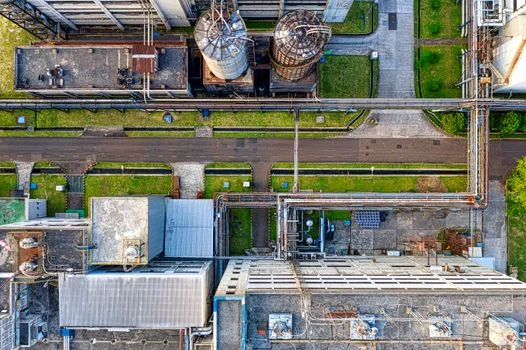
The DAF stage excels at physical separation, removing approximately 95% of suspended solids and 90% of FOG. It also contributes to initial copper removal, capturing up to 70% of dissolved copper. The RO stage is effective against dissolved contaminants, rejecting 99% of dissolved metals like copper and nickel, and 95% of total dissolved solids (TDS). The MBR stage is designed for biological degradation of organic pollutants and nutrient removal; it effectively degrades 90% of organic COD and 99% of ammonia.
| Treatment Stage | Primary Contaminant Removal | Secondary Removal Capabilities | Key Limitations/Requirements |
|---|---|---|---|
| DAF | Suspended Solids (95%), FOG (90%) | Dissolved Copper (70%) | Requires coagulants/flocculants; effectiveness depends on particle size and density. |
| RO | Dissolved Metals (99%), TDS (95%), COD (90%) | Viruses, Bacteria | Sensitive to pH (<8 for scaling prevention); susceptible to oxidant damage; requires effective pretreatment. |
| MBR | Organic COD (90%), Ammonia (99%) | BOD (<5 mg/L), Pathogens | Requires balanced C:N:P ratio; sensitive to toxic shock loads. |
CAPEX and OPEX Breakdown: 2026 Cost Models for Hybrid Systems
Evaluating the economic viability of hybrid treatment systems requires understanding both capital expenditure (CAPEX) and operational expenditure (OPEX). For a 100 m³/h hybrid DAF-RO-MBR system, estimated CAPEX ranges from $1.2M to $2.5M. Operational costs are projected to be $0.80–$1.50 per cubic meter of treated water. Major OPEX components include membrane replacement, energy consumption, and chemical dosing. The return on investment (ROI) for these systems is typically realized within 3–5 years.
| Metric | Hybrid DAF-RO-MBR (100 m³/h) | Standalone DAF + Chemical Precipitation | Notes |
|---|---|---|---|
| CAPEX (Estimated) | $1.2M–$2.5M | ~$0.5M | Hybrid systems have higher initial investment but offer greater long-term value. |
| OPEX per m³ (Estimated) | $0.80–$1.50 | ~$2.00 | Hybrid OPEX is lower due to water reuse savings and reduced sludge disposal. |
Compliance Mapping: EPA, GB 8978-1996, and EU Standards
Hybrid DAF-RO-MBR systems are engineered to meet stringent regulatory requirements. For the United States, EPA 40 CFR Part 469 mandates limits such as copper <0.5 mg/L, pH between 6–9, COD <100 mg/L, and TSS <30 mg/L. In China, GB 8978-1996 sets similar standards. The European Union's Industrial Emissions Directive 2010/75/EU imposes stricter controls.
| Regulation/Standard | Parameter | Limit | Applicable Region |
|---|---|---|---|
| EPA 40 CFR Part 469 | Copper | <0.5 mg/L | United States |
| EPA 40 CFR Part 469 | pH | 6–9 | United States |
Frequently Asked Questions
Q: What’s the biggest mistake fabs make when treating wafer cleaning wastewater?
A: Underestimating oxidant quenching. Hydrogen peroxide concentrations exceeding 1% can irreversibly degrade RO membranes. Failure to do so leads to premature membrane failure and significant replacement costs.
Q: Can hybrid systems handle fluoride from BOE cleaning?
A: Yes, but RO membranes require a pH above 7 to prevent hydrofluoric acid (HF) corrosion. It is essential to add a neutralizing agent to raise the pH to 8–9 before the RO stage.
Q: How often do PVDF membranes need replacement?
A: With proper cleaning protocols, PVDF membranes typically last 5–7 years. Effective DAF pretreatment can extend membrane life by 2–3 years.
Q: Is zero-discharge possible for wafer cleaning wastewater?
A: Yes, zero-discharge is achievable through a multi-stage system. This involves a DAF stage for solids removal, an RO stage for 95% water recovery, and an evaporator/crystallizer to treat the RO concentrate.
For more information, explore our article on engineering specs for heavy metal wastewater treatment and ammonia-nitrogen treatment for semiconductor wastewater.