Why Ankara Is a Special Case for Data Center Water in 2026
Ankara sits in a hot-summer continental, semi-arid Köppen BSk climate belt where summer design wet-bulb runs 18–22 °C and winter design drops below 0 °C, forcing a mixed-mode cooling architecture and producing strong seasonality in humidifier condensate. The 2024–2030 Türkiye ICT localization push treats water stress as a siting constraint on par with power, mirroring the Middle East pattern (IDE 2026). The binding regulatory layers for an Ankara build are the ASKİ industrial discharge tariff set by Ankara Su ve Kanalizasyon İdaresi and the Çevre Kanunu 2872 (Environmental Law No. 2872) enforced through the provincial Çevre, Şehircilik ve İklim Değişikliği directorate — not a Phoenix Active Management Area groundwater plan or a Karachi SEQS schedule. A 100 MW facility can pull up to 2 million liters/day from municipal supply (IDE 2026), and at 4 cycles of concentration (CoC) roughly 25% of that flow leaves as blowdown (Genesis Water Tech 2026). HydropureWater field data, 2026 confirms that Ankara mains water with TDS 250–500 mg/L concentrates to a CTBD envelope of 800–2,500 mg/L, so the discharge train must be sized for that band, not for the lower numbers used in northern-European briefs like the Stockholm data center cooling blowdown treatment guide.
What Streams an Ankara Data Center Actually Produces
Segregating streams drives both compliance and CAPEX. An Ankara data center produces four distinct wastewaters, each with its own chemistry envelope and reuse case.
| Stream | Source | Typical chemistry (Ankara) | Treatment intent |
|---|---|---|---|
| Sanitary & cafeteria | Restrooms, kitchens, staff areas | BOD 200–400 mg/L, TSS 150–300 mg/L, grease 50–200 mg/L | Containerized MBR to sewer or irrigation |
| Humidifier condensate | Direct/indirect humidification | Low TDS (50–200 mg/L), 30–55 °C, occasional biocide residual | DAF pre-step + MBR polish |
| Cooling-tower blowdown (CTBD) | Evaporative cooling loops | TDS 800–2,500 mg/L, hardness 400–1,200 mg/L as CaCO₃, silica 20–80 mg/L, conductivity 1,500–4,000 µS/cm, free Cl <1 mg/L after biocide rotation | MMF + RO for makeup reuse |
| Boiler/pretreatment backwash | Softener regeneration, filter rinse | Spikes of hardness, iron, occasional oil | Equalization + DAF |
The CTBD numbers are consistent with evaporative concentration of Ankara mains water at 4 CoC, and they are the envelope that downstream RO and ClO₂ stages must be designed against. Humidifier drain is low-TDS but high-temperature and carries intermittent biocide residuals, which is why a DAF system for humidifier condensate and CTBD pre-clarification is a more useful pre-step than a settling clarifier. Boiler/softener backwash arrives in slug flow and needs equalization before it hits the same train. For the underlying physical design of the DAF stage, the DAF design parameters 2026 engineering guide gives the hydraulic and air-to-solid ratios an Ankara engineer should anchor against.
The 2026 Discharge Compliance Floor Under SKKY
Turkish discharge compliance runs through the SKKY (Su Kirliliği Kontrol Yönetmeliği — Water Pollution Control Regulation) industrial effluent table, with provincial Çevre, Şehircilik ve İklim Değişikliği directorates acting as the enforcement body under Çevre Kanunu 2872. The 16-hour composite sampling floor that has to be met at the discharge outfall is COD ≤200 mg/L, TSS ≤50 mg/L, total Cr ≤0.5 mg/L, free Cl <1 mg/L, pH 6–9, with conductivity referenced to recipient stream standards (HydropureWater 2026, applied to the Turkish SKKY equivalent). 24-hour composite sampling is enforced at the discharge outfall, and administrative penalties plus operational suspension are the default response to failed composites (HydropureWater field data, 2026). On a USD 5M/yr revenue line at 8–12% margin, a two-week non-compliance event exceeds USD 75,000 in lost contribution — the same compliance-driven redundancy logic that shows up in the Madrid data center cooling blowdown treatment guide. The binding parameters for an Ankara discharge are conductivity, COD, TSS, total Cr, and free Cl, in that order of how often they are the failing analyte.
Process Train: DAF → MBR → MMF → RO → ClO₂
The segregated train for an Ankara data center runs DAF → containerized MBR → multi-media filter → industrial RO → on-site ClO₂, with the sanitary/condensate lines and the CTBD line sharing the front end and splitting before the RO.
Stage 1 DAF. Target 10–50 mg/L suspended-solids removal of corrosion products and biofilm fragments, with a hydraulic surge buffer for humidification drain cycles. The DAF system for humidifier condensate and CTBD pre-clarification covers 4–300 m³/h across 13 standard models, which fits the 50–800 m³/day envelope most Ankara builds sit inside. Equalization ahead of the DAF is mandatory because humidifier flow is diurnal and CTBD backwash is slug-flow.
Stage 2 containerized MBR. The containerized MBR for the sanitary and humidifier train runs at MLSS 8,000–12,000 mg/L and HRT 8–14 h, delivering BOD <10 mg/L, COD <60 mg/L, and TSS <5 mg/L in roughly 60% smaller footprint than conventional activated sludge (HydropureWater field data, 2026). Aeration is oversized 12–18% for ambient derating in Ankara summer when dissolved-oxygen transfer drops, and disc diffusers are specified at guaranteed SOTE above 6.5 kg O₂/kWh at design temperature. Where MBR underperformance is suspected, the submerged MBR troubleshooting guide gives the 12 most common failure modes a commissioning engineer will hit.
Stage 3 multi-media filter. A multi-media filter ahead of the RO train holds SDI below 5 to protect downstream RO membranes from biocides and corrosion inhibitors that concentrate in the circulating water. Backwash volume is recycled to the head of the DAF so it does not create a new discharge stream.
Stage 4 industrial RO polishing on CTBD. The industrial RO polishing for cooling-tower blowdown runs at 65–75% local recovery, 150–400 psi, producing permeate at 10–50 mg/L TDS with 95–99% salt rejection. A 50,000 GPD unit carries CAPEX USD 250,000–500,000 and OPEX USD 1.50–3.00/kgal (Genesis Water Tech 2026). Energy recovery devices are worth specifying above 20 MW IT load because pump energy dominates OPEX at that scale.
Stage 5 on-site ClO₂. An on-site ClO₂ generator for final discharge polish holds free Cl <1 mg/L without the THM formation risk of chlorine, and the skid is sized for grid-outage resilience because Ankara summer storms produce 2–6 h planned outages on the ASKİ-fed industrial feeders.
CTBD Reuse as Cooling-Tower Makeup: A Stepped Ladder
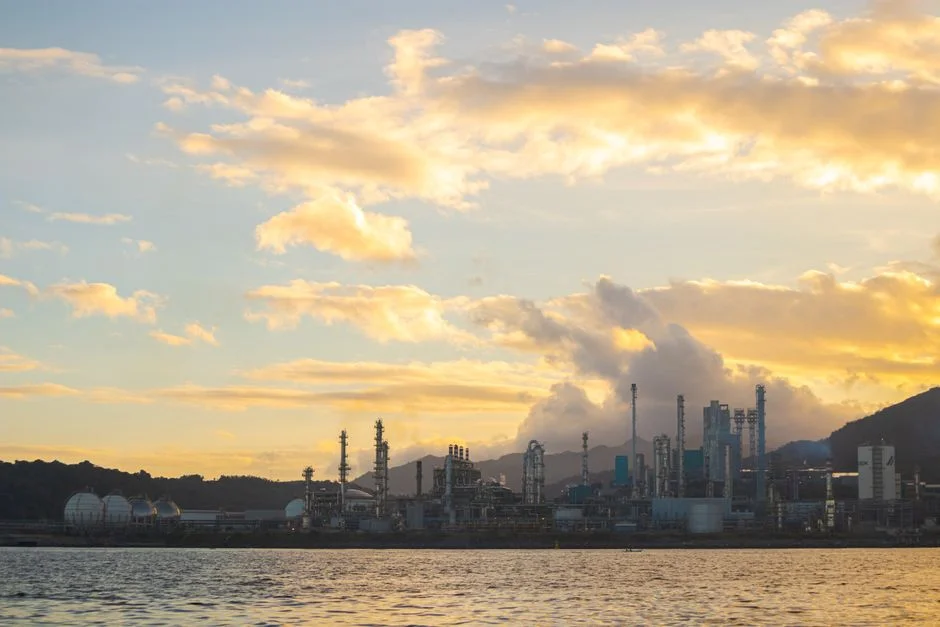
CTBD reuse is a technology ladder, not a single membrane decision. The right step depends on site flow, discharge tariff, and ESG mandate.
| Step | Technology | Operating window | Indicative cost (USD) |
|---|---|---|---|
| 1. Side-stream filtration | 10–25 µm self-cleaning screens, 1–5% of circulation flow | Continuous, <1 psi drop | CAPEX 50,000–200,000 (Genesis Water Tech 2026) |
| 2. UF pretreatment | 0.01–0.1 µm PVDF, 10–30 psi, 90–95% recovery | Chemical clean every 1–3 months | Sized by flow, 2,000–40,000 L/h range |
| 3. BWRO + softener | 50–85% recovery, 95–99% salt rejection, 150–400 psi | Permeate 10–50 mg/L TDS | CAPEX 250,000–500,000; OPEX 1.50–3.00/kgal (Genesis Water Tech 2026) |
| 4. Fluidized-bed crystallizer + brine re-RO | ~95% overall recovery, permeate silica ~1 mg/L | Breaks the 75–80% BWRO ceiling (IDE 2026) | Project-specific, drops OPEX per m³ of recovered water |
| 5. MVC evaporator (ZLD finish) | 95–98% recovery, distillate <10 mg/L TDS | 15–25 kWh per 1,000 USG | CAPEX 1–3M for 10,000–30,000 GPD; full ZLD 3–8M (Genesis Water Tech 2026) |
For Steps 2 and 3, the UF pretreatment ahead of the blowdown RO at 0.03 µm PVDF and the HydropureWater twin-tank industrial water softener at 1–45 T/h lift RO recovery by stripping hardness before the membrane, which is the cheapest way to push past the 75–80% BWRO ceiling that the IDE 2026 reference documents.
Reuse or Discharge: The 200 m³/day Decision Rule for Ankara
The decision rule fits on one slide and lines up with the parametric ranges an Ankara engineer can hand a finance committee.
| Site flow | IT load proxy | Decision | Why |
|---|---|---|---|
| <200 m³/day | <5 MW | DAF + containerized MBR + ClO₂ to sewer | RO CAPEX does not pay back; ASKİ tariff math doesn't justify it |
| 200–1,000 m³/day | 5–25 MW | DAF + MBR + MMF + RO polishing on CTBD | 30–50% makeup cut from pushing cycles 4 → 6–8 (Genesis Water Tech 2026) plus reduced ASKİ discharge fees |
| >1,000 m³/day or ESG-mandated | >25 MW | Full 95–99% recovery train with fluidized-bed crystallizer + MVC | ZLD CAPEX 3–8M USD, OPEX 5–15/kgal (Genesis Water Tech 2026); ASKİ tariff and Çevre Kanunu 2872 enforcement both push this direction |
Ankara's ASKİ industrial tariff structure is a reuse driver in the same direction as the K-Electric B-3 band cited in the HydropureWater 2026 Karachi guide, even where the absolute price levels differ. Below 200 m³/day, the MBR + ClO₂ path is defensible; above 200 m³/day, RO on CTBD pays back inside a 3–5 year window once avoided makeup and avoided discharge fees are both counted.
2026 CAPEX and OPEX Ranges for an Ankara Build
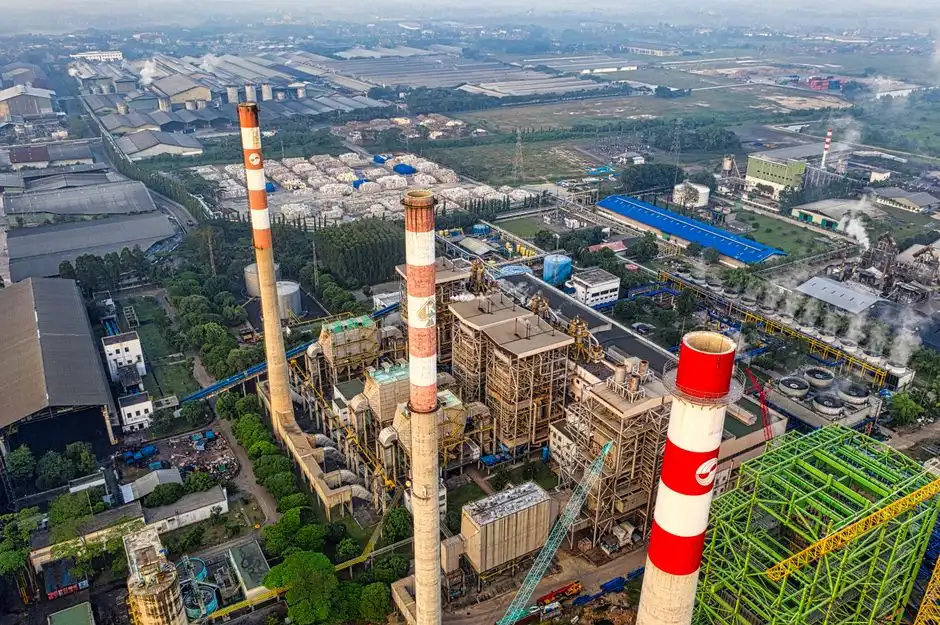
Budgeting an Ankara data-center WWTP starts with the IT-load band and the discharge decision. Costs are quoted in USD per HydropureWater's 2026 cost basis; convert at the prevailing EUR/TRY cross-rate at the time of procurement, with a 5–8% logistics uplift for overland from Mersin or Istanbul ports.
| Scale | IT load | Flow | Train | CAPEX (USD) | OPEX (USD) |
|---|---|---|---|---|---|
| Small hall | ~5 MW | ~200 m³/day | DAF + containerized MBR + ClO₂ to sewer, no RO | Below 250,000 | 0.80–1.50/kgal |
| Mid-scale | ~20 MW | ~800 m³/day | DAF + MBR + MMF + RO polishing on CTBD | RO train 250,000–500,000 (Genesis Water Tech 2026) | 1.50–3.00/kgal (Genesis Water Tech 2026) |
| Hyperscale | ~50 MW | ~2,000 m³/day | Same train + fluidized-bed crystallizer or MVC | Full ZLD 3–8M (Genesis Water Tech 2026) | 5–15/kgal (Genesis Water Tech 2026) |
Containerized WWTP skids clear Mersin or Istanbul ports in 7–14 days for standard ISO containers, then 1–3 days overland to Ankara. Ship the 2-year consumables and critical spares kit in the same logistics window — replacement parts from Europe or China run 6–10 weeks, and a membrane or dosing pump wait will idle a CTBD train the same week commissioning finishes.
Frequently Asked Questions
When does an Ankara data center need a Çevre Kanunu 2872 environmental permit versus just an ASKİ discharge permit?
Any site discharging treated industrial wastewater to a receiving body or to the ASKİ sewer above 50 m³/day needs a Çevre Kanunu 2872 environmental permit through the provincial Çevre, Şehircilik ve İklim Değişikliği directorate, with the SKKY industrial effluent table as the binding compliance floor. Below that threshold an ASKİ discharge connection agreement is typically sufficient.
What is the 200 m³/day reuse threshold for an Ankara data center and why does it matter?
Reuse pays back once site flow exceeds 200 m³/day, which most Ankara data centers hit by 5 MW of IT load because humidification and CTBD together exceed that volume. Below 200 m³/day, DAF + containerized MBR + ClO₂ to sewer is the defensible 2026 decision; above it, RO polishing on CTBD is justified by the 30–50% makeup water cut from pushing cycles 4 → 6–8 (Genesis Water Tech 2026).
What is the 75–80% BWRO ceiling and how does an Ankara engineer design around it?
Conventional brackish-water RO plateaus at 75–80% recovery before silica, CaCO₃, and CaSO₄ scaling becomes unmanageable (IDE 2026). The 2026 fix is a fluidized-bed crystallizer that drops silica, CaCO₃, and CaSO₄ as compact pellets, followed by re-RO of the NaCl brine at ~95% overall recovery with permeate silica near 1 mg/L, which is the only way to break the ceiling without an MVC evaporator.
Which SKKY parameters fail first on an Ankara CTBD discharge?
In HydropureWater field data, 2026, conductivity and free Cl fail first on Turkish CTBD discharges once the cooling system runs above 5 CoC, followed by TSS spikes during humidifier dump events. Total Cr fails when galvanized piping or chromate-treated cooling components are still in service, which is why Cr-free corrosion inhibitors are now standard in the Turkish colocation segment.
How long does it take to ship and install a containerized WWTP for an Ankara site?
Standard ISO containerized skids clear Mersin or Istanbul in 7–14 days, then 1–3 days overland to Ankara, with another 2–4 weeks for site assembly, MBR seeding, and RO commissioning. The 2-year consumables and critical spares kit must ship in the same logistics window to avoid 6–10 week replacement-part waits during the first year of operation.