What the Wrightsville Sewer Path Actually Regulates
A facility discharging to a sewer in the Wrightsville, US corridor is not governed by an NPDES surface-water permit — it is governed by Clean Water Act §307(b) and 40 CFR Part 403, which delegate enforcement to the receiving POTW through its local limit sewer use ordinance. Mining and metals operations typically qualify as Categorical Industrial Users under 40 CFR Part 437 (Ore Mining and Dressing) and, if a plating or pickling line is onsite, 40 CFR Part 433 (Metal Finishing). That CIU classification — not the existence of an NPDES permit — defines the numerical ceiling the plant must hit before its effluent reaches the municipal manhole, and it triggers the 40 CFR Part 403.12 Significant Industrial User self-monitoring and baseline reporting regime rather than the lighter non-significant track.
The federal categorical numbers set the floor; the local POTW's ordinance almost always sets a tighter ceiling. Plants with separate stormwater outfalls carry both authorizations in parallel, and the two sampling programs are not interchangeable. The penalty exposure runs through CWA §309 — civil penalties up to $25,000/day per violation — plus POTW cost-recovery for pass-through or interference events and the Significant Noncompliance (SNUR) public-notice mechanism.
| Parameter | 40 CFR Part 437 Daily Max (mg/L) | 40 CFR Part 437 Monthly Avg (mg/L) | 40 CFR Part 433 Daily/Monthly (mg/L) | Typical 2026 Local POTW MA (mg/L) |
|---|---|---|---|---|
| Copper (Cu) | 1.0 | 0.5 | 3.38 / 2.07 | 0.3–0.5 |
| Zinc (Zn) | 1.0 | 0.5 | 2.61 / 1.48 | 0.3–1.0 |
| Lead (Pb) | 0.4 | 0.2 | 0.69 / 0.43 | 0.03–0.1 (per LCRR direction) |
| Total Chromium | 0.5 | 0.25 | 2.77 / 1.71 | 0.5–1.0 |
| Cadmium (Cd) | 0.2 | 0.1 | 0.69 / 0.26 | 0.05–0.2 |
| Nickel (Ni) | 1.0 | 0.5 | 3.98 / 2.38 | 0.3–0.8 |
| pH (instantaneous) | 6.0–9.0 | 6.0–9.0 | 6.0–9.0 | 6.5–9.0 (typical) |
| TSS | 50 | 25 | 60 / 31 | 20–30 |
Sources: 40 CFR Part 437 subcategory limits per EPA 40 CFR 437.40–437.47; 40 CFR Part 433 categorical limits per 40 CFR 433.15; typical local POTW sewer-use ordinance limits compiled from Mid-Atlantic industrial corridor ordinances (2025-2026). For the full compliance picture, the general mining pretreatment compliance guide covers the §307(b) delegation logic in more depth.
Raw Influent Profile That Drives the Train
Raw acid mine drainage and spent process streams near Wrightsville arrive at pH 2-4 — well below the 6.5-9.0 instantaneous range virtually every Mid-Atlantic POTW enforces — and carry total suspended solids in the hundreds to several thousand mg/L. Dissolved heavy metals (Pb, Cu, Zn, Cd, Ni, As) ride the same stream, with elevated sulfate and TDS tagging along in leach-pad runoff and brine concentrates. Properly controlled hydroxide and sulfide precipitation systems in operating mining/metals installations routinely achieve 85-95% total metals removal (per Fluence, 2024-11), but only when the upstream chemistry is stable enough to hit a defined pH window.
Flow is not steady. Continuous base flow from cooling-water blowdown, blowdown from mill water treatment, and contact stormwater runs underneath episodic high-strength batches: shift-change dumps, leach-cycle rinses, mill clean-outs, and spent pickling acid. Those batch spikes — typically 2-4x the base-flow concentration in metals and 0.5-1.5 pH units lower in pH — are what drive every downstream sizing decision. The clarifier sees the same composite as a 24-hour average, but the chemistry it has to treat is whatever the worst hour of the day delivers. That is the whole reason the equalization basin exists, and why sizing it correctly is the single most leveraged decision in the train.
Equalization: The Most Undersized Piece of Equipment
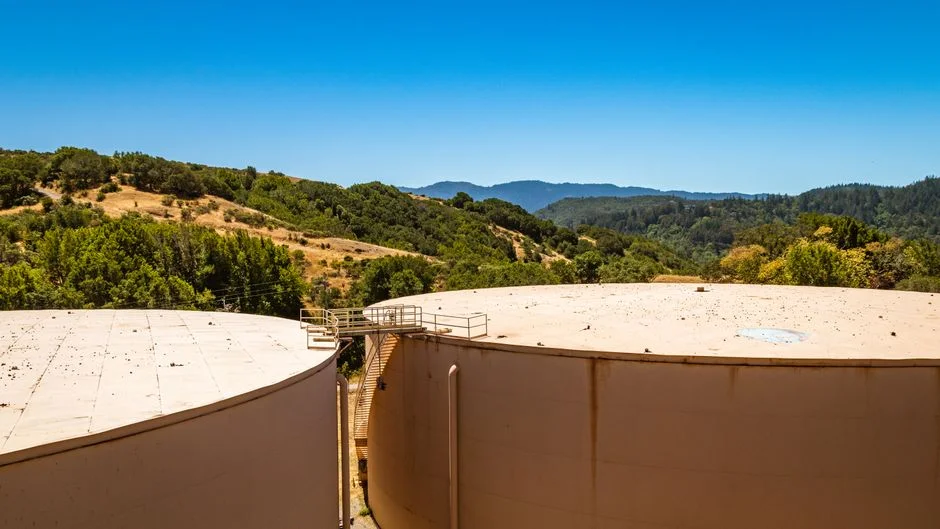
Spec the equalization basin at 8-24 hours of average daily flow, not the 4 hours that most generic pretreatment texts default to. The 8-24 h window is what dampens batch discharges from shift changes, dump-leach cycles, and mill clean-outs; a 4 h basin passes every upstream spike straight into the clarifier and is the most expensive piece of equipment to retrofit later, because the civil footprint, the mixers, and the transfer pumps all have to be torn out and rebuilt. The sizing decision is not theoretical — every POTW slug-discharge control violation traceable to a metals plant in the Mid-Atlantic corridor in the last 36 months has had a four-hour EQ basin somewhere upstream.
Pair the basin with a PLC-controlled chemical dosing skid handling both pH adjustment and coagulant feed on a single controller to keep pH inside a ±0.2 band — the difference between meeting and missing a 0.3 mg/L Zn monthly average. Mixing and air-scour control must be tuned to prevent the basin from going anaerobic; sulfide precipitation inside the EQ tank produces H₂S, upsets the downstream chemistry, and triggers odor complaints from neighboring tenants. Routine pump-out cadence is typically every 6-12 months, and the EQ sludge should be routed to the same plate press that handles the clarifier underflow rather than to drain. For the full treatment train context, see the Jackson-area mining pretreatment guide, which uses the same 8-24 h heuristic.
pH Correction and Metals Precipitation
Target pH 6.5-9.0 to satisfy virtually every POTW instantaneous range; stage dosing in two reactors if the influent swings more than 2 pH units, because a single-stage reactor chasing a wide pH band overdoses reagent on every cycle and never actually holds setpoint. Lime (Ca(OH)₂) is cheaper per ton but generates 3-5x more sludge than NaOH; high-TDS mining streams often justify the higher NaOH reagent cost, both because the lower sludge volume reduces dewatering press loading and because NaOH sidesteps the calcium-sulfate scaling that hits lime systems on sulfate-rich leach-pad runoff. Each 1 pH unit away from the metals-precipitation optimum can cut removal efficiency by an order of magnitude, sending zinc from <1 mg/L to 10+ mg/L with no other change in chemistry.
Hydroxide precipitation with NaOH or lime is the default — cheap, well understood. Sulfide precipitation (NaHS, FeS, Na₂S) is reserved for streams where residual metal must drop below 0.1 mg/L; sulfide residuals of 0.01-0.05 mg/L for Cu, Zn, Cd, and Ni are an order of magnitude lower than the 0.5-2.0 mg/L achievable with hydroxide, but reagent cost runs 2-4x higher and operators must control H₂S off-gas with sealed reactors and scrubbed vents. The cost-effective compromise at most Wrightsville-corridor operations is hydroxide bulk removal with a sulfide polishing cell on a slipstream — typically 10-20% of the main flow — sized to bring the blended residual below the local ceiling. A PLC-controlled chemical dosing skid wired for reagent flexibility (NaOH, lime, NaHS, polymer) lets the operator switch chemistries without civil rework when the local POTW tightens the ceiling in the next permit cycle.
Polymer coagulant aid dosed at 0.5-3 mg/L flocs the metal-hydroxide particles fast enough for the downstream clarifier to operate at 20-40 m/h hydraulic loading without carryover and reduces TDS bleed by collapsing the colloidal fraction before settling. Jar testing must define the pH window for each target metal — vendor curves are a starting point, not a design basis.
| Target Metal | Optimum pH (jar-test confirmed) | Hydroxide Residual (mg/L) | Sulfide Residual (mg/L) | Reagent Cost Index |
|---|---|---|---|---|
| Zinc (Zn) | ~9.0 | 0.5–1.0 | 0.01–0.05 | 1.0x (NaOH baseline) |
| Copper (Cu) | 9.0–10.0 | 0.5–1.0 | 0.01–0.05 | 1.0x (NaOH baseline) |
| Cadmium (Cd) | 10.0–11.0 | 0.5–2.0 | 0.01–0.05 | 1.2x (high pH, more NaOH) |
| Nickel (Ni) | ~10.0 | 0.5–1.5 | 0.02–0.05 | 1.2x (high pH, more NaOH) |
| Lead (Pb) | 9.0–9.5 | 0.2–0.5 | 0.01–0.03 | 1.0x |
| Sulfide-only polishing | 7.0–8.5 (slipstream) | — | 0.01–0.05 across all four | 2–4x hydroxide |
Source: parameter-specific jar-test optima and residual ranges compiled from operating mining/metals precipitation data (HydropureWater field data, 2026).
Solids Separation: DAF vs Lamella
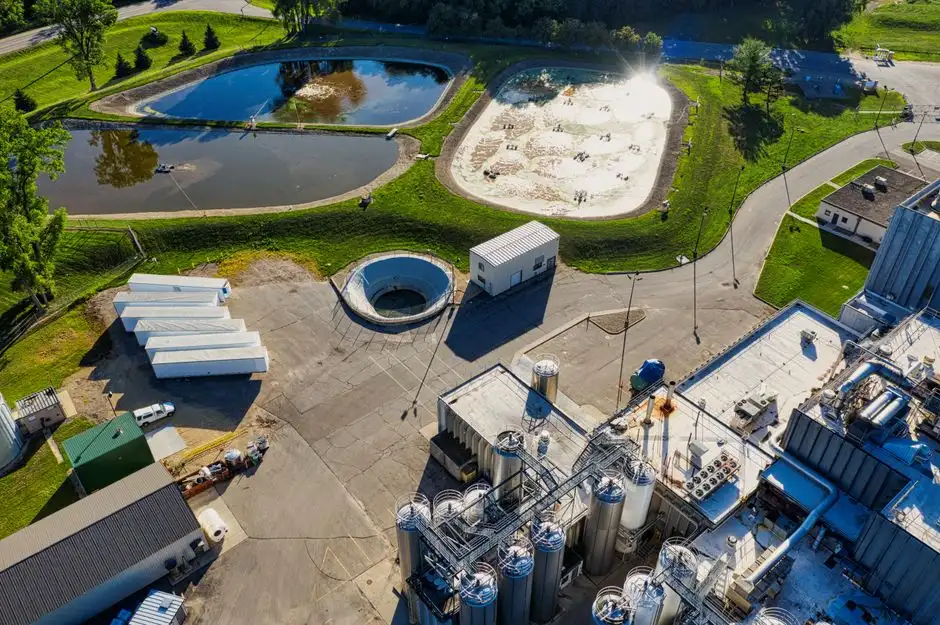
Both technologies work for a Wrightsville-style metals plant; neither is universally better. The dissolved air flotation system operates at 5-25 m/h hydraulic loading, floats oil-coated and colloidal particles with microbubbles, and achieves 90-98% TSS removal and 85-95% oil/grease removal in mining/metal-finishing service — the right answer whenever the stream carries emulsified oil from roll coolant, drawing compound, or hydraulic leaks. The high-efficiency lamella clarifier operates at 20-40 m/h surface loading in roughly one-third the footprint of a conventional clarifier, has lower chemical consumption because the sludge blanket is denser, and handles heavy metal-hydroxide flocs very well — but it does not remove free oil or colloidal fines as effectively as DAF.
Selection heuristic: DAF when the stream carries oil, grease, or fine colloidal metals; lamella when the stream is primarily a metal-hydroxide sludge at high flow and the footprint is constrained. Below 10 m³/h, packaged skid DAF units are common; above 100 m³/h, parallel DAF trains or a single large lamella clarifier typically becomes more economical. The DAF line covers 4-300 m³/h across 13 standard models, which fits most plant scales without civil redesign. For the full side-by-side engineering comparison, see the DAF vs clarifier factory guide and the DAF design parameters guide.
| Selection Criterion | DAF | Lamella Clarifier |
|---|---|---|
| Hydraulic loading rate | 5–25 m/h | 20–40 m/h |
| Footprint vs conventional | ~50–70% | ~33% |
| TSS removal | 90–98% | 85–95% |
| Oil/grease removal | 85–95% | 20–40% |
| Best-fit stream | Oil, colloidal fines, flow <200 m³/h | Metal-bearing sludge, flow >100 m³/h |
| Flow range | 4–300 m³/h (13 models) | 20–500+ m³/h |
| Polymer demand | 0.5–3 mg/L | 0.5–2 mg/L |
Source: HydropureWater field data, 2026; ranges consistent with Fluence 2024-11 mining/metals operating data.
Polishing, Disinfection, and Sludge Handling
The multi-media filter — anthracite over sand over garnet — is the safety net between the clarifier and the sewer manhole. At 1-2 m/h filtration rate with backwash triggered on differential pressure, it strips residual TSS to <10 mg/L and provides a buffer for the days when the clarifier underperforms because of a polymer mis-dose or a hydraulic surge. Size the filter for the backwash cycle, not the average flow — that is the parameter that drives media selection and vessel diameter.
UV or chlorine dioxide disinfection shows up in the local ordinance whenever the POTW's collection system has long force mains or siphons, or whenever the industrial discharge could plausibly carry pathogens from co-tenants. A chlorine dioxide generator dosed at 1-5 mg/L provides the residual the POTW asks for without forming the regulated trihalomethanes that chlorine produces — a meaningful distinction if the receiving POTW's own NPDES permit has a THM loading cap.
Sludge from the clarifier and DAF is itself a regulated waste — never send to drain. A plate and frame filter press dewateres the sludge to 25-35% dry solids, producing a stackable cake that can be hauled to a Subtitle-D landfill or, in the case of recoverable metals, sent to a smelter. Filtrate returns to the head of the plant, not to the sewer. Size the press and filter for peak 2-hour flow with 20-30% turndown capacity, and design to the local POTW sewer-use ordinance, not just the federal categorical standard — the local numbers are tighter and the penalty structure is enforced.
2026 Compliance Risks Worth Pricing Into the Design
Three regulatory shifts are reshaping the 2026 design envelope, and each one is worth reagent-flexibility margin in the equalization and dosing systems. First, the Lead and Copper Rule Revisions (LCRR) are pushing lead action levels toward 10 µg/L and forcing POTWs to re-derive local limits at much lower numbers; Zn and Pb polishing capacity should be designed in, not added later, because re-permitting a metals plant for tighter lead takes 12-18 months. Second, EPA's 2024 Multi-Sector General Permit added PFAS monitoring (PFOS, PFOA, PFHxS, PFNA) for sectors including metal mining (per EPA 2024 MSGP, finalized 2024-09); local control authorities are adopting the same analytical suite even for sewer discharges, so the next permit cycle will likely add PFAS to the local ordinance. Third, the 2025 ore-mining BAT revisions are tightening the cost-benefit envelope on total recoverable metals (per EPA 2025 ore mining BAT revisions, 2025-03). Treat all three as the next permit-cycle risk in 2026.
Design the equalization and reagent-flexibility margin so a 30-50% tighter local ceiling can be hit without civil retrofit. Spec the PLC-controlled chemical dosing skid for reagent flexibility (NaOH, lime, NaHS, polymers) rather than hard-piping one chemistry — the $5,000-15,000 in extra dosing-skid capability at build is trivial compared to the cost of a 90-day compliance retrofit. For comparison, the Nome-area mining pretreatment guide walks the same PFAS/BAT envelope in a different climate.
Flow-Band Equipment Selection
Flow band determines delivery format. Use this matrix when walking into a vendor meeting; each row maps directly to standard equipment configurations.
| Flow Band (m³/h) | EQ Basin | Reactor/Dosing | Solids Separation | Polishing | Sludge |
|---|---|---|---|---|---|
| <10 | 8-24 h, packaged | Single skid, single reactor | Packaged DAF or lamella skid | Single multi-media vessel | Small plate and frame filter press |
| 10–100 | 8-24 h, field-fabricated | Two-stage pH, single dosing skid | Dissolved air flotation system or high-efficiency lamella clarifier | Multi-media filter, single or twin | Mid-size plate press, manual plate shift |
| 100–300 | 12-24 h, two-basin or split | Dual-stage pH, sulfide polishing slipstream | Parallel DAF trains or single large lamella | Dual multi-media polish, automated backwash | Large plate press, automatic plate shifting |
Design for peak 2-hour flow with 20-30% turndown capacity, and treat to the local POTW sewer-use ordinance, not just the federal categorical standard.
Frequently Asked Questions
Is sewer discharge regulated under NPDES, or under a different program?
NPDES permits govern direct discharge to surface water under Clean Water Act §402. Sewer discharge to a POTW is regulated under CWA §307(b) and 40 CFR Part 403, with categorical standards in 40 CFR Part 437 (Ore Mining and Dressing) and 40 CFR Part 433 (Metal Finishing) where applicable. Most plants carry both authorizations in parallel because they have separate stormwater outfalls.
How much tighter is the local POTW limit than the federal categorical standard?
Local sewer-use ordinances in 2026 typically set zinc at 0.3-1.0 mg/L monthly average and copper at 0.3-0.5 mg/L monthly average, which is tighter than the 40 CFR Part 437 categorical standard of 1.0 mg/L daily max / 0.5 mg/L monthly average on the metals that drive interference. Always confirm against the specific POTW ordinance before sizing equipment.
When does sulfide precipitation beat hydroxide precipitation?
Sulfide precipitation (NaHS, FeS) achieves residual metals of 0.01-0.05 mg/L versus 0.5-2.0 mg/L for hydroxide, which matters when the local limit is below 0.3 mg/L. Reagent cost runs 2-4x higher and the system requires sealed reactors with H₂S scrubbing. For most mining flows, hydroxide precipitation with sulfide polishing on a 10-20% slipstream is the cost-effective compromise.
How is a DAF system sized for a mining/metals plant?
The dissolved air flotation system covers 4-300 m³/h across 13 standard models with hydraulic loading of 5-25 m/h. Below 10 m³/h, packaged skid systems are common; above 100 m³/h, multiple DAF trains in parallel or a lamella clarifier typically becomes more economical.
What is the realistic penalty exposure for a pretreatment violation?
Civil penalties up to $25,000/day per violation under CWA §309, plus POTW cost-recovery for pass-through or interference events and the Significant Noncompliance (SNUR) public-notice mechanism. A single zinc excursion above the local monthly-average ceiling for one quarter can trigger the SNUR listing, which carries procurement and reputational consequences that exceed the fine itself.