The compliance problem near Martin, Tennessee in 2026
A hypothetical 100 m³/h zinc/copper concentrator wash stream at the fictional "Cascade Mineral" plant, situated on a 40-acre pad roughly 8 miles south of Martin, Tennessee, would discharge to the nearest publicly owned treatment works (POTW) under a sewer-use ordinance that is almost always tighter than the federal categorical floor. That is the binding constraint in 2026, and it is the constraint that determines what equipment the plant buys. The site sits over the outcrop of the Memphis Sand aquifer, a high-recharge, unconfined to semi-confined sandy aquifer that underlies the Mississippi Embayment and supplies drinking water for most of West Tennessee (per USGS Mississippi Embayment Regional Aquifer Study, 2023). A leak, slug discharge, or unpermitted bypass therefore carries both a Clean Water Act enforcement risk and a groundwater-degradation risk that the local control authority weighs heavily when it sets local limits.
Two regulatory layers apply. The federal layer is the Clean Water Act §307(b) pretreatment program at 40 CFR Part 403 (general pretreatment), with categorical standards for the mining sector at 40 CFR Part 437 (Ore Mining and Dressing) and for any on-site plating, pickling, or finishing shop at 40 CFR Part 433 (Metal Finishing). The state layer is the Tennessee Department of Environment and Conservation (TDEC) Division of Water Resources, which delegates Significant Industrial User (SIU) enforcement to the receiving POTW through its sewer-use ordinance. The receiving POTWs in the Martin area — the City of Martin wastewater system and the Weakley County Municipal Utility District — are small mechanical/biological plants with limited hydraulic and metal-adsorption capacity, so local limits for zinc, copper, and lead are written tighter than the federal categorical numbers.
Three 2024–2026 regulatory trends are reshaping what counts as compliant. First, the Lead and Copper Rule Revisions (LCRR) are pushing lead action levels toward 10 µg/L, which is forcing Tennessee POTWs to re-derive local lead limits in their sewer-use ordinances at the 2026 permit cycle (per EPA LCRR finalization, 2024-10). Second, the 2024 Multi-Sector General Permit (MSGP) added a PFAS analytical suite — PFOS, PFOA, PFHxS, PFNA — for metal mining sectors; even when the discharge path is a sewer, control authorities are folding those parameters into local limits (per EPA 2024 MSGP, finalized 2024-09). Third, the 2025 ore-mining BAT revisions tightened the cost-benefit envelope for total recoverable metals, and West Tennessee POTWs are using that revision to justify lower local caps (per EPA 2025 ore mining BAT revisions, 2025-03). Treat all three as the next permit-cycle risk in 2026.
The federal categorical framework: 40 CFR 403, 437, and 433 mapped to mining
40 CFR Part 403 is the umbrella. It defines a Significant Industrial User (SIU) as any industrial user that discharges more than 25,000 gpd of process wastewater, contributes 5% or more of the POTW's organic or hydraulic load, or is designated by the control authority for compliance — and it routes enforcement through the local control authority (POTW or TDEC) rather than EPA directly (per 40 CFR 403.3). For a 100 m³/h stream, that is roughly 633,000 gpd, well above the 25,000 gpd threshold; Cascade Mineral is an SIU on flow alone.
40 CFR Part 437 (Ore Mining and Dressing) sets categorical pretreatment limits across multiple subcategories — crushed stone, construction sand and gravel, industrial sand, and metallic ore — for mine dewatering, mill wash, and ore-handling streams. Regulated parameters are TSS, total recoverable metals, and pH, expressed as a daily maximum and a monthly average. 40 CFR Part 433 (Metal Finishing) is the rule most mining operators miss: any on-site plating, pickling, anodizing, or even a small electroplating line for wear parts triggers Part 433, with daily-maximum copper at 3.38 mg/L / monthly average 2.07 mg/L, daily-maximum zinc at 2.61 mg/L / monthly average 1.48 mg/L, and total chromium daily-max 2.77 mg/L / monthly average 1.71 mg/L per the federal categorical table (per 40 CFR 433.15). The table below consolidates Part 437 subcategory limits, the Part 433 metal caps that apply if any finishing activity is on-site, typical 2026 local POTW limits in the Martin/West Tennessee region, and the SIU threshold — this is the consolidated reference most top-ranking pages do not provide.
| Parameter | 40 CFR Part 437 Daily Max (mg/L) | 40 CFR Part 437 Monthly Avg (mg/L) | 40 CFR Part 433 Daily Max (mg/L)¹ | Typical 2026 Local POTW Limit (mg/L) |
|---|---|---|---|---|
| Total Suspended Solids (TSS) | 50 | 25 | — | 30 (monthly avg) |
| Copper (total recoverable) | 1.0 | 0.5 | 3.38 | 0.3–0.5 (monthly avg) |
| Zinc (total recoverable) | 1.0 | 0.5 | 2.61 | 0.3–1.0 (monthly avg) |
| Lead (total recoverable) | 0.5 | 0.25 | 0.69 | 0.05–0.1 (LCRR-driven) |
| Total Chromium | 0.5 | 0.25 | 2.77 | 0.5–1.0 |
| pH (instantaneous range) | 6.0–9.0 | 6.0–9.0 | 6.5–9.0 | |
| SIU flow threshold | 25,000 gpd process wastewater, or ≥5% of POTW hydraulic/organic load | |||
¹ 40 CFR Part 433 applies only if a plating, pickling, anodizing, or finishing activity exists on-site. Source: 40 CFR 437.40–437.47 and 40 CFR 433.15; local-limit band is typical 2026 practice for small West Tennessee POTWs (HydropureWater field data, 2026).
The takeaway: a concentrator wash stream with no finishing line is bound by the Part 437 row and the local POTW column; a plant with even a small parts-plating line must run the train to the tighter of Part 433 or the local ordinance. Most mines in West Tennessee do have a downstream POTW, so the Part 403 SIU status is in play and the local control authority — not EPA Region 4 — runs the enforcement (per EPA NPDES Industrial Wastewater, 2024).
The 2026 five-stage pretreatment train
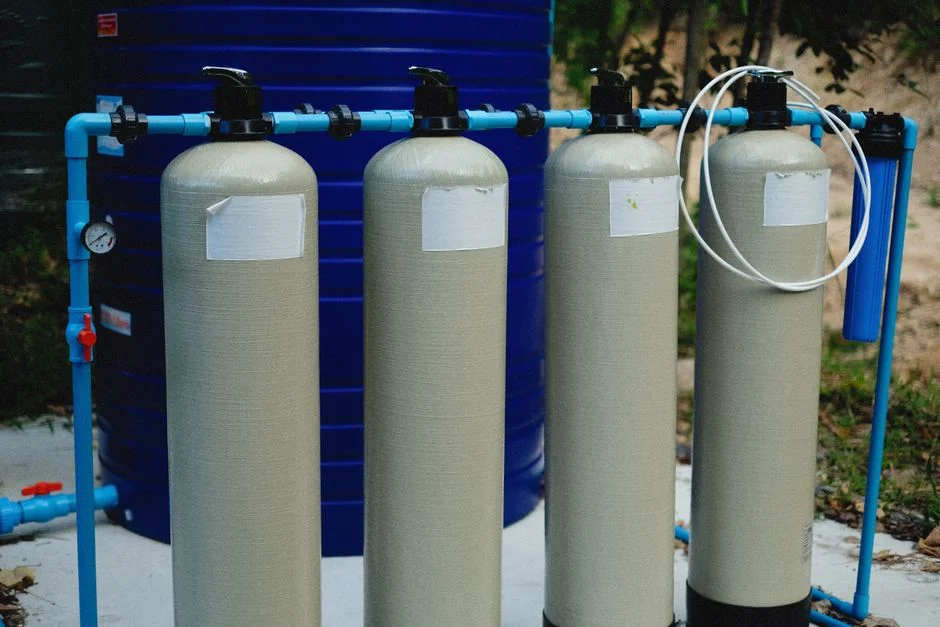
Stage 1 — Coarse and fine screening. A rotary mechanical bar screen for headworks with stainless rake teeth and continuous-duty drive removes rags, gravel, and mill debris; spec 6 mm bar spacing on the front-end and a 2–3 mm fine screen ahead of the flotation unit on high-solids streams. West Tennessee winters are mild compared with northern sites, so a heated enclosure is not required, but a covered screen enclosure is recommended for redundancy during freezing rain.
Stage 2 — Equalization. A covered or buried tank with mechanical mixers, sized for 8–24 hours of hydraulic residence time (HRT), dampens slug loads from shift changes, dump-leach cycles, and mill clean-outs. Spec for the peak 2-hour flow with 20–30% turndown capacity. The equalization basin is the most undersized piece of equipment in most mining pretreatment plants and the most expensive retrofit in the train — a 4-hour basin passes every spike straight into the clarifier.
Stage 3 — pH correction and metals precipitation. Target pH 6.5–9.0 for POTW compliance, with a tighter metals-precipitation optimum locked in by jar testing on the actual concentrator water. NaOH is preferred over lime for high-TDS mining streams because lime generates 3–5× more sludge; a ±0.2 pH band is the difference between hitting and missing a 0.3 mg/L zinc monthly average. Hydroxide precipitation with NaOH or lime achieves 85–95% total metals removal and is the workhorse. Sulfide precipitation (NaHS, FeS) drives residuals to 0.01–0.05 mg/L for Cu/Zn/Cd/Ni — an order of magnitude lower than hydroxide — but reagent cost runs 2–4× higher and H₂S off-gas requires sealed reactors with scrubbed vents. A PLC-controlled chemical dosing skid handling both pH adjustment and coagulant feed on a single PLC keeps pH inside the ±0.2 band; pairing hydroxide on the main flow with sulfide polishing on a 10–20% slipstream is the cost-effective compromise for sub-0.3 mg/L zinc (per Fluence, 2024-11). For deeper dosing-skid reliability data, see the chemical dosing system troubleshooting field guide.
Stage 4 — DAF or lamella clarification. The choice depends on stream character. A DAF system for mining wastewater operates at 5–25 m/h hydraulic loading with 30–80 µm micro-bubbles, achieves 90–98% TSS and 85–95% FOG removal, and is the right pick when the stream carries oil, grease, or colloidal fines. A lamella clarifier for metal hydroxide sludge operates at 20–40 m/h surface loading in roughly one-third the footprint of a conventional clarifier and uses about 30% less coagulant — it is the right pick for metal-hydroxide sludge at high flow with a footprint constraint. For the design math, see the DAF design parameters engineering guide and the DAF vs clarifier decision guide for mining and metals.
Stage 5 — Multimedia polishing and optional disinfection. A multimedia filter as the safety-net polishing stage — anthracite over sand over garnet at 1–2 m/h filtration — strips residual TSS to <10 mg/L and provides a buffer for the days when the clarifier underperforms because of a polymer mis-dose or a hydraulic surge. Chlorine dioxide at 1–5 mg/L is added only if the local ordinance requires a residual, typically when the receiving collection system has long force mains or biological sensitivity at the POTW. Sludge from the clarifier float and underflow is dewatered with a plate and frame filter press for sludge dewatering to a 25–35% dry-solids cake that can be hauled to a Subtitle-D landfill or, if recoverable metals justify it, sent to a smelter.
The decision tree: sewer vs ZLD, hydroxide vs sulfide, DAF vs lamella, skid vs field-erected
Operators in West Tennessee face four real choices when a project moves from concept to vendor selection. The first is the discharge path: sewer or ZLD. Sewer discharge to a POTW makes sense when a municipal or regional POTW exists within a reasonable haul distance for the sludge cake, when the local ordinance can be met with the five-stage train plus biological/MBR polishing downstream, and when the receiving POTW is willing to accept the SIU load. ZLD — typically RO at 75–95% recovery feeding a mechanical-vapor-recompression (MVR) evaporator and crystallizer — makes sense when no POTW is accessible, when dissolved salts block land application (sulfate >2,000 mg/L or TDS >5,000 mg/L), or when sludge-haul OPEX exceeds evaporator energy cost. For a 200 m³/h concentrator stream, 2026 CAPEX for a full DAF + RO + evaporator/crystallizer ZLD system typically lands in the $6M–$15M range, with OPEX dominated by evaporator energy at 25–40 kWh/m³ of distillate; a comparable 50 m³/h DAF + lamella + MBR pretreatment package falls in the $400K–$1.2M CAPEX range, with chemical cost and sludge-haul distance as the OPEX drivers (HydropureWater field data, 2026).
The second choice is hydroxide vs sulfide. Hydroxide with NaOH or lime is the default for streams where the local limit is 0.5 mg/L or higher; it is cheap, the chemistry is well understood, and total metals removal of 85–95% is achievable with proper pH control. Sulfide becomes the right pick when the local limit is below 0.3 mg/L for copper or zinc, when residuals must drop to 0.01–0.05 mg/L, or when downstream ion exchange or RO is in the train. The cost-effective compromise is hydroxide on the main flow with sulfide polishing on a 10–20% slipstream — the sulfide reactor sees a smaller volume, H₂S off-gas control is easier, and reagent cost is bounded.
The third choice is DAF vs lamella. DAF wins when the stream carries oil, grease, or colloidal fines below 50 µm; when flow is below 200 m³/h; or when the upstream process has emulsified lubricants (cutting fluids, hydraulic oil from a maintenance shop). Lamella wins when the stream is primarily a metal-hydroxide sludge at flow above 100 m³/h, when the footprint is constrained, or when coagulant cost is a significant OPEX line. Many West Tennessee plants run a DAF for oil/FOG removal followed by a lamella for the metal-hydroxide polishing step, which combines the strengths of both.
The fourth choice is package skid vs field-erected. Skid-mounted, factory-tested systems minimize field-commissioning time, arrive on a single truck, and are preferred for flows below 50 m³/h or for tight construction windows. Field-erected concrete basins become more economical above 100–150 m³/h and when the site has the civil capacity and the construction season allows cast-in-place work. The decision rule is straightforward: below 50 m³/h, skid; 50–150 m³/h, either (skid for schedule, field for cost); above 150 m³/h, field-erected with skid-mounted process packages inside. For a regional perspective on the same framework, see the mining pretreatment compliance guide for another US region.
2026 compliance checklist for the West Tennessee mining plant
Hand this to a vendor or an internal review team before the kickoff meeting. Every item is a 2026 permit-cycle risk if left unaddressed.
- Confirm SIU status under 40 CFR 403.3: process flow >25,000 gpd, or ≥5% of receiving POTW hydraulic/organic load, or designated by control authority (per 40 CFR 403.3).
- Identify the binding subcategory: 40 CFR Part 437 for the concentrator wash stream, 40 CFR Part 433 if any plating/pickling/anodizing is on-site (per 40 CFR 433.15).
- Pull the receiving POTW's current sewer-use ordinance and identify the tightest local limit for zinc, copper, lead, total chromium, and pH — typically tighter than the federal categorical numbers (HydropureWater field data, 2026).
- Verify LCRR-driven lead local limit; expect action levels near 10 µg/L in the 2026 permit cycle (per EPA LCRR finalization, 2024-10).
- Confirm PFAS analytical suite (PFOS, PFOA, PFHxS, PFNA) is included in the local control authority's monitoring requirements, even for sewer discharges (per EPA 2024 MSGP, finalized 2024-09).
- Spec the equalization basin at 8–24 h HRT, sized for peak 2-hour flow with 20–30% turndown; this is the most common and most expensive retrofit in the train.
- Lock in the pH optimum for the actual concentrator water by jar testing; do not rely on vendor literature. Each 1 pH unit away from optimum can cut removal efficiency by an order of magnitude (per Fluence, 2024-11).
- Select DAF or lamella by stream character (oil/FOG → DAF; metal-hydroxide sludge at high flow → lamella); spec DAF at 5–25 m/h hydraulic loading, lamella at 20–40 m/h surface loading.
- Add a multimedia polishing filter (anthracite over sand over garnet) at 1–2 m/h as the safety net; residual TSS <10 mg/L is the design target.
- Add chlorine dioxide at 1–5 mg/L only if the local ordinance requires a residual; long force mains and biological sensitivity at the POTW are the typical triggers.
- Plan sludge handling with a plate and frame filter press to 25–35% dry solids; cake mass drives haul cost, so the press pays back in the first year of operation for most West Tennessee plants.
- Budget the 2026 CAPEX band: $400K–$1.2M for a 50 m³/h DAF + lamella + MBR package; $6M–$15M for a 200 m³/h full ZLD system (HydropureWater field data, 2026).
- Document the enforcement exposure: civil penalties up to $25,000/day per violation under CWA §309, plus state-level penalties under the Tennessee Water Quality Control Act.
Frequently Asked Questions
What federal categorical standard applies to a zinc/copper concentrator wash stream in West Tennessee?
40 CFR Part 437 (Ore Mining and Dressing) is the primary categorical standard for mine dewatering, mill wash, and ore-handling streams, with daily-maximum TSS at 50 mg/L, daily-maximum copper and zinc at 1.0 mg/L, and pH in the 6.0–9.0 range. If the site also operates a plating, pickling, anodizing, or finishing shop, 40 CFR Part 433 (Metal Finishing) applies in parallel, with daily-maximum copper at 3.38 mg/L, zinc at 2.61 mg/L, and total chromium at 2.77 mg/L per 40 CFR 433.15. The binding limit in 2026, however, is almost always the local POTW's sewer-use ordinance, which is tighter than the federal numbers (typical local limits: zinc 0.3–1.0 mg/L monthly average, copper 0.3–0.5 mg/L monthly average).
Is a 100 m³/h concentrator stream automatically a Significant Industrial User (SIU)?
Yes, on flow alone. 40 CFR 403.3 defines an SIU as any industrial user discharging more than 25,000 gpd of process wastewater, contributing 5% or more of the POTW's organic or hydraulic load, or designated by the control authority. A 100 m³/h stream is roughly 633,000 gpd — well above the 25,000 gpd threshold — so the Cascade Mineral-type plant is an SIU on flow alone regardless of its mass-loading profile, and the local POTW (or TDEC DWR where delegated) runs the enforcement, not EPA Region 4 directly.
When does sulfide precipitation beat hydroxide for a mining wastewater train?
Sulfide precipitation (NaHS, FeS, or Na₂S) beats hydroxide when the local limit is below 0.3 mg/L for copper or zinc, when the downstream process (ion exchange, RO, or ZLD) requires residuals below 0.1 mg/L, or when the metals of concern include cadmium or nickel that do not precipitate as cleanly with hydroxide. Sulfide residuals are typically 0.01–0.05 mg/L for Cu/Zn/Cd/Ni versus 0.5–2.0 mg/L for hydroxide, but the reagent cost runs 2–4× higher and the system requires sealed reactors with H₂S off-gas scrubbing. For most West Tennessee flows, hydroxide on the main stream with sulfide polishing on a 10–20% slipstream is the cost-effective compromise.
What is the 2026 CAPEX range for a 50–200 m³/h mining pretreatment package?
For a 50 m³/h DAF + lamella + MBR pretreatment package, 2026 CAPEX typically falls in the $400K–$1.2M range, with OPEX driven by chemical cost and sludge-haul distance. For a 200 m³/h full ZLD system (DAF + RO at 75–95% recovery + MVR evaporator/crystallizer), 2026 CAPEX typically lands in the $6M–$15M range, with OPEX dominated by evaporator energy at 25–40 kWh/m³ of distillate. The wide bands reflect site-specific factors: influent TDS, target recovery, sludge disposal route, and whether the system is skid-mounted or field-erected (HydropureWater field data, 2026).