Why textile dyehouses choose buried sewage treatment systems
China's textile sector discharged 1.84 billion tons of wastewater and emitted 206,000 tons of chemical oxygen demand in 2015, ranking the industry third and fourth respectively among 41 key industrial categories for five consecutive years (2011–2015), per the Ministry of Environmental Protection. That scale, combined with the urban siting of most modern dyehouses, is the reason buried package plants have become the default procurement path in 2026.
The driving constraint is land. Textile parks in China, India, Bangladesh, Türkiye, and Egypt cluster near export ports and labor markets where above-ground concrete basins compete with residential and commercial real estate at premium prices. A clarifier that occupies 200 m² of buildable footprint is a 200 m² parcel the mill cannot lease, and an aeration tank that vents to atmosphere is an odor source that triggers residential complaints under most municipal nuisance ordinances. The buried configuration addresses both problems in a single civil decision: the tank lid becomes parking, garden, or roadway, and the biological stage is sealed below grade with no atmospheric release. A carbon-filtered vent stack sized to 5–10 air changes per hour handles the off-gas, and the blower room is housed in an adjacent enclosure rather than beside open tanks.
The third driver is reuse. Printing and dyeing currently recycles only 30% of process water, against a textile-industry average below 70% and a national industrial benchmark of 80% (per the China National Textile and Apparel Council 2018 report). A buried A/O unit that meets sewer-discharge consent can be polished later for reuse without disturbing the surrounding site — a path above-ground retrofits rarely allow.
What a textile underground sewage treatment system actually contains
A modern buried A/O package plant is a single welded or cast-in-place tank divided into six process compartments, sequenced by internal weirs and piping. The reader needs to know what each compartment does because the RFQ must specify performance at each boundary, not only at the final outlet.
Step 1 is a rotary mechanical bar screen (typically 5–10 mm aperture) that strips rags, fiber lint, plastic packaging, and stitching waste from the raw effluent. Textile influent carries far more fibrous solids than municipal sewage, and an unprotected biological stage will rag up within days.
Step 2 is a buried equalization tank with mechanical mixers, sized for a hydraulic residence time of 8–12 hours. Batch dyeing discharges concentrated dye baths in 2–4 hour pulses; without homogenization, the biological stage sees a COD swing that exceeds 3:1 and loses nitrification. The equalization tank absorbs that swing and feeds the downstream biology at a near-constant load.
Step 3 is the anoxic zone (the "A" in A/O). Mixed-liquor return from the clarifier feeds the anoxic compartment, where denitrifying bacteria convert nitrate to nitrogen gas and reduce a further fraction of soluble COD. A/O outperforms single-stage aerobic on textile streams because the nitrate recycle loop handles the ammoniacal nitrogen load from urea-based auxiliaries and reduces overall sludge yield by roughly 20–30% compared to conventional aerobic-only designs.
Step 4 is the aerobic zone (the "O"). Submerged biofilm carriers (combined-packing) plus fine-bubble diffusers deliver biological contact oxidation at mixed-liquor suspended solids of 3,000–5,000 mg/L and an aerobic HRT of 12–24 hours, depending on influent COD. This stage is the workhorse: it oxidizes the bulk COD, oxidizes sulfides, and degrades reactive-dye chromophores to the extent that biology can.
Step 5 is the sedimentation compartment, usually a lamella or inclined-plate clarifier integrated into the same buried envelope. Inclined plates at 55–60° settle the biological floc into a hopper; clarified supernatant flows forward by gravity to the disinfection stage, while settled sludge returns to the anoxic zone or is wasted to sludge holding.
Step 6 is disinfection, sized to a contact-time (CT) value derived from the EU Drinking Water Directive 98/83/EC and WHO drinking-water guidelines. A chlorine dioxide disinfection generator at 0.5–1.5 mg/L residual, or a UV dose of 30–40 mJ/cm², delivers the fecal-coliform reduction most discharge consents require. The full sequence is integrated into a WSZ-series buried A/O package plant rated 1–80 m³/h and designed for unattended operation.
Upstream of the buried unit, a DAF micro-bubble flotation unit handles color bodies, hydrolysed reactive dyes, and colloidal auxiliaries that resist biological oxidation. DAF is a textile standard at 4–300 m³/h and removes 50–70% of apparent color before the stream reaches biology.
Influent and effluent targets: the textile numbers that matter in 2026
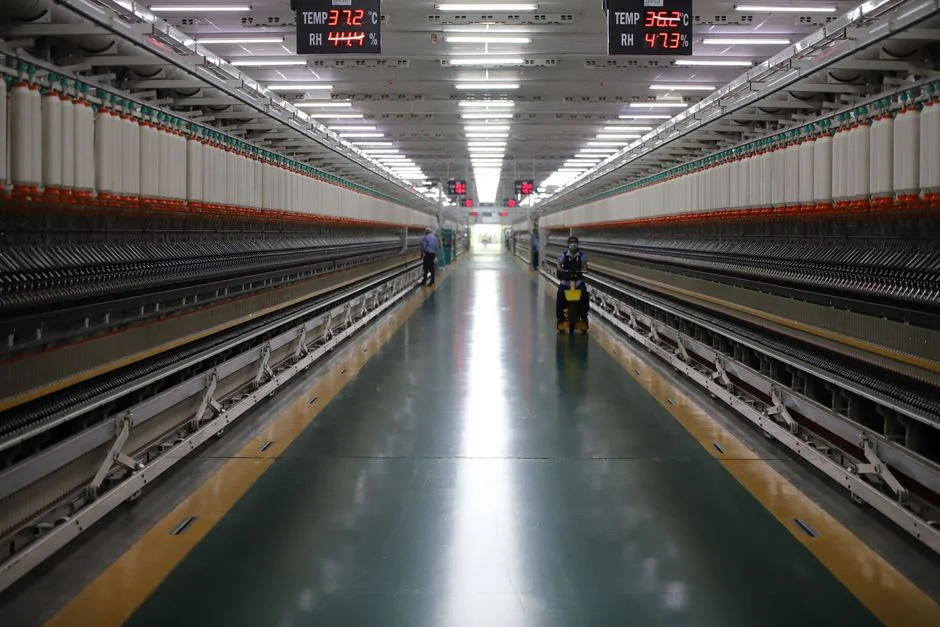
Textile influent is not a single number. Alkaline scouring raises pH to 8–11; reactive-dye baths push COD into the 800–2,500 mg/L band; suspended solids run 100–500 mg/L; and effluent temperatures sit at 30–45 °C because baths discharge hot. The buyer's first job is to characterize the actual stream with a 24-hour composite across one full production cycle — the data below is the envelope to size against, not the influent assumption to ship.
| Parameter | Raw textile influent | After DAF pre-treatment | After buried A/O package | After A/O + MBR polish |
|---|---|---|---|---|
| COD (mg/L) | 800–2,500 | 600–1,800 | 80–150 | <50 |
| BOD (mg/L) | 200–600 | 150–450 | 15–30 | <10 |
| TSS (mg/L) | 100–500 | 40–120 | 20–40 | <5 |
| Color (Pt-Co) | 500–2,000 | 150–600 | 100–400 | <50 (with ozone) |
| pH | 8–11 | 7–9 | 6.5–8.5 | 6.5–8.5 |
| Hydrosulfide (mg/L) | 1–10 | 0.5–3 | <0.5 | <0.1 |
The numbers to write into the RFQ are the columns labeled "After buried A/O package" and "After A/O + MBR polish." Sewer discharge in most jurisdictions accepts the A/O effluent if COD is held under 150 mg/L and TSS under 40 mg/L. Where the goal is reuse, the MBR integrated wastewater treatment system delivers sub-1 µm filtration and pushes TSS below 5 mg/L, which is the threshold for most rinse-water and boiler-feed make-up loops.
Two textile-specific items belong in every parameter table. First, hydrosulfides: the academic literature documents that textile effluent reduces dissolved oxygen and blocks light penetration in receiving waters, with sulfide concentrations commonly 1–10 mg/L. The biological stage oxidizes sulfides under aerobic conditions, but a DAF or ozone polish is typically needed to finish the job when consents set sulfide under 0.5 mg/L. Second, color from reactive and direct dyes persists past biological treatment because the chromophore structure resists oxidation. Apparent color above 400 Pt-Co after A/O usually means a downstream ozone or activated-carbon polish is needed, not a larger aeration tank. The 2016–2020 textile plan target of a 23% reduction in water intake per unit of industrial added value is the regulatory tailwind that justifies the polish train.
Underground A/O vs underground MBR vs above-ground conventional activated sludge
Three configurations are realistic for a 50–500 m³/day dyehouse. The selection is a function of discharge mode (sewer vs reuse), land availability, and capex tolerance — not technical capability, because all three can meet a typical COD <150 mg/L sewer consent when correctly sized.
| Criterion | Underground A/O package (WSZ) | Underground A/O + MBR | Above-ground CAS |
|---|---|---|---|
| Flow range | 1–80 m³/h | 10–2,000 m³/day (per MBR module) | >2,000 m³/day economic |
| Relative capex per m³/day | 1.0× (baseline) | 1.5–2.5× | 0.7–0.9× at scale |
| Visible footprint | None (tank buried, lid landscaped) | None | Full tank farm above grade |
| Effluent TSS (mg/L) | 20–40 | <5 | 20–30 |
| Reuse potential | None without polish | ≥70% reuse achievable | None without tertiary |
| Odor exposure | Sealed; vent stack filtered | Sealed; vent stack filtered | Open tanks; odor fence typically required |
| Best fit | Sewer discharge, urban site, no land | Water-scarce hub, ≥70% reuse target | Rural site, >2,000 m³/day, land available |
The decision rule is straightforward. If the discharge consent is a municipal sewer and the site cannot spare above-ground tankage, the WSZ-series buried A/O package plant is the correct spec. If the water tariff at the site makes reuse pay back in under four years, add a downstream MBR process train. If the mill processes more than 2,000 m³/day and sits on a non-urban parcel, conventional activated sludge in civil concrete tanks remains the lowest unit cost — and the buried configuration stops making sense.
Sizing and footprint: matching the buried plant to your dyehouse
Hydraulic sizing starts with the mill's own production data. A woven-finishing dyehouse typically discharges 80–150 L of effluent per kilogram of fabric processed, and the figure is reproducible across cotton, polyester, and blend routes. A 20,000 m²/day woven mill running at 0.30 kg/m² therefore discharges roughly 1,600–3,000 m³/day, or 65–125 m³/h at single-shift or 1,500–2,000 m³/day at two-shift steady-state — within or just above the upper end of the WSZ envelope. Most 50–500 m³/day dyehouses will specify a single WSZ unit at the larger end of the range, or two parallel units for redundancy.
The load check converts the hydraulic figure to a tank-volume check. Peak COD load in mg/L × flow in m³/h ÷ 1,000 = kg COD per hour. The aerobic stage should be sized for 0.3–0.5 kg BOD removed per kg MLSS per day at MLSS 3,000–5,000 mg/L — the standard design loading for combined-packing contact oxidation. This rule of thumb catches undersized tanks that would pass a hydraulic check but fail on organic load.
Burial depth for a WSZ-class tank is typically 0.5–1.5 m of cover above the lid, supporting pedestrian, light-vehicle, or landscaped loading. Deeper burial (2–3 m) is mechanically feasible but increases excavation cost and, more importantly, requires buoyancy control. In delta-region textile hubs — Bangladesh, Vietnam, lower Egypt — the water table sits within 1 m of grade for part of the year. The supplier must price anti-flotation concrete ballast or ground anchors as a line item; omitting this line is the single most common cause of an empty tank popping out of the ground during a wet season.
Ventilation ties into the blower room. A carbon-filtered vent stack sized to 5–10 air changes per hour removes H₂S and VOC carryover, and the stack must terminate above any occupied space on or adjacent to the mill. Acoustic enclosures on the blowers themselves are standard; without them, the buried biological tank quiets the site but the surface-level blower room reintroduces the noise the buried configuration was meant to eliminate.
Capex, opex, and lifecycle numbers for a buried textile STP in 2026
Capex for a turnkey buried A/O package plant typically runs 1.5–3.5× the cost of a basic above-ground steel tank of equal hydraulic capacity, because excavation, waterproofing, structural ballast, and buried piping all add cost that the surface alternative avoids. The configurator is the WSZ 1–80 m³/h buried integrated sewage treatment plant envelope. Opex is dominated by aeration energy — typically 0.4–0.8 kWh per m³ treated for the biological stage — followed by pH-correction chemical dosing and sludge hauling. A PLC-controlled chemical dosing system is the standard fit for the alkaline scouring streams that arrive at pH 8–11.
Sludge volume is the second opex lever. A plate-and-frame sludge filter press dewaterings waste activated sludge to a 60–65% moisture cake, cutting hauling tonnage and cost by 30–50% versus a drying bed. The press pays back inside two years on a 200 m³/day plant at typical textile-hub sludge-hauling tariffs.
Reuse economics are the real driver for the upgrade. Pushing the water-reuse rate from the 30% printing/dyeing baseline toward 80% repays the incremental capex of an MBR polish within 2–4 years at textile-hub water tariffs, and it directly serves the textile plan 2016–2020 target of a 23% reduction in water intake per unit of industrial added value. For boards weighing the capex, the framing that lands is: buried A/O is the sewer-discharge baseline; buried A/O plus MBR is the reuse-positive investment that the regulatory trajectory will eventually require anyway.
Selection checklist: 7 criteria before you sign the PO
Step 1 is influent characterization. Pull a 24-hour composite sample across at least one full production cycle, including a peak dyeing shift, and test for COD, BOD, TSS, pH, color, temperature, sulfide, and total nitrogen. Do not accept supplier influent assumptions in lieu of site data.
Step 2 is discharge consent. Lock the effluent parameter table to the actual permit — municipal sewer, surface water, or reuse loop. The table from the parameter section above is the envelope to specify.
Step 3 is hydraulic profile. Confirm average, peak, and minimum hourly flow across the production week, and decide whether an upstream equalization tank is required inside the buried envelope.
Step 4 is site constraint confirmation. Burial depth, water-table depth, setback distances from buildings, and the live load on the tank lid (pedestrian, light vehicle, or landscaped) all drive structural and buoyancy design. The supplier must price each item separately.
Step 5 is DAF pre-treatment. If the dye class includes reactive, disperse, or vat dyes, a DAF ahead of the buried A/O is mandatory for color and colloid removal, and the supplier quote should bundle the DAF micro-bubble flotation unit.
Step 6 is sludge handling. Specify a plate-and-frame sludge filter press with cake moisture below 65%, and confirm the disposal route for the dewatered cake.
Step 7 is automation and service. Specify a PLC with remote telemetry and confirm the local service response time. Most textile-mill EHS teams are too thin to staff continuous attendance, and a buried plant that needs an operator is the wrong plant. The buried STP maintenance guide is the reference document to send with the RFQ so bidders all quote against the same preventive-maintenance scope.
Frequently Asked Questions
What flow range does a buried A/O package plant cover for a textile application?
The WSZ-series buried A/O package plant is rated 1–80 m³/h, fully automated, and integrates screening, equalization, anoxic–aerobic contact oxidation, sedimentation, and disinfection in a single buried unit. This covers the full envelope of mid-size textile and dyeing operations from roughly 24 m³/day up to 1,920 m³/day per unit, with parallel units deployed for redundancy or for mills above 2,000 m³/day.
What water-reuse rate can a textile mill realistically target with this configuration?
Printing and dyeing currently recycles about 30% of process water, against a textile-industry average below 70% and a national industrial benchmark of 80% (per the China National Textile and Apparel Council 2018 report). Pushing a buried A/O effluent through an MBR integrated wastewater treatment system polish typically achieves 70–80% reuse, hitting the national industrial benchmark and aligning with the 2016–2020 textile plan target of a 23% reduction in water intake per unit of industrial added value.
How does the plant handle color and hydrosulfide from reactive dye baths?
A DAF micro-bubble flotation unit ahead of the buried A/O removes 50–70% of apparent color and the colloidal auxiliaries that resist biology; the anoxic–aerobic contact oxidation stage then oxidizes hydrosulfides below 0.5 mg/L. For the strongest reactive and direct dye chromophores, an ozone or activated-carbon polish is added downstream of the MBR to drop color below 50 Pt-Co.
What does a buried plant do about odor and noise compared to an open-tank system?
Sealing the biological compartments below grade eliminates atmospheric release of H₂S and volatile organics at the source; a carbon-filtered vent stack sized to 5–10 air changes per hour handles the off-gas. Blower noise is contained by acoustic enclosures in a separate surface-level blower room, and the soil cover above the tank provides additional acoustic damping — the net result is no visible aeration basin and no off-property odor or noise complaint, which is the principal reason urban dyehouses specify the buried configuration.
What maintenance does a buried textile STP actually require, and does it need an operator?
Routine service follows a documented buried STP maintenance guide: monthly inspection of diffusers and biofilm carriers, quarterly sludge wasting, and annual desludging of the equalization and sludge hoppers. The unit is designed for unattended operation with PLC and remote telemetry, so a single EHS technician walking the plant once per shift is sufficient — no dedicated operator is required at the 1–80 m³/h scale.