Why the Federal Floor Is Not the Binding Number for a Dunlap-Area Plant
40 CFR Part 437 (Ore Mining and Dressing, subparts 437.40–437.47) sets the federal categorical floor for NAICS 2122 facilities, but Dunlap-area operations on the Cumberland Plateau — where some sites straddle into NAICS 331/332 metals fabrication — are almost never designed against that ceiling. The binding number is the Sequatchie Valley Utility District's or the neighboring small municipal POTW's sewer-use ordinance, enforced under 40 CFR Part 403 as a Categorical Industrial User program. Those local limits run tighter than Part 437 for Zn, Cu, Pb, ammonia, sulfate, and oil & grease because the POTW must protect its activated-sludge biomass, its collection system from sulfide-induced corrosion, and the receiving Sequatchie River watershed. Three 2024–2026 federal actions are pushing those local caps lower right now: the Lead and Copper Rule Revisions (LCRR) are driving lead action levels toward 10 µg/L (per EPA 2024 Multi-Sector General Permit, finalized 2024-09), the 2024 MSGP added PFAS monitoring (PFOS, PFOA, PFHxS, PFNA) for metal-mining sectors, and the 2025 ore-mining BAT revisions tightened the cost-benefit envelope on total recoverable metals. The consequence of missing those numbers is civil penalties up to $25,000/day per violation under Clean Water Act §309, enforced by the local control authority. For a parallel regional spec covering an analogous watershed, the analog Franklin, IN compliance blueprint walks the same logic with different numbers.
The Four Wastewater Sub-Streams That Drive a Tennessee Mine-Mill Design
A Dunlap-area site is not one wastewater problem; it is at least four, and the right train depends on which stream dominates the site (per NREL/OSTI mine water study, 2021). Acid mine drainage (AMD) from pyrite and pyrrhotite oxidation in waste rock and tailings is the highest-priority compliance stream on the Cumberland Plateau — raw pH 2–4, high TDS, Fe/Mn/Cu/Zn/As/Cd loaded — and it is the primary driver of the precipitation stage. Process water from flotation, heap leach, and cyanide gold circuits carries high TDS plus reagent-specific species: xanthates and dithiophosphates from flotation, cyanide and chloramines from gold circuits, and ammonia from some heap-leach operations. Tailings pond effluent (TSF decant) contains fine solids, residual reagents, and leached metals, and TSF closure plans are increasingly written to demonstrate zero liquid escape from a closed facility (per AMPAC USA, 2026). Dewatering discharge is geology-dependent in quality but volume-driven in design, with flows often exceeding 1,000 gpm at active operations, and that volume usually decides whether reuse or discharge is economic. Mining accounts for less than 1% of total U.S. water demand but is highly localized, so site-specific design is non-negotiable (per NREL/OSTI mine water study, 2021). For a Dunlap-area site, AMD and dewatering are the dominant sub-streams, not gold-circuit process water; the train should be specified accordingly.
Regulation-to-Stage Design Table for a 2026 Dunlap-Area Train
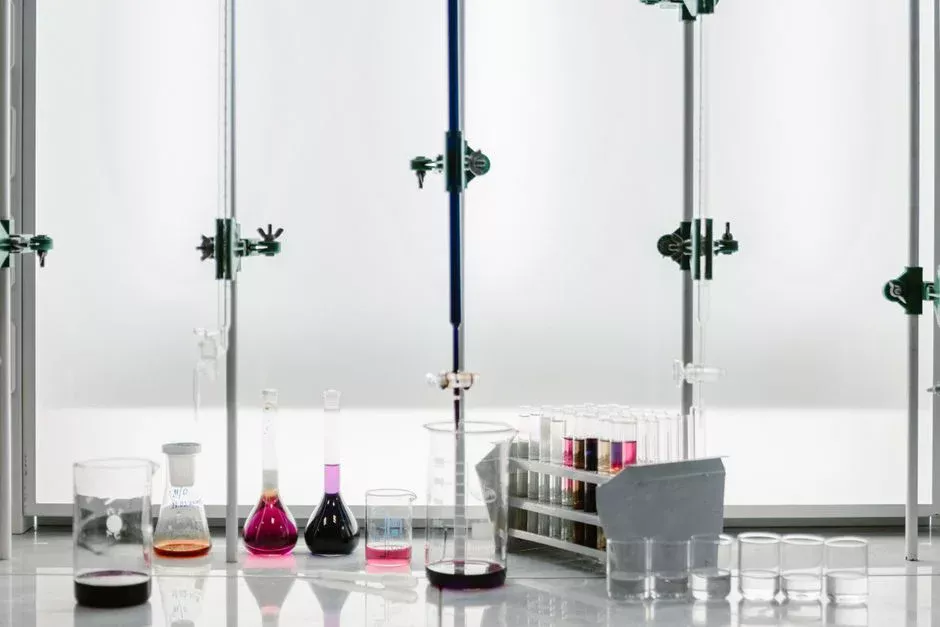
The table below maps each Part 437 subpart pollutant to a typical 2026 Sequatchie Valley POTW local limit and a defensible stage-by-stage design target. Hydroxide precipitation on operating mining/metals streams routinely achieves 85–95% total metals removal when pH is held in the 9–11 window (per Fluence, 2024-11); sulfide polishing on a slipstream drops Cu/Zn/Cd/Ni residuals to 0.01–0.05 mg/L. RO recovery on AMD and high-sulfate streams is sized at 50–70% to control sulfate scaling on standard BWRO membranes (per AMPAC USA, 2026). A DAF system typically sits between the precipitation reactor and the multimedia filter; sizing it from the surface-loading column below prevents the most common clarifier bottleneck.
| Parameter | Typical 40 CFR Part 437 ceiling (mg/L, daily max) | Typical 2026 Sequatchie Valley POTW local limit (mg/L) | Pre-RO target after precipitation/clarification (mg/L) | Final RO permeate target (mg/L) |
|---|---|---|---|---|
| Copper (Cu) | 1.0 | 0.3–0.5 (monthly avg) | <0.5 at pH 9.5–10.5 (hydroxide) | <0.05 |
| Lead (Pb) | 0.6 | 0.1–0.3 (LCRR-driven tightening toward 0.010) | <0.1 at pH 9.5–10.5, or via sulfide | <0.01 |
| Zinc (Zn) | 1.0 | 0.3–1.0 (monthly avg) | <0.5 at pH 9–10 | <0.05 |
| Cadmium (Cd) | 0.1 | 0.05–0.1 | <0.05 at pH 10–11, or via sulfide | <0.01 |
| Nickel (Ni) | 1.0 | 0.5–1.0 | <0.5 at pH 9.5–10.5 | <0.05 |
| Total Chromium | 0.5 | 0.5–1.0 | <0.1 via co-precipitation at pH 7–8 | <0.05 |
| Arsenic (As) | 0.5 | 0.1–0.3 | <0.1 at pH 7–8 with Fe co-precipitate | <0.01 |
| Mercury (Hg) | 0.002 | 0.001–0.005 | <0.01 via sulfide polishing | <0.001 |
| Total Cyanide | 1.0 | 0.2–0.5 | <1.0 after alkaline chlorination or H₂O₂/Cu-catalyzed oxidation, before any biological stage | <0.05 |
| Ammonia (as N) | — | 10–20 | <2 via MBR nitrification | <0.5 |
| Sulfate (SO₄) | — | ~250 (sewer corrosion/digester upset limit) | 1,000–3,000 (after lime softening) | <50 (RO permeate) |
| TSS | 30 (35 subpart C) | 20–30 | <30 (DAF or lamella at 20–40 m/h surface loading) | <1 |
| Oil & Grease | — | 50–100 | <10 (DAF at 85–95% removal) | <1 |
| pH | 6.0–9.0 | 6.0–9.0 (instantaneous) | 9–11 (optimal precipitation window) | 6.5–7.5 |
Two practical notes make or break compliance. Each metal has its own optimum inside the 9–11 window — copper at pH 9–10, lead 9.5–10.5, cadmium 10–11 (per watertechusa metal precipitants guide, 2026) — so a single set point cannot hit them all; two-stage precipitation (pH 7–8 for Fe/Mn/Cd, then 9.5–10.5 for Cu/Zn) is standard on AMD. Competing chelants (EDTA, citric acid, ammonia) bind metals and defeat hydroxide precipitation, which is the single most common cause of failed compliance on AMD streams (per watertechusa metal precipitants guide, 2026).
The Three 2026 Train Options, Ordered by Capex
There is no one-size-fits-all solution across the Sequatchie Valley; site-specific water character and discharge economics drive the selection (per NREL/OSTI mine water study, 2021). The three realistic 2026 options are ordered from lowest to highest capex/opex.
| Train | Stages | RO recovery | Best fit | 2026 capex/opex signal |
|---|---|---|---|---|
| A — Conventional + RO | Equalization → pH adjustment → hydroxide or sulfide precipitation → DAF or lamella → multimedia filtration → industrial RO system | 50–70% (BWRO) | AMD-dominant stream, willing POTW with hydraulic capacity, no zero-discharge requirement | Lowest capex; standard 2026 default |
| B — MBR-led | Equalization → precipitation → DAF → integrated MBR system (submerged PVDF, 0.1–0.4 µm) → cartridge → RO | 50–70% (BWRO) | Stream carries ammonia, cyanide-breakdown products, or variable organics; protects RO from organic fouling and removes ammonia below typical 10 mg/L POTW caps in one stage | Mid capex; safest default for gold-mill and copper-mill streams with reagent residue |
| C — ZLD | Train B + brine concentrator + crystallization | 70–85% (RO stage); thermal for remainder | Inland water-stressed site, no POTW, or TSF closure demands zero liquid escape | 2–4× the OPEX of a discharge-permitted train, driven almost entirely by thermal energy (per AMPAC USA, 2026) |
For most Dunlap-area sites with a willing Sequatchie Valley POTW, Train A or B is the economic answer; ZLD is increasingly a 2026 design requirement for new mines and TSF closure rather than an option (per AMPAC USA, 2026). Pilot the precipitation stage before committing to full-scale design, and budget the pilot at 3–6% of full-scale capex.
DAF vs Lamella and Hydroxide vs Sulfide: Decision Matrices
Two decisions dominate the vendor meeting: clarification technology and precipitation chemistry. Both have defensible defaults, neither is universally better.
| Decision | Operating envelope | Pick this when | Watch out for |
|---|---|---|---|
| DAF system | 5–25 m/h hydraulic loading; 90–98% TSS removal; 85–95% oil/grease removal; 4–300 m³/h across 13 standard models | Stream carries oil, grease, or fine colloidal metals; flow under ~200 m³/h | Polymer mis-dose or hydraulic surge carries solids to the multimedia filter |
| Lamella clarifier | 20–40 m/h surface loading; ~⅓ the footprint of a conventional clarifier; denser sludge blanket; lower chemical consumption | Stream is primarily a metal-hydroxide sludge at high flow and footprint is constrained; flow above ~100 m³/h | Does not remove free oil or colloidal fines as effectively as DAF |
| Hydroxide precipitation (NaOH, lime) | 85–95% total metals removal; residuals 0.5–2.0 mg/L; reagent cost baseline | Default first stage; local Pb/Cd/Hg limits ≥0.3 mg/L | Each metal has a narrow optimum pH; single set point misses some species |
| Sulfide precipitation (NaHS, FeS, Na₂S) | Residuals 0.01–0.05 mg/L for Cu/Zn/Cd/Ni; reagent cost 2–4× higher | Polishing step on a slipstream when local Pb/Cd/Hg limits are below 0.3 mg/L | Sealed reactors with H₂S scrubbing required; H₂S off-gas is a safety/odor issue |
The single most common cause of failed compliance on AMD streams is competing chelants — EDTA, citric acid, ammonia — binding metals and defeating hydroxide precipitation (per watertechusa metal precipitants guide, 2026). Jar-test every reagent upstream of the precipitation stage before committing to full-scale design.
Sludge, Reuse, and ESG: The 2026 OPEX Levers
Sludge handling is a real OPEX line, not an afterthought. Metal-bearing sludge is typically hazardous waste, and a plate-and-frame filter press producing 25–35% dry solids (or 60–70% for hazardous metal sludge) is the standard downstream of any precipitation stage; filterate returns to the head of the plant. A PLC-controlled chemical dosing skid ahead of the press keeps polymer and lime consumption inside an auditable band and avoids the over-dose OPEX trap. Internal reuse enabled by RO can reduce freshwater intake by 40–60% versus once-through operation, often the largest single economic lever in a 2026 capex decision at water-stressed sites (per AMPAC USA, 2026), and it directly reduces both discharge and TSF volumes. GRI 303 water-disclosure obligations are no longer optional; mining operators voluntarily report water withdrawals, discharge by receiving body, and reuse (per NREL/OSTI mine water study, 2021), and a 2026 spec that does not generate the flow, recovery, and reuse data needed to populate those disclosures is out of date before it ships.
Frequently Asked Questions
Does a Dunlap-area mine-mill discharge to a POTW need an NPDES permit too?
Most operations carry both authorizations in parallel: CWA §307(b) pretreatment at 40 CFR Part 403 governs the sewer path, while CWA §402 NPDES covers separate stormwater outfalls and any direct surface-water discharge. The sewer path is the binding constraint because the local limits, sampling frequency, and enforcement triggers (civil penalties up to $25,000/day under CWA §309) are tighter than NPDES self-monitoring (per EPA industrial wastewater guidance, 2026).
Why is hydroxide precipitation failing on our AMD stream even at pH 10?
Competing chelants — EDTA, citric acid, ammonia from heap-leach or mill reagents — bind metal ions and defeat hydroxide precipitation; this is the single most common cause of failed compliance on AMD streams (per watertechusa metal precipitants guide, 2026). Jar-test the actual influent for chelant carryover before adjusting pH set points, and consider sulfide polishing on a slipstream if residuals must drop below 0.3 mg/L.
What RO recovery should we spec on an AMD or high-sulfate stream in 2026?
50–70% recovery is the standard 2026 design target for AMD and high-sulfate streams on standard BWRO membranes; pushing recovery above 70% on AMD is the most common cause of premature membrane replacement (per AMPAC USA, 2026). In ZLD trains, RO recovery rises to 70–85% because the concentrate is sent to a thermal stage rather than discharged.
When does a Dunlap-area site actually need ZLD instead of a discharge-permitted train?
ZLD is increasingly required for tailings facility decommissioning where regulators require demonstration that no liquid will escape a closed facility, and for inland sites in water-stressed catchments with no willing POTW (per AMPAC USA, 2026). For sites with a willing Sequatchie Valley POTW and adequate hydraulic capacity, a discharge-permitted Train A or B remains the economic answer; ZLD OPEX runs 2–4× a discharge-permitted train, driven almost entirely by thermal energy. For a deeper side-by-side of the biological stage, see the MBR vs CAS comparison for mining wastewater.